




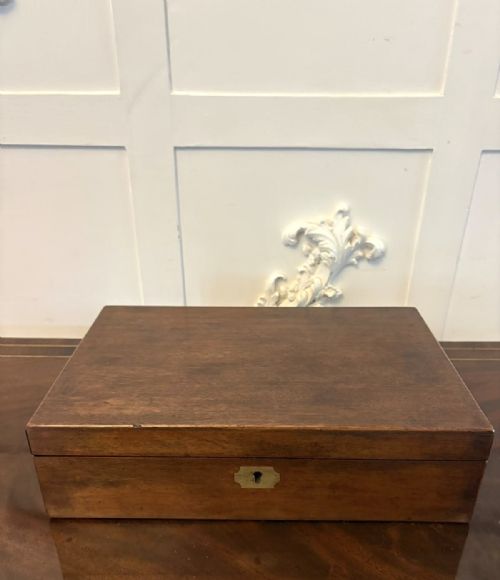
Brown Lap Desk
A brown lap desk is a portable writing box designed for travel, combining fitted compartments and a sloping leather surface to provide a mobile writing station.
Brown Lap Desk
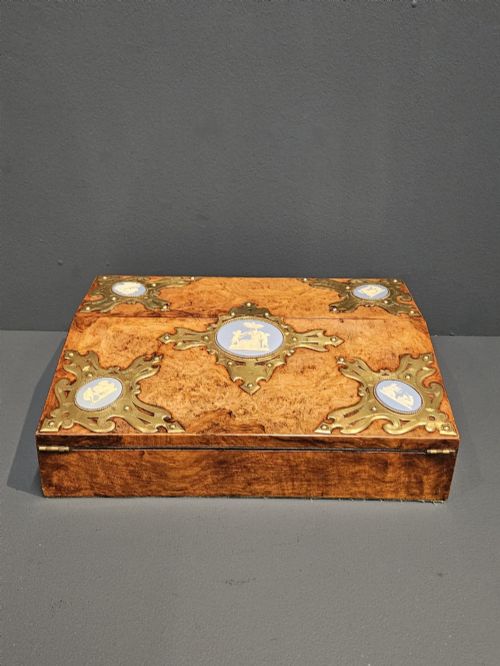
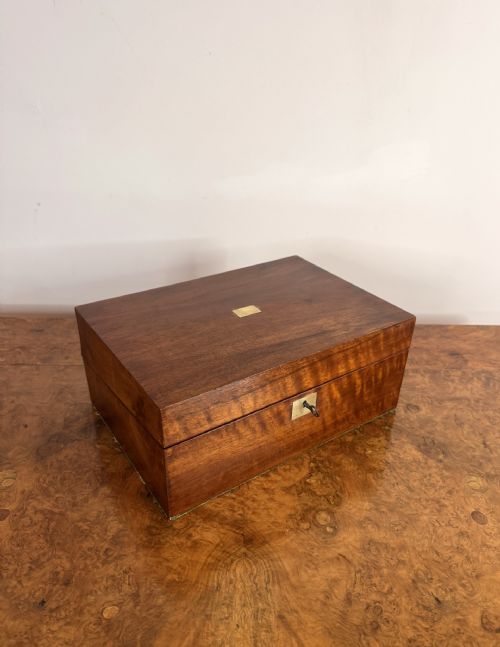
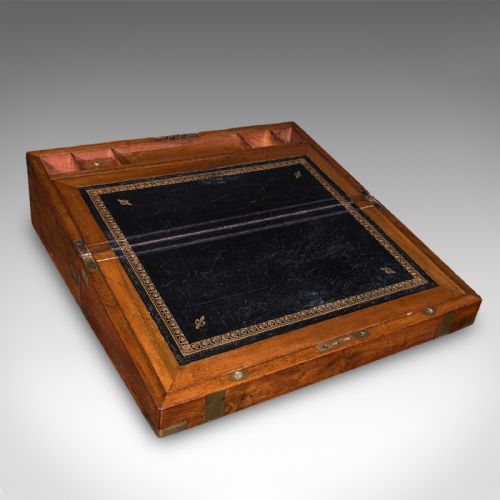
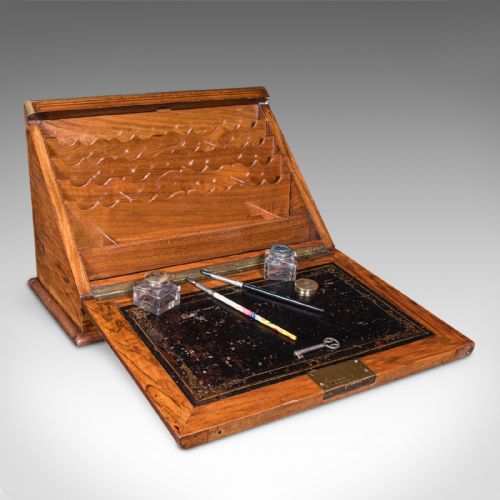
A brown lap desk encompasses portable writing slopes, writing boxes, and correspondence cases originating predominantly from the Georgian, Regency, and Victorian eras. These pieces take the form of hinged wooden boxes that open to reveal a slanted writing surface lined with leather, alongside internal partitions for inkwells, pens, and paper.
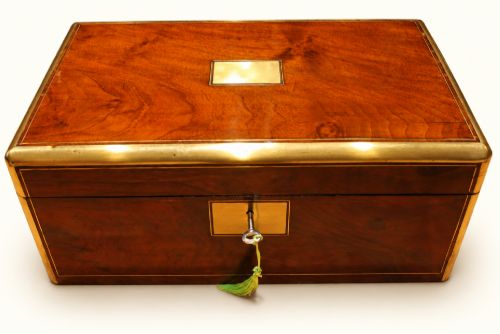
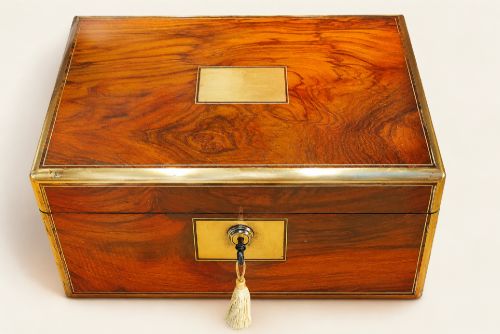
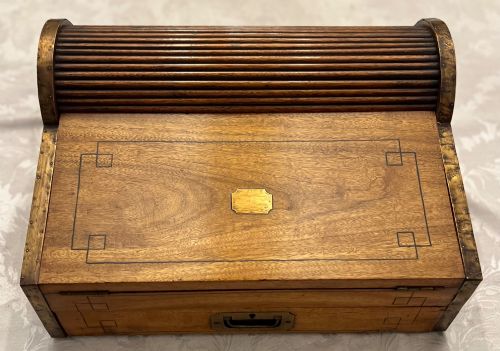
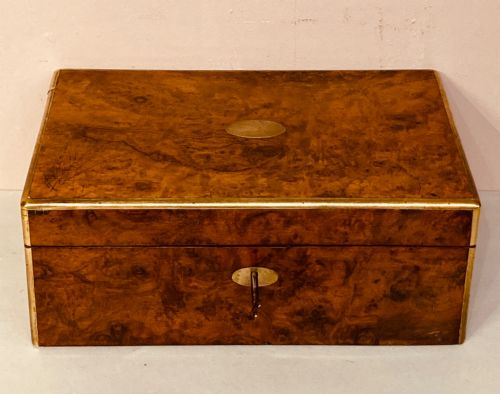
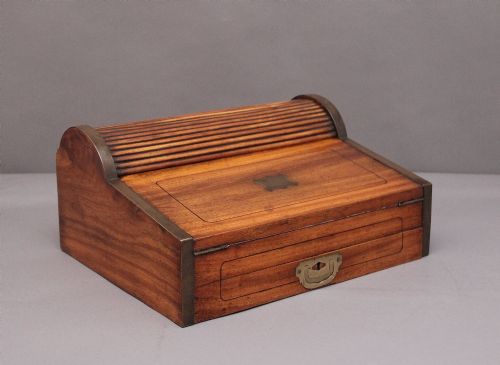
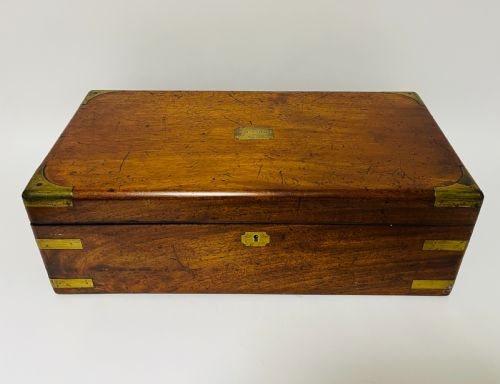
The versions most frequently met on this page are mahogany and walnut writing slopes dating from the nineteenth century. Many of these examples display campaign styling with brass binding, reflecting their use by officers and travellers during the period.
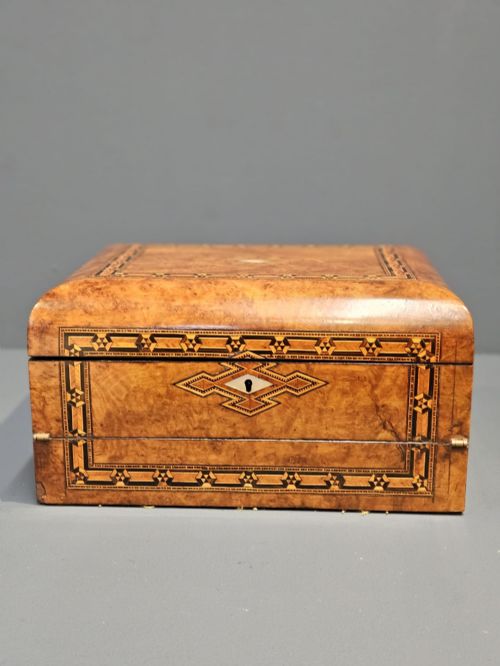
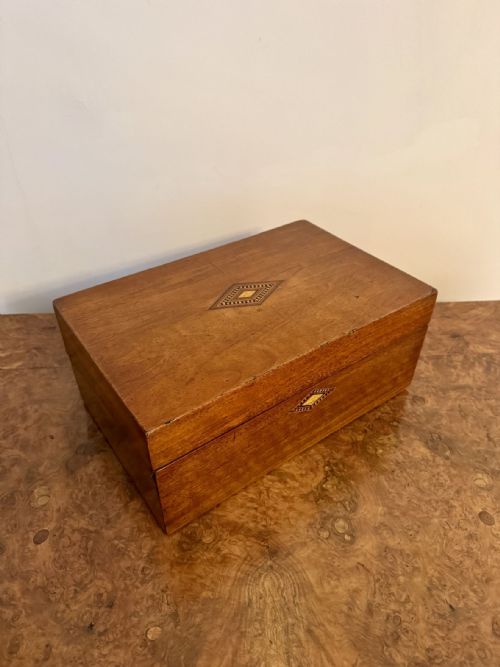
Regional variations also appear among the stock, including camphor wood and rosewood models associated with colonial trade, as well as specialised items incorporating Tunbridge ware inlay or olive wood.
Materials and construction methods
Makers constructed these writing boxes using dense hardwoods such as mahogany, walnut, burr walnut, rosewood, and camphor wood, often selecting figured veneers for exterior display. Brass corners, straps, and flush carrying handles reinforced the structures for travel, particularly on campaign models designed to withstand rough movement.
Interiors combined secondary timbers with leather writing surfaces, glass inkwells, and secret compartments concealed beneath removable panels. Locks by makers such as Bramah secured the contents, while specialised techniques like Tunbridge ware mosaic added decorative geometric patterns to the wooden surfaces.
Brown Lap Desk Retail Price Guide 2026
Typical asking prices for brown lap desk among the pieces listed under this phrase on Sellingantiques today, from the lower quarter to the upper quarter. They describe what is for sale here now, not the wider market.
Listings feature mahogany, walnut, camphor wood, and rosewood across nineteenth-century forms.
Distinctions in craftsmanship and design
Quality in a brown lap desk rests on the selection of timber veneers, such as richly figured burr walnut or substantial mahogany, and the precision of the brass banding and inset hardware. Superior pieces integrate complex interior mechanisms, secret drawers, and high-security locks that operate smoothly.
The refinement of the internal fittings, including matched glass inkwells, finely tooled leather writing surfaces, and careful dovetail joinery, separates standard utility boxes from exhibition quality items.
Austin·Fisher
The Brown Lap Desk Glossary
- Writing slope
- A portable box with a hinged lid that opens to form an inclined surface for writing. Inside, compartments store stationery, ink, and writing instruments.
- Campaign style
- Furniture and accessories built for military officers and travellers, characterised by sturdy construction, recessed brass handles, and protective corner brackets.
- Tunbridge ware
- A form of decorative woodwork produced in Kent, utilising thousands of tiny tinted wood blocks to create mosaic pictures and geometric borders on boxes.
- Secret compartment
- A hidden drawer or compartment built into a piece of furniture, accessed by sliding or removing a concealed panel within the interior layout.
- Bramah lock
- A high-security cylindrical lock invented by Joseph Bramah in the late eighteenth century, frequently fitted to quality nineteenth-century writing boxes.
Brown Lap Desk: Frequently Asked Questions
What is a brown lap desk used for?
These boxes served as portable desks for correspondence, keeping paper, inkwells, and pens organised in one secure container during travel.
Users placed the sloping surface on their lap or a table to provide a stable angle for writing letters before envelopes became standard.
How do I identify a campaign lap desk?
Campaign models feature protective brass corners, strap work, and flush-fitting handles designed to prevent damage during military transport.
They often utilise dense woods like camphor or mahogany and may separate into folding sections for ease of movement.
What woods are typical for these desks?
Mahogany and walnut appear most frequently, often selected for their strength and rich grain patterns across nineteenth-century examples.
Exotic timbers like rosewood and camphor wood also occur, reflecting colonial trade and specific geographical origins.
How do secret compartments work?
Secret compartments operate through hidden latches, spring-loaded panels, or removable partitions that require a specific sequence to open.
They allowed owners to conceal valuables, private letters, or spare keys away from the main stationery well.
Were these desks made for military use?
Many writing slopes were built specifically for officers on active service, incorporating rugged brass reinforcement to endure rough conditions.
Others served domestic purposes in Georgian and Victorian households, remaining stationary on desks or tables rather than travelling.