


Brass Cloisonne Dish
A brass cloisonne dish brings intricate wirework and vibrant enamel into a room, offering centuries of artistry on a polished metal base.
Brass Cloisonne Dish
A brass cloisonne dish represents a tradition of metalwork and vitreous enamelling found across multiple historic periods. When collectors search for a brass cloisonne dish, they encounter large chargers, decorative plates, trays, and lidded bowls originating from Japanese Meiji and Edo periods, alongside Qing Dynasty examples.
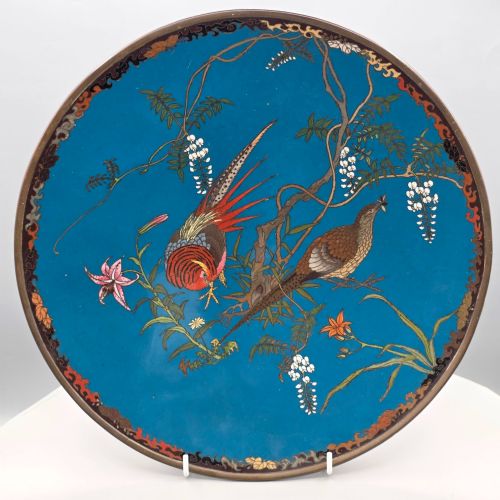
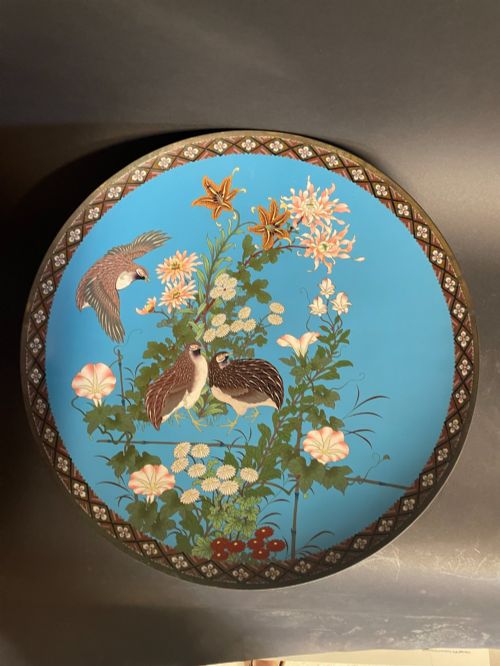
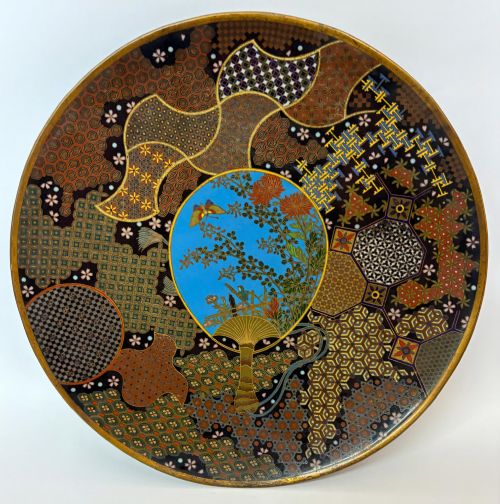
The pieces on this page span from the eighteenth century through to the twentieth century, with nineteenth-century examples appearing frequently. Forms range from broad decorative chargers depicting birds, landscapes, and dragons to smaller bowls and trays adorned with floral motifs.
Makers utilised various object types, including charger plates and decorative plaques, each designed to display complex surface patterns. These items serve primarily as decorative objects, capturing the skill of historic metalworkers and enamel artisans.
Materials and technique
Makers constructed the foundation of each piece using brass, copper, or bronze as a durable metallic base. Artisans then soldered thin metal wires, known as cloisons, onto the surface to create intricate cells and compartments.
These compartments were filled with coloured enamel pastes before undergoing high-temperature firing. Craftsmen ground and polished the hardened enamel surfaces down until the metal wires remained flush with the smooth, colourful design.
Listings feature brass, copper, and bronze vessels produced across the eighteenth, nineteenth, and twentieth centuries.
Distinctions in craftsmanship
The standard of a piece rests upon the precision of the wirework and the complexity of the imagery depicted. Finer examples display immaculate cell alignment and detailed naturalistic subjects such as birds, fish, and Mount Fuji.
Subtlety of colour shading and the overall polish of the metal substrate differentiate standard decorative items from masterworks. The depth of the enamel and the intricacy of motifs like dragons and floral sprays indicate the level of artisan skill involved.
The Brass Cloisonne Dish Glossary
- Cloisonne
- A decorative metalwork technique where thin wires are soldered to a metal body to form cells that hold coloured enamel. This method creates distinctive patterned surfaces across historic vessels and plates.
- Charger
- A large ornamental plate or dish utilised for display rather than dining. These substantial pieces often showcase complex pictorial scenes.
- Meiji Period
- A historical Japanese era spanning from eighteen sixty-eight to nineteen twelve, known for prolific production of detailed metalwork and enamel goods. Pieces from this time demonstrate advanced technical proficiency.
- Edo Period
- A historic Japanese era preceding the Meiji period, characterised by distinct traditional craftsmanship. Surviving enamel works from this timeframe are less common.
- Mon
- A Japanese heraldic badge or emblem used to identify families or clans. These symbols frequently appear integrated into the decorative borders of enamel vessels.
- Qing Dynasty
- The final imperial dynasty of China, known for diverse decorative arts including metallic enamelware. Pieces from this era reflect distinct continental styles.
Brass Cloisonne Dish: Frequently Asked Questions
How do I clean a brass cloisonne dish?
Dust the surface gently with a soft, dry cloth to remove everyday particles without disturbing the delicate enamel.
Avoid using harsh chemical polishes or abrasive liquid cleaners, as these substances can scratch the polished metal wires and dull the glass-like enamel finish.
Can I display these dishes on a wall?
Many larger chargers and plates were created with display in mind, though appropriate specialised wall hangers must be selected with care to support the weight of the metal.
Ensure that any mounting hardware grips the rim securely without applying undue pressure to the enamel surface or the thin brass structure.
What subjects appear on these pieces?
Common motifs include natural elements such as birds, fish like koi, floral arrangements featuring chrysanthemums and irises, and landscapes incorporating Mount Fuji.
Mythological creatures like dragons and ho-o birds also appear frequently, alongside geometric patterns and familial crests known as mons.
How do I identify a Meiji period piece?
Meiji period items often feature exceptionally fine wirework and naturalistic pictorial scenes reflecting the rapid opening of Japanese trade during the late nineteenth century.
Comparing the style of the flora, fauna, and background motifs against documented nineteenth-century examples helps confirm the period of origin.