


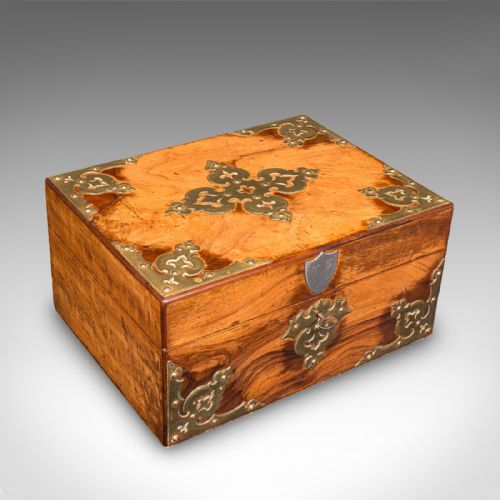


Brass Bound Jewellery Box
A brass bound jewellery box is a sturdy timber chest reinforced with metal corners and straps designed to protect valuables on the move.
Brass Bound Jewellery Box
A brass bound jewellery box sits among a lineage of portable containers, taking forms from small tabletop caskets to large campaign chests. When searching this phrase, expect to encounter sturdy timber boxes reinforced with metal corners and straps designed for travel.
Most examples originate from the Victorian and Georgian periods, constructed in rich timbers like rosewood, walnut, and coromandel. These pieces served travellers, officers, and ladies requiring secure storage for precious items during journeys.
Beyond standard tabletop jewellery boxes, the selection includes fitted vanity cases, writing slopes, and miniature trunks. Each variation reflects the utilitarian demands of the nineteenth century combined with domestic refinement.
How they were made
Cabinet makers utilised dense hardwoods such as mahogany, rosewood, burr walnut, and coromandel as the foundational structure for these containers. These timbers provided the durability required for frequent handling and long-distance transport.
Brass formed the essential reinforcing element, appearing as corner brackets, strapwork, escutcheons, and flush inset handles. Metal fasteners secured the mitred joints and protected vulnerable edges from impact during travel.
Interiors typically received fitted trays, velvet or leather linings, and compartments designed to hold rings, watches, and grooming bottles. Many incorporate secret drawers and locking mechanisms operated by small keys.
Object forms range from miniature campaign trunks and writing slopes to large fitted vanity cases.
What varies in quality
The choice of timber grain dictates much of the visual merit, with highly figured burr walnut, amboyna, and coromandel occupying the upper tier of production. Plain mahogany and standard woods represent simpler, more utilitarian workshop standards.
The precision of the brass work separates standard production from finer pieces, particularly where metal straps sit flush with the wood surface. Hand-engraved escutcheons and robust locking mechanisms indicate superior original craftsmanship.
Internal complexity also defines the grade of the box, distinguishing simple open compartments from fully fitted vanity interiors with original glass bottles and working secret drawers.
H Mitchell·Mechi and Bazin
The Brass Bound Jewellery Box Glossary
- Campaign box
- A portable container made with recessed brass handles and reinforced corners for military transport. These items were built to withstand the rigours of travel across the British Empire.
- Escutcheon
- A protective metal plate surrounding a keyhole. This brass component prevents the surrounding wood from splintering through repeated use of the key.
- Coromandel
- A dense, heavily figured timber imported from Asia, valued for its dark brown colour and striking black stripes. It appears frequently on high-status nineteenth-century vanity cases.
- Flush handle
- A metal pull inset level with the surface of the box so it does not catch on luggage. This mechanism is characteristic of campaign and travel furniture.
- Writing slope
- A hinged box that opens to reveal a slanted leather-lined writing surface and storage compartments. Some examples combine this function with jewellery storage.
Brass Bound Jewellery Box: Frequently Asked Questions
What is a brass bound jewellery box?
A brass bound jewellery box is a wooden chest strengthened with metal corners and straps to protect valuables during travel. These containers date primarily from the Georgian and Victorian eras.
Craftsmen built them using dense timbers like rosewood, mahogany, and coromandel to ensure durability. They range from small tabletop caskets to large campaign trunks with fitted interior compartments.
How were these boxes used?
Owners used them to store jewellery, watches, and small personal valuables securely at home or while travelling. The robust construction and locking mechanisms kept contents safe on long journeys.
Many examples feature internal trays and dedicated slots for rings and accessories. Some incorporate writing slopes or vanity mirrors for grooming purposes.
How do I date a brass bound box?
Dating relies on timber choices, brass mounting styles, and construction techniques visible on the piece. Georgian and Regency examples often feature mahogany or rosewood with simpler brass inlays.
Victorian pieces frequently utilise exotic woods like coromandel or burr walnut alongside more ornate brass strapwork. Maker marks and locks can also provide specific chronological clues.
How do I care for the wood?
Maintain the timber by keeping the box away from direct sunlight and sudden temperature changes. Consistent indoor humidity prevents the wood from warping or splitting.
Apply appropriate furniture wax sparingly to nourish polished surfaces like rosewood or walnut. Avoid harsh chemical cleaners on both the timber and the brass mounts.