





Gothic Revival Jewellery Box
These gothic revival jewellery box pieces combine medieval architectural forms with rich timber and metalwork, offering a secure home for personal treasures.
Gothic Revival Jewellery Box
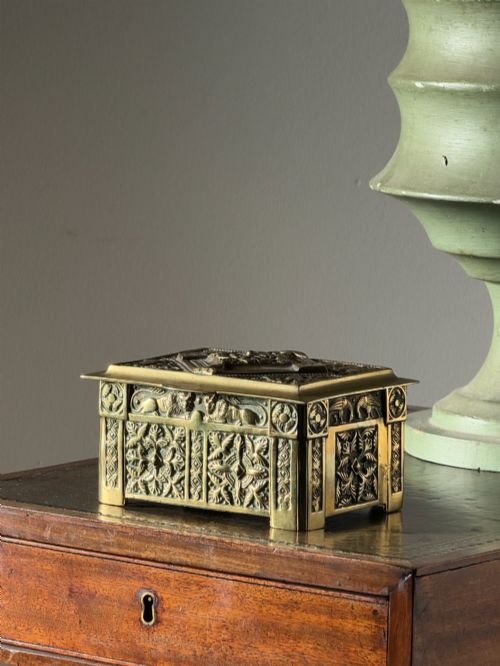
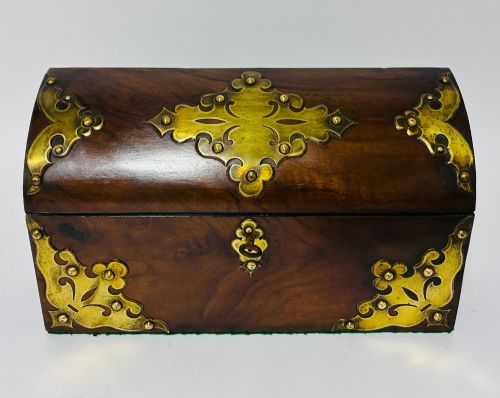
A gothic revival jewellery box draws upon medieval architectural motifs such as pointed arches, heavy brass mounts, and domed lids. These items serve both decorative and practical functions for storing valuables.
The pieces encountered on this page originate from periods such as the Victorian era and the early twentieth century, spanning styles from strict Gothic Revival to Arts and Crafts. Forms include dome top boxes, caskets, and table cabinets.
Materials range from burr walnut and mahogany to steel, brass, and enamel. Scottish and German origins appear alongside standard Victorian British examples.
How they were made
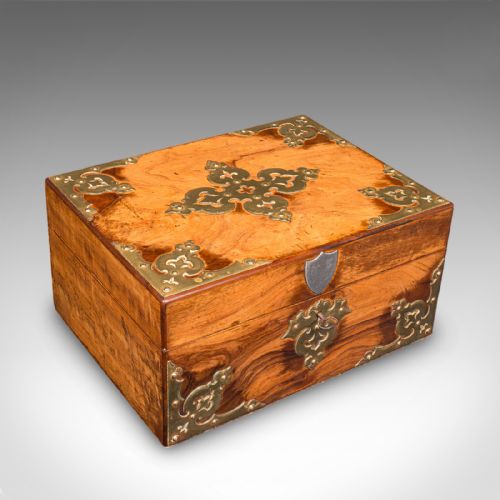
Construction relies upon dense hardwoods like walnut and mahogany, often selected for dramatic grain patterns such as burr and burl figure. These timbers provide a sturdy carcass suitable for housing delicate compartments.
Metalwork forms a defining characteristic, utilising brass mounts, beaten and rivetted steel, and cast metal. Enamel and malachite details frequently provide colour contrast against the dark wood and polished metal.
Gothic Revival Jewellery Box Retail Price Guide 2026
Typical asking prices for gothic revival jewellery box among the pieces listed under this phrase on Sellingantiques today, from the lower quarter to the upper quarter. They describe what is for sale here now, not the wider market.
Current listings feature items from the Victorian, Edwardian, and 1920s periods, utilising brass, burr walnut, mahogany, steel, and enamel.
What varies in quality
Quality depends upon the integration of architectural hardware and the selection of timber figure. Superior examples feature heavy cast or rivetted metalwork that complements the proportions of the wooden box.
The choice of secondary materials marks the upper tier of production, particularly when cloisonné enamel or malachite inlays are incorporated. Finer pieces demonstrate meticulous attention to the alignment of brass bindings and hinges.
The Gothic Revival Jewellery Box Glossary
- Gothic Revival
- A design movement reviving medieval architectural elements such as lancet windows, pointed arches, and heavy iron or brass fittings. It dominated nineteenth-century decorative arts.
- Burr Walnut
- A timber harvested from the warted excrescences of walnut trees, prized for its swirling, highly figured grain patterns. It provides a luxurious surface texture on Victorian boxes.
- Cloisonné Enamel
- A technique where vitreous enamel is applied to compartments separated by metal strips on a metal base. This adds vibrant colour and intricate detail to metal caskets.
- Table Cabinet
- A small freestanding cabinet designed for tabletop placement, offering multiple internal drawers or compartments for storage. These pieces bridge the gap between portable boxes and larger furniture.
- Casket
- A decorative box or chest traditionally used for holding jewels, relics, or documents. In revival styles, they mimic medieval church chests on a domestic scale.
Gothic Revival Jewellery Box: Frequently Asked Questions
What periods do these boxes come from?
The selection spans the nineteenth and early twentieth centuries, with a strong representation of Victorian and Edwardian examples. Dates range from the early 1800s through to the 1920s.
Production methods shifted slightly over this timeframe, moving from heavy nineteenth-century brass-bound timbers toward the beaten steel and enamel work associated with the Arts and Crafts movement.
What materials were used?
Builders relied primarily on hardwoods like walnut, burr walnut, and mahogany for the main body of the boxes. These were frequently enhanced with secondary decorative elements.
Metal components feature prominently, utilising brass, iron, steel, and cast metal. Inlays of malachite and panels of cloisonné enamel appear on more decorative pieces.
How were these boxes used?
These containers served to safeguard jewellery, sewing implements, games pieces, and personal documents. Their decorative exterior made them suitable for display on tables and cabinets in Victorian interiors.
Larger versions functioned as workboxes or table cabinets, containing internal trays and compartments designed to organise specific domestic paraphernalia.
How do I spot a Gothic Revival piece?
Look for architectural references drawn from medieval buildings, such as domed lids reminiscent of church roofs, pointed arches, and strapwork hinges. Heavy metal mounts are typical.
Materials like brass-bound walnut and rivetted steel reinforce the medieval aesthetic, distinguishing these items from simpler classical or Georgian furniture forms.