





Victorian Brass Bound Casket
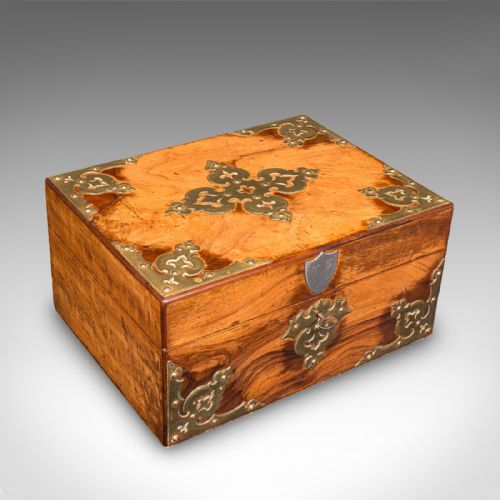
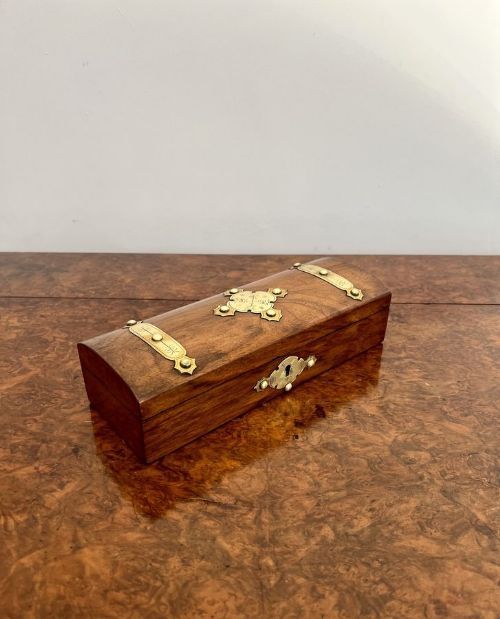
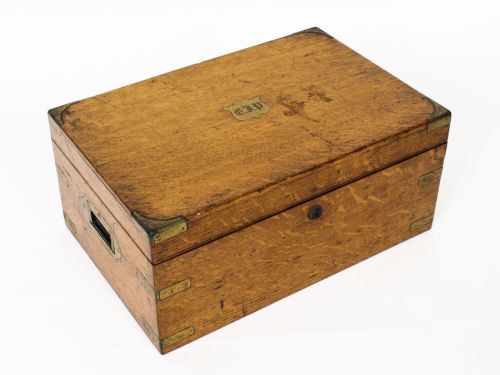
These nineteenth-century pieces of a victorian brass bound casket are robust containers strengthened with metal corners and straps to protect valuables during travel or daily use.
Victorian Brass Bound Casket
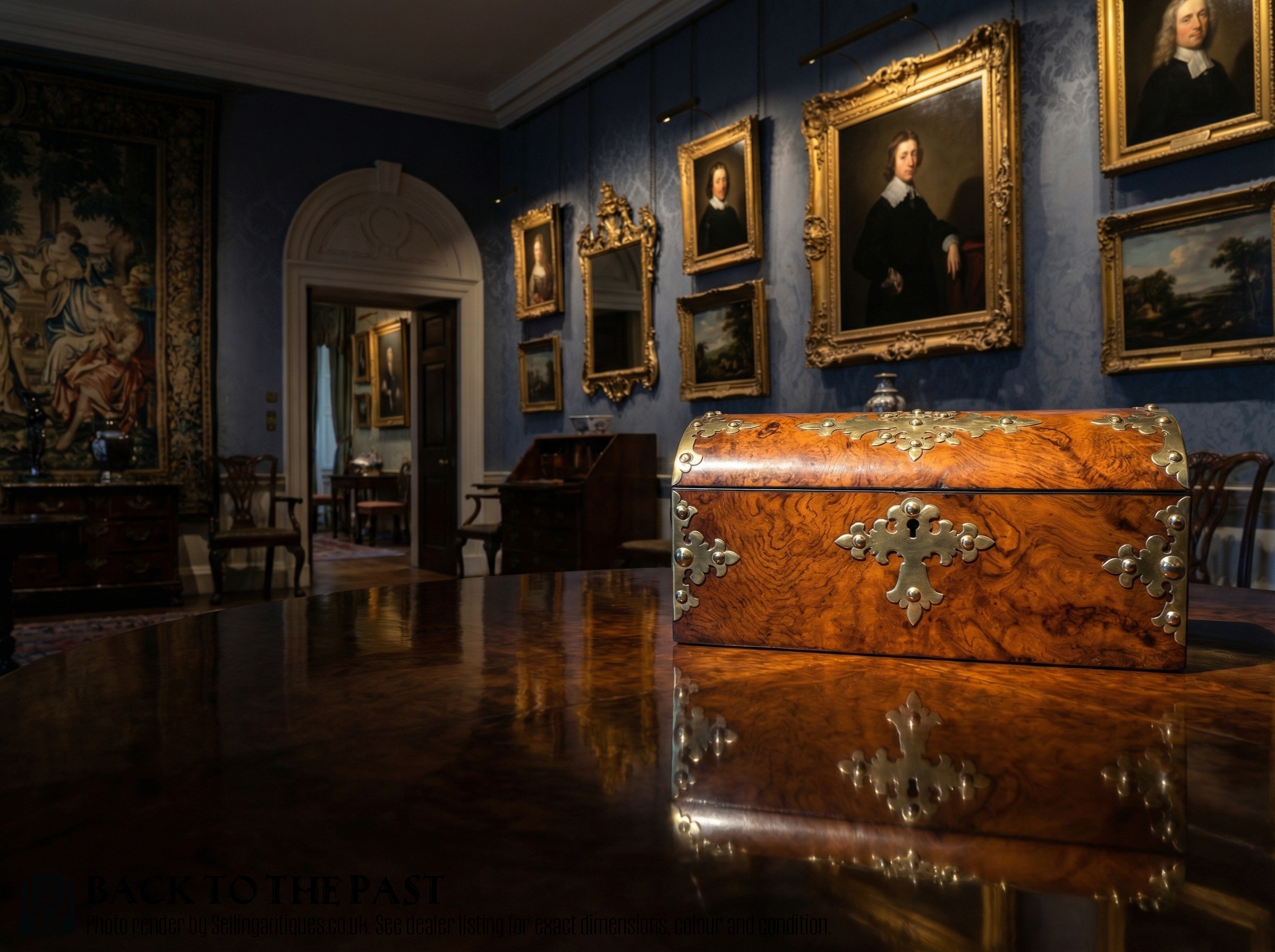
When you examine a victorian brass bound casket, you are looking at nineteenth-century containers built to hold stationery, letters, jewellery, and games.
The versions most commonly met on this page span the Victorian era, including specific forms like glove boxes, stationery boxes, and games boxes.
Makers constructed these sturdy boxes from dense timbers, mounting them with heavy brass strapwork and protective corner brackets to withstand regular handling.
How they were made
Cabinetmakers constructed the carcass from hardwoods such as walnut, oak, and rosewood, often applying decorative veneers like burr walnut or coromandel to the exterior surfaces.
Craftspeople integrated heavy brass banding, corner pieces, and escutcheons into the timber, securing them with small flush-fitting screws to reinforce the structure.
Interiors frequently featured fitted compartments lined in velvet, silk, or leather, designed to hold specific items neatly in place.
Listings feature nineteen-century periods including the 1850s, 1860s, 1880s, and 1900, alongside Victorian and Gothic Revival styles.
What varies in quality
The distinction between ordinary production and finer work rests on the selection of timber veneers and the precision of the brass inlay.
Superior examples display harmonious grain patterns across burr walnut or coromandel surfaces, combined with hand-cut dovetail joints and substantial brass mounts.
The complexity of the internal fittings, such as secret drawers, removable trays, and integrated lock mechanisms signed by known makers, elevates the standing of a piece.
George Betjemann·C.G. Hope Hastings·Pugin
The Victorian Brass Bound Casket Glossary
- Brass bound
- A method of reinforcing box edges and corners with fitted metal strips to prevent splitting and wear. This technique provides both structural strength and visual contrast against the dark timber.
- Coromandel
- A dense, heavy timber imported from Asia, characterised by dark brown colouring with dramatic contrasting stripes. Cabinetmakers valued it for high-status luxury boxes.
- Burr walnut
- Wood taken from the growth excrescences on walnut trees, showing swirling, intricate grain patterns. It was sliced into thin veneers for decorative box lids and panels.
- Escutcheon
- A protective plate surrounding a keyhole, usually made of brass on these boxes. It prevents the timber around the lock from splitting during use.
- Pietra dura
- An artistic technique involving the inlay of cut and fitted polished coloured stones to create pictures or geometric designs. Examples occasionally appear inset into box lids.
- Gothic revival
- An architectural and decorative style drawing inspiration from medieval forms, featuring pointed arches and heavy mouldings. This style appears on specialised workboxes and despatch boxes.
Victorian Brass Bound Casket: Frequently Asked Questions
What were these boxes used for?
These containers served specific domestic and travel functions, holding writing paper, envelopes, jewellery, and small valuables securely.
Fitted interiors often included trays and compartments tailored for particular items like gloves, playing cards, or glass decanters.
How should I clean the brass mounts?
Wipe the metal gently with a soft cloth to remove dust without disturbing the surrounding wood.
Avoid harsh chemical polishes that might stain or damage the aged timber grain adjacent to the brass.
Were these items meant for travel?
Many of these pieces functioned as portable containers designed to protect personal belongings during journeys.
The heavy brass binding and secure locks were specifically engineered to withstand the rigours of nineteenth-century transport.