

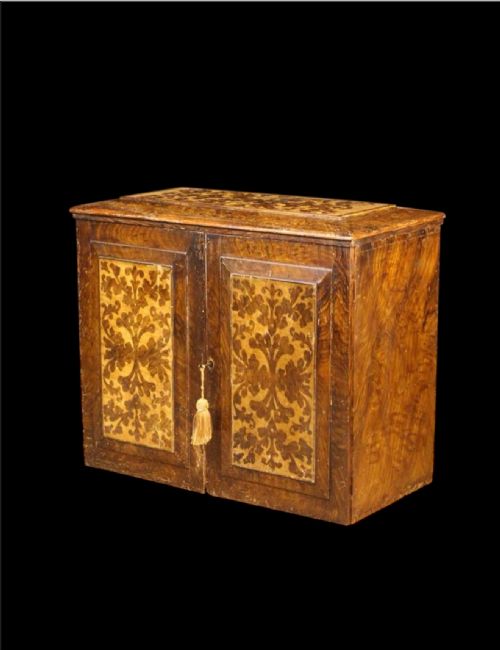


Victorian Inlaid Jewellery Chest
A victorian inlaid jewellery chest provides secure storage for precious trinkets while doubling as a decorative tabletop cabinet.
Victorian Inlaid Jewellery Chest
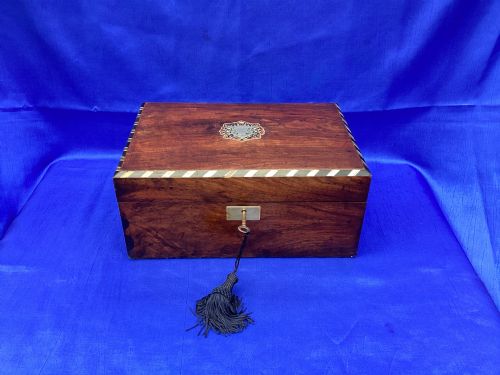
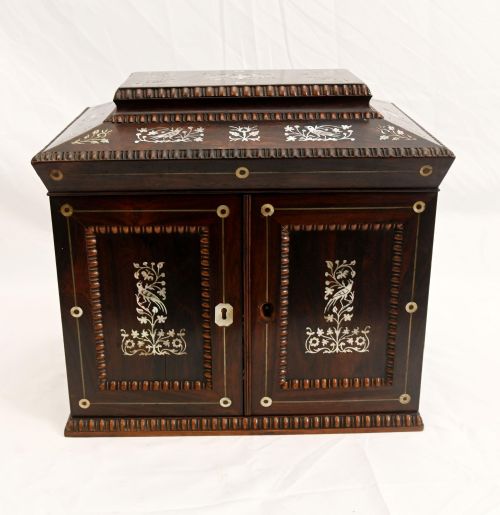
A victorian inlaid jewellery chest spans multiple forms, ranging from miniature chests of drawers and collectors cabinets to fitted table top boxes and caskets. These pieces date across the nineteenth century, including specific years such as eighteen fifty, eighteen sixty, eighteen eighty, and eighteen ninety.
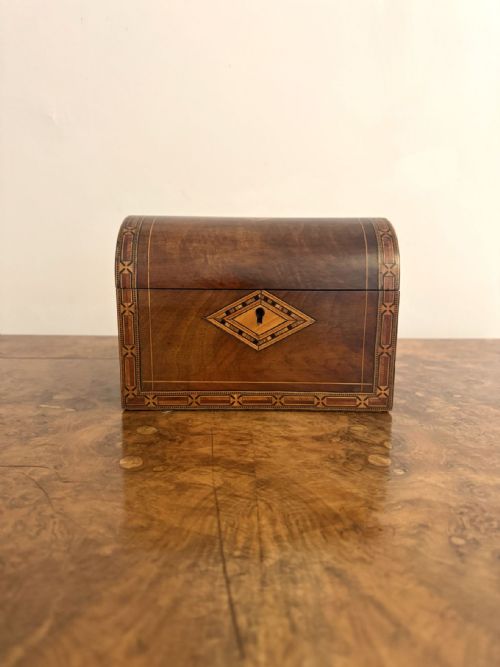
Origins stretch beyond standard British Victorian workshop production to include regional specialisms like Tunbridge ware and Sorrento ware. Buyers encounter various styles including Georgian Revival, Regency, and nineteenth century Italian examples.
Materials and technique
Cabinet makers utilised dense hardwoods such as rosewood, walnut, mahogany, coromandel, and oak as the foundational structure for these chests. Surfaces were frequently decorated with elaborate wood inlay, parquetry, or marquetry patterns.
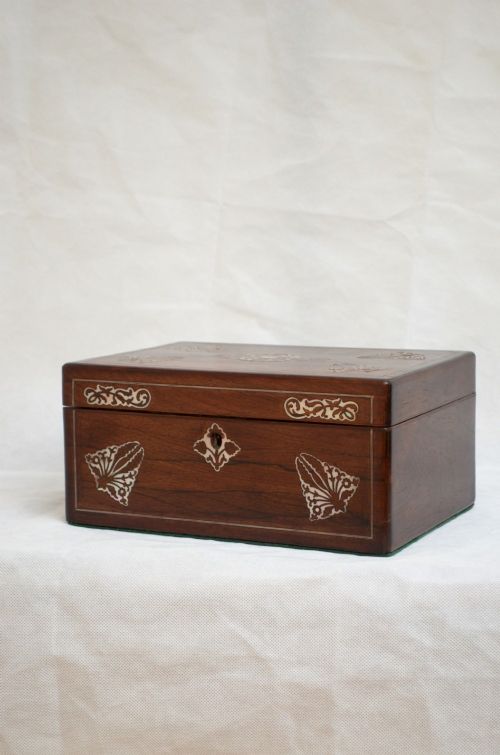
Inlays incorporated contrasting materials including mother of pearl, boxwood, and brass stringing to create geometric or pictorial designs. Many pieces integrated specialised techniques such as Tunbridge mosaic work or Sorrento wood inlay.
Interiors typically featured fitted trays, compartments, and linings designed to organise rings, watches, and trinkets. Exterior hardware often included brass escutcheons, hinges, and lock mechanisms.
Miniature chests were often built by apprentices to demonstrate mastery before joining the guild.
Craftsmanship and distinction
The precision of the wood inlay and parquetry work dictates the visual distinction of a piece, separating basic surface decoration from intricate mosaic or pictorial craftsmanship. Artisans who aligned contrasting woods with exact tolerances achieved superior decorative results.
Internal complexity and the preservation of original fitted trays, compartments, and linings elevate a chest's standing. Cabinets featuring multi drawer configurations or specialised compartments demonstrate greater original ambition from the maker.
The choice of primary timber, from standard mahogany to figured burr walnut, rosewood, and coromandel, influences the character of the piece. Superior examples maintain crisp detailing in brass stringing and mother of pearl elements without heavy restoration.
Edwards & Roberts
The Victorian Inlaid Jewellery Chest Glossary
- Tunbridge Ware
- Woodware decorated with tiny mosaic tesserae to form pictorial or geometric motifs. This technique originated in Kent during the nineteenth century.
- Marquetry
- Decorative veneer applied to furniture in patterns using different woods, metals, or shells. It creates detailed pictorial scenes on box lids and cabinet doors.
- Parquetry
- Geometric mosaic woodwork formed by fitting together small blocks or strips of veneer. It frequently appears on nineteenth century tabletop boxes and tea caddies.
- Mother of Pearl
- Iridescent inner layer of mollusc shell used for inlaid accents on boxes and cabinets. It provides contrasting white and shimmering highlights against dark rosewood.
Victorian Inlaid Jewellery Chest: Frequently Asked Questions
How do I care for a Victorian wood inlaid box?
Keep the wood conditioned using a suitable paste wax and apply it sparingly to maintain the natural moisture of the timber. Avoid placing the box in direct sunlight or near heat sources, which can cause the veneer or delicate inlay to warp and lift.
Protect mother of pearl and brass elements by dusting them gently with a dry, soft cloth. Excessive moisture can damage older paper or fabric linings, so interior cleaning should remain strictly surface-level.
What materials were used for nineteenth century box inlays?
Cabinet makers incorporated a variety of contrasting materials to ornament the exterior surfaces of these chests. Mother of pearl provided shimmering white accents, while brass stringing added fine linear definition to the wood.
Boxwood and various dyed woods were utilised in Tunbridge and Sorrento pieces to build up complex geometric or pictorial mosaics. Rosewood, walnut, and mahogany served as the primary contrasting ground timbers.
How can I tell a miniature chest from a full size cabinet?
Miniature chests and table cabinets are scaled down specifically to sit upon desks, dressing tables, or sideboards. They replicate the full proportion of larger furniture but remain compact enough for portable use.
These pieces typically feature small working drawers designed for trinkets rather than garments. Their hardware, locks, and handles are correspondingly reduced in size while retaining functional integrity.