
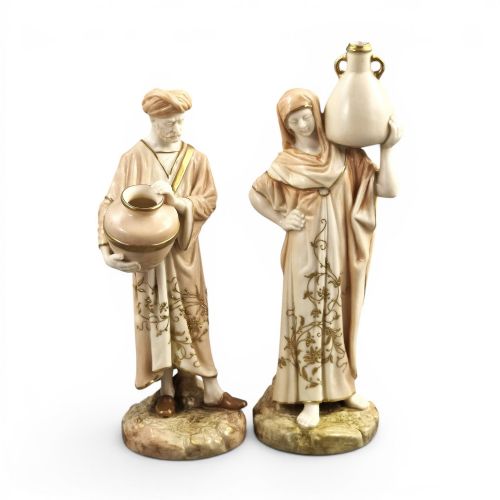


Blush Ivory Figures
Blush ivory figures are porcelain figurines and candlesticks finished in a soft, matte cream glaze, prized by collectors for their delicate tinted details and classical or orientalist subjects.
Blush Ivory Figures
Blush ivory figures encompass porcelain figurines, decorative statuettes, candlesticks, and candelabra produced primarily during the Victorian and Edwardian eras. These pieces take the form of human subjects, including classical maidens, dancers, musicians, and orientalist figures such as water carriers and musicians.
The objects span late nineteenth-century Victorian work through to pieces made in the 1920s and 1930s. Makers combine the signature soft glaze with sculptural forms that range from single decorative statuettes to matched pairs of candelabra mounted on circular rustic bases.
How they were made
The foundational material is porcelain, shaped into intricate human figures and functional candle holders using detailed moulding and modelling techniques. Artisans apply a specialised blush ivory glaze to create the characteristic matte, cream-toned surface.
Makers enhance the porcelain bodies with enamel, gold leaf, gilding, and gilt highlights. These metallic additions accent the robes, bases, and decorative elements of the figurines and candelabra.
The selection includes notable sculptural forms ranging from dancing women and musicians to satyrs and snake charmers.
What varies in quality
Scale and complexity also distinguish the range, moving from standard single figures to large pairs of candelabra and multi-figure groups mounted on specialised rustic bases.
Royal Worcester·James Hadley·Royal Dux
The Blush Ivory Figures Glossary
- Blush ivory glaze
- A matte, cream-coloured porcelain finish. It provides a soft, warm background for hand-painted enamel and gilded details.
- Gilt
- A thin layer of gold applied to the porcelain surface. It highlights specific design elements such as jewellery, trim, and base details.
- Candelabra
- A branched candlestick holder designed to hold multiple candles. These pieces often feature sculptural figures integrated into the central column or base.
- Orientalist
- An artistic style depicting themes and subjects from Middle Eastern and Asian cultures. It appears in figures representing water carriers and craftsmen.
- Neoclassical revival
- An artistic movement drawing inspiration from the classical art and culture of ancient Greece and Rome. This influence appears in figures of Grecian maidens.
Blush Ivory Figures: Frequently Asked Questions
What periods do blush ivory figures cover?
These pieces date primarily from the nineteenth century, the Victorian era, and the early twentieth century up to the 1930s. The largest concentration of examples originates from the late Victorian and Edwardian periods.
Production spans several decades of refined ceramic manufacture, reflecting changing stylistic influences from classical revival to art nouveau.
How do I identify a Hadley piece?
James Hadley worked closely with Royal Worcester, designing complex figurative models such as water carriers, musicians, and satyrs. His work is often identified through specific pattern numbers and distinct sculptural character.
Many pieces associated with his output carry specific signatures or mark variations from the late nineteenth century.
Were these figures purely decorative?
While many examples are standalone figurines and statuettes intended for display, others serve a dual purpose. Items include functional candlesticks and candelabra designed to light rooms while featuring detailed porcelain figures.
Large pairs were frequently produced to anchor mantelpieces or grand sideboards in period interiors.
What subjects are most common?
The subject matter draws heavily on classical antiquity and nineteenth-century orientalism. Common motifs include Grecian maidens, dancers, satyrs with staffs, and figures engaged in traditional crafts.
More elaborate models depict named characters and scenes, such as Egyptian musicians and trinket makers.