


Blue Water Landscape Painting
Blue water landscape painting captures rivers, lakes and coastlines in oil or watercolour across the nineteenth and twentieth centuries.
Blue Water Landscape Painting
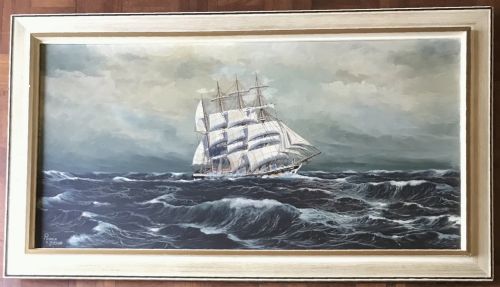
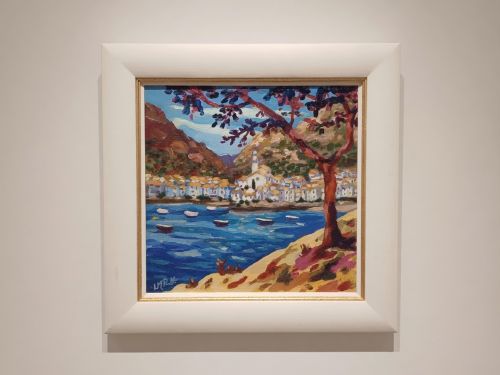
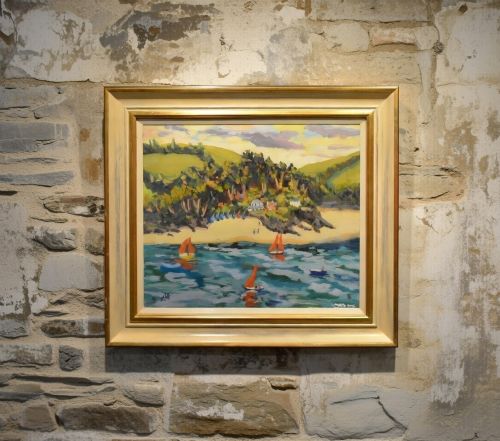
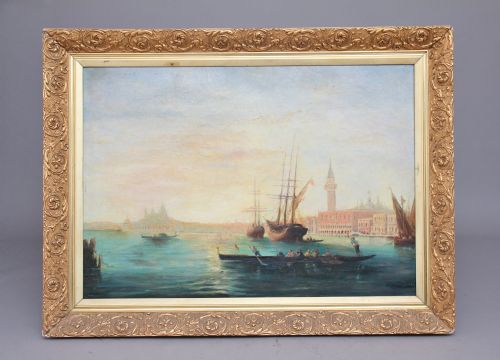
A blue water landscape painting brings together rivers, lakes, canals and coastal scenes rendered in oil and watercolour. These works span from nineteenth-century Victorian marine art and French impressionism through to the Edwardian era and contemporary pieces.
The most common examples on this page are oil paintings on canvas and panel alongside delicate watercolours on paper. Subjects range from Venetian lagoons and the Seine to British rivers and Welsh watersides.
Materials and methods
Artists relied primarily on oil paint on canvas or panel, and watercolour applied to paper, capturing light and atmosphere en plein air or in the studio. Gesso frames often complemented the finished works, while wood and glass provided further structural support and protection.
Techniques varied from the precise detail of Victorian marine art to the loose, visible brushwork characteristic of French and Italian impressionism.
A donkey once stood quietly by a Welsh waterside, faithfully preserved in watercolour for future generations to admire.
Markers of quality
Quality rests in the handling of light on water and the confidence of the brushwork, distinguishing atmospheric compositions from rigid interpretations. The sensitivity of the palette and the fidelity of the rendering determine the distinction between ordinary topographical records and accomplished artistic expressions.
William Frederick Settle·Arthur Reginald Smith·Armand Guillaumin·Edith E Caswall·William Knox·Arthur Joseph Meadows·Tom Dudley·Yves Brayer·Adolphe Gumery·Owen Bowen·Charles Clement Calderon
The Blue Water Landscape Painting Glossary
- Watercolour
- A painting method where paints are made of pigments suspended in a water-based solution. Paper serves as the standard support for these translucent washes.
- Oil on canvas
- A traditional medium utilising pigments bound in a drying oil, applied to a stretched cloth support. This technique allows for rich texture and deep colour saturation.
- Plein air
- The act of painting outdoors to directly capture the transient effects of light and weather upon a landscape. This approach defined much of nineteenth-century French impressionism.
- Gesso
- A plaster-like mixture applied to wood or canvas to prepare a rigid surface for painting or to coat picture frames. It provides a smooth, absorbent base.
Blue Water Landscape Painting: Frequently Asked Questions
What periods do these paintings cover?
The works span from the nineteenth century through the Edwardian period and up to contemporary modern art.
Key movements represented include Victorian marine art and French and Italian impressionism.
Are these paintings supplied with frames?
Many works are presented in period frames, often finished with gesso or constructed from wood to complement the artwork.
Framing details vary considerably between individual pieces and dealers.
What surfaces were used by the artists?
Artists utilised paper for delicate watercolours and canvas or wood panels for oil paintings.
These varied supports directly influenced the texture and final character of each landscape.
Where do the landscape scenes originate?
The geographical scope includes Venetian canals, French rivers, the Mediterranean, and British coastal and rural watersides.
Both domestic and continental views appear frequently across the selection.