


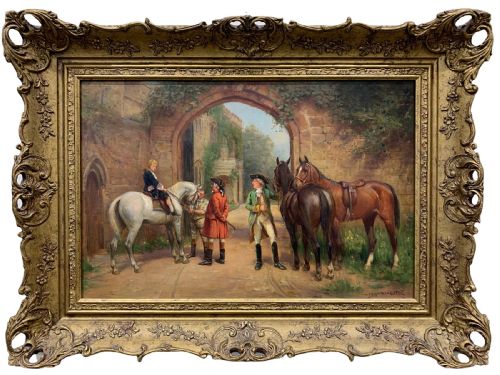


Antique Estate Artwork
These antique estate artwork pieces capture historic country houses, grand horses, and noble landscapes, offering a direct window into bygone domestic grandeur.
Antique Estate Artwork
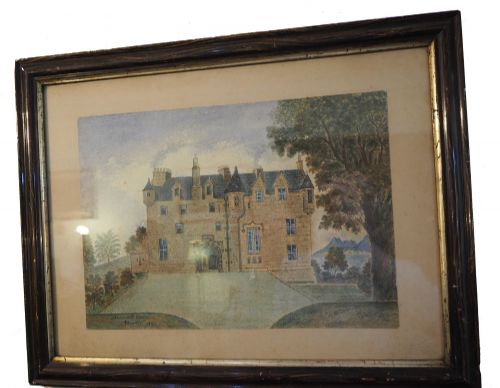
When you search for antique estate artwork, you are looking at visual records of historic properties, country seats, and sporting life produced across several centuries. The pieces on this page span from the eighteenth century through the Edwardian period, capturing notable British and European country houses, castles, and their surrounding parklands. You will encounter oil paintings on canvas alongside watercolours, drawings, engravings, and coloured lithographs depicting named locations such as Newstead Abbey, Trentham Hall, and Arundel Castle.
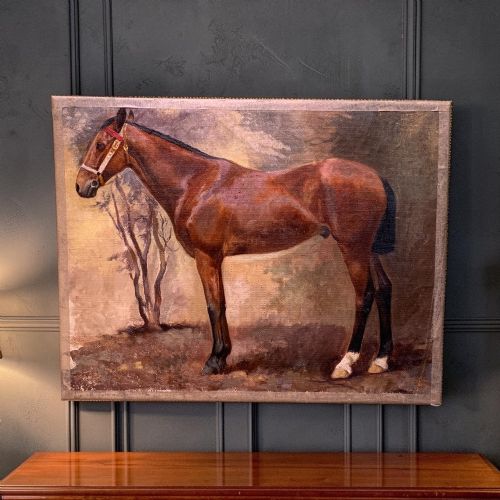
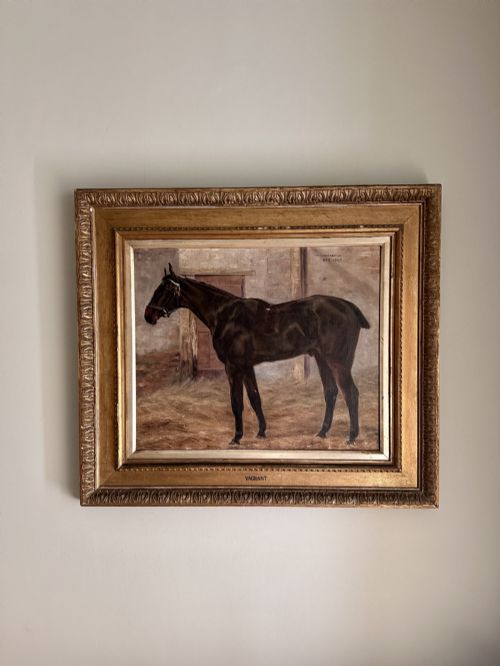
The subjects naturally divide between architectural portraiture of stately homes and the equestrian or sporting life associated with landed estates. Many canvases and works on paper record specific horse portraits, hunt stables, and carriage processions situated before classical facades and ornamental lakes. These works range from intimate watercolours to large oil paintings executed by named artists and regional schools working within Georgian, Regency, Victorian, and Edwardian aesthetic traditions.
How they were made
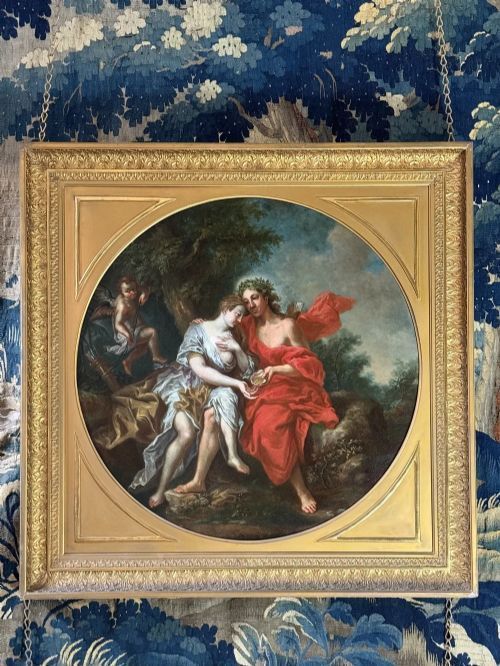
The physical backbone of these works relies upon traditional oil paint applied to woven canvas, alongside watercolours and monochrome inks worked onto paper supports. Artists built up their compositions using layered pigments that capture the play of light across stone facades, rolling parklands, and the glossy coats of horses. Engravings and lithographs utilise inked plates and stones to multiply detailed topographical views of country seats for contemporary patrons.
Traditional timber frames, often finished in giltwood or gilded wood, encase these paintings and prints to protect the edges of the canvas and paper. The construction of the supporting stretchers and frames typically reflects the period of the artwork, utilising hand-joined wood secured with traditional fixings rather than modern metal brackets.
Listings featuring antique estate artwork span the 18th Century, Victorian, Regency, and Edwardian periods, utilising oil paint, canvas, paper, and giltwood.
What varies in quality
The distinction between ordinary and exceptional estate artwork rests upon the precision of the draughtsmanship and the artist's command of light and atmosphere. Superior works capture the precise architectural details of a country house and the correct anatomy of horses with confident, fluid brushwork rather than stiff, mechanical rendering. Weaker examples often rely on formulaic foliage and generic backgrounds that lack the specific topographical identity found in works by accomplished painters.
Provenance and documentation heavily influence the standing of a piece within this category. Paintings that retain clear historical connections to named estates, recorded sitters, or established artists command greater interest from collectors. The integrity of the original surface, free from heavy overpainting or aggressive conservation, preserves the artist's original touch and tonal balance.
Charles-Antoine Coypel·Fred Fitzpatrick·Clifton Tomson·Samuel Sidley·James Canter·C de Falens·John Sanderson Wells·Robert Thomas Buttery·Fred Merriman·Peter Tillemans·Martin Pierre Denis·Henri Harpignies
The Antique Estate Artwork Glossary
- Estate artwork
- Visual depictions of country houses, noble seats, landed properties, and their associated sporting or agricultural activities. These pieces serve as historical documents of domestic architecture and landscape design.
- Giltwood
- Timber carved and coated with a thin layer of gold leaf or metal powder. This material is standard for framing grand domestic paintings from the eighteenth and nineteenth centuries.
- Lithograph
- A print made from a design drawn on limestone or a metal plate with a greasy crayon, allowing the transfer of detailed topographical views onto paper. This technique became common for reproducing architectural scenes in the nineteenth century.
- Provenance
- The documented history of ownership of a work of art from its creation to the present day. Clear provenance links a painting directly to the estate or family depicted.
- Topographical art
- Accurate visual representation of actual places, buildings, and landscapes. In estate artwork, this ensures the precise recording of historic country seats and gardens.
Antique Estate Artwork: Frequently Asked Questions
What is antique estate artwork?
Estate artwork comprises paintings, watercolours, and prints that record historic country houses, castles, and the landed estates surrounding them. They serve as both fine art and historical documentation of domestic British and European architecture.
These pieces frequently feature equestrian subjects, hunt stables, and family seats commissioned by the owners of the properties. They range from large oil canvases to modest topographical watercolours created over the course of three centuries.
How were these paintings displayed?
Historically, these works hung within the very country houses and ancestral seats they depict, forming part of a family's collection of portraits and topographical views. They were positioned in reception rooms, libraries, and long galleries alongside furnishings of the same period.
Today, buyers place them in domestic interiors to add historic character and a connection to traditional country house aesthetics. They pair naturally with period furniture, neutral walls, and traditional wood panelling.
How do I date an estate painting?
Dating relies upon stylistic clues within the architecture, the clothing of figures or grooms, and the techniques used in the canvas preparation and framing. Architectural alterations visible in the background often provide a reliable terminus post quem for the depiction.
Signatures, artist dates, and contemporary inscriptions on the reverse of the canvas or stretcher offer direct evidence of creation. Historical records of the estate depicted help narrow the window of execution.
Are these works always signed by the artist?
Many estate paintings and watercolours remain unsigned because they were commissioned as topographical records rather than gallery pieces by the families who owned the land. Anonymous works of high artistic quality were frequently produced by regional schools or visiting jobbing artists.
Attributions are often made by comparing the brushwork, handling of landscape, and architectural rendering to documented works by known painters. Archival records and estate inventories sometimes supply the missing name of the artist.