
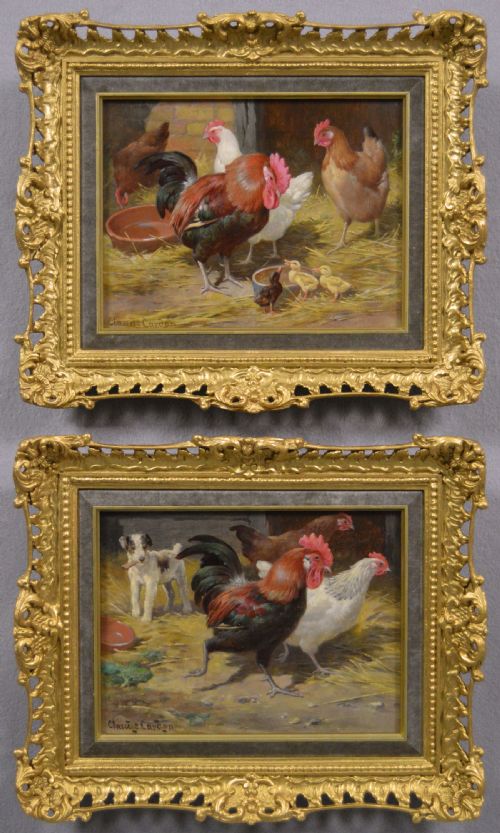
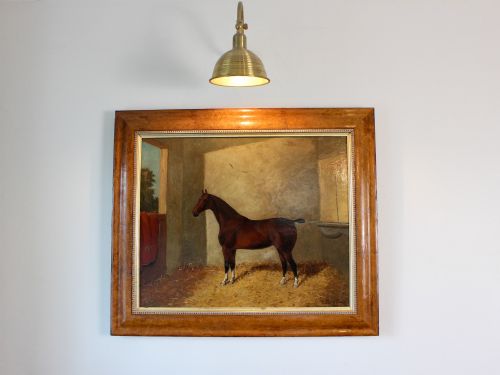


Edwardian Country House Picture
An edwardian country house picture brings domestic estate life, sporting pursuits and pastoral calm straight to your walls through period oil paint and watercolour.
Edwardian Country House Picture
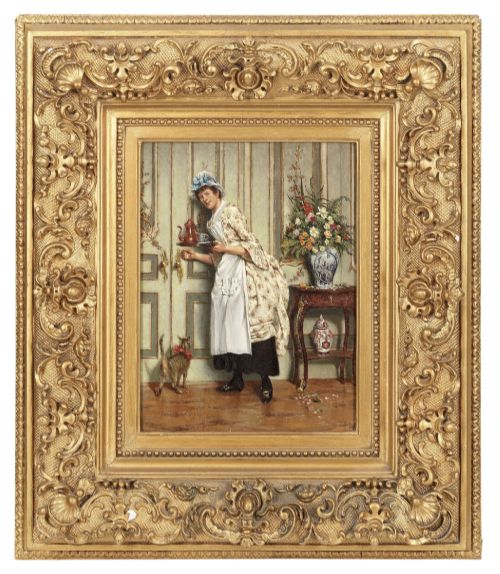
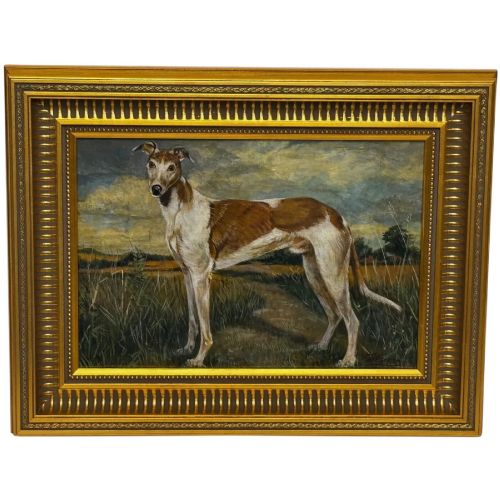
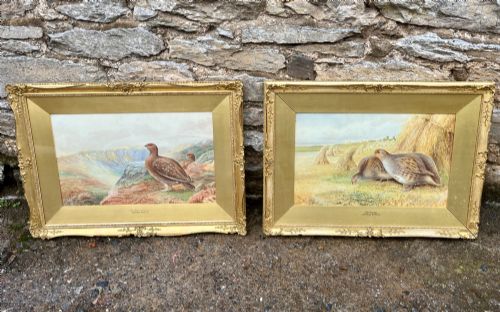
An edwardian country house picture captures the aesthetic and atmosphere of large British estates, ranging from interior drawing rooms to surrounding parklands and sporting scenes. You will frequently encounter oils on canvas and watercolours depicting domestic interiors, sporting dogs, racehorses and rural landscapes.
The pieces on this page span the late nineteenth century through to the interwar decades, reflecting both Victorian realism and Edwardian pastoral sensibilities. Framed paintings and prints dominate, often bearing the signatures of named British artists recording the leisure and livestock of the period.
Materials and Method
Artists of this era applied oil paint or watercolour onto prepared canvas, paper and wooden supports to achieve depth of light and naturalistic detail. Many works remain housed within their original giltwood or moulded wooden frames, preserving the integrity of the piece.
Printmakers utilised paper to produce detailed monochrome and tinted impressions, sometimes enhanced with embossing to add texture. The combination of durable canvas and quality wood ensured these works survived generations of domestic display.
Listings feature works spanning from the late nineteenth century through to the 1940s, executed in oil, watercolour, and print media on paper and canvas.
Assessing Quality and Execution
Superior examples demonstrate confident brushwork and precise anatomical or architectural rendering, whether depicting a racehorse or a stately drawing room interior. The artist's ability to capture natural light and atmospheric depth distinguishes the finest oils and watercolours from simpler decorative output.
The preservation of the original surface, alongside an appropriate period frame, contributes significantly to the integrity of the work. Evidence of a known hand or documented exhibition history elevates the piece above standard topographical records.
Stephen Samuel Lewin·George Rankin·Claude Cardon·Henry John Yeend King·Rowland Henry Hill·Alfred Duke·George Frederick Nicholls·Fred Merriman·Margaret Thompson·Elinor Margaret Charteris·Archibald Thorburn
The Edwardian Country House Picture Glossary
- Oil on Canvas
- Pigments bound in a drying oil applied to stretched woven fabric. This medium allowed artists to build rich textures and deep tones suitable for large interior and landscape scenes.
- Watercolour
- Pigments suspended in a water-based solution applied to paper. It provides translucent washes of colour favoured for delicate architectural studies and garden views.
- Giltwood
- Wood carved and coated with a thin layer of gold leaf or metallic powder. It forms the traditional ornate framing common to nineteenth and early twentieth century fine art.
- Sporting Art
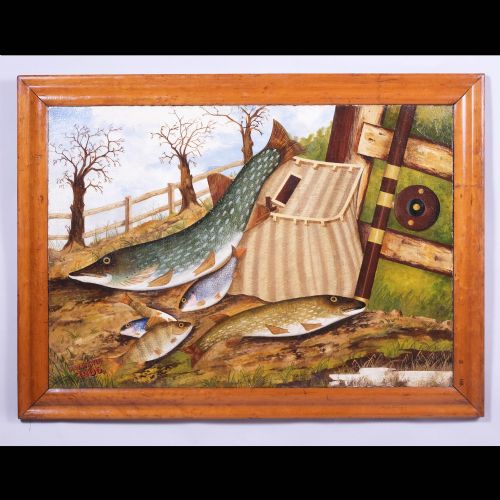
- Depictions of hunting, shooting, fishing and equestrian subjects. This genre flourished in British painting, celebrating estate pursuits and prized animals.
- Genre Painting
- Scenes depicting everyday life and domestic activities. These works often show figures in interiors or rural landscapes rather than formal portraiture.
Edwardian Country House Picture: Frequently Asked Questions
What defines an edwardian country house picture?
These works depict the architecture, interiors, gardens, and sporting life associated with large British country estates during the late nineteenth and early twentieth centuries.
They serve as visual records of domestic spaces, sporting animals, and rural pastimes captured through oil paintings, watercolours, and period prints.
Where were these paintings displayed?
Historically, such artworks hung in the reception rooms, libraries, and drawing rooms of grand houses, reflecting the tastes and pursuits of the owners.
Today, they suit similar domestic settings, bringing traditional British pastoral and interior aesthetics into modern homes.
How do I care for these works?
Keep paintings and watercolours away from direct sunlight and excessive humidity to prevent the fading of pigments and the warping of canvas or paper.
Dust wooden frames gently with a dry cloth and avoid touching the painted surface or paper directly.
How can I tell the period?
Dating relies on artist signatures, exhibition records, framing styles, and the clothing or architecture depicted within the composition.
Listings often combine stylistic analysis with historical dates to place each piece within the late Victorian or Edwardian eras.