



Country House Landscape Art
Country house landscape art brings the character of historic estates and rural scenes directly onto the wall.
Country House Landscape Art
Country house landscape art encompasses oil paintings, watercolours, and drawings depicting rural views, estates, animals, and sporting scenes. These works capture the visual record of British and European countryside life across the eighteenth, nineteenth, and early twentieth centuries.
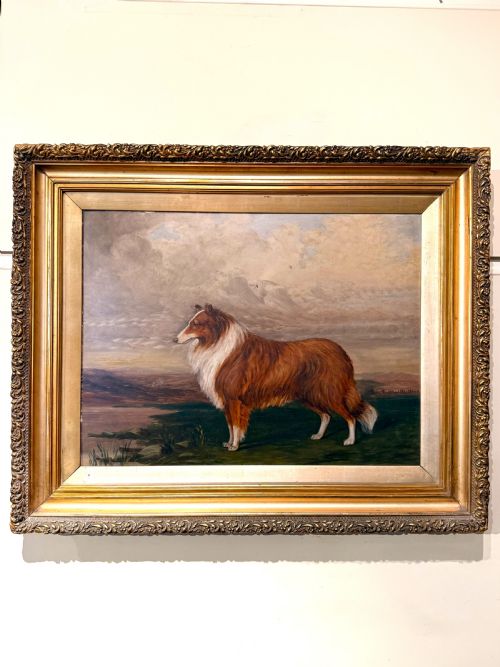
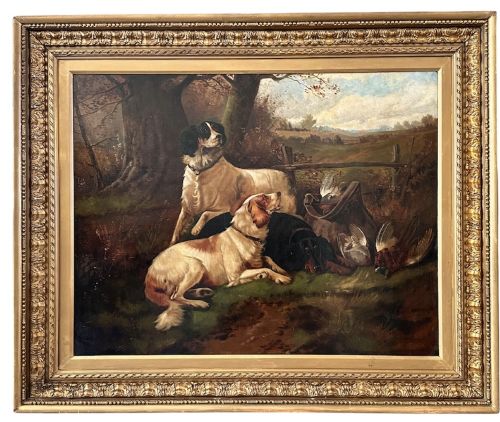
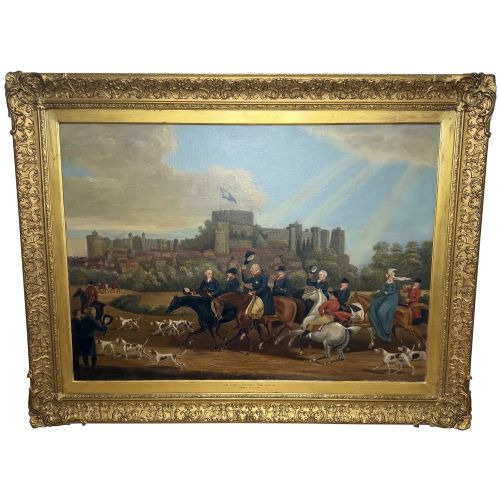
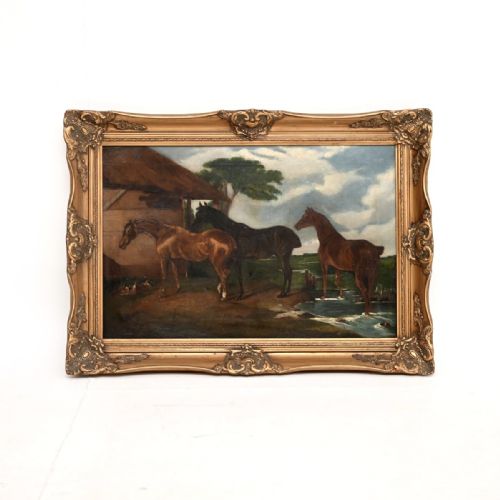
The pieces most frequently met on this page include nineteenth-century oil paintings on canvas or board, featuring farmyard scenes, hunting dogs, and pastoral landscapes. Many examples reflect the Victorian interest in animals, equestrian portraits, and topographical views.
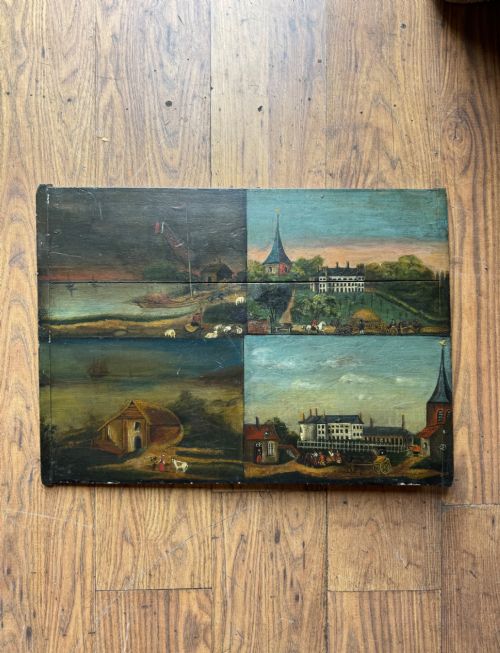
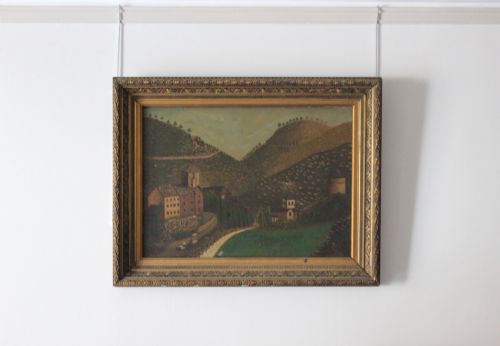
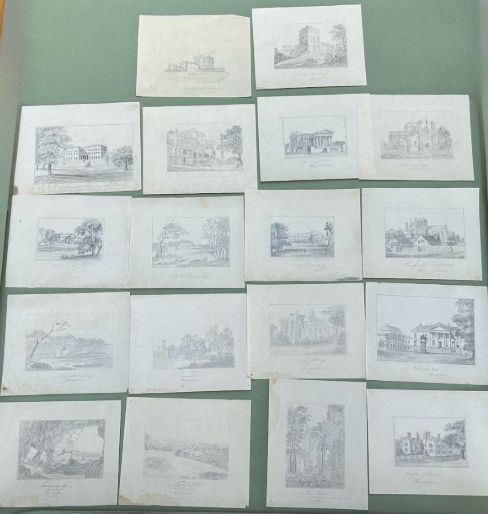
Buyers encounter works ranging from provincial naive folk art to academic paintings by named artists, often housed in period frames of giltwood or gesso. The variety spans peaceful pastures, coastal views, and stately homes with their surrounding grounds.
Materials and methods
Artists painted primarily in oil upon canvas or wooden board, utilising oil paint layered to build depth in fields, animals, and skies. Watercolour and pastel on paper appear in drawings and lighter studies, sometimes accompanied by gouache.
Frames play a structural and aesthetic role, constructed from wood and finished with giltwood or gesso leaf. These frames often match the period of the artwork, providing the formal boundary typical of nineteenth-century presentation.
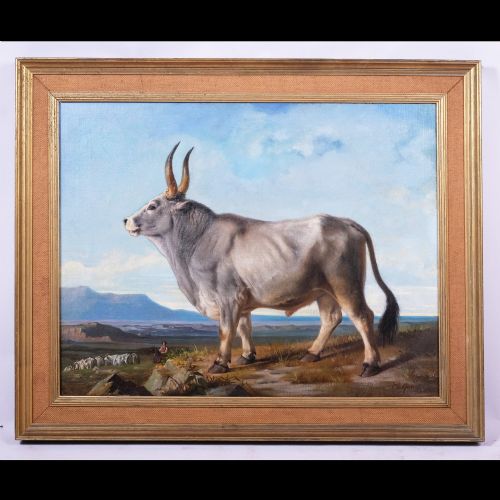
Several canvases record local livestock history with portraits of individual bulls, short horns, and prize horses.
Markers of quality
Quality rests upon the execution of form, particularly in the handling of anatomy for animals and horses, and the perspective within landscape settings. Works by established Victorian painters demonstrate precise brushwork and proportion that distinguish them from simpler provincial pieces.
The preservation of the paint surface and the originality of the frame determine the integrity of the piece. Untouched canvas surfaces and period giltwood frames retain the historical context valued by collectors of rural art.
Thomas Sidney Cooper·John Sargent Noble·Johann Friedrich Voltz·Joseph Knight·A M Gauci·Edgar Woollatt·John Frederick Herring Jnr·Henry John Yeend King·Eugene Verboeckhoven·Philip Henry Rideout·Rowland Henry Hill·George Morland·Colin Graeme Roe·John Alfred Wheeler·Clifton Tomson·Alfred Duke
The Country House Landscape Art Glossary
- Oil on canvas
- Pigment suspended in drying oil applied to a stretched fabric support. This combination provides durability and allows for rich colour blending.
- Giltwood
- Wood carved and coated with gold leaf or metallic powder. It forms the decorative border of traditional frames.
- Naïve art
- Artwork created by an artist without formal academic training, often characterised by flat perspective and direct observation. This style appears frequently in provincial nineteenth-century works.
- Gesso
- A plaster mix applied to wood or canvas as a smooth base for gilding or painting. It provides the white foundation seen beneath many historic frames.
- Topographical painting
- An artwork depicting a specific real location with accurate placement of buildings and terrain. These pieces serve as visual records of historic English properties.
Country House Landscape Art: Frequently Asked Questions
What periods do these paintings date from?
The works span the eighteenth, nineteenth, and early twentieth centuries, with a strong concentration of Victorian and Edwardian pieces.
Dates range from early eighteenth-century naive topographical scenes through to 1910s sporting and landscape watercolours.
Are the frames original to the artwork?
Many pieces retain their period frames, constructed from wood with giltwood or gesso finishes appropriate to the nineteenth century.
Frames often show age-related wear that corresponds to the production era of the canvas inside.
How do I care for an antique oil painting?
Keep paintings away from direct sunlight and sources of extreme temperature fluctuation to protect the oil paint and canvas.
Dust the surface and frame gently with a soft, dry brush without applying liquid cleaners.
What subjects are most common in these landscapes?
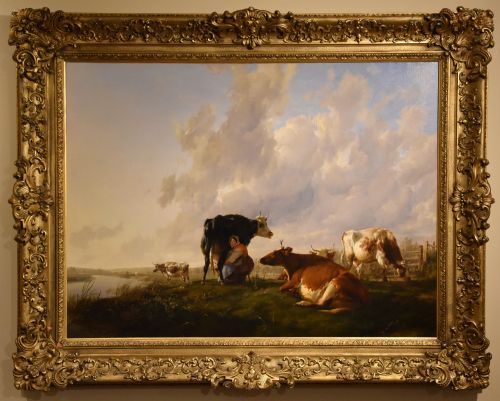
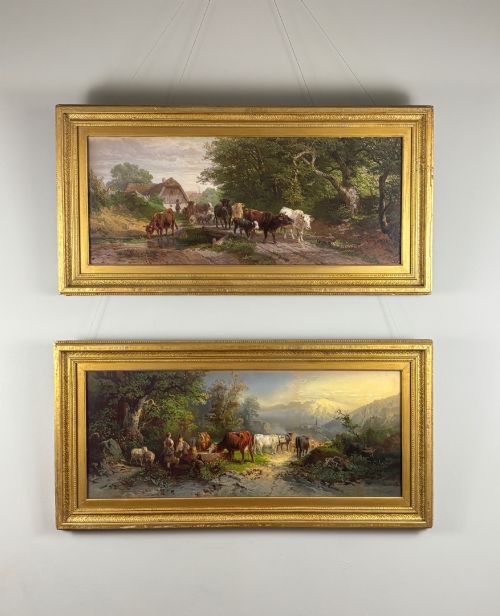
Common subjects include pastoral scenes with cattle or sheep, hunting dogs, equestrian portraits, and views of country houses.
Artists frequently combined domestic animals with the rolling topography of rural estates.