



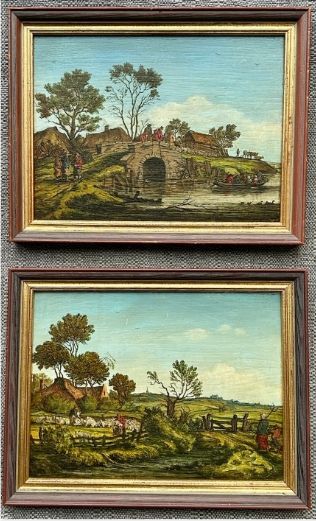
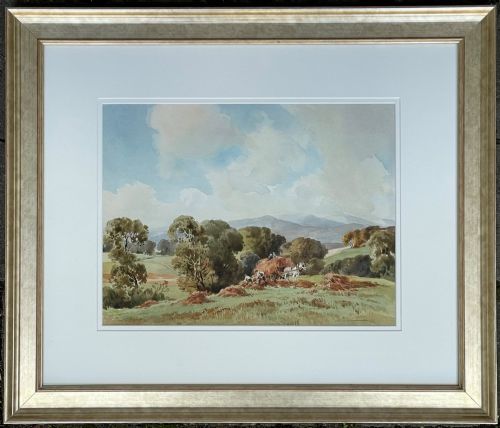
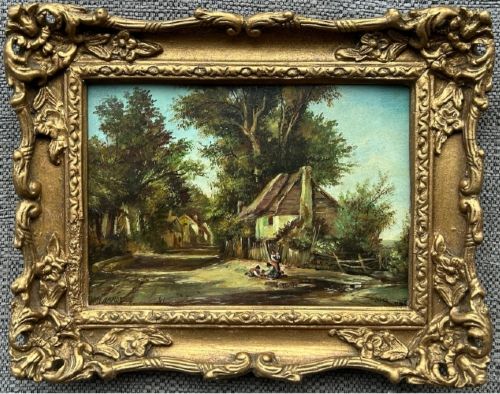
Framed Original Landscape Artwork
Framed original landscape artwork brings the field, river, and coast indoors through authentic 19th-century and mid-century painting.
Framed Original Landscape Artwork
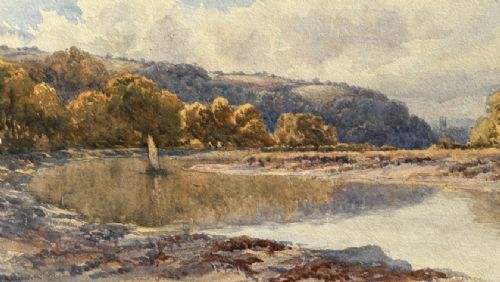
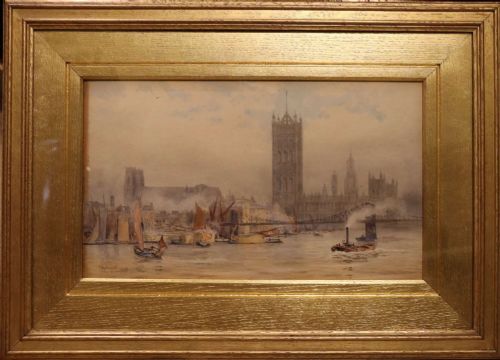
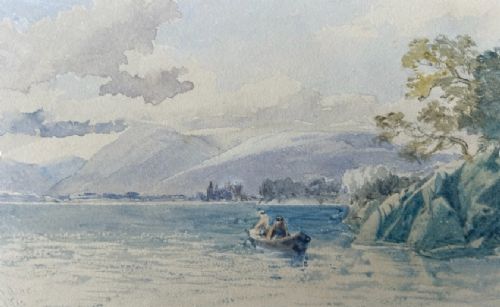
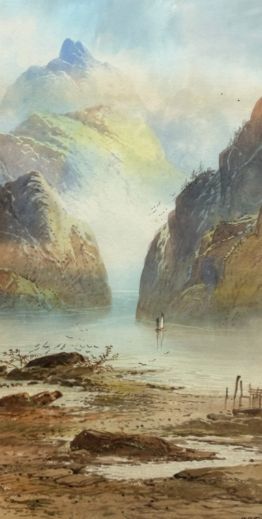
When you search for framed original landscape artwork, you encounter authentic watercolours, oil paintings, and drawings spanning from the nineteenth century into the mid-twentieth century. These pieces record rural scenes, coastal harbours, and lochs from British, Flemish, and French creators.
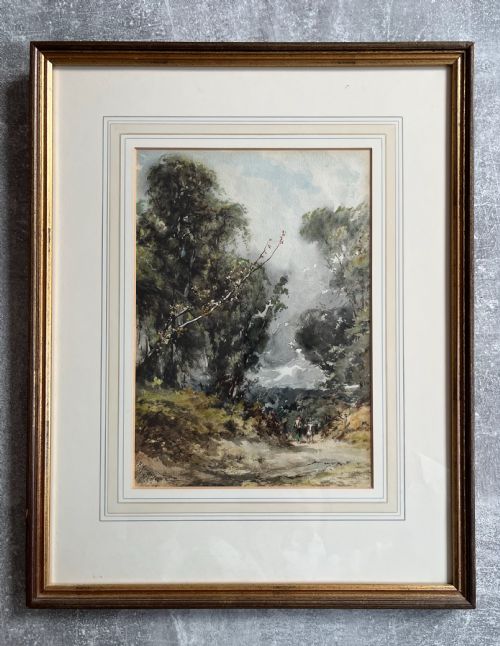
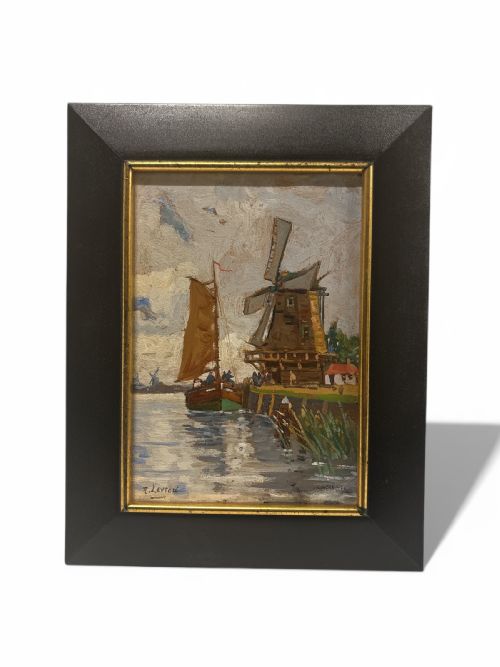
The version you meet most frequently on this page is the nineteenth-century or Edwardian watercolour on paper, alongside oil paintings executed on canvas, board, or wood panels. Many retain their original timber and giltwood frames, protecting the work behind glass where appropriate.
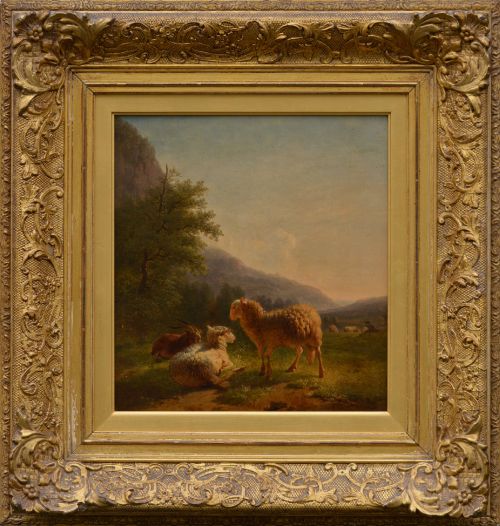
Subjects range widely across regional landscapes, capturing Scottish mountains, Lake District vistas, and pastoral farmyards with sheep or cattle. Stylistic influences span from Victorian romanticism and British impressionism to modern British interpretations.
Materials and technique
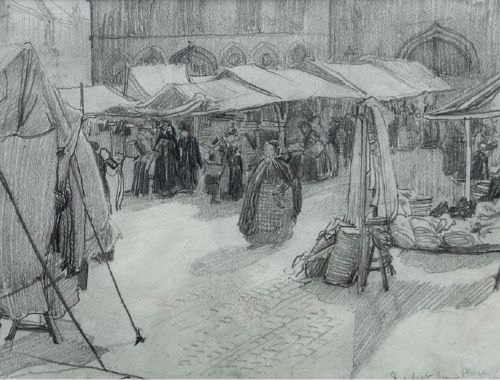
Paintings utilise oil paint applied to canvas, wooden panels, or board, building rich textures and deep tones across woodland and marine scenes. Watercolours employ pigment on paper, often finished with pencil or charcoal underdrawing to define the contours of buildings and natural foliage.
Support materials reflect the period of creation, with traditional wooden stretchers, heavy rag papers, and silk used in specific regional pieces. Frames are constructed from wood, frequently embellished with giltwood mouldings to complement the artwork.
Materials recorded across the selection include oil paint, watercolour, charcoal, pencil, silk, canvas, and giltwood.
Distinctions in quality
The distinction between standard works and exceptional pieces lies in the sureness of the brushwork and the precision of atmospheric perspective. Masterful handling of light across water or through woodland foliage elevates a composition far above a routine topographical record.
Preservation of the original surface and the integrity of the period frame heavily influence the character of the piece. Unrestored watercolours with strong, unblemished colour sit at a distinct advantage compared to examples faded by excessive exposure to light.
David Law·H. Medlycott·Eugène Verboeckhoven·George Fotherly Hargitt·Thomas Miles Richardson Jnr·James Orrock·William Henry Earp·Henry Percy Huggill·R Leyton·William H Myers·THOMAS ELLISON·Clifford Hanney·W Klombeck·Percy Lancaster·William Howard Hardy·Frederick Marriott·Arthur Wardle·John Horace Hooper·A. Mitchell·A. Marie Parsons·William Joseph Shayer Senior·John McDougal·Alfred Fontville de Breanski Jr·Sidney A. Court·EJ Letheren
The Framed Original Landscape Artwork Glossary
- Giltwood
- Wood carved and covered with a thin layer of gold leaf. This material frequently appears on period frames designed to enhance the artwork.
- Watercolour
- A paint consisting of soluble pigment suspended in a water-based solution. Artists apply it to paper to achieve translucent washes and delicate atmospheric effects.
- Oil on Canvas
- Pigment mixed with drying oil applied to a woven fabric stretched across a wooden frame. This technique allows for rich texture and deep colour saturation.
- Barbizon School
- A nineteenth-century French movement focused on naturalistic landscape painting. Artists painted directly from nature, emphasising mood and ordinary rural views.
- Impressionism
- A style emphasising small, thin brush strokes and accurate depiction of light. British and continental practitioners captured transient moments in coastal and rural settings.
Framed Original Landscape Artwork: Frequently Asked Questions
How do I hang a heavy oil painting safely?
Heavy oil paintings require sturdy picture hooks fixed directly into wall studs or secured with appropriate masonry plugs. Steel wire or robust brass D-rings on the wooden frame distribute the weight evenly.
Ensure the hanging height positions the centre of the artwork at eye level. Avoid placing original watercolours or oils in rooms with high humidity or direct sunlight.
Should I replace an original period frame?
Original period frames, particularly giltwood examples matching the age of the artwork, carry historical significance. Keeping the frame maintains the integrity and period context of the piece.
Only consider conservation or replacement if the frame structure is failing and actively threatening the safety of the painting within.
How do I care for antique works on paper?
Antique watercolours and drawings on paper need protection from direct sunlight to prevent fading. Acid-free mounts prevent chemical damage to the paper over time.
Keep them in stable room environments away from damp walls and extreme temperature shifts. Ensure the glass does not touch the painted surface directly.