Cheshire Antiques Consultant Ltd has dated this Framed Estate Landscape Painting to the Edwardian era.
By Edward John Bishop Evans (1860–1923)
Subject & Medium
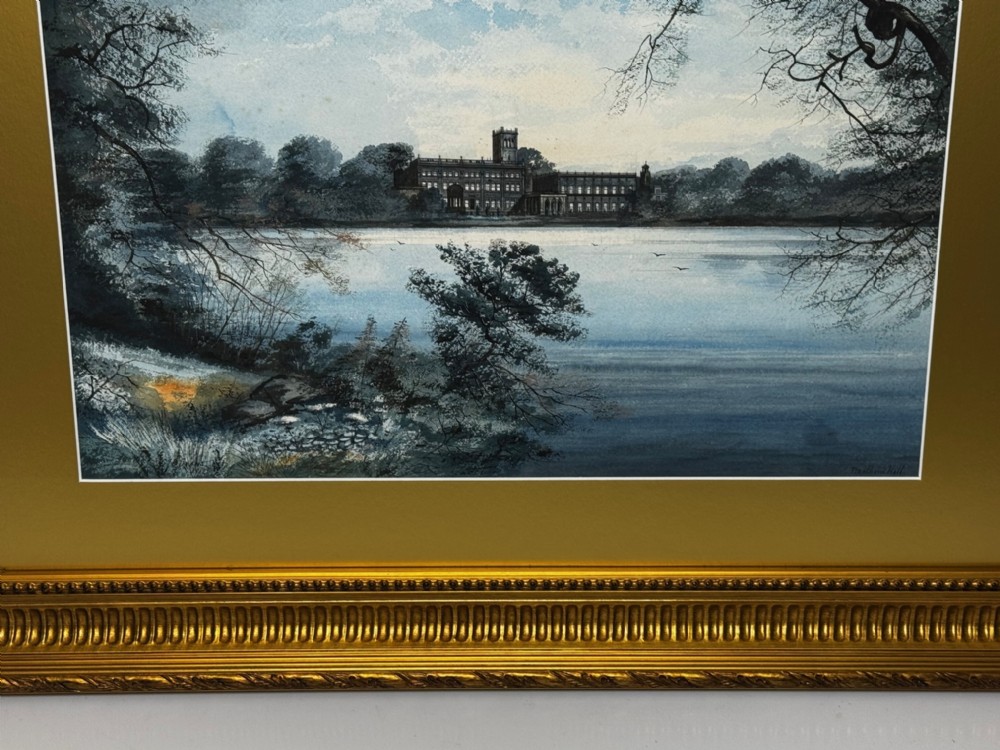
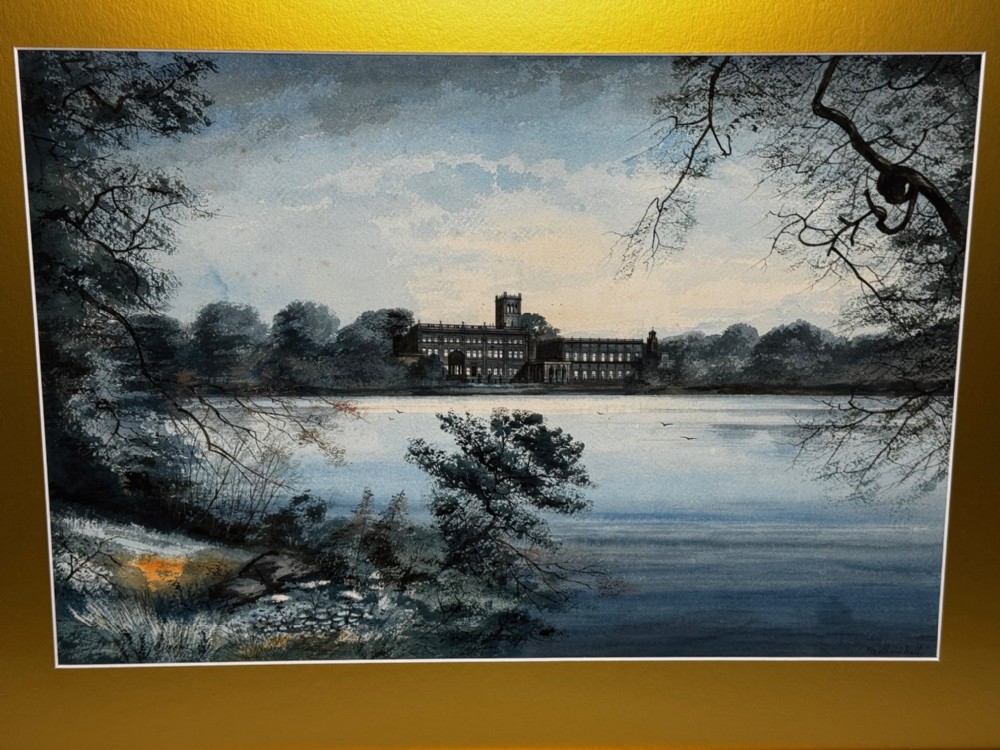
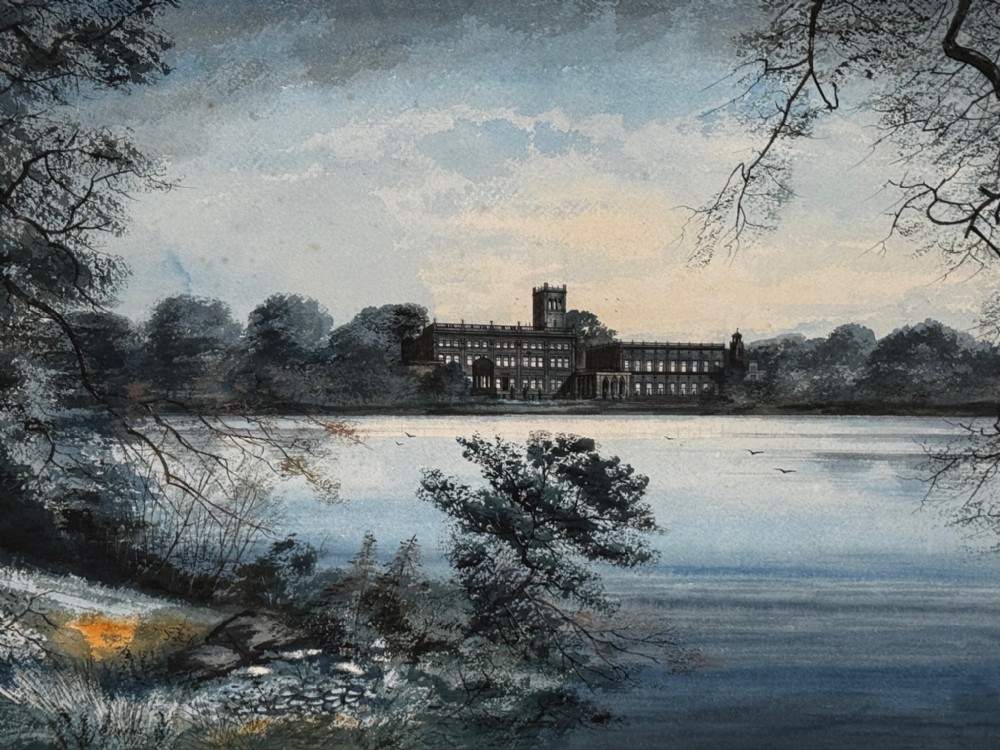
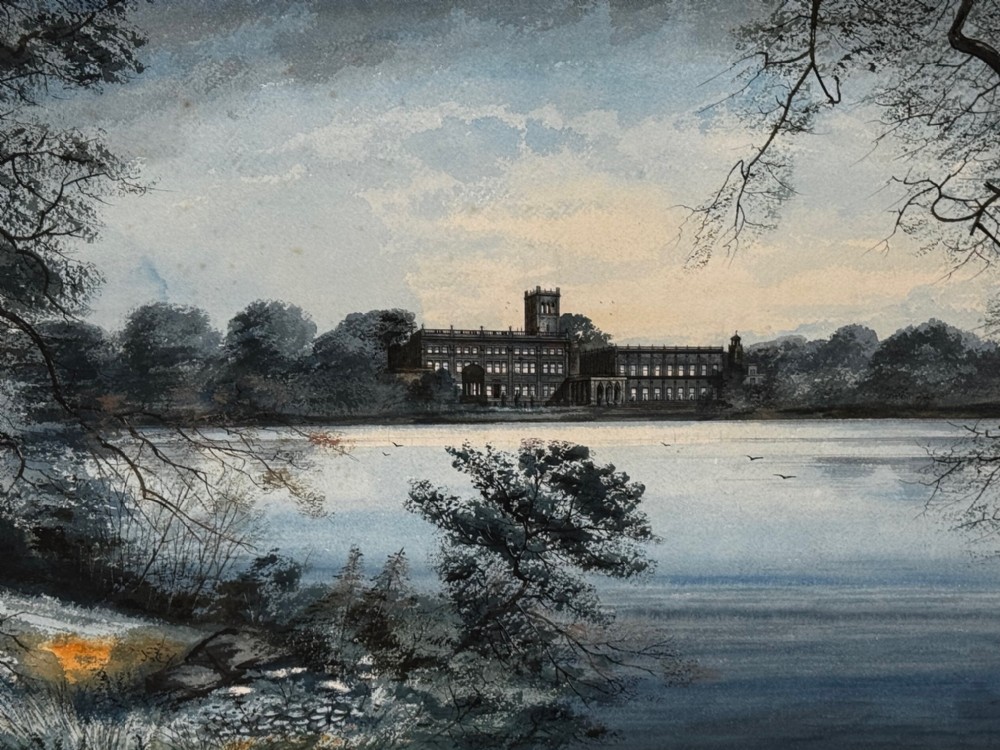
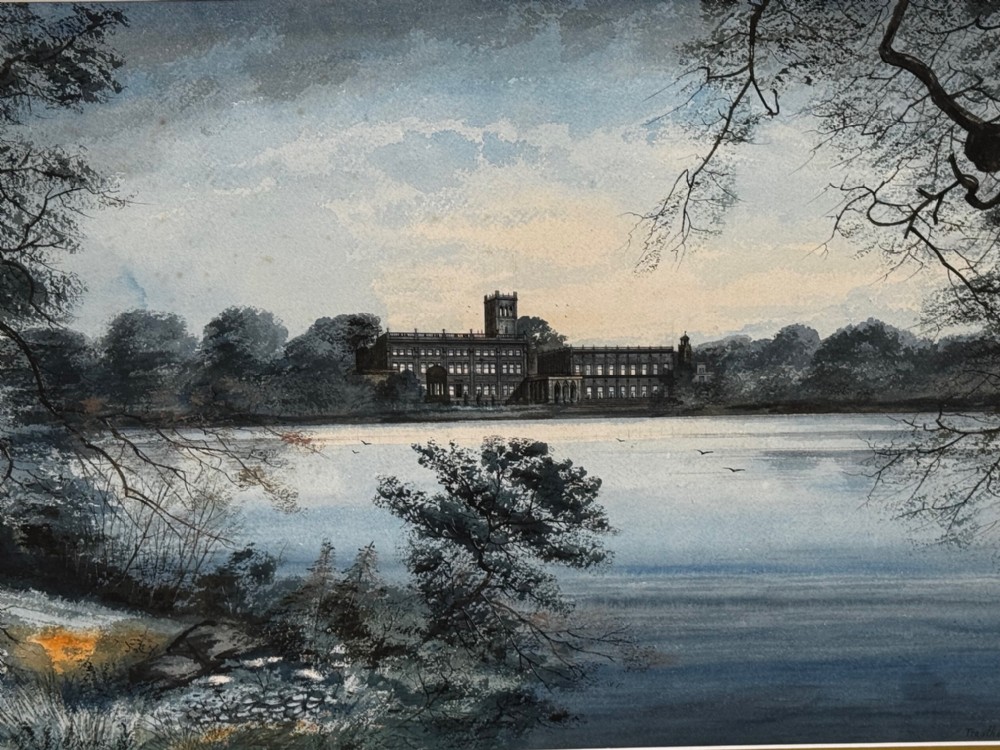
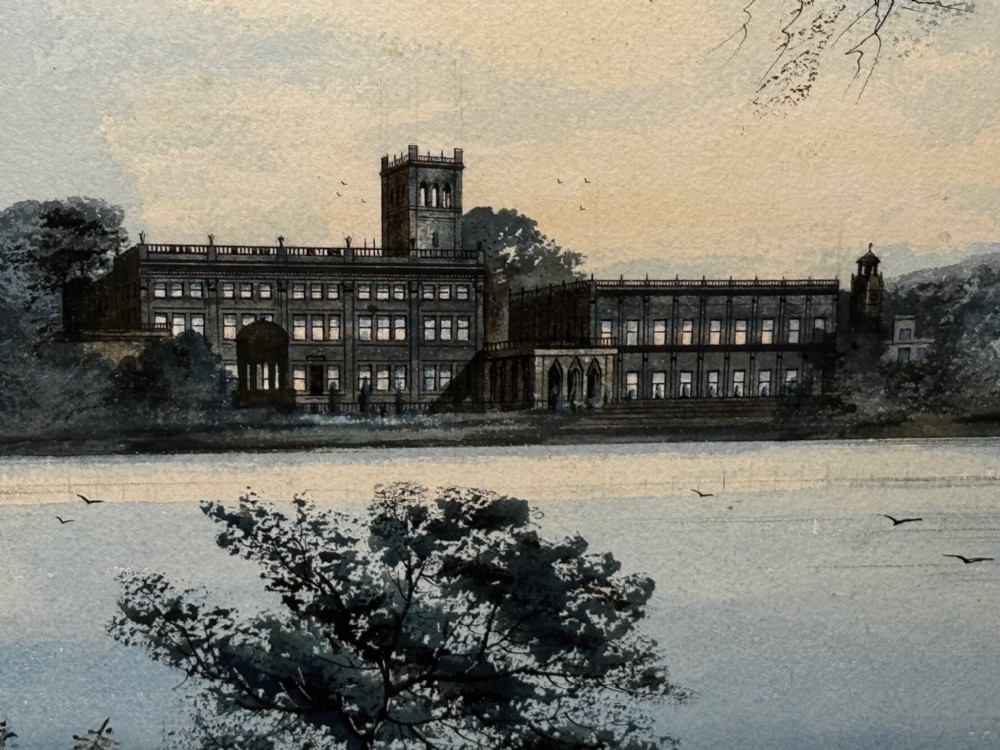
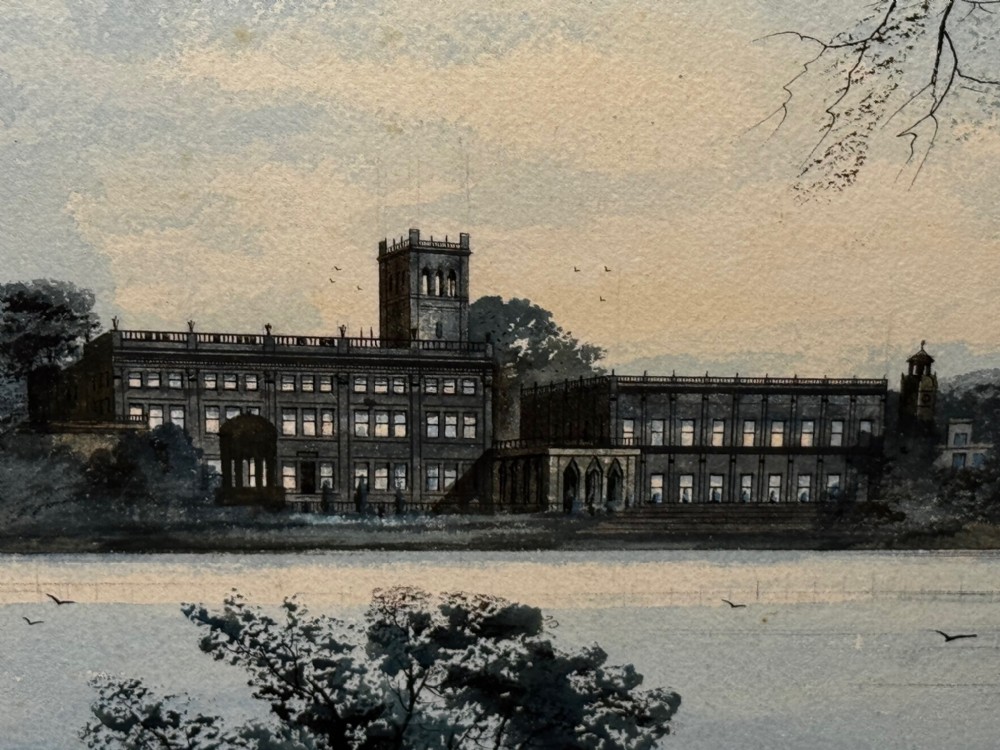
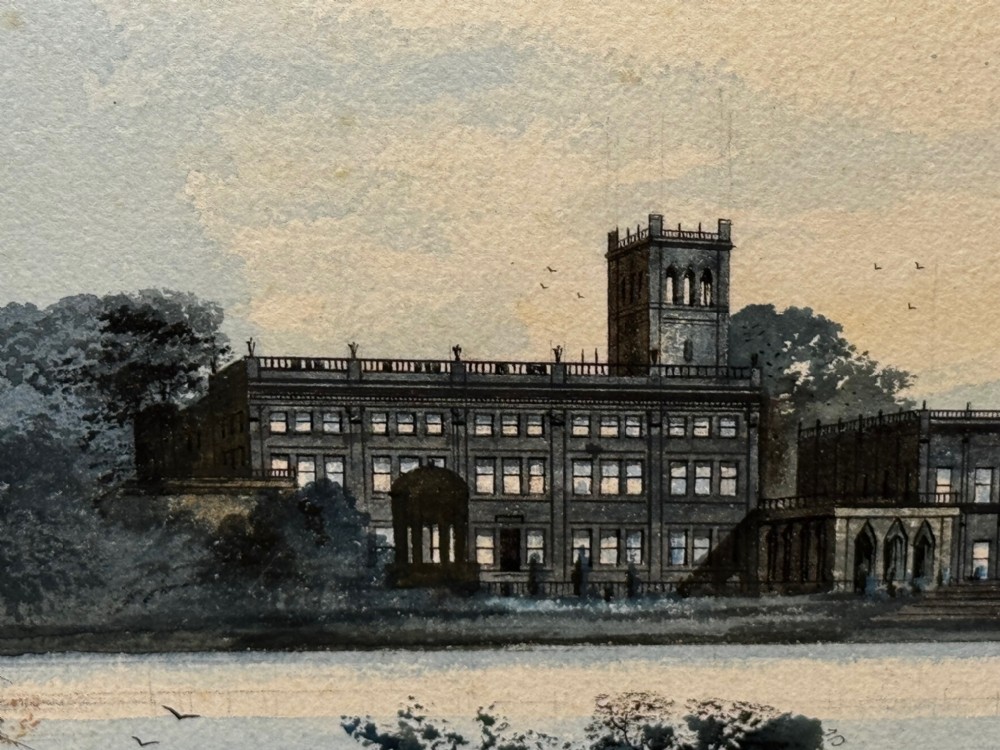
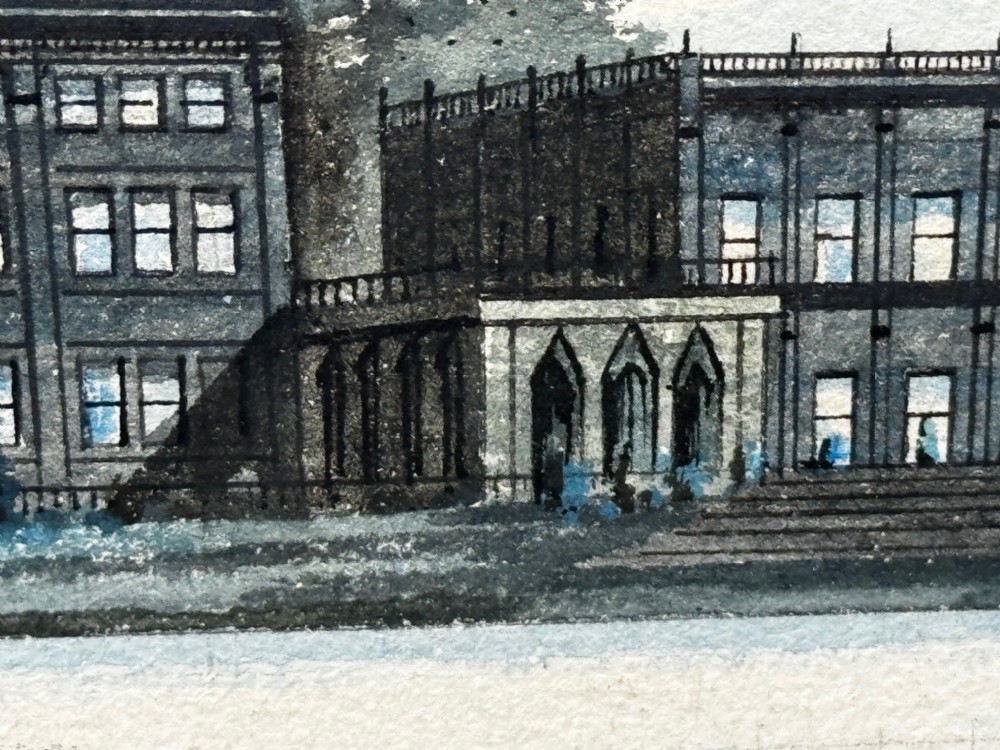
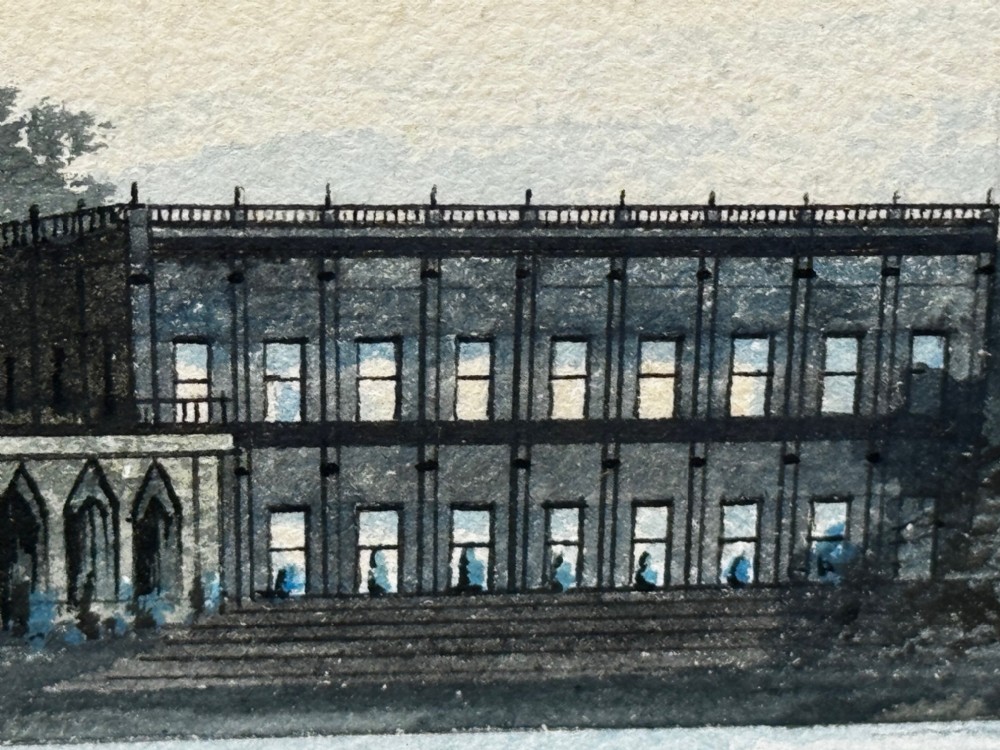
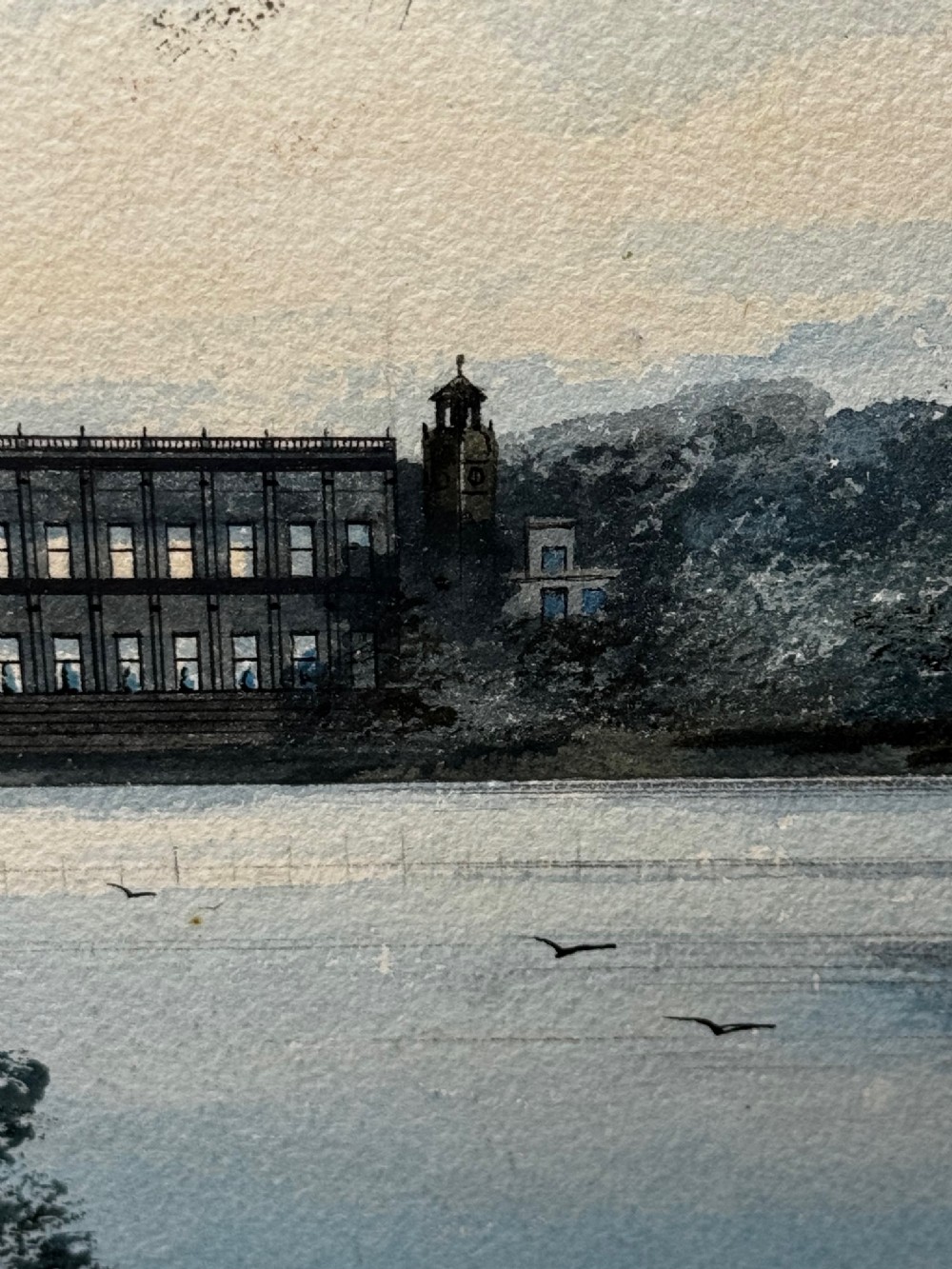
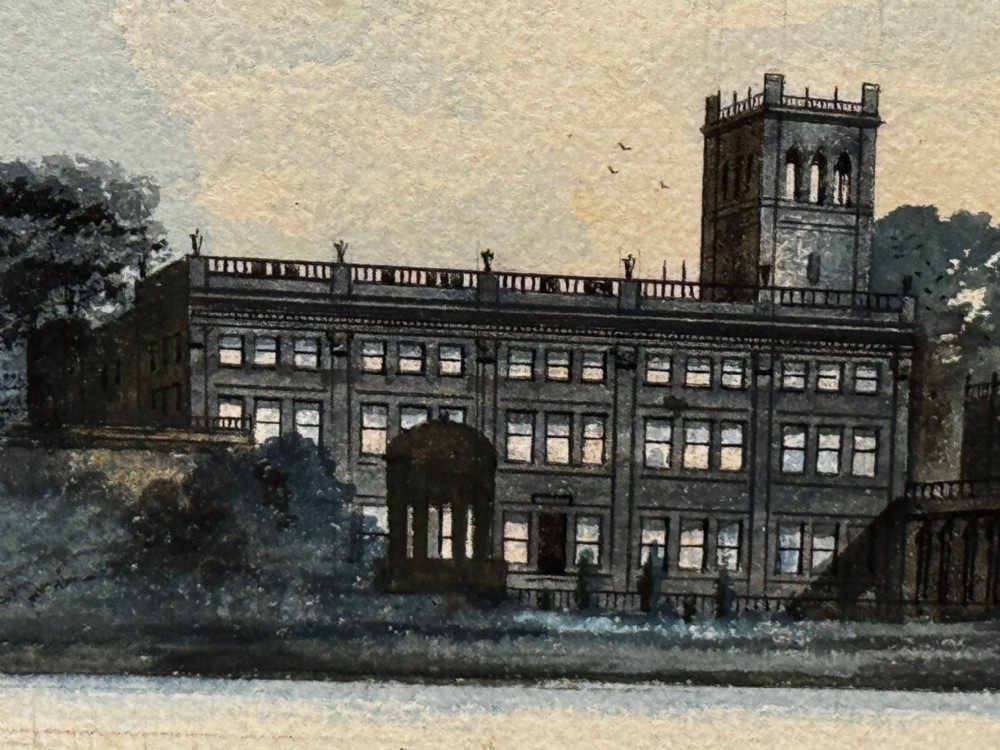
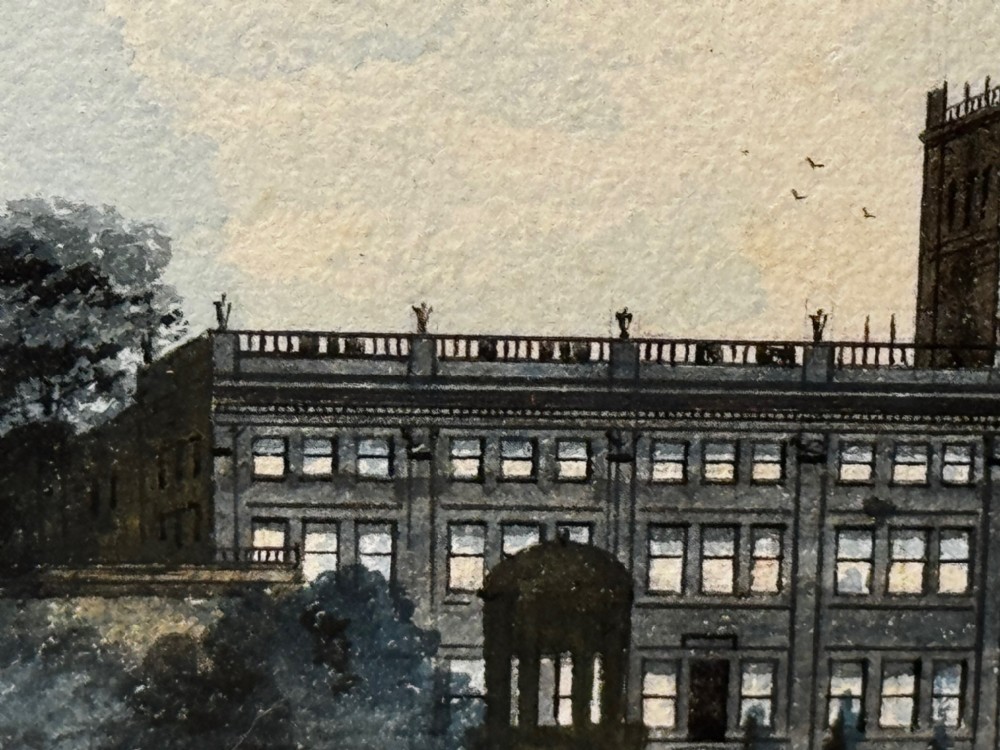
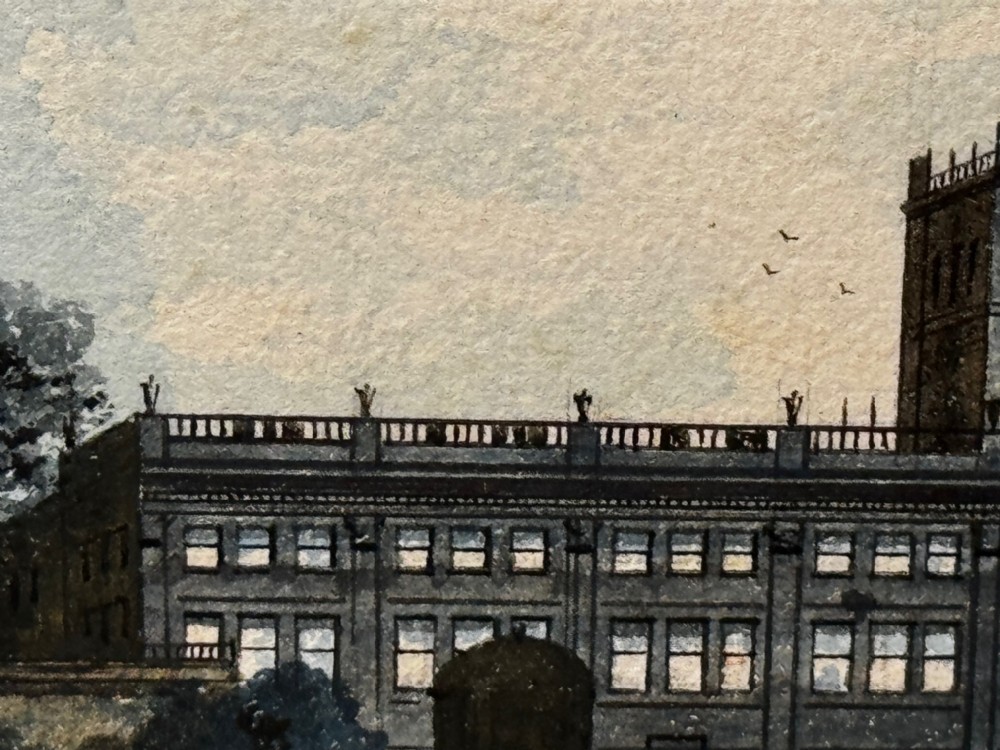
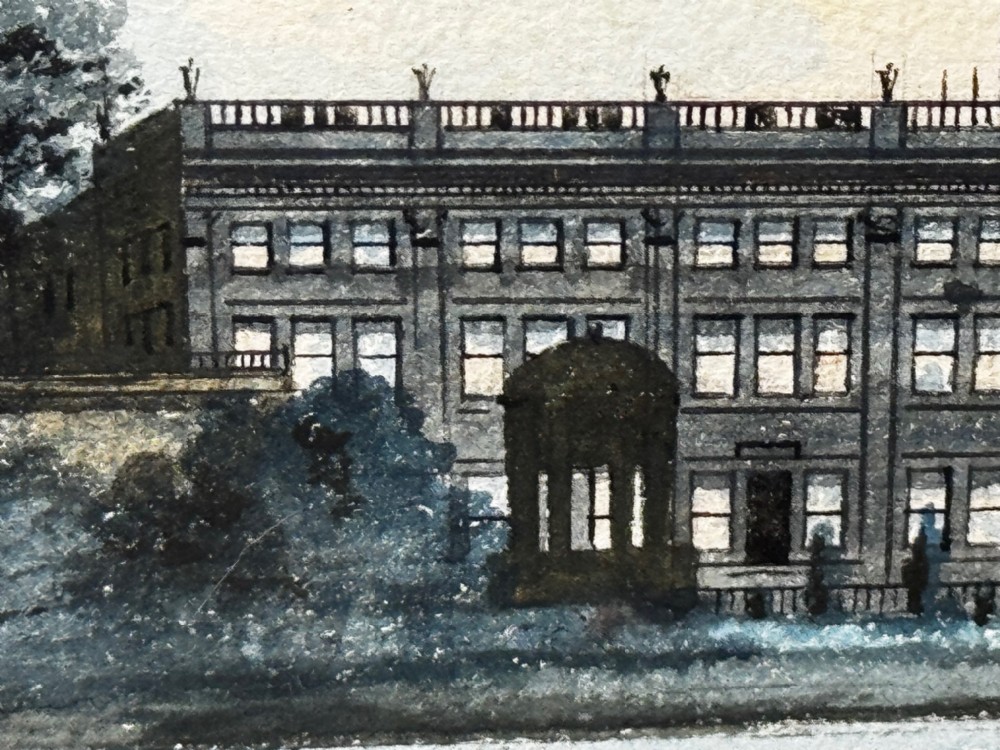
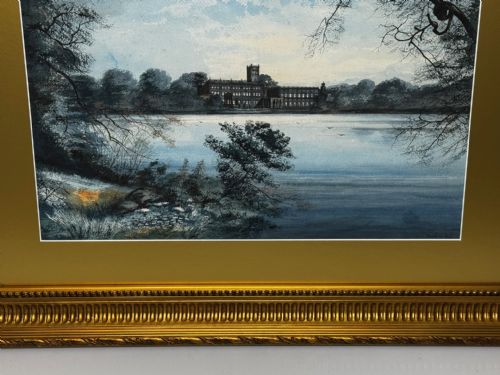
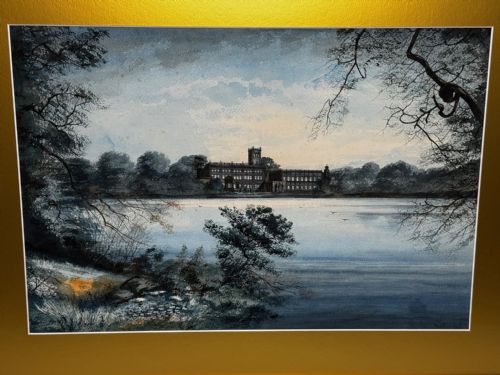
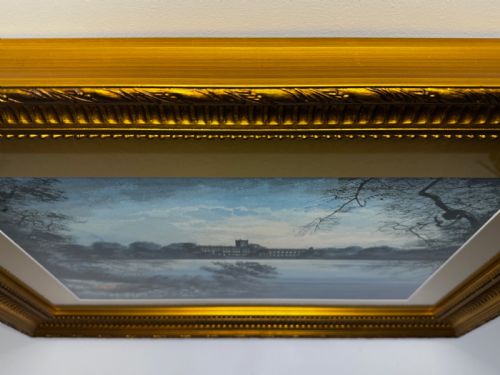
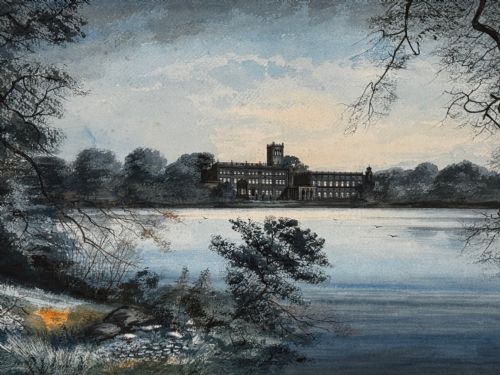
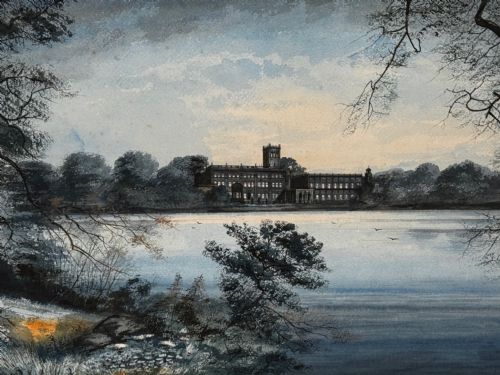
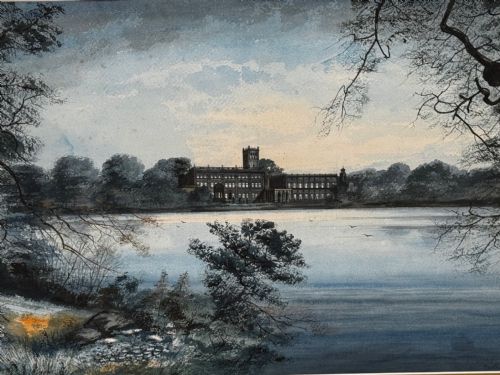
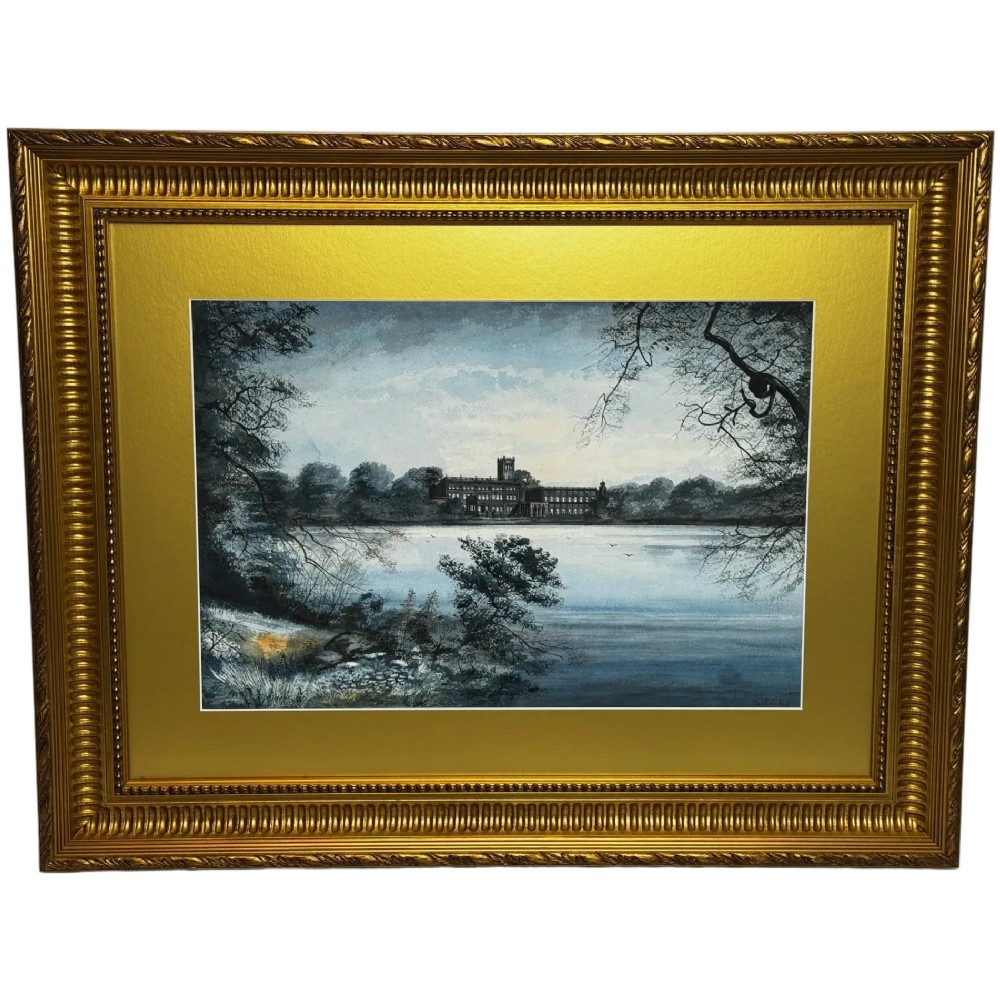
Depicting Trentham Hall in Staffordshire, viewed serenely across its lake, the work is an historic witness painted on the eve of the Hall’s demolition. It offers a rare and poignant memory of the country seat of the Dukes of Sutherland.
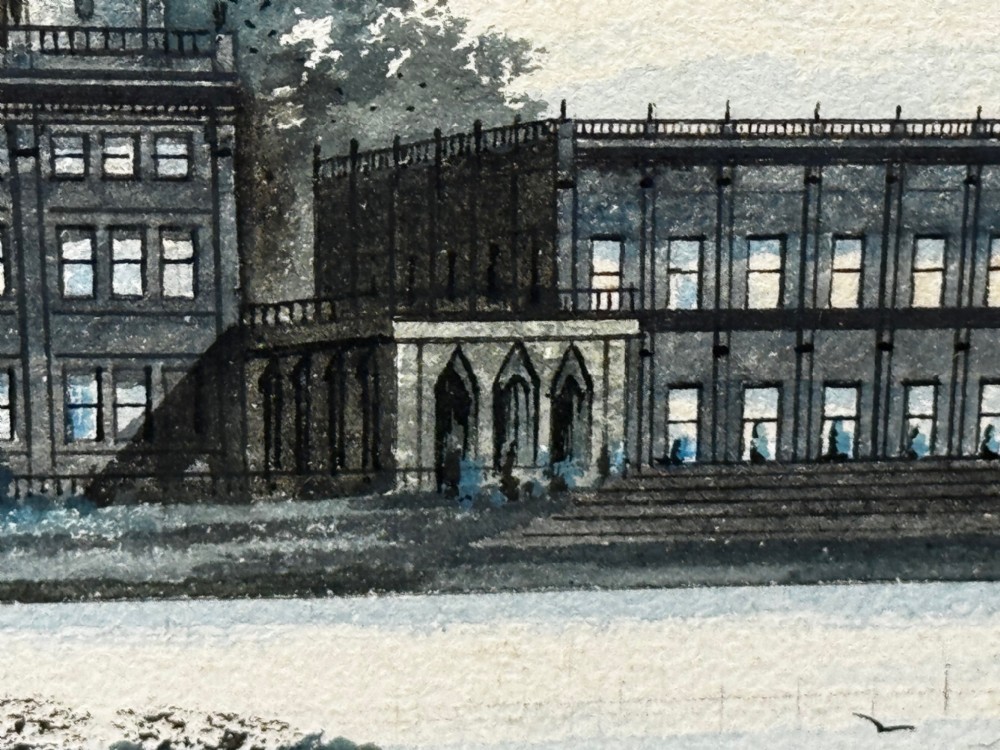
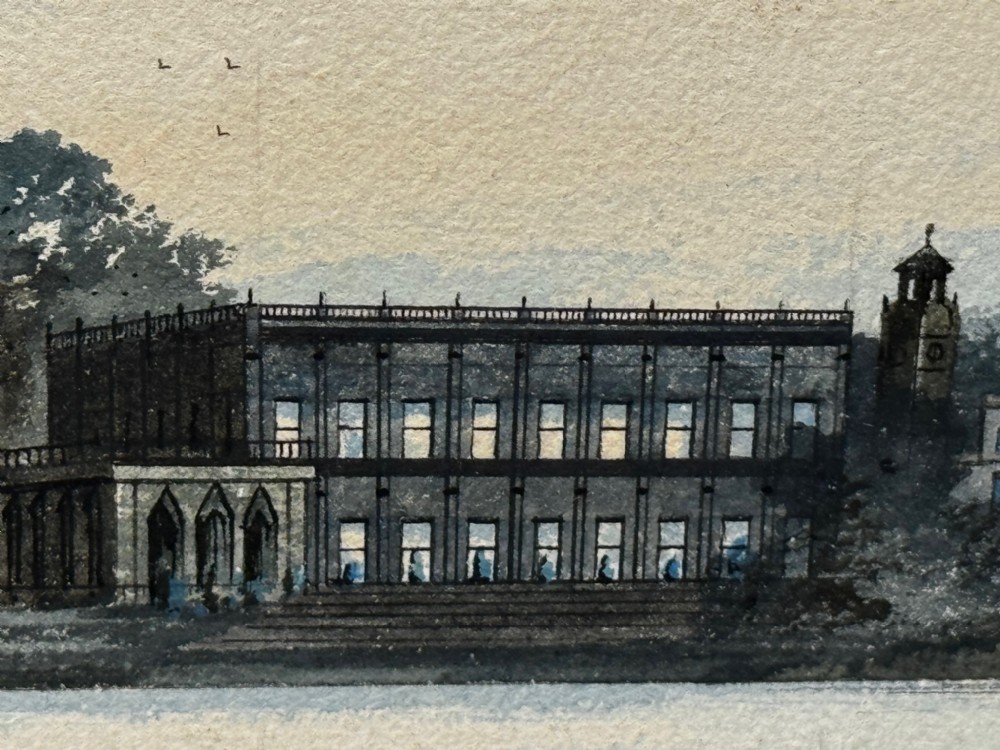
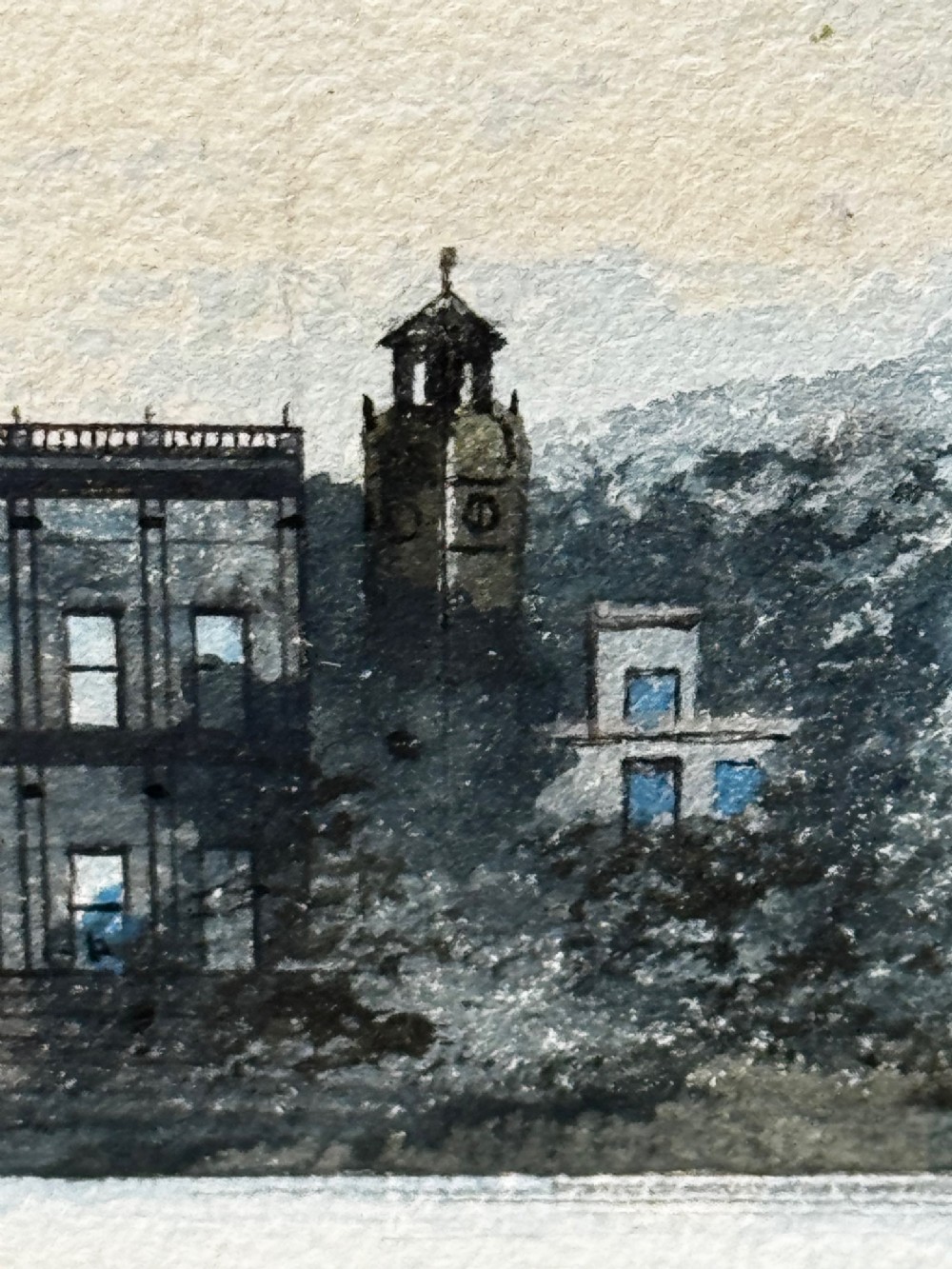
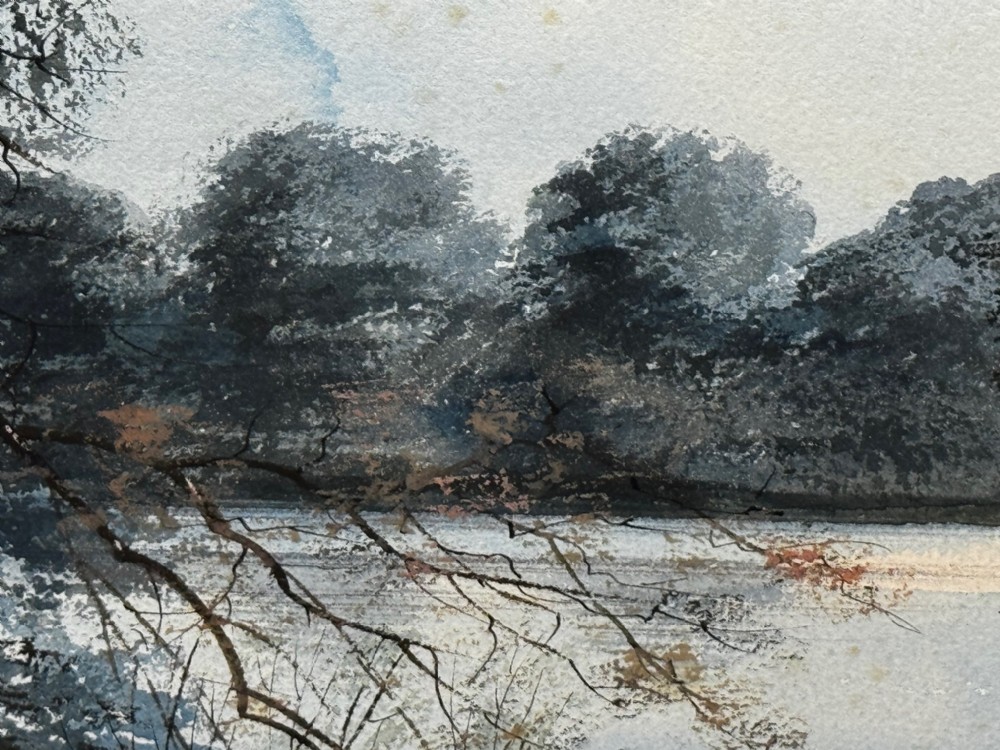
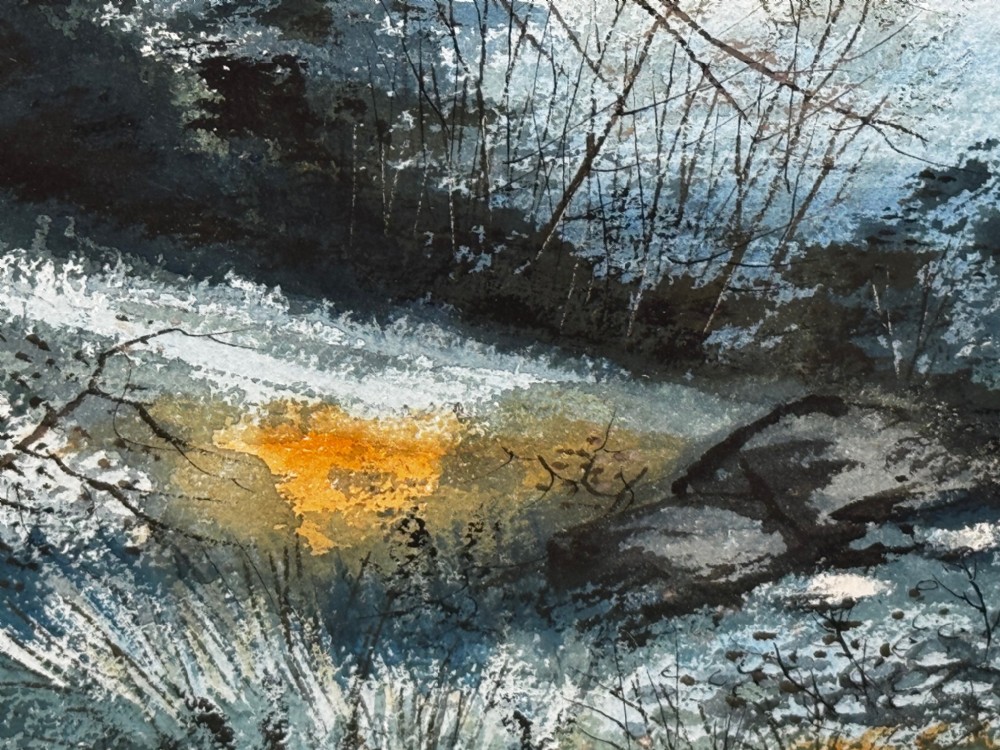
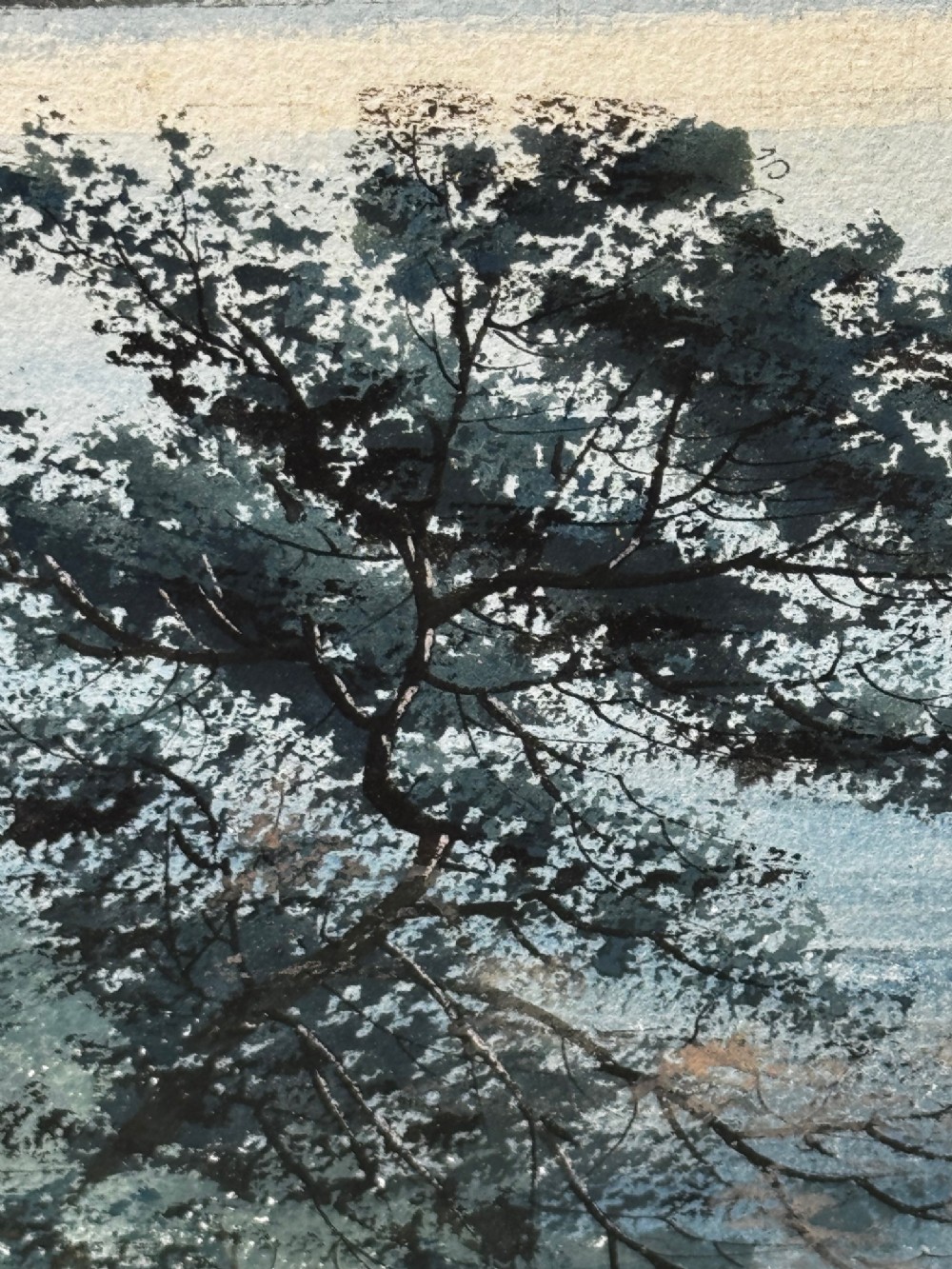
Evans employed transparent watercolour washes, finely controlled pen-and-ink detailing, and subtle bodycolour highlights to combine atmosphere with precision. The result is both a masterwork of technique and an irreplaceable historical record.
Composition & Technique
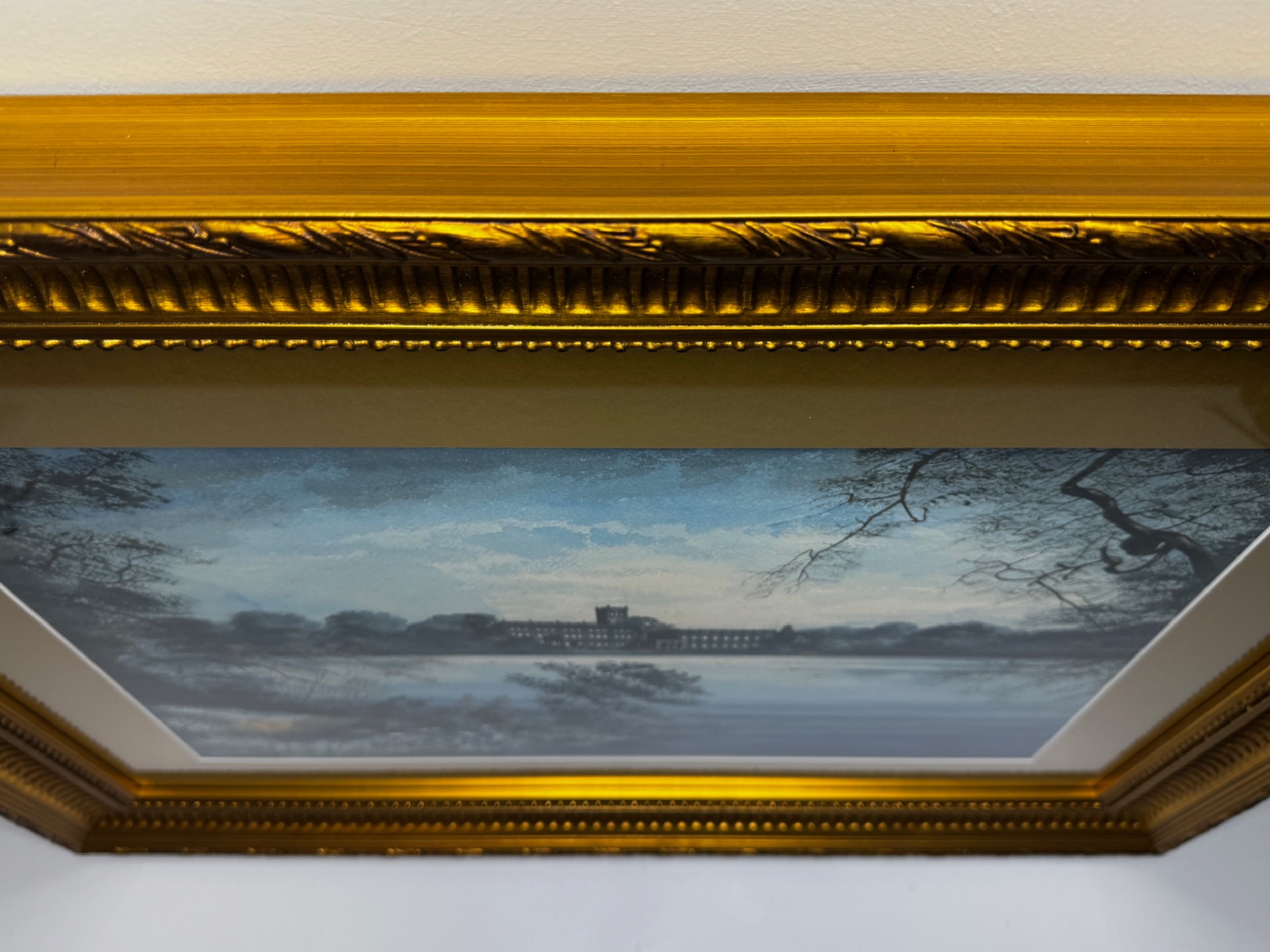
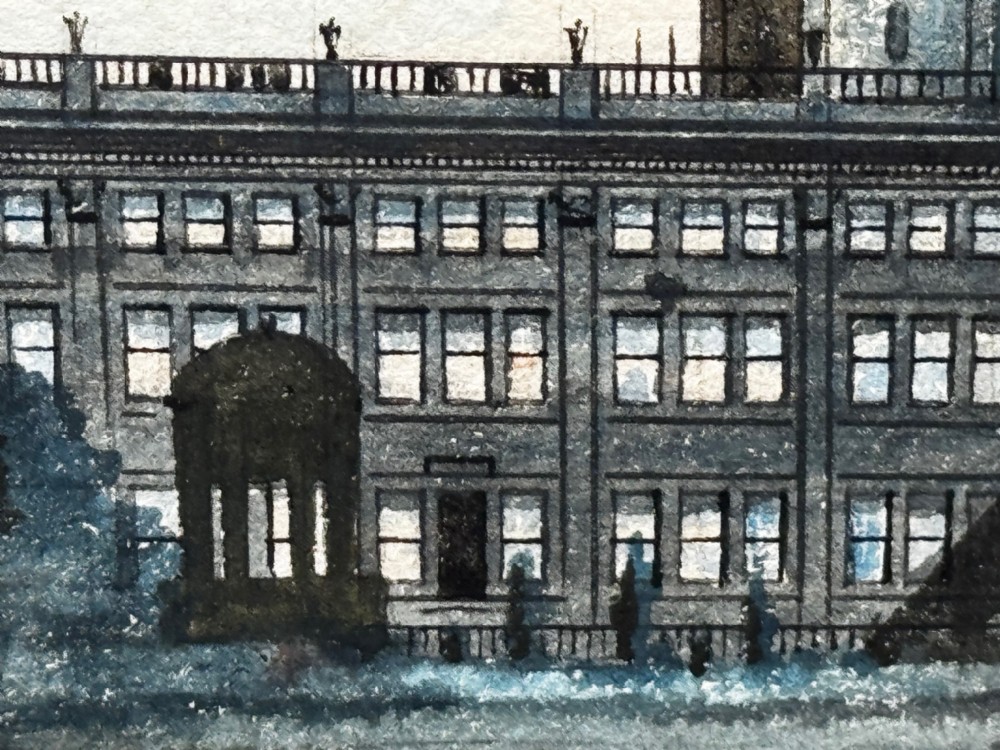
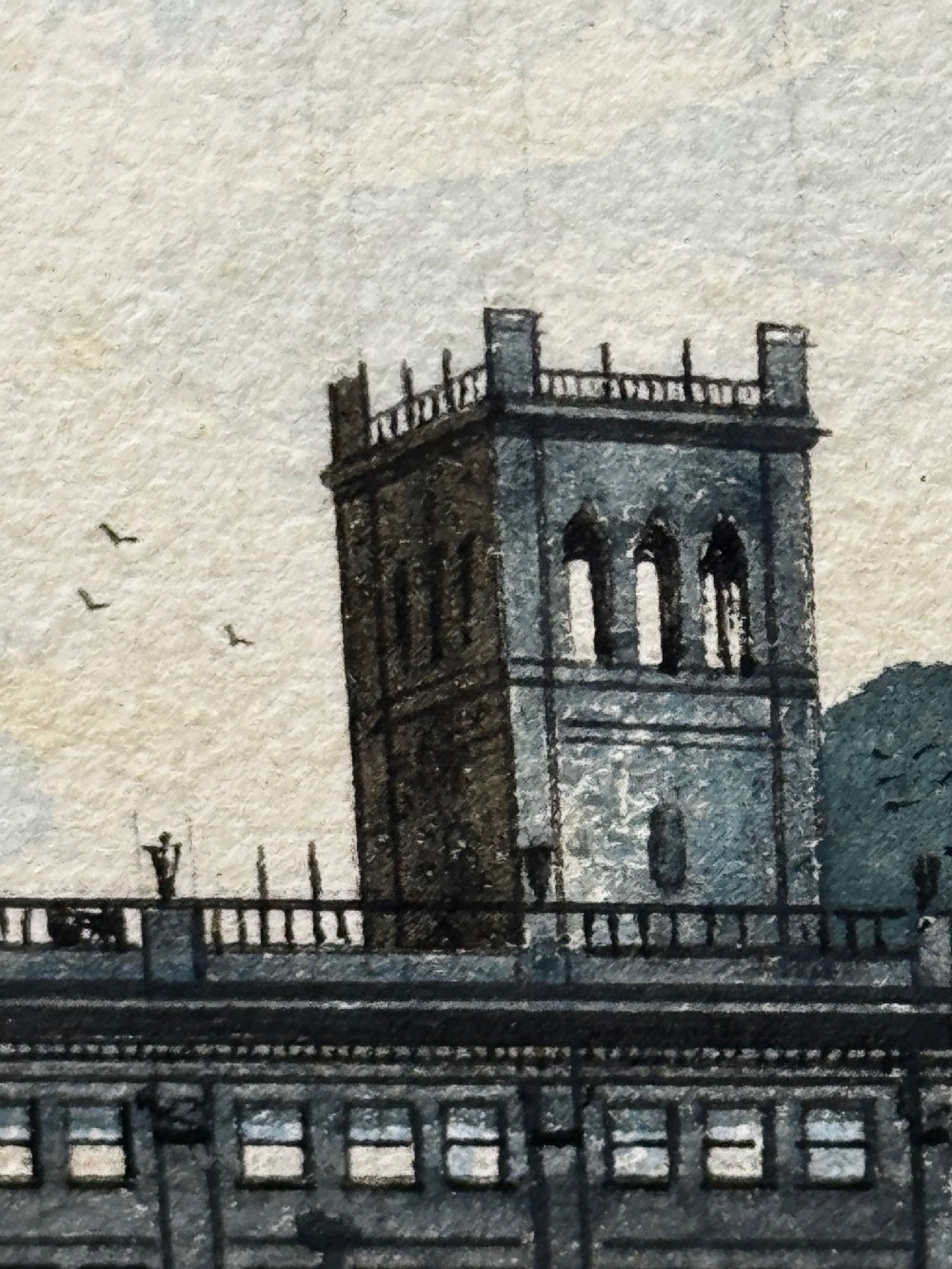
The composition is elegantly structured: the Hall rises beyond the reflective lake, framed by wooded slopes and a softened sky. Evans’s fluid washes establish mood, while his crisp linework delineates the architecture. Highlights of bodycolour add depth, texture, and luminosity—an approach that elevates this painting beyond simple topographical record.
The Story of Trentham Hall
Trentham’s heritage stretches back almost a millennium, first recorded in the Domesday Book (1086) as the site of a priory. Following the Dissolution, the estate passed to the Leveson family, later merging with the Leveson-Gowers, who ascended as the Dukes of Sutherland—among the wealthiest and most influential dynasties in Britain.
By the 19th century, the Dukes were reputedly the nation’s largest private landowners, with immense holdings in Staffordshire and Scotland. Trentham Hall became their Staffordshire seat, hosting royalty, prime ministers, and leading figures of society.
18th century: Lancelot “Capability” Brown landscaped the grounds, creating sweeping lawns, wooded valleys, and the serpentine lake.
19th century: Sir Charles Barry, architect of the Houses of Parliament, remodelled the Hall into a palatial Italianate residence with formal parterres, terraces, and fountains.
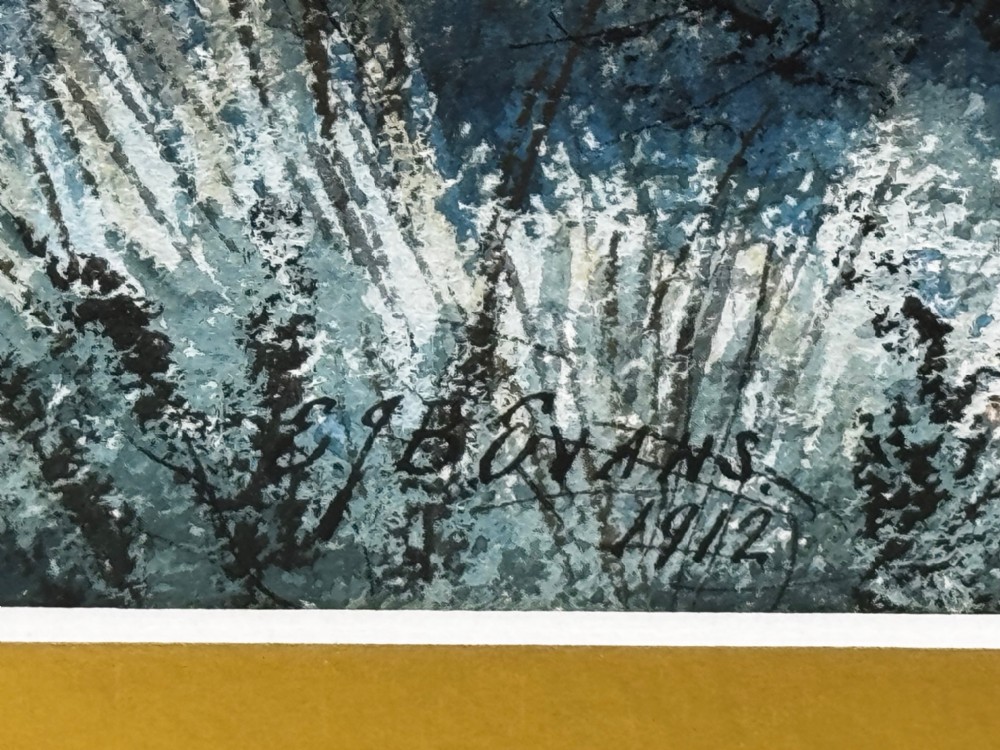
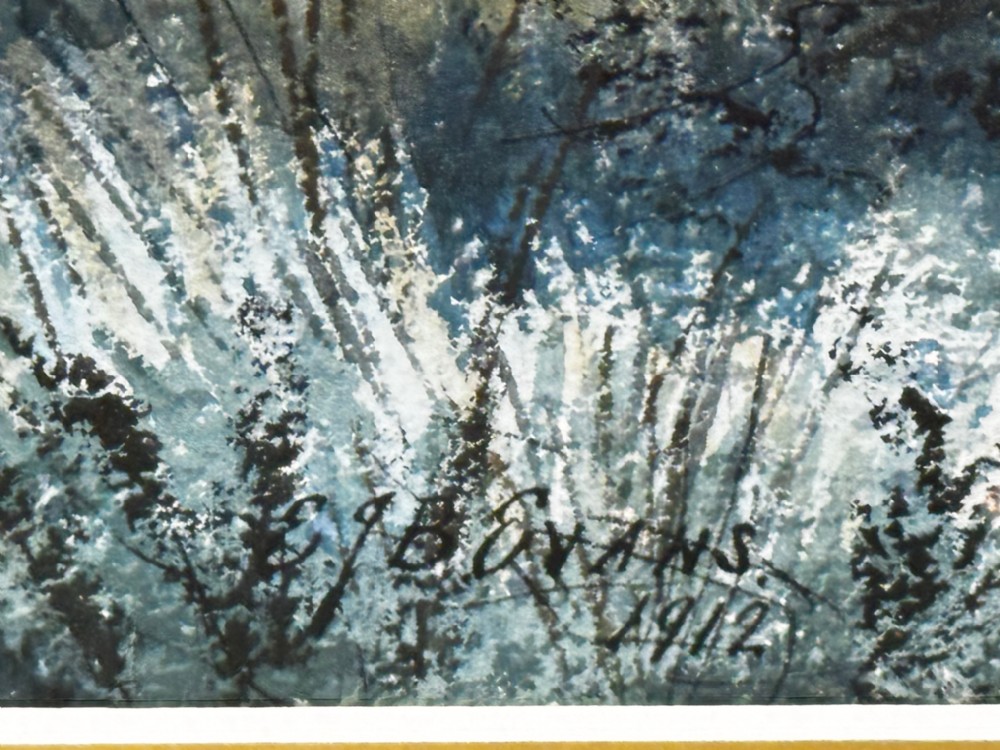
Throughout the Victorian and Edwardian eras, Trentham Hall epitomised aristocratic splendour. Yet by the late 19th century, pollution from the pottery industry and the enormous costs of maintenance brought decline. By 1912, when Evans painted this evocative view, the Hall’s fate was sealed. Demolition began the following year.
Although the house was lost, the celebrated Trentham Gardens survived and today remain one of Britain’s leading heritage attractions. Evans’s painting forms a vital link between the vanished house and the enduring gardens, capturing both memory and continuity.
Conclusion
The Final Glimpse is more than a work of art—it is a memorial in paint. Evans preserves the grandeur of the Dukes of Sutherland’s lost seat while offering collectors today a rare survival of British country house history.
For discerning buyers of historic British watercolours, heritage art, or rare country house depictions, this represents a once-in-a-lifetime opportunity to acquire a piece that bridges art, history, and memory.
Signature
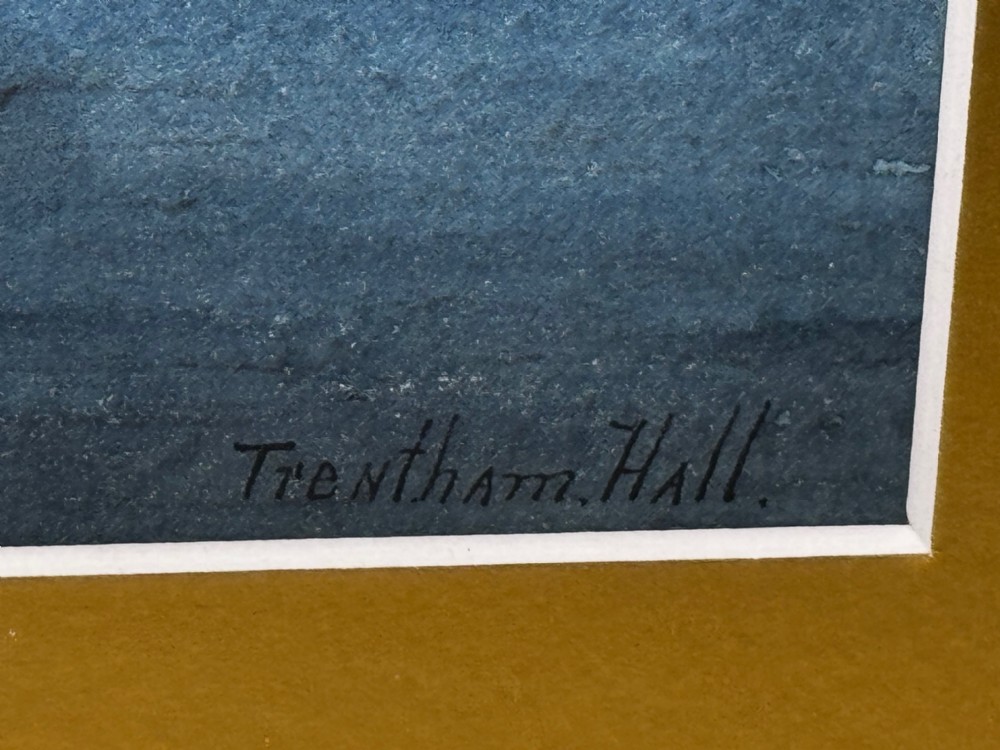
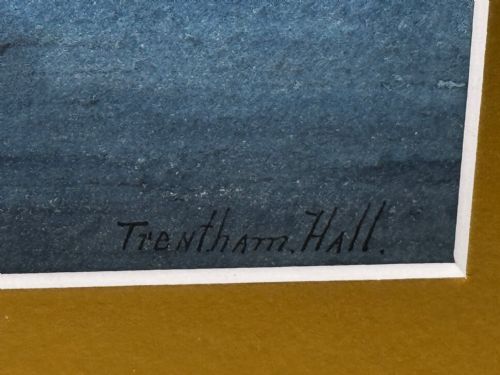
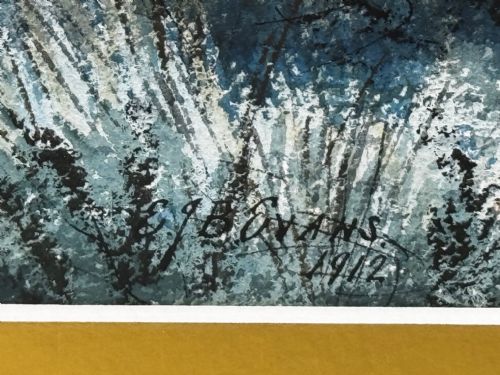
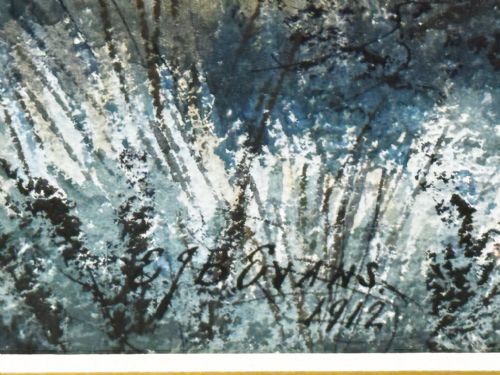
Signed lower right in watercolour by the artist Edward J. B. Evans.
About the Artist
Edward John Bishop Evans (1860–1923) was both a painter and an esteemed art director in Staffordshire’s ceramic industry, shaping designs for Aynsley, Hammersley & Co, Coalport, and Maw & Co. He also produced landscapes and architectural studies, preserving Staffordshire’s cultural heritage. His works are represented in museum collections and listed on Art UK.
Artistic & Cultural Significance
Artistic mastery: Subtle atmosphere, architectural clarity, and refined technique.
Historic witness: Among the last depictions of Trentham Hall before its demolition.
Cultural symbolism: A visual emblem of Britain’s fading co
Cheshire Antiques Consultant Ltd has dated this Framed Estate Landscape Painting to the Edwardian era.
Source the historic in 17th, 18th, 19th & 20th century fine arts, painting, sculptures & collectibles
You can view the stock and full dealer information on the Cheshire Antiques Consultant Ltd Profile Page
Painting the Final Glimpse Trentham Hall C1912 Seat Duke of Sutherland