9,563  PAGES BROWSED TODAY PAGES TODAY 36  ANTIQUES UPLOADED TODAY NEW ARRIVALS
ID #SA575415
FOR SALE
£4,500
Email
Save
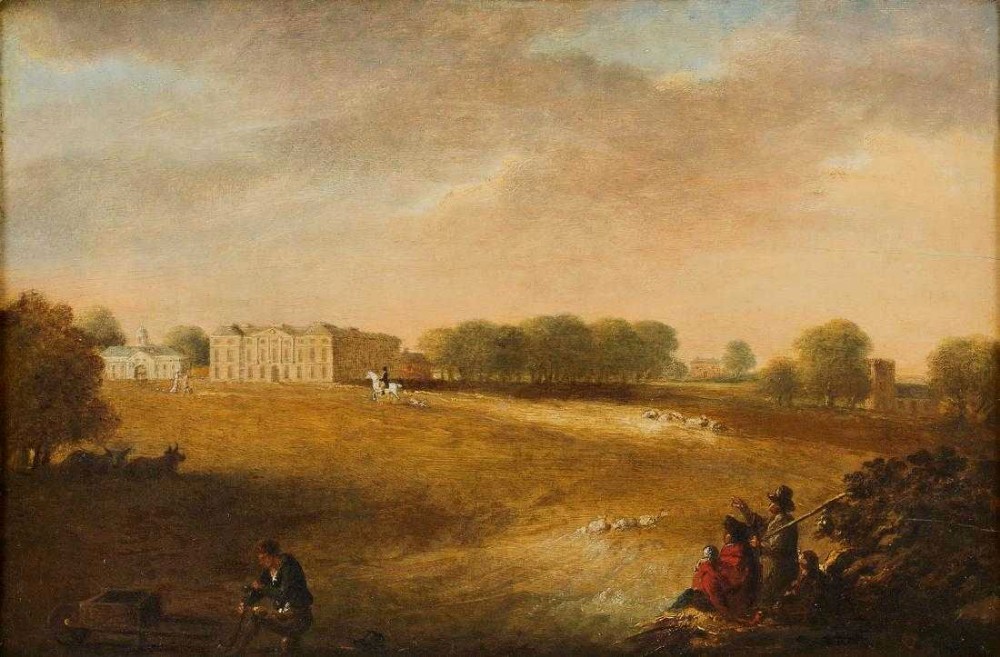
English School 18th, Century a Prospect of Croome Court, Warwickshire
Artware Fineart
for sale €5,265     $5,715
£4,500

Artware Fineart

Sellingantiques Verified Since Sep 2008
View Dealers Stock Page
Id #SA575415
PDF SHARE
SAVE

English School 18th, Century a Prospect of Croome Court, Warwickshire

18th century
For Sale by Artware Fineart
Description

English School 18/19th, Century

A Prospect of Croome Court, Warwickshire

Signed/Inscribed:

on a label on the reverse 'Croome Court Warwickshire former home of the Earls of Coventry'.

oil on panel

48 x 65 cm. (19 x 26 in.)

Croome Court is a mid-18th century neo-Palladian mansion surrounded by extensive landscaped parkland at Croome D'Abitot, near Pershore in south Worcestershire, England. The mansion and park were designed by Lancelot "Capability" Brown for the 6th Earl of Coventry, and were Brown's first landscape design and first major architectural project. Some of the mansion's rooms were designed by Robert Adam.
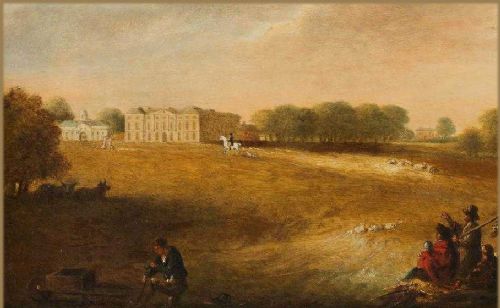
The mansion house is owned by Croome Heritage Trust, and is leased to the National Trust which operates it as a tourist attraction. The National Trust owns the surrounding parkland, which is also open to the public.
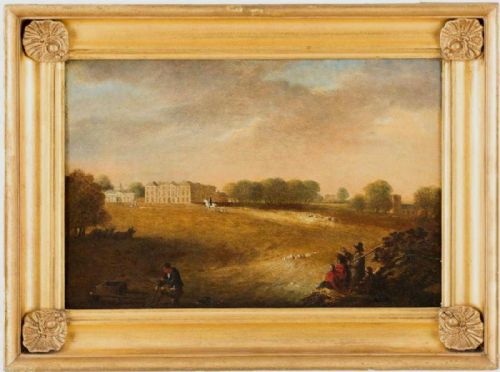
The foundations and core of Croome Court, including the central chimney stack structure, date back to the early 1640s.Substantial changes to this early house were made by Gilbert Coventry, 4th Earl of Coventry.

George Coventry, the 6th Earl, inherited the estate in 1751, along with the existing Jacobean house. He commissioned Lancelot "Capability" Brown, with the assistance of Sanderson Miller, to redesign the house and estate. It was Brown's "first flight into the realms of architecture" and a "rare example of his architectural work", and it is an important and seminal work. It was built between 1751 and 1752, and it and Hagley Hall are considered to be the finest examples of Neo-Palladian architecture in Worcestershire. Notable Neo-Palladian features incorporated into Croome Court include the plain exterior and the corner towers with pyramidal roofs (a feature first used by Inigo Jones in the design of Wilton House in Wiltshire). Robert Adam worked on the interior of the building from 1760 onwards.

The house was visited by George III, as well as by Queen Victoria during summers when she was a child, and George V (when Duke of York).

A jam factory was built near Pershore railway station by the 9th Earl of Coventry in about 1880, to provide a market for Vale of Evesham fruit growers in times of surplus. Although the Croome connection with jam-making had ceased, the building was leased by the Croome Estate Trust during the First World War to the Huddersfield Fruit Preserving Company as a pulping station.

The First World War deeply affected Croome; there were many local casualties, although the house was not requisitioned for the war effort. This is possibly because it was the home of the Lord Lieutenant of the county, who needed a residence for his many official engagements.

Croome Court was requisitioned during the Second World War by the Ministry of Works, and leased for a year to the Dutch Government as a possible refuge for Queen Wilhelmina of the Netherlands to escape the Nazi occupation of the Netherlands. However, evidence shows that they stayed for two weeks at the most, perhaps because of the noise and fear created by the proximity of Defford Aerodrome. They later emigrated to Canada.

The Croome Estate Trust sold the Court in 1948, along with 38 acres (15 ha) of land, to the Roman Catholic Archdiocese of Birmingham, and the mansion became St Joseph's Special School, which was run by nuns from 1950 until 1979.

The house was listed on 11 August 1952; it is currently Grade I listed.

In 1979, the hall was taken over by the International Society for Krishna Consciousness (Hare Krishna movement) which used it as its UK headquarters and a training college called Chaitanya College,run by 25 members of the movement. During their tenure they repainted the Dining Room. The ISKC had to leave the estate for financial reasons in 1984. It held a festival at the hall in 2011.

From 1984 onwards, various owners tried to use the property as a training centre; apartm

Physical Dimensions
Height
48cm (18.90")
Width
65cm (25.59")
Depth
0.5cm (0.20")
Declaration

Artware Fineart has dated this 18th Century Landscape Painting to the 18th Century.

Reference Numbers
Sellingantiques Reference
SA575415
Dealers Internal Reference
4018
Description
English School 18/19th, Century

A Prospect of Croome Court, Warwickshire

Signed/Inscribed:

on a label on the reverse 'Croome Court Warwickshire former home of the Earls of Coventry'.

oil on panel

48 x 65 cm. (19 x 26 in.)

Croome Court is a mid-18th century neo-Palladian mansion surrounded by extensive landscaped parkland at Croome D'Abitot, near Pershore in south Worcestershire, England.
Artware Fineart

The mansion and park were designed by Lancelot "Capability" Brown for the 6th Earl of Coventry, and were Brown's first landscape design and first major architectural project. Some of the mansion's rooms were designed by Robert Adam.

fig 1. An eighteenth-century English School oil painting depicting an expansive country estate vista with figures in the foreground under a cloudy sky.
fig 1. English School 18th, Century a Prospect of Croome Court, Warwickshire

The mansion house is owned by Croome Heritage Trust, and is leased to the National Trust which operates it as a tourist attraction. The National Trust owns the surrounding parkland, which is also open to the public.

fig 2. An eighteenth-century English School oil painting depicting an expansive country estate vista with figures in the foreground under a cloudy sky.
fig 2. English School 18th, Century a Prospect of Croome Court, Warwickshire

The foundations and core of Croome Court, including the central chimney stack structure, date back to the early 1640s.Substantial changes to this early house were made by Gilbert Coventry, 4th Earl of Coventry.

George Coventry, the 6th Earl, inherited the estate in 1751, along with the existing Jacobean house. He commissioned Lancelot "Capability" Brown, with the assistance of Sanderson Miller, to redesign the house and estate. It was Brown's "first flight into the realms of architecture" and a "rare example of his architectural work", and it is an important and seminal work. It was built between 1751 and 1752, and it and Hagley Hall are considered to be the finest examples of Neo-Palladian architecture in Worcestershire. Notable Neo-Palladian features incorporated into Croome Court include the plain exterior and the corner towers with pyramidal roofs (a feature first used by Inigo Jones in the design of Wilton House in Wiltshire). Robert Adam worked on the interior of the building from 1760 onwards.

The house was visited by George III, as well as by Queen Victoria during summers when she was a child, and George V (when Duke of York).

A jam factory was built near Pershore railway station by the 9th Earl of Coventry in about 1880, to provide a market for Vale of Evesham fruit growers in times of surplus. Although the Croome connection with jam-making had ceased, the building was leased by the Croome Estate Trust during the First World War to the Huddersfield Fruit Preserving Company as a pulping station.

The First World War deeply affected Croome; there were many local casualties, although the house was not requisitioned for the war effort. This is possibly because it was the home of the Lord Lieutenant of the county, who needed a residence for his many official engagements.

Croome Court was requisitioned during the Second World War by the Ministry of Works, and leased for a year to the Dutch Government as a possible refuge for Queen Wilhelmina of the Netherlands to escape the Nazi occupation of the Netherlands. However, evidence shows that they stayed for two weeks at the most, perhaps because of the noise and fear created by the proximity of Defford Aerodrome. They later emigrated to Canada.

The Croome Estate Trust sold the Court in 1948, along with 38 acres (15 ha) of land, to the Roman Catholic Archdiocese of Birmingham, and the mansion became St Joseph's Special School, which was run by nuns from 1950 until 1979.

The house was listed on 11 August 1952; it is currently Grade I listed.

In 1979, the hall was taken over by the International Society for Krishna Consciousness (Hare Krishna movement) which used it as its UK headquarters and a training college called Chaitanya College,run by 25 members of the movement. During their tenure they repainted the Dining Room. The ISKC had to leave the estate for financial reasons in 1984. It held a festival at the hall in 2011.

From 1984 onwards, various owners tried to use the property as a training centre; apartm

Height
48cm (18.90")
Width
65cm (25.59")
Depth
0.5cm (0.20")
Date of Manufacture

Artware Fineart has dated this 18th Century Landscape Painting to the 18th Century.

Reference Numbers
Sellingantiques Ref
SA575415
Dealers Internal Ref
4018
Artware Fineart
Sellingantiques verified Since Sep 2008
Dealer Profile

You can view the stock and full dealer information on the Artware Fineart Profile Page
PDF SHARE
SAVE
An eighteenth-century English School oil painting depicting an expansive country estate vista with figures in the foreground under a cloudy sky.
1 / 3
Archive I An eighteenth-century English School oil painting depicting an expansive country estate vista with figures in the foreground under a cloudy sky.

English School 18th, Century a Prospect of Croome Court, Warwickshire
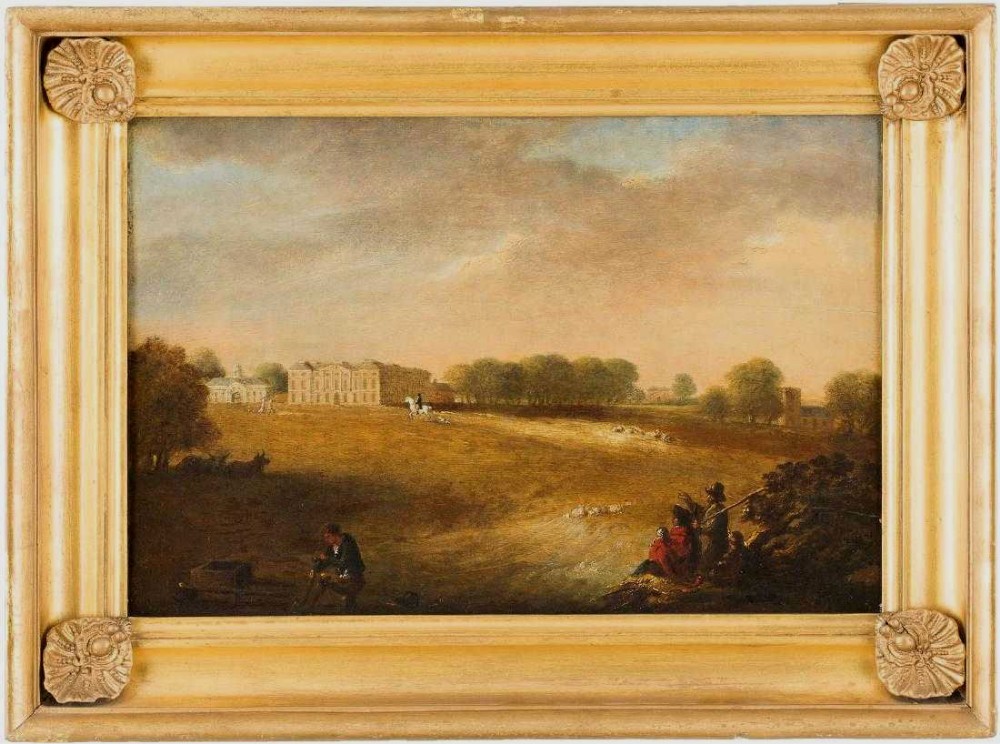
Archive II An eighteenth-century English School oil painting depicting an expansive country estate vista with figures in the foreground under a cloudy sky. View II
Archive III An eighteenth-century English School oil painting depicting an expansive country estate vista with figures in the foreground under a cloudy sky. View III
FURTHER BROWSING

Visitors also looked at these ⇣

Enlarged Archival View
Telephone 07958 699 645
Location
18 La Gare
51 Surrey Row
London
SE1 0BZ
United Kingdom
Verified Since Sep 2008
Items For Sale 243
Items Sold 223
Artware Fineart
Verified Since Sep 2008
View Dealer Info
Location: 18 La Gare , 51 Surrey Row , London , SE1 0BZ , United Kingdom
Verified
Sep 2008
For Sale
243
Sold
223
An eighteenth-century English School oil painting depicting an expansive country estate vista with figures in the foreground under a cloudy sky.
English School 18th, Century A Prospect of Croome Court, Warwickshire
Ref: SA575415
An eighteenth-century English School oil painting depicting an expansive country estate vista with figures in the foreground under a cloudy sky.
Detail View 1
Detail View 2
Archival Detail
Every single antique dealer on our platform is individually approved by our internal team. We verify their professional trade history, ethical standards, and photographic quality to ensure a secure, high-standard buying environment. Upon joining, every dealer agrees to a strict 9-point code of conduct. While issues can occasionally arise, our dealers typically resolve them swiftly and directly with the buyer. In fact, since our founding in 2002, Sellingantiques has only had to step in to help resolve an issue on roughly five occasions—a true testament to the quality of our dealers and their dedication to your happiness.
Our dealers are highly experienced in packing and shipping fragile, high-value antiques. Because you are in direct contact with the dealer, you will be able to easily go through all available shipping and insurance options together to ensure your item arrives safely.
Antiques are the ultimate green purchase. By choosing historical pieces over newly manufactured goods, you completely eliminate the carbon footprint of modern mass production while preserving exceptional, timeless craftsmanship.

Eighteenth-century English landscape painting, often referred to as topographical or prospect painting, focused on documenting country estates, grand houses, and rural vistas in a naturalistic yet idealised manner.

Artists primarily used hand-ground oil pigments mixed with linseed oil on stretched linen canvases or wooden panels, often sealed with traditional animal skin glue size.

Authentic pieces typically exhibit natural craquelure consistent with age, period-appropriate canvas weave or wooden support construction, and dark or oxidised varnish layers on the reverse and surface.

Hang the painting as a focal point above a mantelpiece, sideboard, or console table to add warmth, historical depth, and traditional character to modern or classic room schemes.

Display the artwork away from direct sunlight and heat sources, maintain stable relative humidity, dust gently with a soft dry brush, and consult a professional conservator for cleaning.
items
Add keywords to the filter
Price
£100
£250000
Era
Movements
Material
Origin
Stock Location
Freshness
Online Payments
Categories