




Blue Porcelain Plaque
Blue porcelain plaque items bring painted ceramic panels and wall chargers into rooms, prized for rich cobalt glaze work and detailed pictorial scenes.
Blue Porcelain Plaque
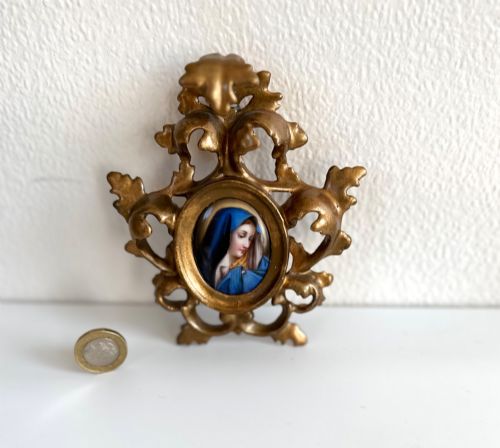
When you search for blue porcelain plaque, you find items spanning the eighteenth century through the twentieth century, encompassing decorative wall plates, chargers, and mounted plaques. These objects take forms ranging from Japanese Imari chargers and Meiji period plates to European cabinet plates, miniature portraits, and Sevres style mantel clock mounts.
You are most likely to meet nineteenth century examples on this page, including Victorian pieces, French Second Empire items, and Japanese export wares. The selection balances Oriental ceramic traditions with European neoclassical and rococo revival tastes.
How blue porcelain plaque items were made
Makers utilised traditional ceramic bodies, applying cobalt blue pigments beneath or over glazes before high-temperature firing. Many pieces incorporate hand painted details, gilding, and enamel work.
Mounting techniques combined porcelain with ormolu, gilt metal, brass, and bronze frames, particularly on French clock cases and furniture.
The inventory combines European cabinet plates with Japanese Imari chargers and Victorian clock mounts.
What varies in quality in blue porcelain plaque items
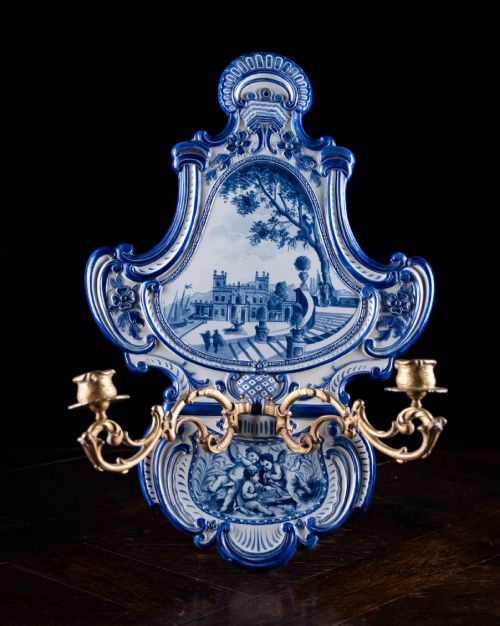
Quality rests in the precision of the hand painting, the clarity of the cobalt blue, and the crispness of any gilt or ormolu mounts. Finer cabinet plates and plaques show superior brushwork and detailed portraiture or landscape scenes.
The sophistication of the underlying ceramic body and the integration of metal mounts separate standard decorative items from works produced by leading European factories and Japanese workshops.
Villeroy and Boch·Royal Bonn·Wedgwood·Royal Vienna·Sevres·Royal Worcester·Mintons·Birks
The Blue Porcelain Plaque Glossary
- Charger
- A large decorative plate intended for display rather than table use. These form a significant portion of the blue porcelain plaque selection.
- Cabinet plate
- A high-quality porcelain plate made for display in a cabinet or on a wall. They frequently feature hand painted scenes and gilt borders.
- Ormolu
- Gilt bronze mounted on decorative items like clocks and furniture. This technique frames many nineteenth century porcelain plaques.
- Imari
- A style of Japanese porcelain exported to the West, characterised by blue, red, and gold decoration. These appear frequently among the listed plates and chargers.
- Pate sur pate
- A porcelain decoration technique where liquid clay is built up in layers to create a cameo relief effect. This method appears on specialised plaques and tondos in the collection.
Blue Porcelain Plaque: Frequently Asked Questions
How do I hang a blue porcelain plaque?
Wall plates and chargers require specialised spring-loaded brass hangers that grip the rim securely without causing damage to the ceramic body.
Ensure the wall fixing is rated to take the weight, particularly with larger nineteenth-century chargers and framed pieces.
Are these plaques meant for dining?
Most items listed under this search are decorative cabinet plates, chargers, or mounted panels intended purely for display.
Their hand-painted surfaces, gilding, and delicate metal mounts make them unsuitable for everyday culinary use.
How do I distinguish French and Japanese pieces?
French pieces often feature neoclassical portraits, Sevres style markings, and ormolu mounts characteristic of nineteenth-century salons. Japanese Imari and Meiji period items display distinct cobalt blue and iron red botanical or geometric motifs.
Examining the paste and any underglaze stamps clarifies the regional origin.
Can I clean the gilt metal mounts?
Metal mounts require gentle dusting with a dry microfibre cloth to prevent the accumulation of dirt in recessed areas. Avoid abrasive cleaners that strip the original gilding from ormolu and brass elements.
What is a tondo plaque?
A tondo is a circular work of art, in this context executed in porcelain with techniques like pate sur pate or fine enamel painting. These round pieces were designed specifically for framed wall display.