


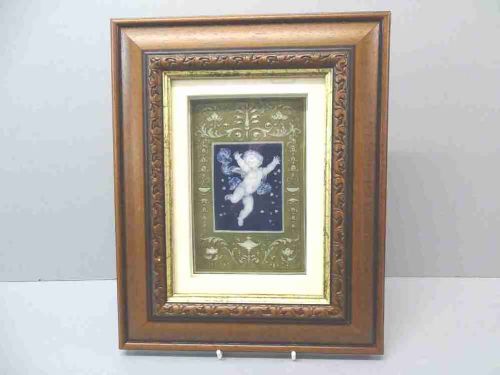


Victorian Pate Sur Pate
Victorian pate sur pate brings translucent ceramic reliefwork into interiors through vases, cabinet plates and plaques created during the late nineteenth and early twentieth centuries.
Victorian Pate Sur Pate
When you search for Victorian pate sur pate, you are looking at porcelain items decorated with layered ceramic slip to build up cameo-like figures and classical motifs. These objects range from cabinet plates and tondos to table lamps and wall plaques.
You are most likely to meet pieces originating from English factories such as Mintons and Grainger's Worcester, alongside continental porcelain. Forms include pairs of vases and individual decorative plaques spanning the 1870s to the early 1900s.
The style moves across Victorian classical revival, neoclassical, and art nouveau aesthetics. Makers utilised gilt brass mounts and gold leaf frames to display these ceramic panels on lamps and wall art.
How they were made
Makers built these designs using liquid ceramic slip applied layer by layer onto a porcelain body. This paste-on-paste technique allowed artists to achieve delicate shifts in opacity and relief before firing.
Finishing touches often included hand painting, enamel details, and gold leaf highlights. Metalworkers then housed porcelain bodies in gilt brass for oil lamps and framed plaques in wood and fabric.
Victorian Pate Sur Pate Retail Price Guide 2026
Typical asking prices for victorian pate sur pate among the pieces listed under this phrase on Sellingantiques today, from the lower quarter to the upper quarter. They describe what is for sale here now, not the wider market.
Artists painting these delicate reliefs risked losing days of work if a single stray drop of slip ruined the translucent layers.
What varies in quality
The finesse of the slip layering dictates the visual depth of the central figures. Skilled artists achieved subtle translucent gradients that weaker brushwork simply cannot replicate.
Mounting and framing also distinguish the standard of the piece. Gilt brass fittings and gold leaf accents vary in crispness and weight across different workshops.
Minton·Mintons·Grainger's Worcester·Kate Locke·Birks·Dresden
The Victorian Pate Sur Pate Glossary
- Pate-sur-pate
- Paste on paste technique where successive layers of liquid ceramic slip are built up on a porcelain ground to form a low-relief design. This French term describes the sculptural process central to these wares.
- Porcelain
- Vitrified ceramic material fired at high temperatures to achieve a white, non-porous body. It serves as the standard canvas for pate sur pate reliefwork.
- Slip
- Liquid clay mixture applied to pottery for decoration or structure. In this work, it forms the translucent relief figures.
- Tondo
- Circular work of art, whether a painting, plaque or ceramic plate. These round formats appear frequently in nineteenth-century decorative pieces.
- Gilt
- Application of gold leaf or powdered gold to a surface. It frames and enhances the ceramic plaques and lamp bases.
Victorian Pate Sur Pate: Frequently Asked Questions
What is pate sur pate?
Pate sur pate is a ceramic technique where layers of liquid porcelain slip are built up on a body to create a translucent, cameo-like relief design.
Artists painted successive coats of slip while the clay remained wet, allowing fine details to emerge through careful shading and scraping.
How were these items used?
These pieces served primarily as ornamental items for nineteenth-century interiors, including cabinet plates displayed on walls or stands.
Larger forms functioned as decorative vases, table lamps mounted in gilt brass, and wall plaques designed to catch the light.
Who made pate sur pate?
Major English potteries like Mintons and Grainger's Worcester produced notable examples, often employing specific artists such as Kate Locke.
Continental factories, including Dresden workshops and French makers, also created pate sur pate porcelain lamps and plaques during the late nineteenth century.
How do I date these pieces?
Dating relies on factory marks, painter signatures, and stylistic shifts between Victorian neoclassical revivals and later art nouveau designs.
Most surviving examples date from the 1870s through the early 1900s, aligning with the operational periods of these prominent ceramic studios.