

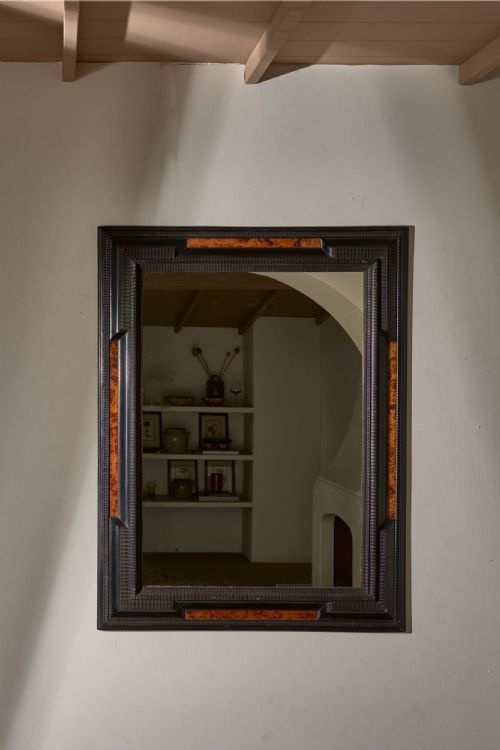
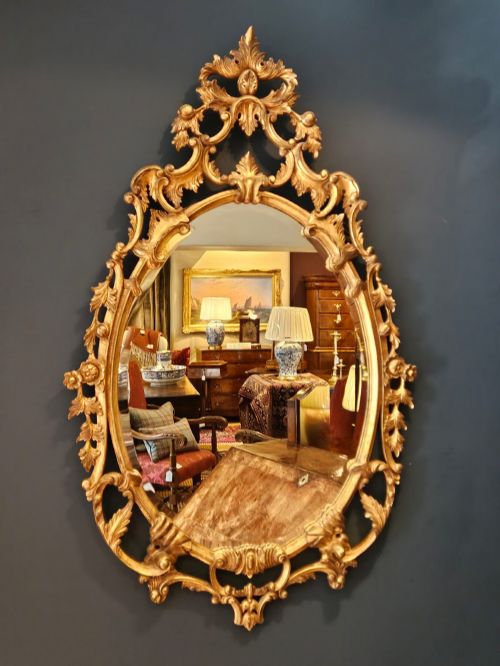
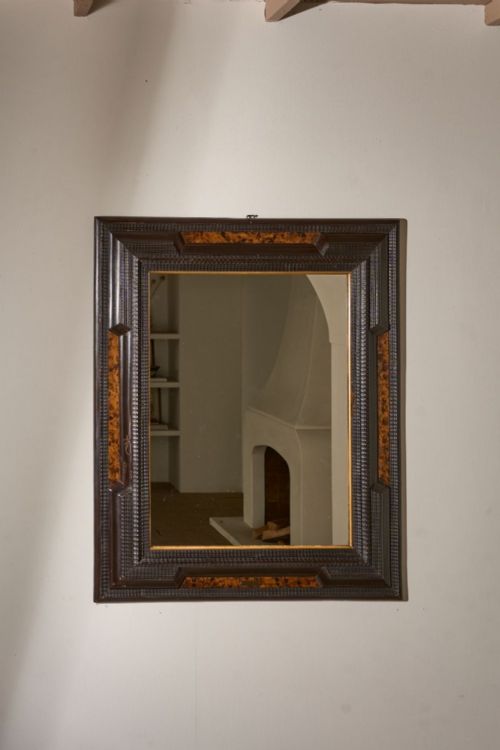


Baroque Style Mirror
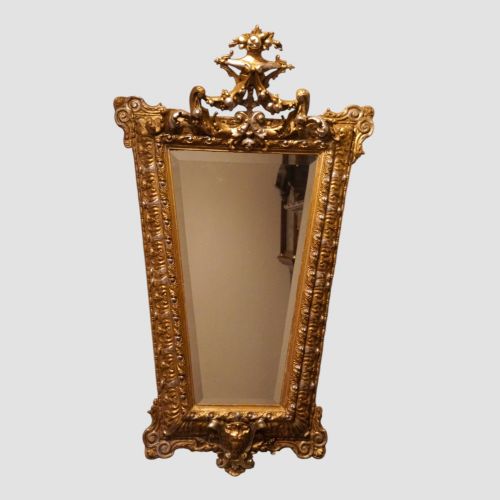
These baroque style mirror pieces bring theatrical drama and grand scale to a room.
Baroque Style Mirrors
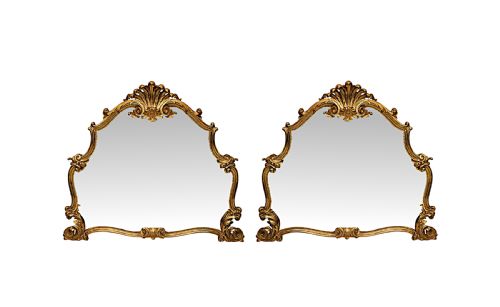
When you search for a baroque style mirror, you encounter ornate frames built for presence and reflection. The selection spans wall mirrors, overmantel mirrors, pier mirrors and cushion mirrors designed to command a wall. Pieces originate primarily from the nineteenth century, with revivals and earlier examples appearing across the inventory.
Italian and French interpretations dominate the selection, alongside English and Dutch variants. The typical piece met here is a nineteenth century giltwood wall mirror or cushion mirror exhibiting robust revival detailing. These mirrors function as architectural focal points rather than modest household accessories.
The aesthetic draws directly from seventeenth and eighteenth century traditions, reinterpreted by nineteenth century workshops. Forms range from rectangular wall hangings to expansive overmantel installations and decorative cushion frames.
Construction and Materials
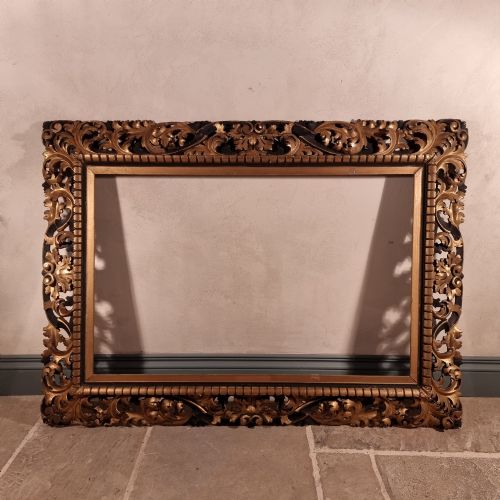
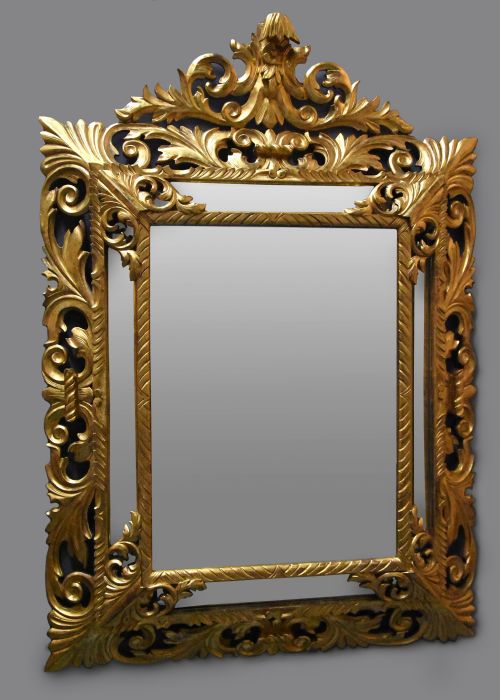
Frames rely on carved wood and gesso as a base for surface ornamentation. Artisans applied gold leaf and gilt finishes over carved wooden structures to achieve a luminous, reflective metallic sheen. Mirror glass is set within these heavy wooden armatures.
Techniques combine deep relief carving with delicate gesso work to build complex sculptural profiles. The material palette centres firmly on giltwood, gold leaf and carved wood, supported by mirror glass.
Retail Price Guide 2026
Typical UK retail prices for baroque style mirror, calculated from the Sellingantiques database of over a million retail prices indexed since 2003. This retail price guide relies exclusively on Sellingantiques data; no external sources or auction records are used, so the figures do not describe the wider market.
Judging Quality
The distinction between tiers rests upon the depth and vigour of the carving. Superior examples show confident hand-carved relief work in the wood and gesso, whereas lesser pieces rely on shallow moulding and mechanical uniformity. The handling of the gilding further separates standard production from ambitious workshop output.
Proportion and architectural coherence dictate the success of the piece. Stronger examples maintain balanced symmetry and crisp detail across large surfaces, while lesser items lose definition in the ornamental foliage and scrolls.
The Baroque Style Mirror Glossary
- Giltwood
- Wood covered with gold leaf or a gold-coloured finish. This material forms the primary visual signature of baroque mirrors.
- Cushion Mirror
- A mirror frame featuring a broad, outward-sloping border that resembles a soft cushion. This profile creates additional depth and reflects light from multiple angles.
- Overmantel Mirror
- A large mirror specifically designed to hang above a fireplace mantelpiece. These pieces often span significant horizontal dimensions.
- Pier Mirror
- A tall mirror intended to hang on the wall space between two windows. They make efficient use of narrow architectural gaps.
- Gesso
- A plaster-like mixture applied to wood frames to create a smooth surface for gilding. Carvers cut intricate details directly into this hardened layer.
Frequently Asked Questions
How do I hang a heavy giltwood mirror?
These heavy carved wooden frames require professional wall fixings secured directly into structural studs or masonry. Distributing the weight safely protects both the wall and the antique frame.
Consult a specialist art installer to ensure the hanging brackets match the substantial weight of giltwood and mirror glass.
Where should I place a large baroque mirror?
Position these mirrors opposite a window to maximise natural light distribution and amplify the sense of space in a room. Overmantels and main reception walls provide traditional placements.
Ensure the wall can support the physical scale and visual weight of the frame without cluttering adjacent furniture.
How do I clean a vintage mirror frame?
Dust the carved giltwood gently with a dry, soft brush to protect the delicate gold leaf and gesso surfaces. Avoid liquid cleaners or chemical polishes on the antique frame entirely.
Clean the mirror glass separately using a minimal amount of glass cleaner applied to a cloth rather than sprayed directly onto the glass.
What defines the baroque revival style?
Baroque revival pieces emulate the dramatic movement, rich ornamentation and theatrical scale of the seventeenth century. Nineteenth-century makers drew on these historical motifs to create grand decorative items.
Scrollwork, deep relief carving and luminous gilt surfaces characterise this exuberant aesthetic.