





Arita Imari Porcelain
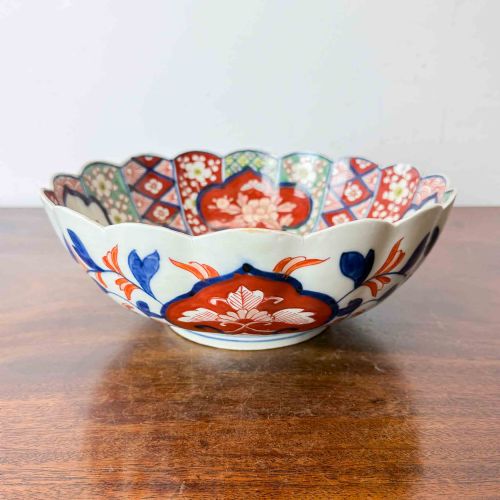
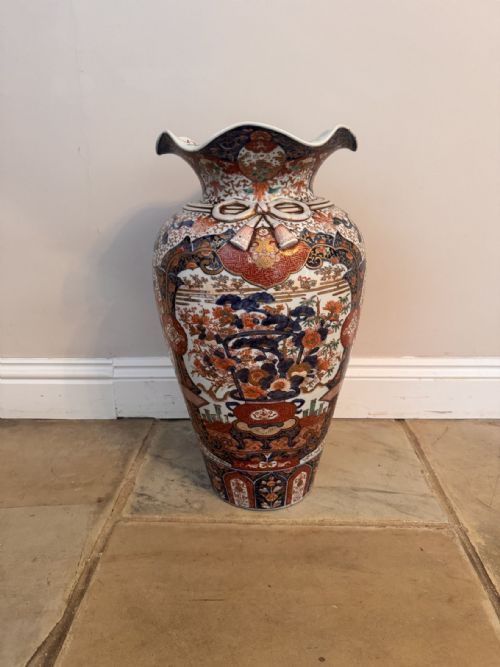
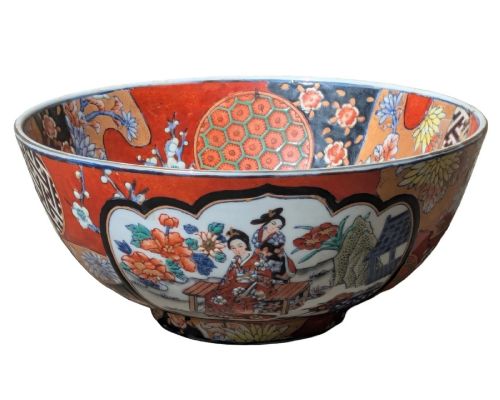
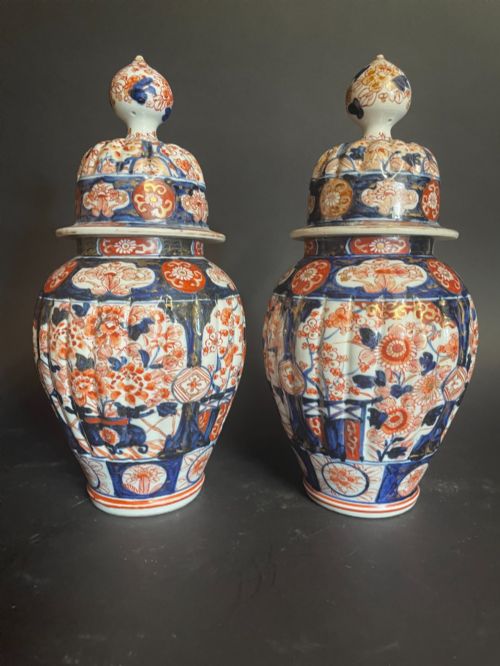
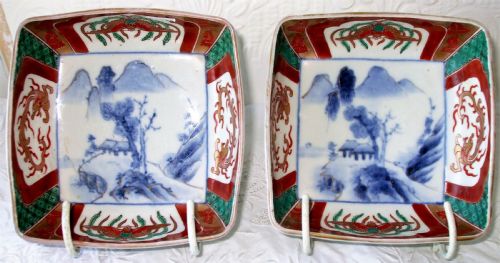
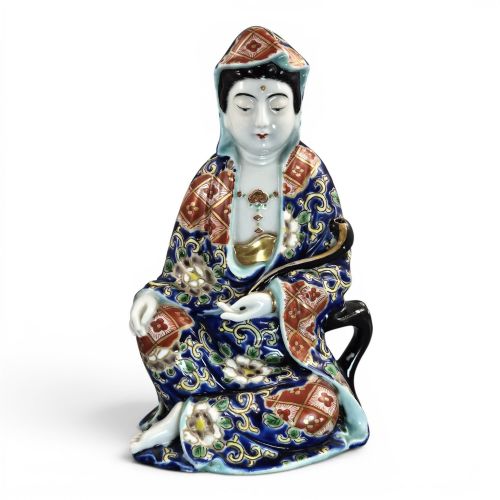
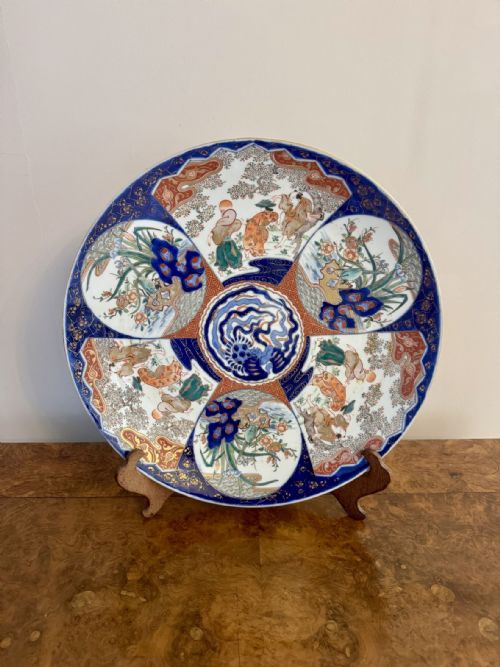
These pieces of arita imari porcelain bring together rich cobalt pigment and enamel tones on hard paste bodies, offering a striking display of historic craftsmanship.
Arita Imari Porcelain
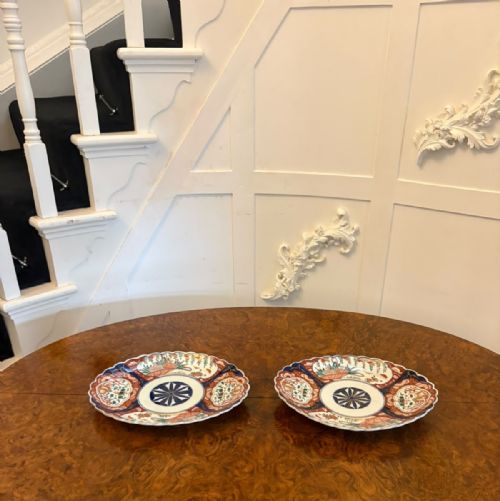
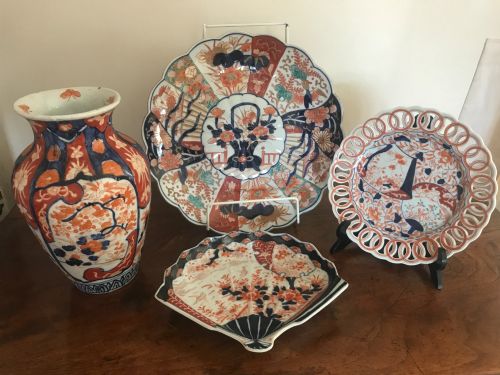
Arita imari porcelain encompasses decorative plates, chargers, bowls, vases, and lidded jars originating from Japan. The selections span from the Edo period through the Meiji period up to the early twentieth century.
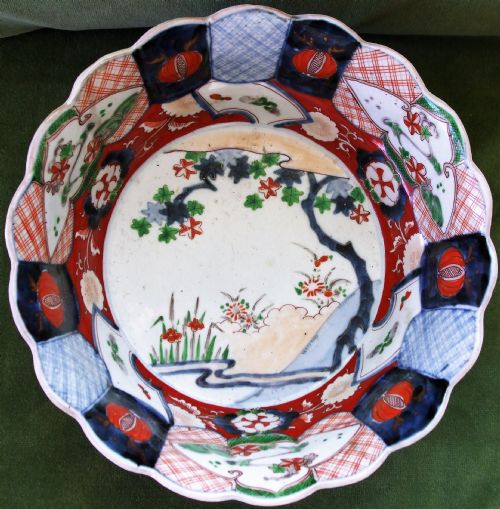
Buyers encounter substantial chargers, scalloped edge bowls, and floor standing vases alongside smaller dishes and paired temple vases. These objects represent centuries of kiln traditions centred around the town of Arita.
The aesthetic bridges functional vessel forms and decorative display pieces, often featuring traditional floral and bird motifs executed in a distinct palette.
How arita imari porcelain was made
The foundation relies on hard white porcelain shaped on the wheel or in moulds, fired at high temperatures to achieve a dense, resonant body. Cobalt pigment is applied under the glaze to create the deep blue elements.
Enamel colours and gold gilt or gold leaf are subsequently added over the glaze in secondary firings to build up the characteristic vibrant surface pattern.
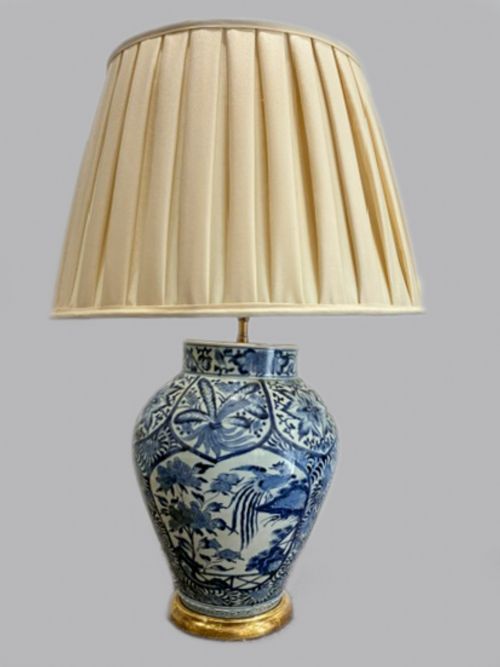
Some seventeenth century vases found a second life wired as lamps, proving that even a towering temple jar loves a practical career shift.
What varies in quality
The distinction lies in the crispness of the underglaze cobalt painting and the precision of the overglaze enamel and gold gilt details. Superior examples display balanced compositions and careful registration between the blue underglaze and the subsequent enamel layers.
The weight, throwing symmetry of large vessels like jars and chargers, and preservation of the delicate gilding separate standard production pieces from finer works.
The Arita Imari Porcelain Glossary
- Arita
- The Japanese town and surrounding region in Hizen province where production of these ceramics took place.
- Imari
- The port from which these Japanese porcelains were shipped to Europe, giving the decorative style its western name.
- Meiji Period
- The era spanning from 1868 to 1912 characterised by a resurgence in detailed export ceramics.
- Edo Period
- The historical Japanese period lasting from 1603 to 1867 encompassing early wares.
- Charger
- A large decorative plate intended for display on a wall or sideboard rather than dining use.
- Gilt
- Application of gold leaf or powdered gold used to highlight specific areas of the porcelain design.
Arita Imari Porcelain: Frequently Asked Questions
How do I clean my porcelain?
Dust gently with a soft dry cloth. Avoid using liquid cleaners or abrasives that might harm the overglaze enamels and gold gilt.
Keep the pieces out of direct sunlight to protect the pigments over time.
Can I use chargers for food?
These decorative plates and chargers are generally intended for display rather than modern dining use. Historic glazes and overglaze enamel work can be sensitive to cutlery and acidic foods.
Display them on stands or wall mounts to preserve their surface.
How do I tell Edo from Meiji pieces?
Edo period items often feature heavier bodies and simpler cobalt tones reflecting earlier kiln practices. Meiji period works frequently exhibit denser enamelling and busier decorative schemes.
Examining the foot ring and glaze characteristics helps determine the period.
Why are some vessels converted to lamps?
Vases and jars were often adapted for domestic lighting during the nineteenth and twentieth centuries as interior tastes changed. This repurposing allowed owners to integrate antique porcelain into everyday household settings.
Such conversions reflect the changing utility of decorative objects over their lifespan.