





Imari Pattern Porcelain Plate
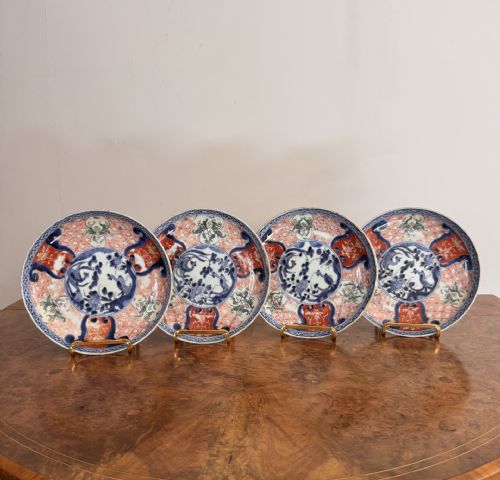
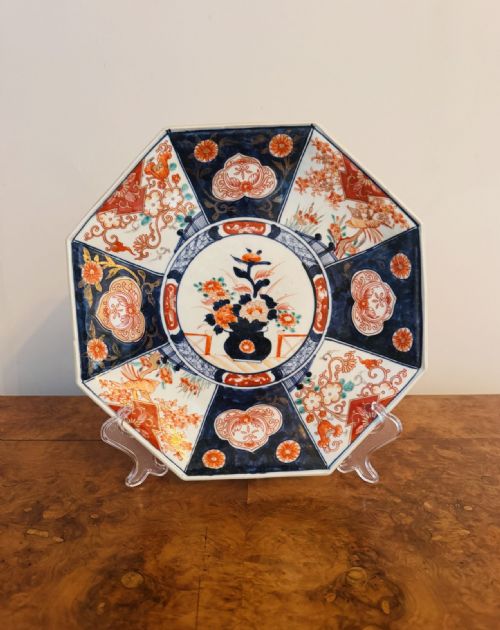
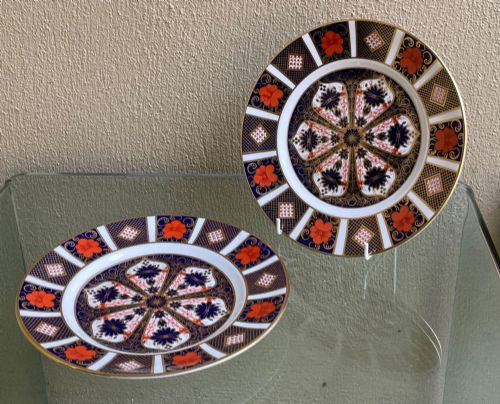
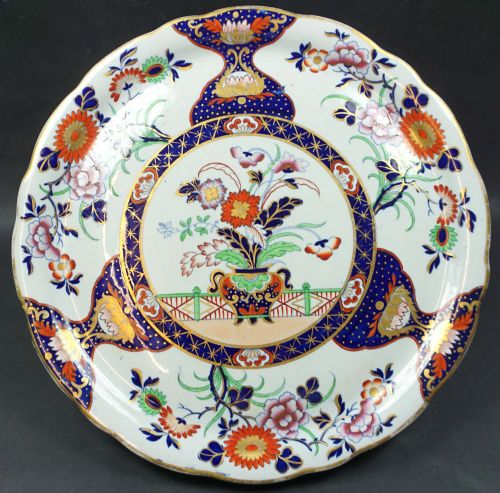
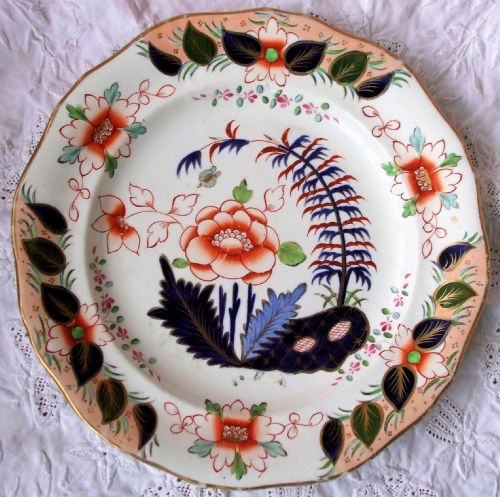
An imari pattern porcelain plate brings rich cobalt blue, vibrant iron red, and touches of gold leaf straight to the table.
Imari Pattern Porcelain Plate
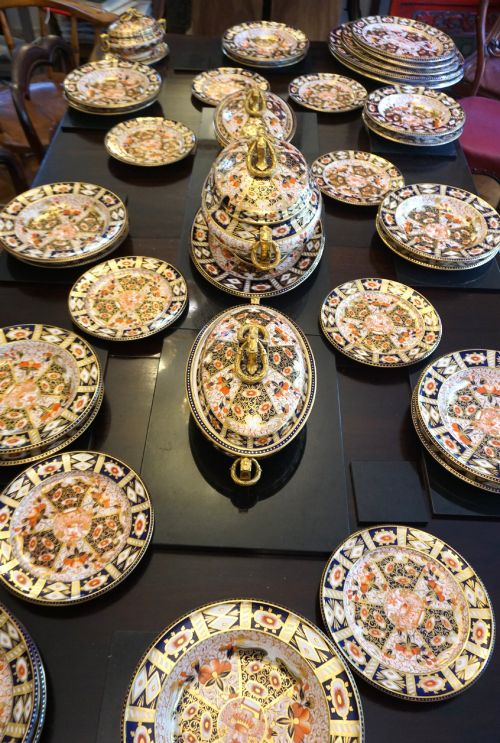
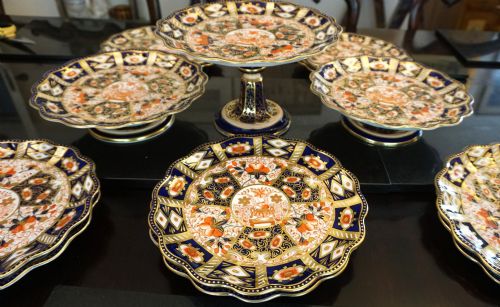
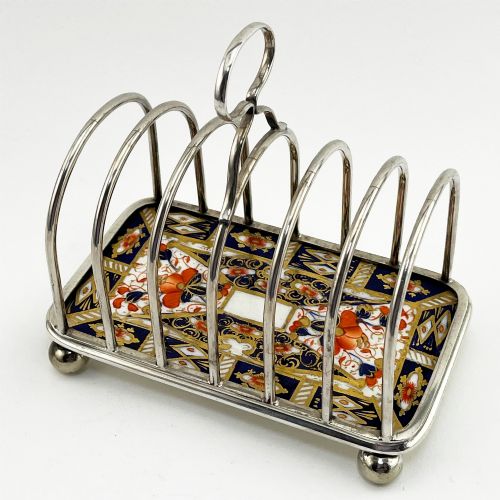
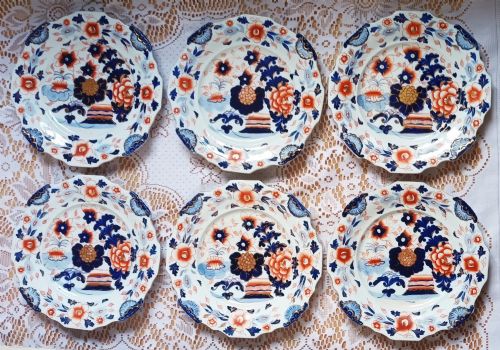
The imari pattern porcelain plate is a striking fusion of decorative traditions, spanning Japanese originals from the Edo period and English interpretations from the Georgian and Victorian eras. These pieces appear on this page in forms ranging from individual decorative plates and large serving dishes to complete dessert services and biscuit barrels.
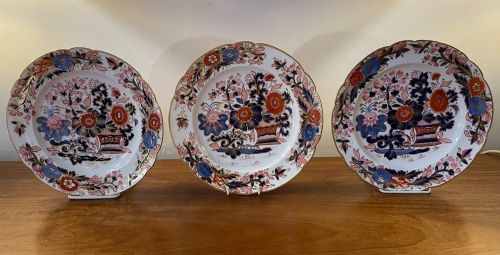
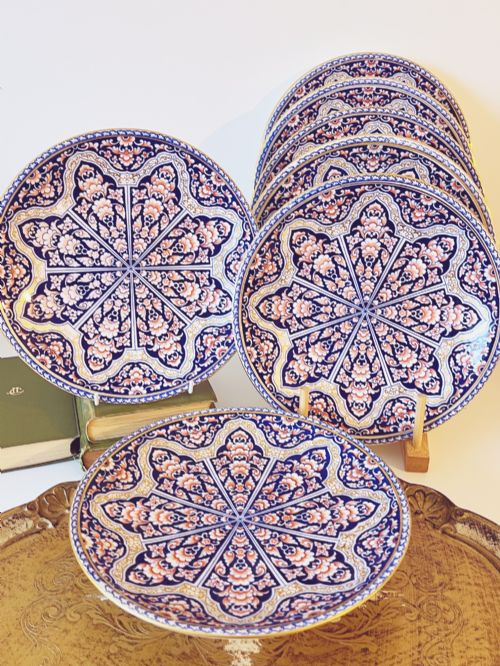
Buyers encounter traditional Japanese Imari alongside English variations produced by factories such as Royal Crown Derby, Masons, and Worcester. The palette remains distinct across these origins, typically combining underglaze blue with overglaze red enamel and gilding.
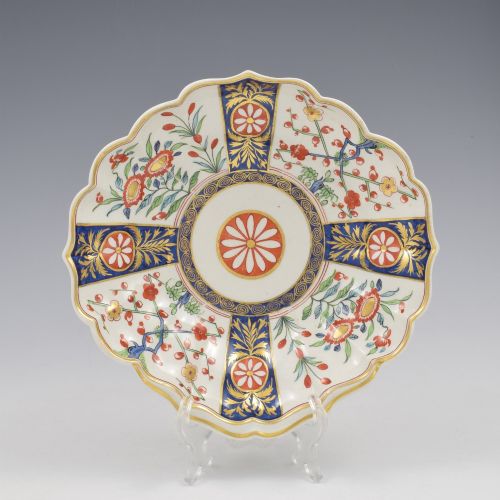
Forms vary from standard circular dinnerware to octagonal shapes, scalloped edges, and shell-moulded serving dishes. Dating stretches from the late seventeenth century through the nineteenth century and into the mid-twentieth century.
Materials and techniques
Makers utilised hard-paste porcelain, ironstone, bone china, and earthenware as the foundational body for these wares. The ceramic base underwent initial firing before receiving hand-painted underglaze blue cobalt decoration.
Overglaze enamels in iron red and other colours were applied in subsequent stages, frequently accented with gold leaf. This layered technique required multiple kiln firings to fuse the minerals permanently to the glaze surface.
Imari Pattern Porcelain Plate Retail Price Guide 2026
Typical asking prices for imari pattern porcelain plate among the pieces listed under this phrase on Sellingantiques today, from the lower quarter to the upper quarter. They describe what is for sale here now, not the wider market.
Materials documented across these ceramic entries include enamel, porcelain, gold leaf, ceramic, glaze, ironstone, bone china, and earthenware.
Evaluating quality
Quality rests upon the precision of the hand-painted brushwork and the vibrancy of the enamel colours. Superior examples display crisp cobalt definition beneath the glaze alongside thickly applied, well-preserved iron red and gold leaf highlights.
The choice of ceramic body also dictates standing, with fine porcelain and early ironstone achieving sharper moulding and more refined forms than heavier earthenware. Factory provenance, particularly marked pieces from established English potteries or authentic Edo period Japanese kilns, elevates the stature of a dish.
Royal Crown Derby·Hicks and Meigh·John Davenport of Longport·Flight Barr and Barr·Chamberlain Worcester·Masons Patent Ironstone·Coalport Porcelain
The Imari Pattern Porcelain Plate Glossary
- Imari palette
- A distinctive colour scheme dominated by deep cobalt blue and iron red, frequently enriched with gold leaf. This aesthetic originated in Japan before European potteries adapted the style.
- Ironstone
- A durable type of heavy earthenware patented in the nineteenth century. It provided a robust alternative to porcelain for busy domestic services.
- Comport
- A raised dish or bowl used for serving fruit or dessert as part of a formal table service. These pieces stand on a central foot.
- Underglaze blue
- Pigment applied directly to the raw ceramic body before the glaze is applied and fired. This technique protects the blue decoration beneath a glossy protective layer.
- Edo period
- A historical era in Japan spanning from sixteen hundred and three to eighteen hundred and sixty-eight. Porcelains exported during this time formed the basis for European imitation.
Imari Pattern Porcelain Plate: Frequently Asked Questions
How do I tell Japanese Imari from English Imari?
Japanese imari plates often feature finer porcelain bodies and traditional motifs such as landscapes, flowers, and brocade patterns derived from the Edo period. English versions by makers like Royal Crown Derby or Masons utilise ironstone, bone china, or earthenware adapted to European tastes.
Examination of the footring and any factory marks on the reverse provides further confirmation of origin. English pieces frequently carry impressed or printed maker stamps, whereas older Japanese wares rely on unglazed foot rims and spontaneous brush signatures.
Can I use antique imari plates for dining?
Many antique ironstone and porcelain plates remain structurally sound for occasional dining or dessert use. Hand-washing is essential to protect the overglaze red enamels and delicate gold leaf from detergent damage.
Dishes featuring extensive gilding or soft earthenware bodies are better suited to display rather than regular service. Modern usage should avoid microwaves and harsh automatic dishwashers entirely.
What does Kakiemon style mean on a plate?
Kakiemon refers to a refined Japanese ceramic style characterised by asymmetric designs, asymmetric placement of motifs, and a specific palette including iron red, yellow, blue, and turquoise. English factories in the Georgian period frequently copied these delicate compositions.
Plates with this decoration display sparse, elegant compositions of birds, quails, or flowering branches rather than dense brocade patterns. This restraint marks a distinct aesthetic within the broader imari tradition.
How should I display a collection of these plates?
Wall mounting using coated wire hangers or displaying them on plate stands allows the vibrant cobalt and iron red colours to catch the light. Grouping pieces by shape, such as combining octagonal plates with standard circular forms, creates visual balance.
Display areas should avoid direct, prolonged sunlight to prevent fading of the overglaze enamels over time. Sturdy shelving ensures safety for heavier ironstone and dessert services.