





19th Century Imari Charger
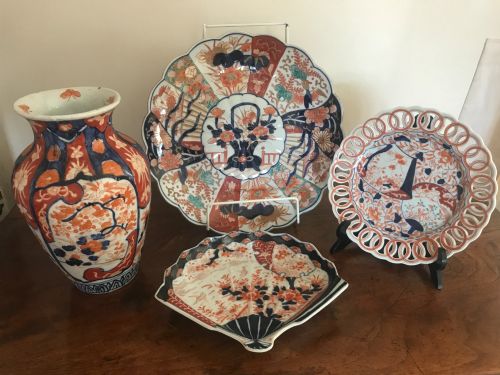
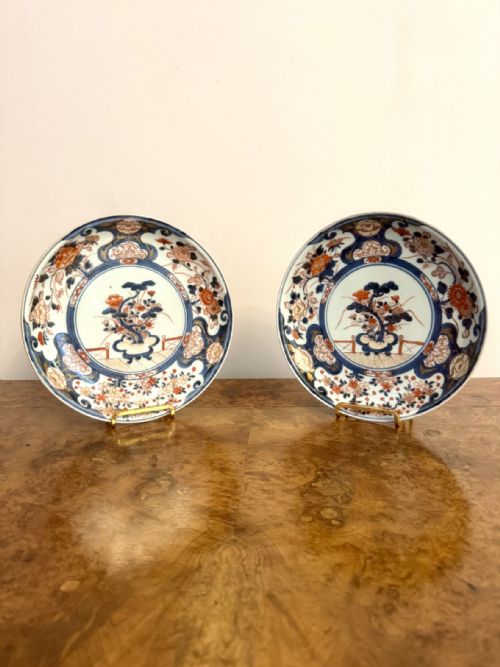
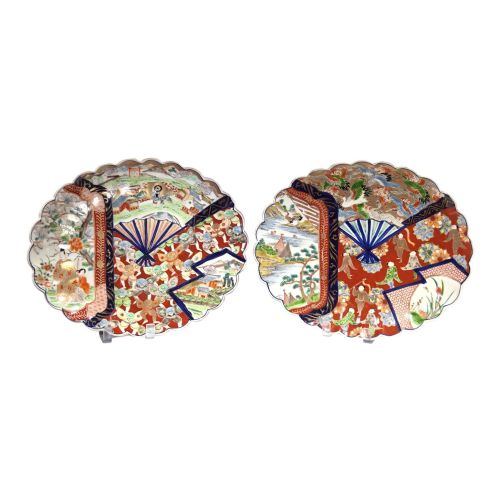
A 19th century imari charger brings bold palettes of cobalt blue and iron red into a room, offering striking wall or table display.
19th Century Imari Charger
A 19th century imari charger is a broad ceramic disc intended primarily for display rather than dining, commonly found in large formats spanning up to fifty-five centimetres across. These pieces originate from Japanese traditions, particularly associated with Arita production and the Meiji period, while also aligning with Victorian era imports in Britain.
The version most frequently met on this page is the large decorative wall charger or plate, often featuring scalloped rims and intricate panel designs. Alongside single chargers, buyers encounter matched pairs and sets of smaller plates sharing the same distinctive aesthetic.
The form functions equally well mounted on a wall or laid flat on a surface, drawing the eye through sheer scale and patterned density. These ceramics bridge utilitarian vessel roots and purely ornamental interior design.
How they were made
Makers shaped these objects in porcelain and ceramic glaze, providing a hard, white ceramic base capable of supporting heavy surface decoration. The primary palette relies on underglaze cobalt blue combined with overglaze iron red enamel.
Painters applied additional detailing using gold leaf and gilt highlights over the enamel glaze, introducing metallic brilliance to the geometric and floral motifs. Firing in kilns set the base blues before secondary firings fused the enamel and gold layers.
Listings feature items dated across the 19th century, Victorian era, and Meiji period, executed in porcelain, enamel, and gold leaf.
What varies in quality
Quality rests in the crispness of the hand-painted brushwork and the complexity of the compositional layout across the surface. Finer examples display meticulous detail within the panels and precise registration of the iron red and cobalt blue pigments.
The presence and preservation of gold leaf highlights also mark the division between standard production and top tier pieces. Superior specimens maintain vibrant gilding and deep enamel layers that catch the light without appearing dull.
The 19th Century Imari Charger Glossary
- Charger
- A large decorative plate or dish, typically exceeding thirty centimetres in diameter, designed for display rather than table service.
- Imari
- A style of Japanese porcelain featuring a distinct palette of underglaze blue and overglaze iron red, frequently accented with gold.
- Meiji Period
- The era in Japanese history spanning from 1868 to 1912, corresponding closely to the late Victorian period in Britain.
- Enamel
- A glass-like substance fused to the surface of porcelain during secondary low-temperature firings to provide vibrant colours.
- Gilt
- A thin layer of gold applied to the ceramic surface to enrich the decorative scheme.
19th Century Imari Charger: Frequently Asked Questions
How were chargers displayed originally?
Historic interiors utilised large chargers as centrepieces on sideboards or mounted them directly onto walls using specialist wire hangers. This allowed households to showcase the vibrant palette and complex patterns of imported ceramics.
Today, modern collectors employ similar methods, placing large chargers on sturdy plate stands or hanging them in dining rooms and halls to draw the eye upwards.
Are these pieces Japanese or British?
The ceramic bodies and decorative styles originate from Japanese production centres such as Arita during the Meiji period. They arrived in Britain in large quantities during the 19th century to satisfy Victorian demand for exotic imports.
Consequently, pieces carry Japanese manufacturing techniques while existing within the context of European collecting history.
What does black ship decoration mean?
Certain plates feature motifs referencing foreign vessels visiting Japanese ports, marking pivotal moments of international trade during the period. These narrative elements provide specific historical context for collectors interested in maritime themes.
Such designs add an uncommon pictorial layer to the standard floral and geometric compositions typically found on these ceramics.
How do I care for a porcelain charger?
Dusting gently with a soft, dry cloth is sufficient for routine maintenance, avoiding harsh chemical cleaners that might damage the overglaze enamels. Because gold leaf and enamel can wear over time, these pieces require careful handling during relocation.
Display mounts should support the weight securely without putting undue pressure on the rim or the scalloped edges.