




Gilded Imari Display Plate
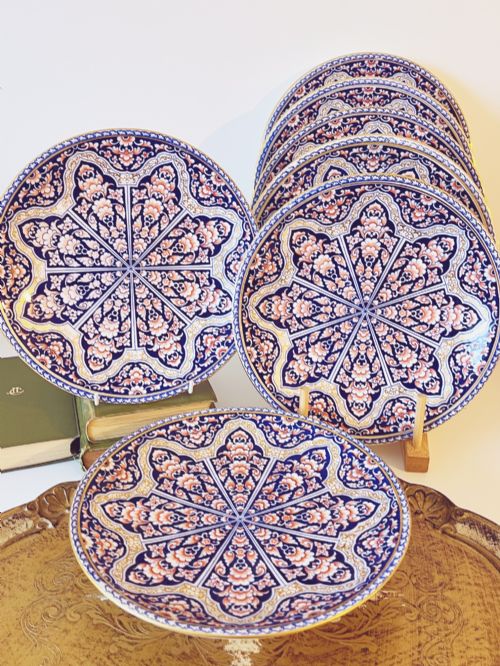
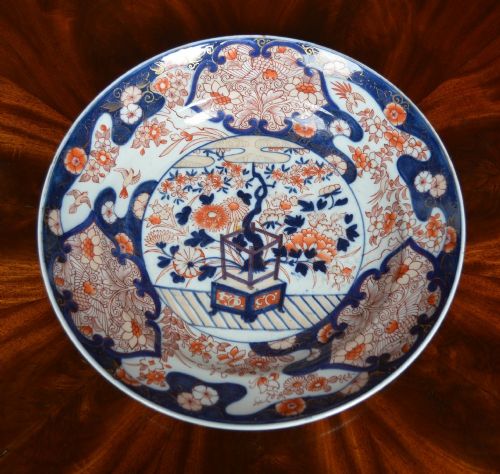
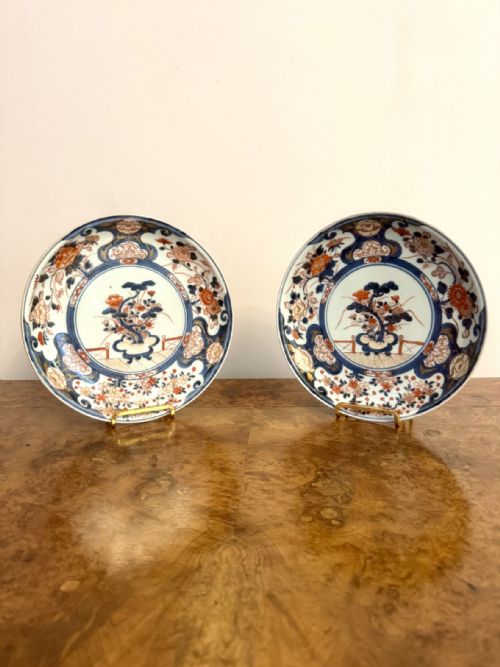
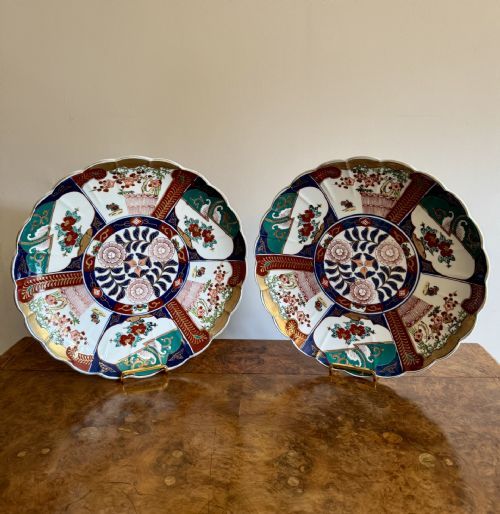
A gilded imari display plate brings together rich traditional ceramic colour and metal leaf, catching the eye on any wall or sideboard.
Gilded Imari Display Plate
A gilded imari display plate combines traditional porcelain forms with distinctive patterned painting and metallic highlights. When searching for a gilded imari display plate, buyers encounter pieces originating from Japanese workshops spanning the Edo and Meiji periods alongside English interpretations from factories like Royal Crown Derby, Worcester, and Mintons.
The physical forms range from large decorative chargers and wall plates to dessert service components and shaped dishes in shell, fan, and square formats. The palette relies on iron red, cobalt blue, and enamel details enhanced by gold leaf or gilt accents applied across nineteenth and early twentieth century examples.
How they were made
Potters shaped porcelain, bone china, or ceramic bodies before applying underglaze cobalt blue and hand-painted enamel designs. Artisans then introduced gold leaf, gilding, or gold gilt over the glaze, fixing the metallic decoration through subsequent kiln firings.
Makers utilised moulded blanks for standard round plates alongside specialised hand-formed shapes such as scalloped edges, oval profiles, and fan or shell contours. The combination of hand painting, glaze, and surface metal created the distinct visual depth characteristic of these chargers and dishes.
Listings feature porcelain, bone china, and ceramic bodies decorated with enamel, glaze, gold leaf, and gilt across the nineteenth and twentieth centuries.
What varies in quality
Quality depends upon the precision and complexity of the hand-painted floral, bird, or mythical motifs across the porcelain surface. Finer examples display meticulous brushwork and balanced compositions where cobalt blue, enamel, and gilding integrate harmoniously.
The crispness of moulded or shaped ceramic edges and the preservation of the gold leaf or gilt enrichment distinguish exceptional service plates and chargers from standard production. Subtlety in the decorative arrangement and the clarity of glaze application separate the upper tier of pieces.
Royal Crown Derby·Worcester Flight Barr and Barr·Mintons
The Gilded Imari Display Plate Glossary
- Imari
- A style of ceramic decoration originating in Japan that typically employs cobalt blue, iron red, and gilt. The name derives from the port from which these wares were shipped.
- Charger
- A large decorative plate intended for display rather than table service. These substantial ceramic pieces measure significantly larger than standard dinner plates.
- Gilding
- The application of gold leaf or gilt to the surface of porcelain. This technique adds metallic highlights to the painted patterns.
- Meiji Period
- A span of Japanese history lasting from 1868 to 1912. Many export ceramics found on the market date from this era of increased international trade.
- Edo Period
- The period of Japanese history running from 1603 to 1867. Early examples from this timeframe represent the foundation of the tradition.
Gilded Imari Display Plate: Frequently Asked Questions
How were gilded imari display plates used?
These pieces served primarily as decorative chargers mounted on walls or placed on sideboards within nineteenth-century interiors. Certain examples formed part of larger dessert services intended for formal dining tables.
Over time, the focus shifted toward display use due to the delicate nature of the enamel and gold leaf decoration. Their size and vibrant palettes made them focal points in reception rooms.
How do you clean a gilded imari display plate?
Maintenance requires gentle dusting with a soft, dry cloth to protect the delicate enamel and gold leaf surface. Moisture and abrasive cleaners should be avoided entirely to preserve the historical glaze.
Display stands ought to support the weight securely without putting pressure on the ceramic edges. Regular handling should remain minimal to prevent wear on the hand-painted details.
How do you tell Japanese pieces from English ones?
Japanese examples from the Edo and Meiji periods typically feature characteristic hand-painted motifs and unglazed foot rims typical of Eastern export porcelain. English equivalents often carry factory date marks and backstamps from firms like Mintons or Royal Crown Derby.
The clay body and weight also offer clues, with bone china appearing frequently in English dessert services while hard-paste porcelain defines the Japanese tradition.
What periods do these display plates come from?
The listings span from the eighteenth century through the Victorian era up to the early twentieth century. Georgian and Victorian English pieces sit alongside Japanese Edo and Meiji period examples.
This broad chronological range reflects the enduring popularity of the style across different manufacturing centres in both Europe and Japan.