








Japanese Decorative Wall Charger
These japanese decorative wall charger pieces bring vibrant colour and intricate craftsmanship to interior spaces through hand-painted porcelain and detailed metalwork.
Japanese Decorative Wall Charger
A japanese decorative wall charger is a wide decorative plate or dish created for display on interior surfaces rather than dining use. These items manifest primarily as large circular forms, though square shapes and scalloped edges also appear across the selection.
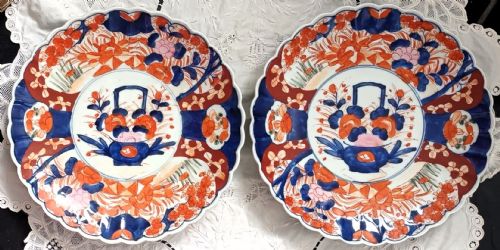
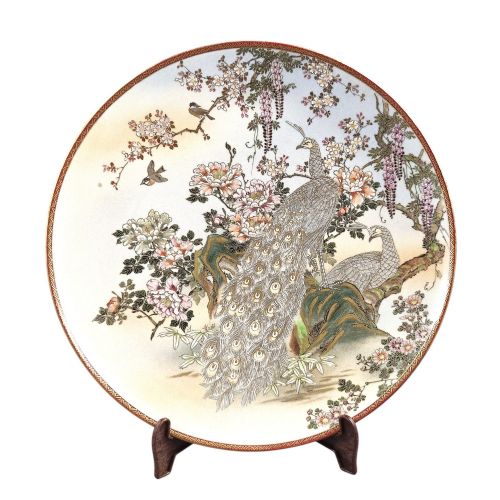
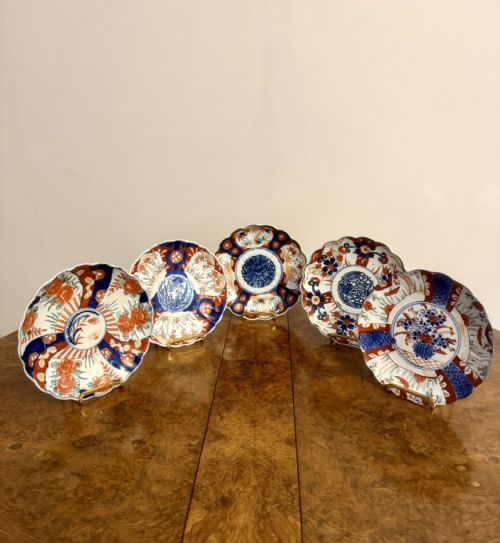
The objects stem predominantly from the Meiji period and the wider nineteenth century up to the early twentieth century. Common physical manifestations include porcelain bodies finished with Imari palettes, Kutani designs or Satsuma wares, alongside metal vessels decorated with enamel and inlay.
Most examples originate from traditional Japanese artistic centres and production hubs active during the Meiji and Taisho eras. Collectors encounter diverse scales, ranging from standard cabinet plates up to substantial chargers measuring over thirty centimetres across.
Materials and methods of construction
Potters shaped porcelain and ceramic bodies before applying underglaze blue, enamel pigments, and surface gilding. Many works combine porcelain bases with intricate surface treatments, including moriage relief work and hand-painted motifs.
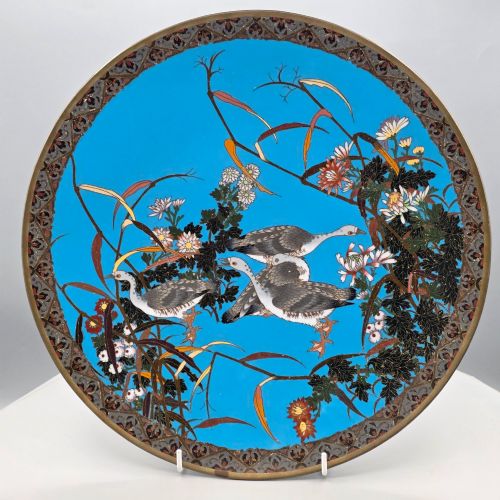
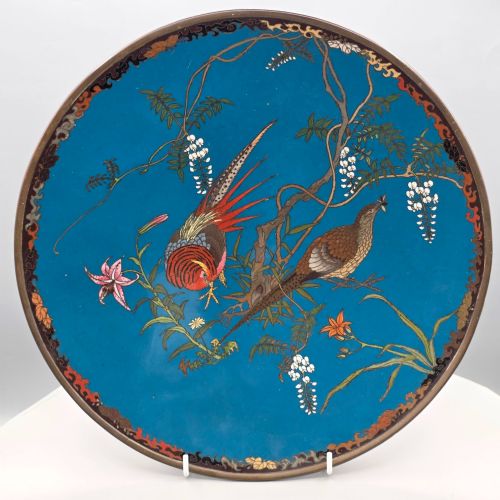
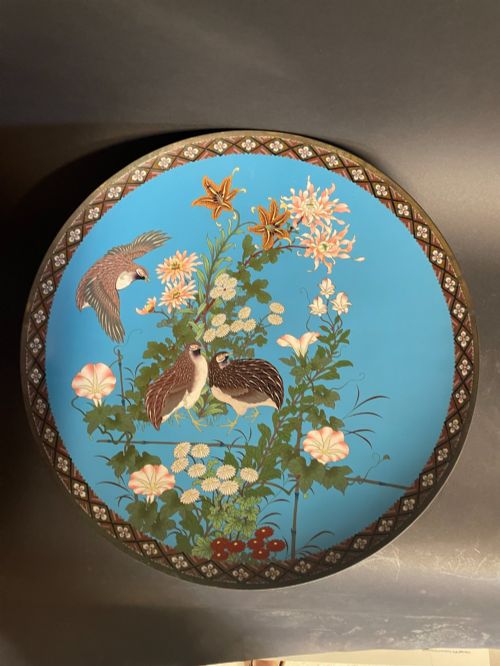
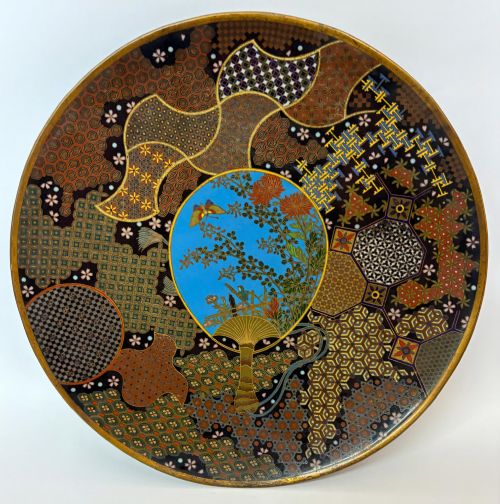
Metal versions utilise copper, brass, bronze, and patinated iron as foundations for cloisonne enamel work. Craftsmen laid down fine wire cells to hold coloured enamel pastes, firing the pieces multiple times to achieve polished pictorial surfaces.
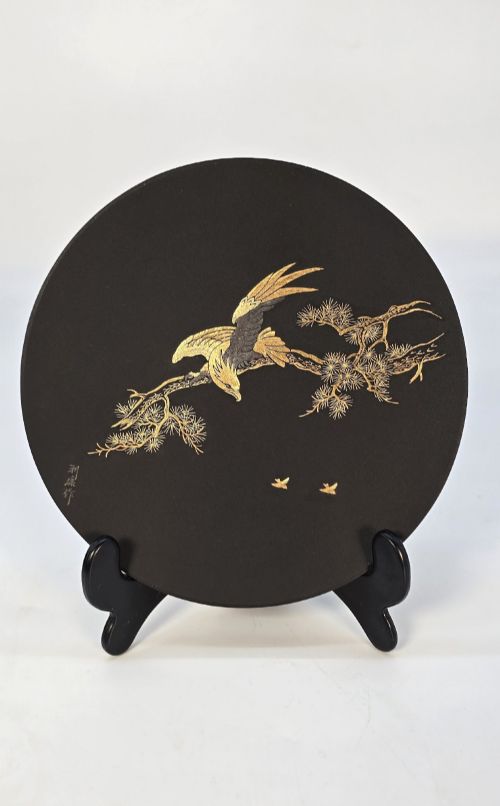
Makers integrated gold leaf, silver inlay, and specialised glazes to enrich the visual depth of both ceramic and metal vessels. Techniques such as totai shippo applied enamel directly over porcelain bodies wrapped in simulated tree bark designs.
Listings feature periods spanning the Victorian era, the Meiji period, and the early twentieth century up to nineteen-twenty.
Determinants of distinction
The refinement of the pictorial composition and the density of the decorative detail dictate the visual standing of an object. Masterpieces display complex subjects like flora, fauna, deities, and landscapes executed with exceptional brushwork or precise wirework.
The crispness of the firing and the preservation of original gold leaf, enamel, or patination influence the perceived standard of the piece. Subtle variations in glaze consistency and the crispness of scalloped or square rims distinguish superior examples from standard production items.
Koshida
The Japanese Decorative Wall Charger Glossary
- Imari
- A traditional style of Japanese porcelain featuring a distinct palette of underglaze blue, iron red, and gold. These wares gained immense popularity in Europe and domestic markets alike during the Meiji period.
- Cloisonne
- A decorative metalwork technique where fine wires are soldered to a metal base to create compartments for enamel paste. Artisans fire these cells to produce smooth, colourful pictorial surfaces depicting birds, flowers, and scenes.
- Satsuma
- A type of earthenware pottery characterised by a fine crackle glaze decorated with polychrome enamels and gilding. Pieces often incorporate raised enamel work known as moriage.
- Kutani
- A style of Japanese porcelain renowned for bold pictorial designs and rich colour application. These items frequently utilise vibrant greens, reds, yellows, and purples to depict natural subjects.
- Totai shippo
- An uncommon technique involving enamel work applied over a porcelain body rather than a traditional metal base. This method merges ceramic shaping with cloisonne surface decoration.
- Charger
- A large decorative plate traditionally intended for display on walls or sideboards. These wide vessels provide a broad canvas for complex artistic narratives.
Japanese Decorative Wall Charger: Frequently Asked Questions
How were japanese decorative wall charger pieces displayed?
These large dishes were traditionally mounted on interior walls or showcased on heavy stands and sideboards within reception rooms. Their generous scale allowed artisans to present complex pictorial narratives for decorative contemplation.
Today, owners utilise similar display methods, employing secure wall brackets or sturdy plate stands to exhibit the colourful porcelain and enamelled surfaces safely within modern interiors.
What subjects appear on these pieces?
Common motifs include natural elements such as chrysanthemums, peonies, wisteria, Mount Fuji, and various birds like phoenixes, geese, and ibises. Figures from mythology, including the Seven Lucky Gods, also frequent the painted surfaces.
These traditional themes reflect Meiji period aesthetics and draw on rich cultural symbols intended to convey good fortune, prosperity, and natural beauty to the viewer.
How do I identify Meiji period pieces?
Meiji period items typically date from the late nineteenth to the early twentieth century, exhibiting dense, highly detailed ornamentation in porcelain or cloisonne. Signatures from individual makers or workshops sometimes appear on the reverse or base of the vessels.
Stylistic shifts during this era moved from traditional utilitarian forms toward elaborate decorative arts intended for international export and domestic display.