


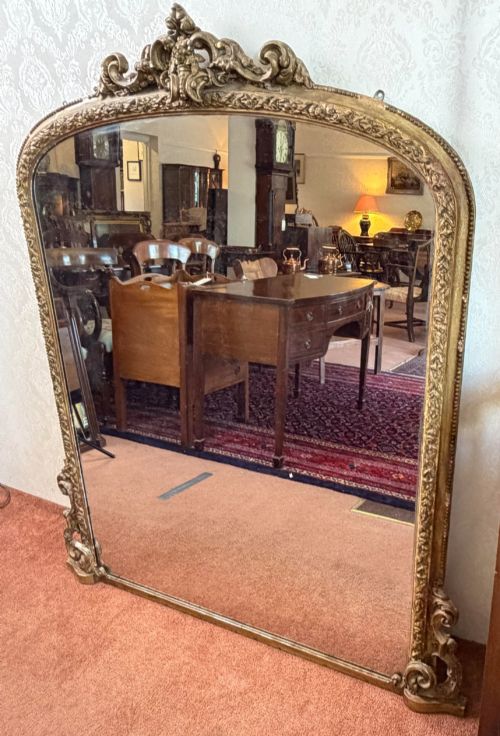
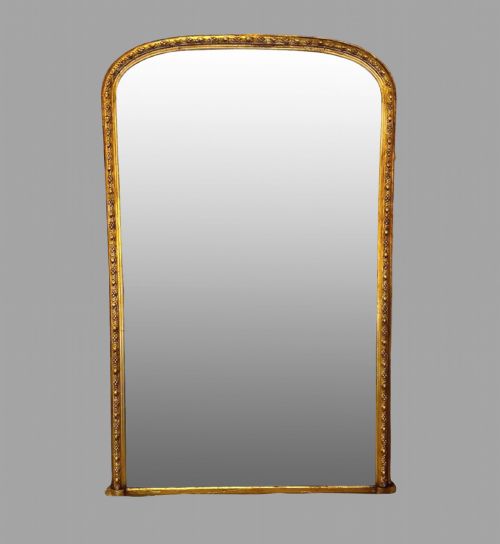
Arched Gilt Overmantel Mirror
An arched gilt overmantel mirror brings proportion and reflected light to a room, designed specifically to sit above a fireplace hearth.
Arched Gilt Overmantel Mirror
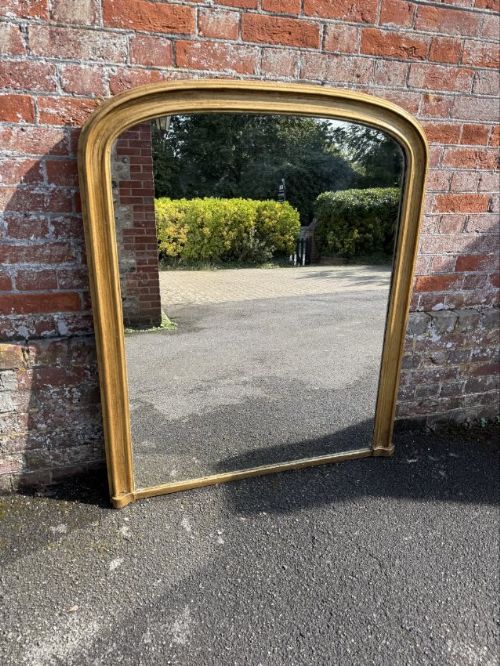
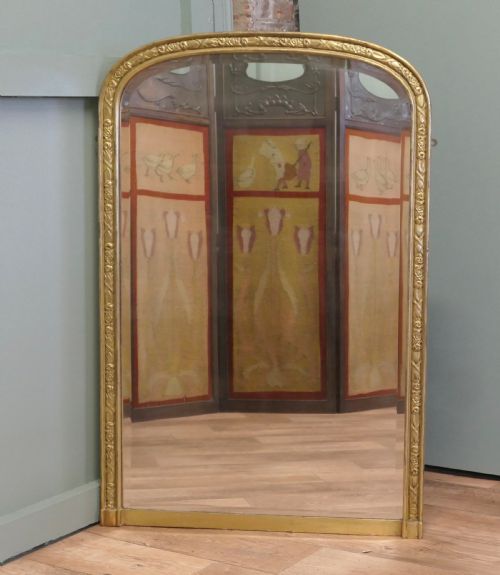
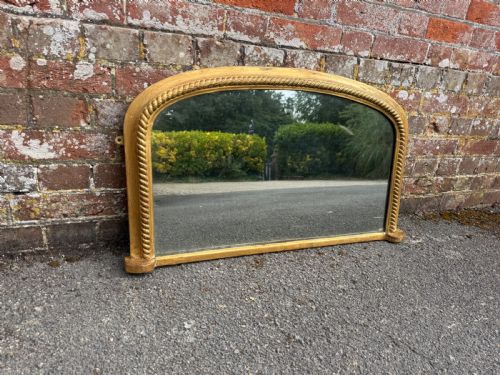
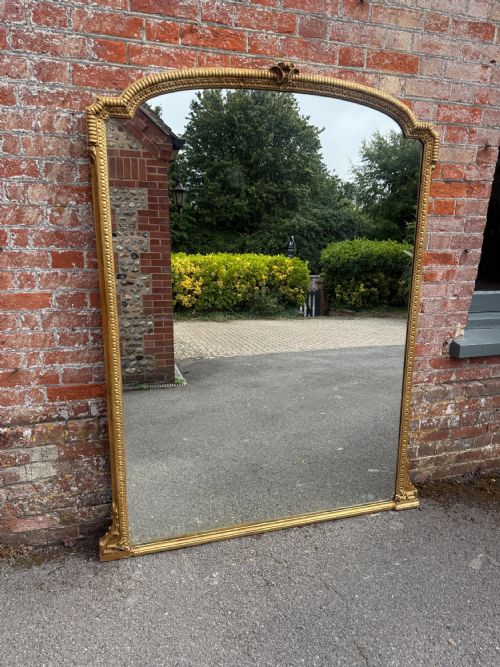
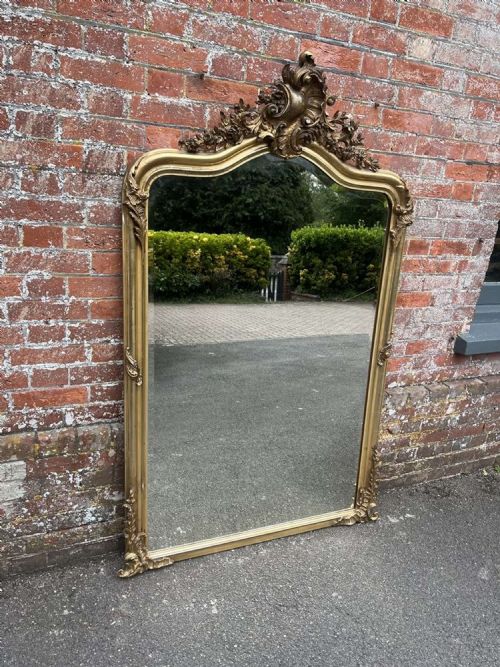
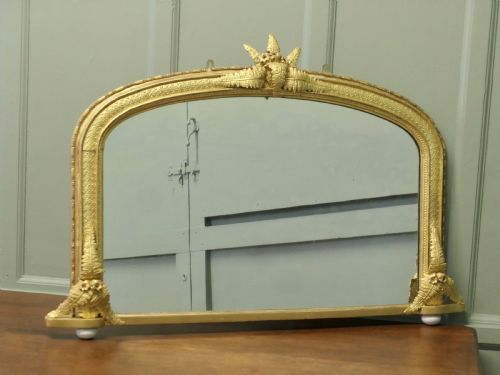
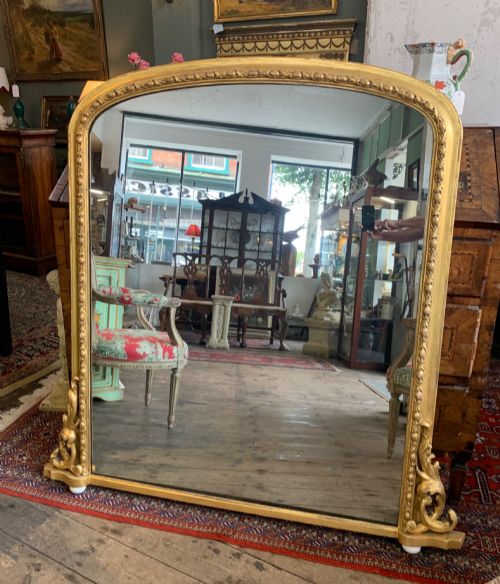
An arched gilt overmantel mirror is a substantial decorative looking glass intended to hang above a chimney breast or mantelpiece. The form typically spans a generous width to balance the hearth below, framed by a characteristic curved apex.
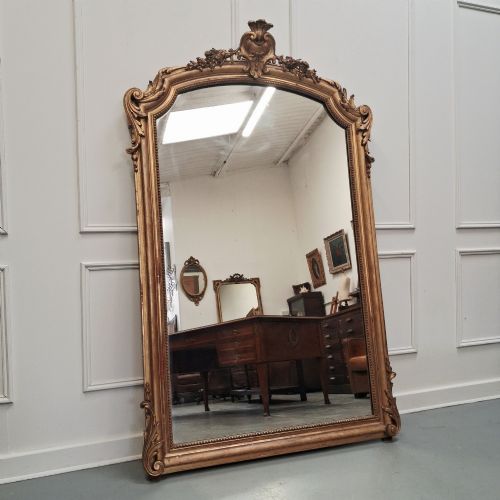
Most examples found on this page date from the nineteenth century, spanning Victorian and French provincial traditions. Makers constructed these mirrors to anchor the domestic interior, reflecting light from windows and chandeliers across the principal reception rooms of period houses.
How they were made
The underlying structure relies on carved wood or moulded plaster, which provides the rigid foundation for intricate surface decoration. Artisans applied thin sheets of gold leaf or gesso onto the wooden carcass, building up the rich metallic finish characteristic of the period.
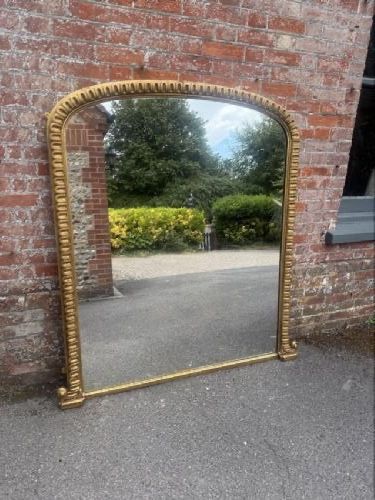
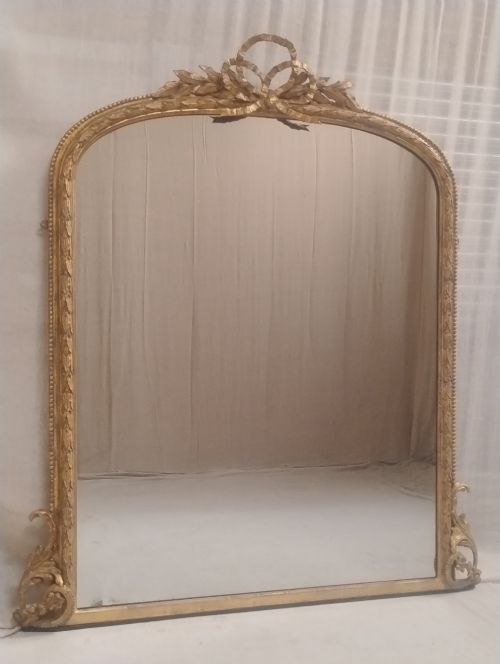
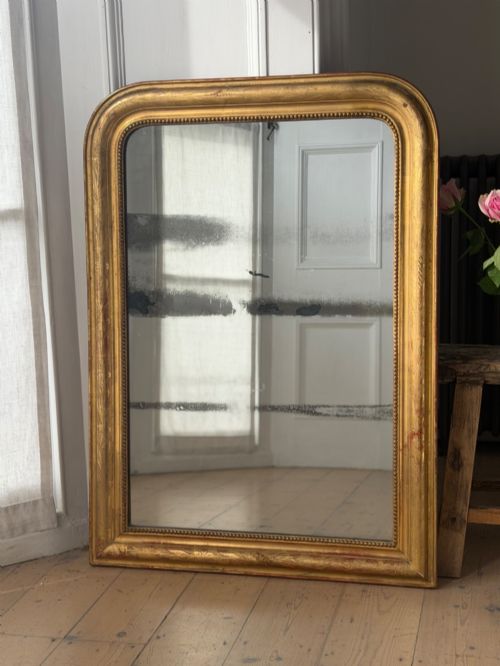
Mirror glass was set into the frame, often secured with backing boards and protected by mouldings such as rope twists, ribbon details, or ribbed profiles. French pieces frequently utilised mercury glass plates that exhibit natural foxing over time.
Some nineteenth-century makers incorporated nautical rope twist carvings into the gilt frames, bringing maritime themes far inland.
What varies in quality
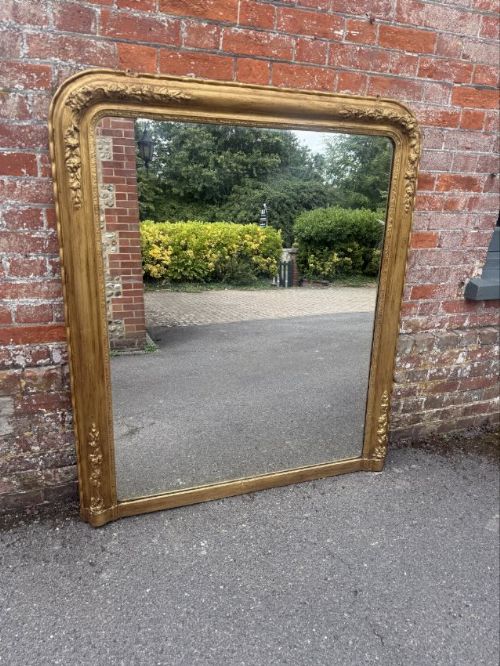
Quality rests in the crispness of the hand-carved wooden details and the depth of the original gilding rather than mass-produced composition ornament. Fine examples retain their original gold leaf surface with minimal restoration, showing harmonious ageing across the frame.
The architectural proportion of the arch and the weight of the timber frame dictate the structural integrity of the mirror. Superior pieces demonstrate careful joinery at the corners and retain intact original mirror glass plates.
The Arched Gilt Overmantel Mirror Glossary
- Overmantel
- A mirror or painting specifically designed to be positioned directly above a fireplace mantelpiece. These pieces often feature wide proportions to match the scale of the chimney breast.
- Gesso
- A plaster-like mixture applied to wood frames to create a smooth surface for gilding. Artisans carved fine decorative motifs directly into this layer before applying gold leaf.
- Giltwood
- Timber that has been coated with gold leaf or gold paint. This material provides the bright, reflective metallic finish seen on period frames.
- Foxing
- Age-related spots and discoloration within the silvering of antique mirror glass. This chemical reaction occurs over decades beneath the surface of the glass.
- Louis Philippe
- A French nineteenth-century style characterised by restrained classical proportions and simple arched tops. These mirrors offer a clean aesthetic with minimal ornamentation.
Arched Gilt Overmantel Mirror: Frequently Asked Questions
Where should an overmantel mirror hang?
These mirrors traditionally sit directly on the mantel shelf or hang securely from the wall above a fireplace opening. The lower edge rests near the shelf to anchor the visual weight of the hearth.
Placing the glass at this height allows the frame to reflect light from opposing windows across the room, brightening dark corners without overwhelming the wall space.
How do I identify a Victorian mirror?
Victorian examples often display heavier carved wood and gesso frames with decorative elements such as rope twists, fern leaves, or ribbed mouldings. The timber backing boards and framing pins provide clues to the manufacturing era.
French pieces from the same decades tend to favour simpler Louis Philippe lines or ornate Rococo revival curves with distinct crestings.
What is foxed mirror glass?
Foxed glass refers to the natural ageing of the reflective silver backing, which develops dark speckles and cloudy patches over time. This chemical breakdown results from moisture interacting with the metal behind the glass.
Collectors value genuine foxing as an indicator of age and authenticity, distinguishing original antique plates from modern replacements.
How do I clean a giltwood frame?
Giltwood requires careful dusting with a soft, dry brush to prevent damage to the delicate gold leaf surface. Moisture and chemical cleaners strip the thin metallic layer from the gesso underneath.
Preserving the original finish means avoiding abrasive cloths and leaving accumulated age patination intact on the carved wooden details.