
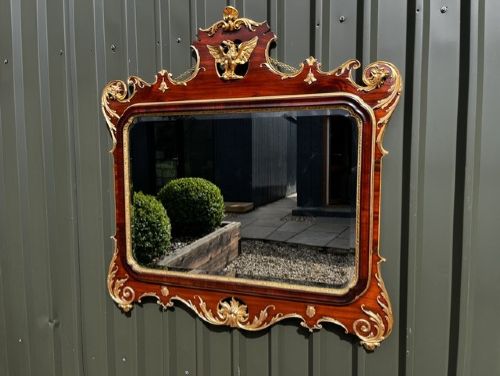
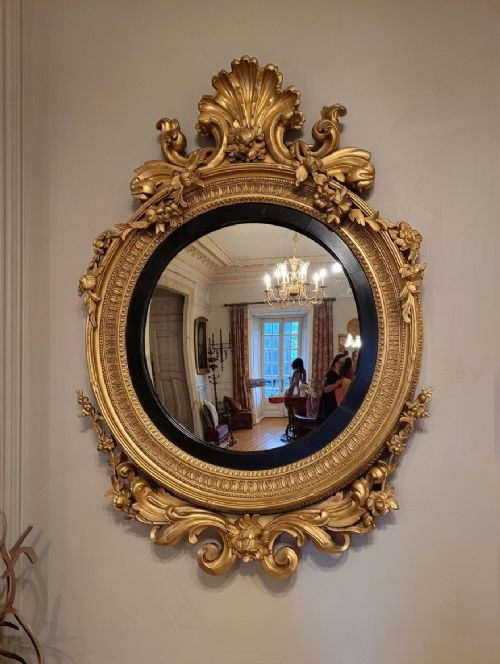
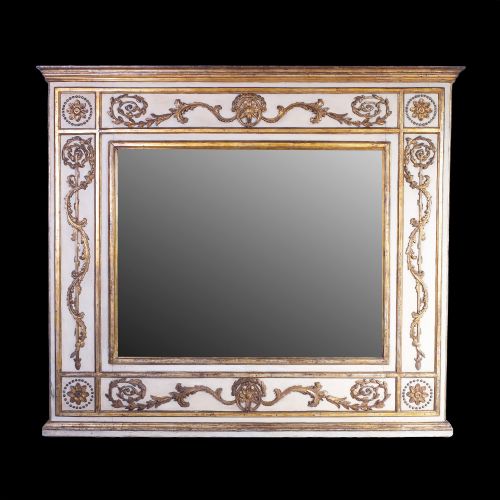
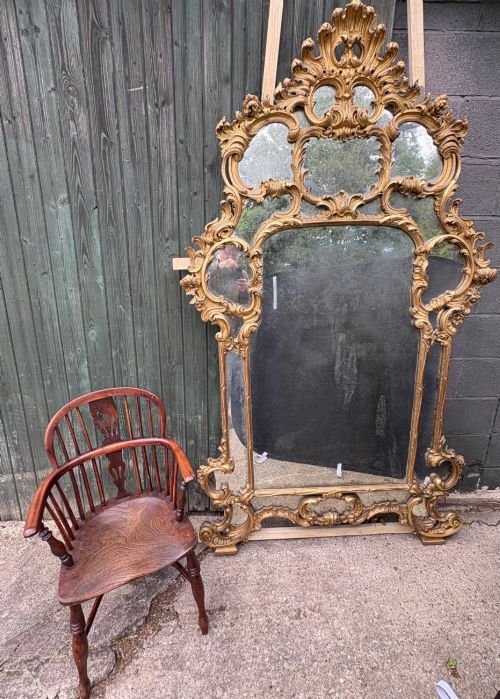
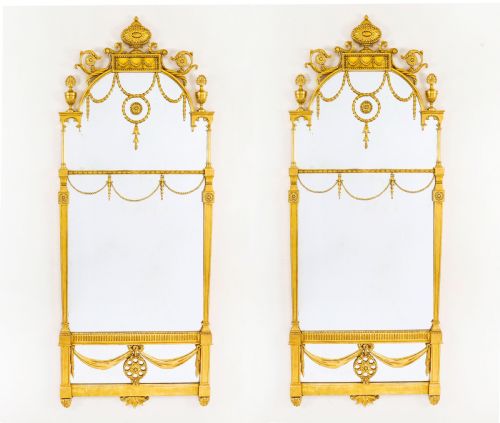
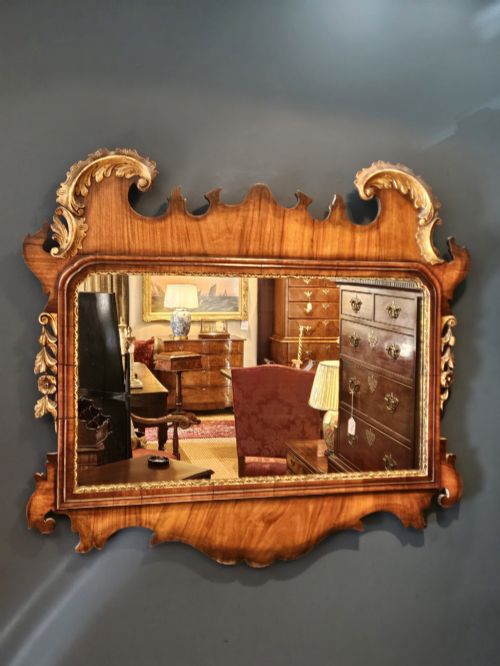


Georgian Style Overmantel Mirror
These georgian style overmantel mirror pieces bring architectural presence and classical proportion to a room, designed originally to sit above a fireplace mantel.
Understanding the georgian style overmantel mirror
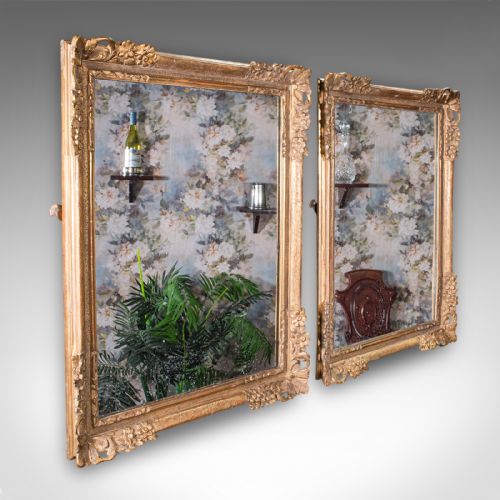
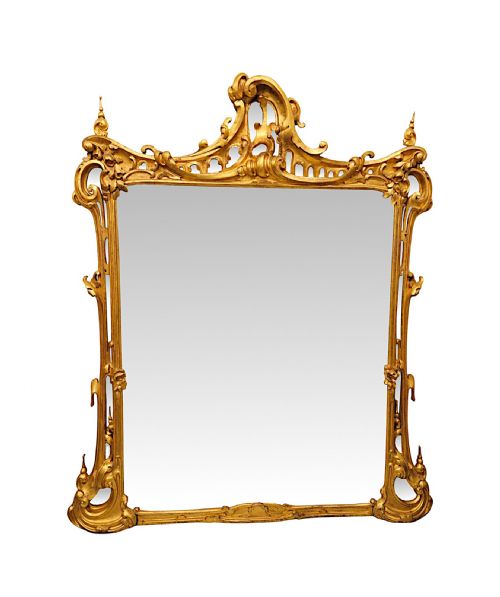
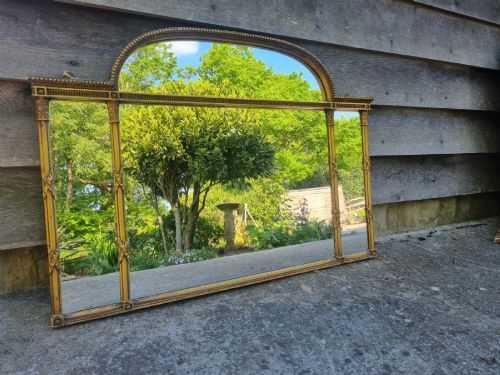
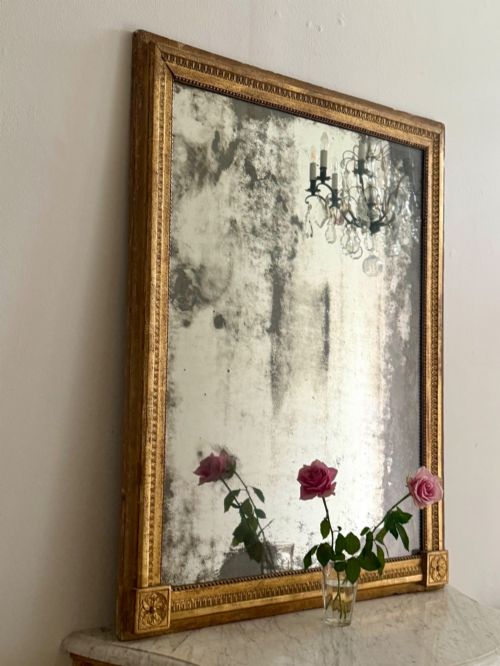
A georgian style overmantel mirror is a horizontal wall piece designed to sit directly above a mantelpiece, reflecting light and anchoring the fireplace wall. The pieces recorded here span the Victorian era, the nineteenth century, and the Regency period, carrying neoclassical decorations alongside painted and gilt finishes.
Most examples you will encounter take the form of large landscape mirrors featuring shaped tops, column frames, or triple mirror plates. Their origins stretch from nineteenth century English workshops to French influences, maintaining a horizontal format suited to domestic interiors.
Construction and Materials
The frames of these mirrors rely on carved wood as a core structure, overlaid with gesso and composition to build up crisp decorative reliefs. Artisans applied gold leaf or paint directly over these prepared surfaces to create the distinctive giltwood and painted finishes seen across the period.
The reflective plates are set within sturdy timber backs, frequently retaining their original glass and wooden backing boards. Column frames and neoclassical motifs were shaped using traditional moulding and carving techniques characteristic of nineteenth-century workshops.
Retail Price Guide 2026
Typical UK retail prices for georgian style overmantel mirror, calculated from the Sellingantiques database of over a million retail prices indexed since 2003. This retail price guide relies exclusively on Sellingantiques data; no external sources or auction records are used, so the figures do not describe the wider market.
The listings span the nineteenth century, Victorian era, and Regency period, utilising materials such as giltwood, gesso, composition, and paint.
Distinctions in Quality
The hierarchy of quality rests primarily on the depth and crispness of the carved wood, gesso, and composition details. Finer examples display sharp, well-defined neoclassical decorations and harmonious proportions, whereas simpler pieces rely on softer moulded relief.
Originality of components also dictates standing, with mirrors retaining their original glass and backboards holding distinct appeal. The execution of the giltwood or painted finish separates standard decorative work from pieces with superior surface presence.
The Georgian Style Overmantel Mirror Glossary
- Overmantel Mirror
- A large horizontal mirror specifically scaled to hang above a fireplace mantelpiece. These pieces often feature landscape orientations and elaborate frames designed to draw the eye upwards.
- Gesso
- A plaster-like mixture applied to a wooden frame to create a smooth surface for gilding or painting. It allows craftsmen to carve and mould intricate neoclassical decorations.
- Giltwood
- Wood that has been thinly coated with gold leaf. This finish gives the frame a luminous quality that reflects candlelight and daylight.
- Neoclassical
- A style drawing inspiration from the classical art and architecture of ancient Greece and Rome. It appears on these mirrors through symmetrical motifs, columns, and crisp linear details.
Frequently Asked Questions
Where should an overmantel mirror be hung?
These mirrors are traditionally positioned centrally above a fireplace mantelpiece, where their horizontal format balances the hearth below. They also function effectively on any principal wall needing a strong focal point.
Because of their substantial size and weight, secure wall fixings are essential to support the timber and glass safely.
Are the mirror plates original?
Many nineteenth-century examples retain their original glass, which often exhibits subtle foxing, minor warping, or soft silvering. These age characteristics confirm the authenticity of the piece.
Replacement glass tends to look flatter and clearer, lacking the historical depth found in period plates.
What defines Regency style in these mirrors?
Regency pieces often incorporate architectural elements such as classical columns, pilasters, and bolder horizontal lines. The influence draws heavily from British design of the early nineteenth century.
They frequently employ gilt framing and restrained neoclassical ornaments rather than heavy Victorian elaboration.