


Large French Mantle Mirror
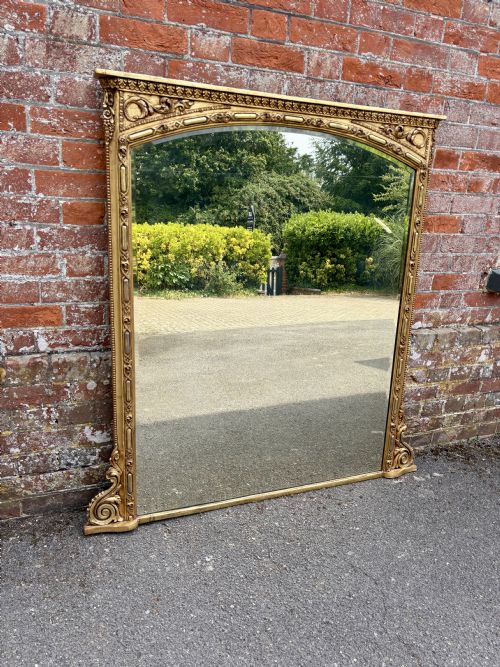
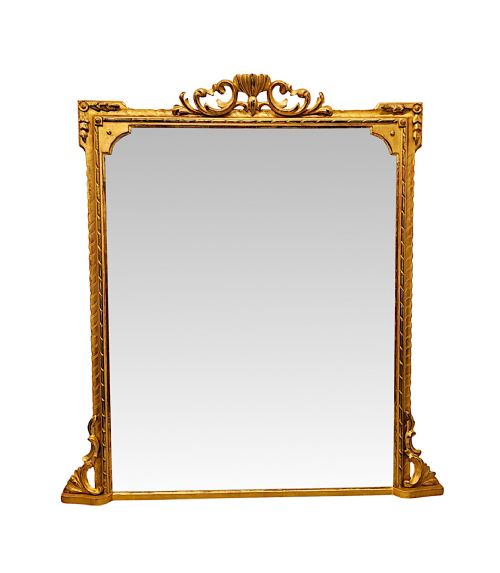
These large french mantle mirror pieces deliver grand scale and luminous reflection, bringing distinct nineteenth-century Continental presence to a room.
Large French Mantle Mirror Forms
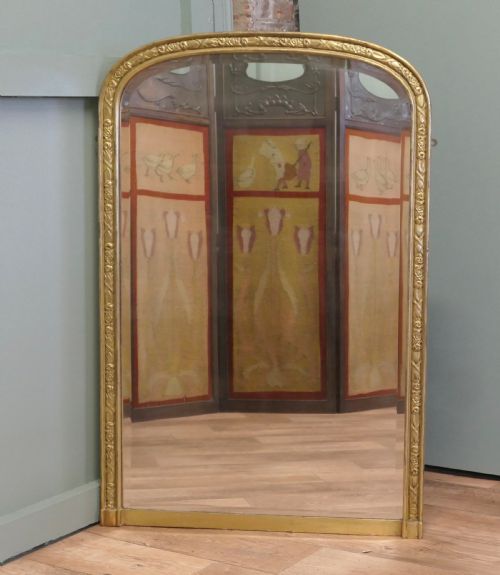
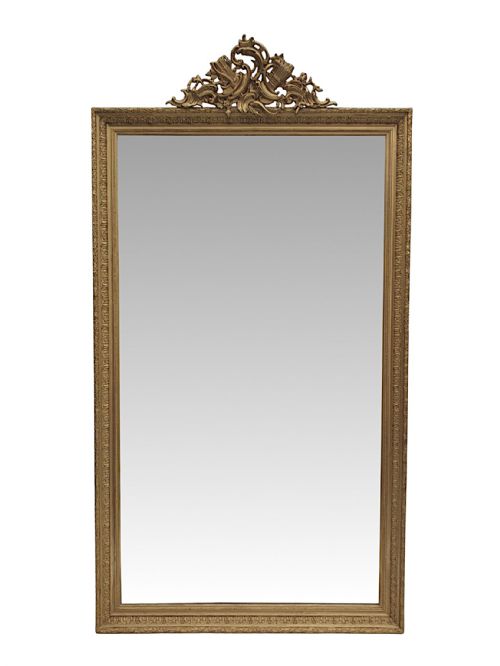
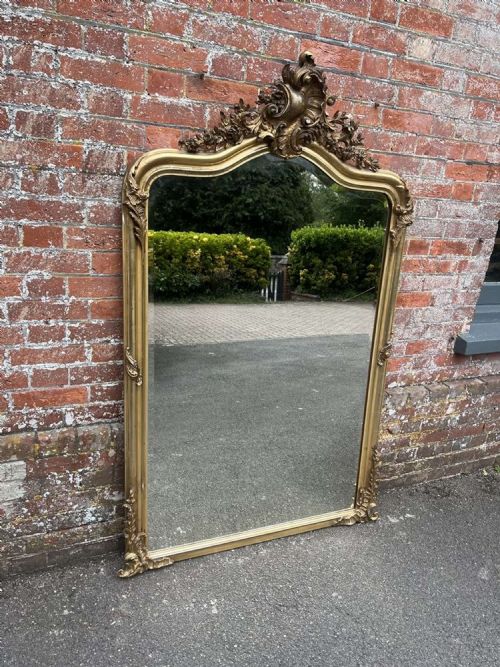
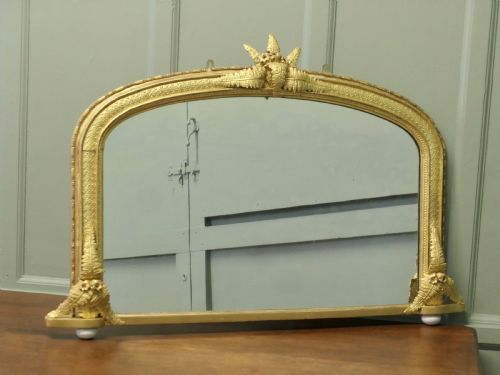
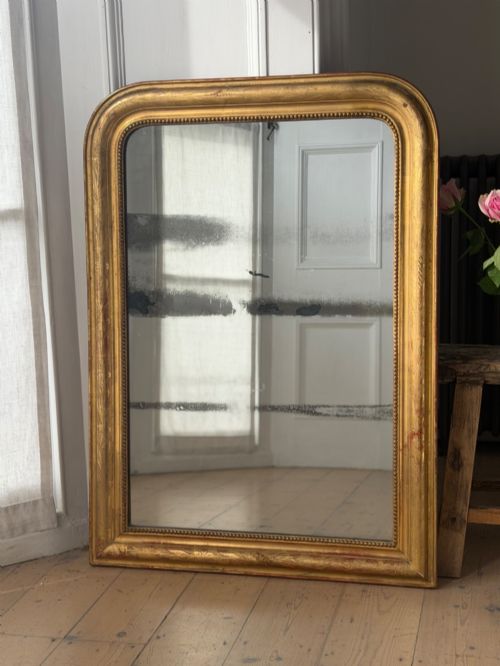
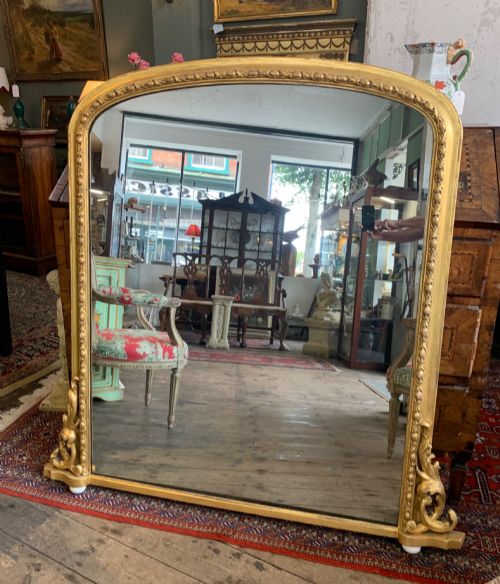
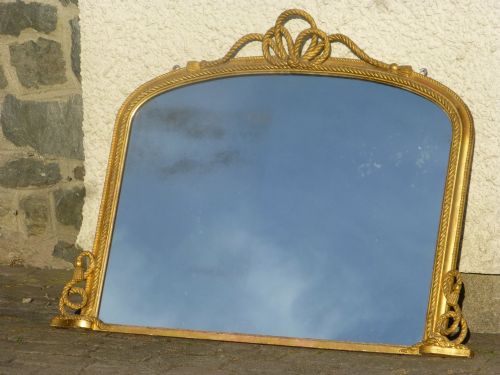
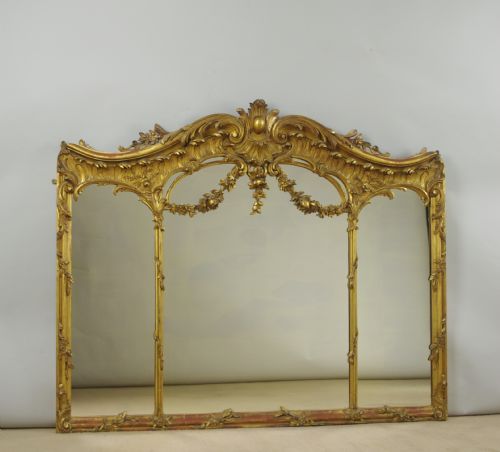
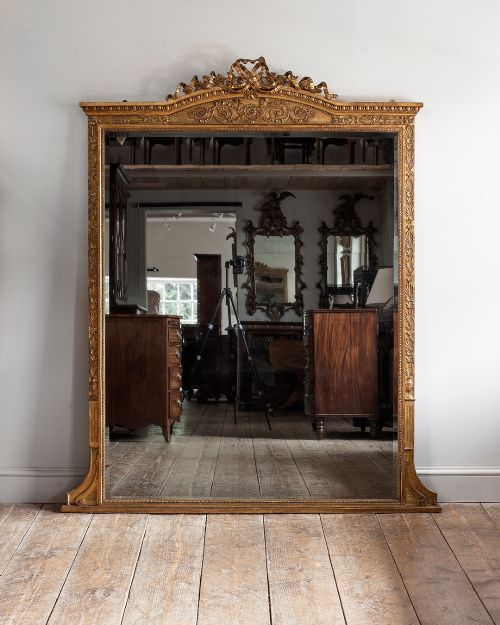
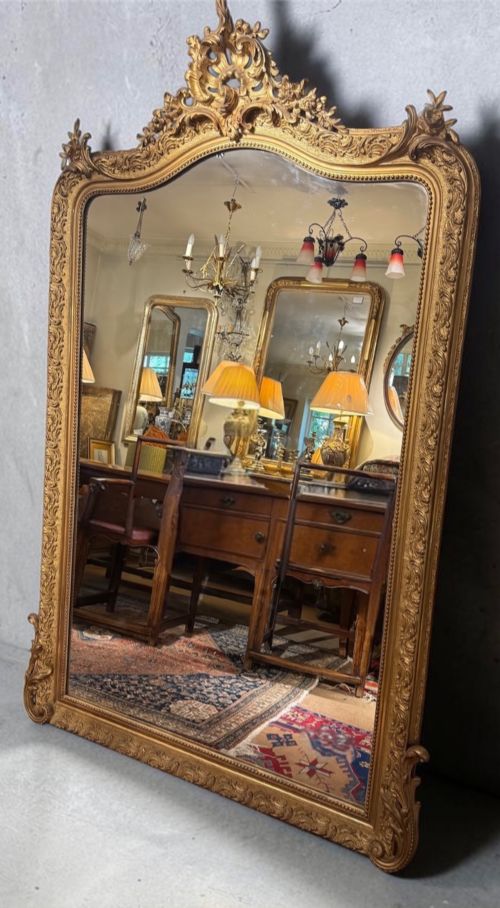
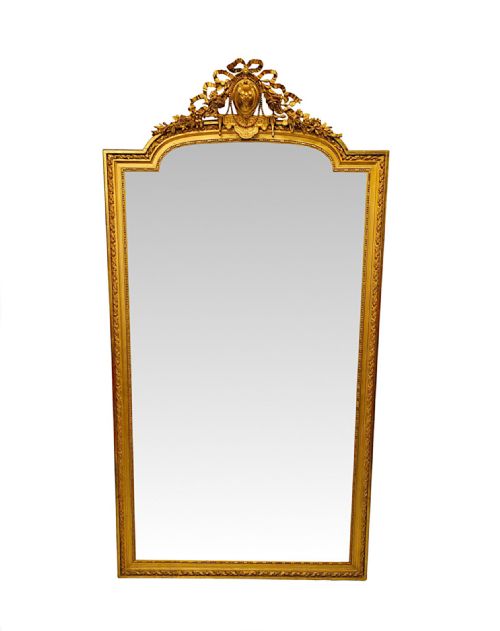
A large french mantle mirror typically spans the nineteenth century, drawing on Louis Philippe and Napoleon III aesthetics designed to sit above a fireplace. These architectural pieces often take the form of overmantle wall mirrors with arched tops, shaped tops, or cushion profiles that command attention in high-ceilinged interiors.
The archive and current selection show frequent examples featuring ripple frames, plain borders, and marginal glass configurations. Many pieces display horizontal landscape proportions or tall vertical formats suited to traditional mantelpieces and principal reception rooms.
Materials and Construction
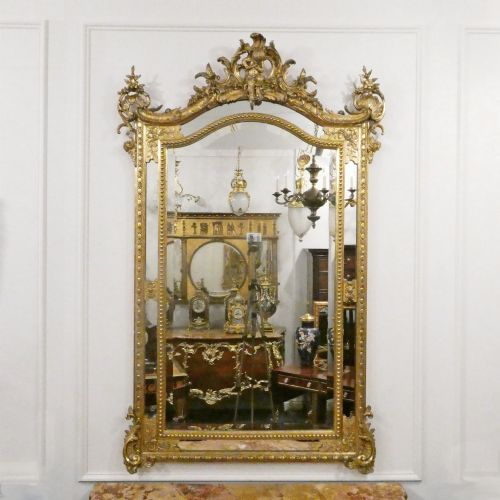
Craftsmen built these frames using carved wood, gesso, and plaster foundations that accepted intricate surface enrichment. Gilding was applied using gold leaf, alongside silvered finishes, ebonised treatments, and painted surfaces that often incorporated decorative chateau schemes.
The heavy wooden carcasses support original mirror glass plates, sometimes structured with deep rebate mouldings and cushion profiles. Detail work relies on traditional hand-carving techniques combined with moulded gesso ornaments fixed to the primary timber framework.
Retail Price Guide 2026
Typical UK retail prices for large french mantle mirror, calculated from the Sellingantiques database of over a million retail prices indexed since 2003. This retail price guide relies exclusively on Sellingantiques data; no external sources or auction records are used, so the figures do not describe the wider market.
Listings demonstrate that nineteenth-century French mirrors frequently utilise carved wood and gesso finished in gold leaf, silver, or ebonised paint.
Assessing Quality and Execution
Distinction across the range rests on the crispness of the hand-carved wooden ornament and the depth of the gesso relief beneath the gold leaf or paint. Superior examples retain their original gilding and historic mirror plates with authentic foxing, whereas lesser pieces show heavy modern intervention or flattened, poorly defined surface mouldings.
The integrity of the structural carcass and the finesse of the joinery at the arched or shaped top dictate the architectural success of the mirror. Master carvers achieved fluid, balanced proportions that integrate seamlessly with the heavy reflective glass.
The Large French Mantle Mirror Glossary
- Gesso
- A plaster-like mixture applied to wooden frames as a smooth base for gilding or painting. It allows intricate decorative motifs to be moulded directly onto the timber carcass.
- Giltwood
- Timber coated with gold leaf or metallic powder applied over a prepared ground. This finish provides the characteristic warm metallic sheen seen on period frames.
- Louis Philippe
- A mid-nineteenth-century French style characterised by restrained classical curves, gentle arched tops, and simple moulded frames without excessive ornamentation.
- Overmantle
- A large mirror specifically proportioned to hang on the wall directly above a fireplace mantel. These pieces visually anchor the hearth and reflect light across the room.
- Ripple frame
- A frame profile featuring repetitive wave-like undulations carved into the wood. This technique creates complex play of light and shadow around the mirror glass.
Frequently Asked Questions
Where should a large french mantle mirror hang?
These pieces traditionally sit centrally on the wall above a fireplace mantel, where their scale balances the hearth below.
They also function effectively on principal living room walls to bounce natural light deep into the interior space.
How do I identify a Louis Philippe mirror?
Louis Philippe mirrors typically feature a subtle rounded or arched top corner transition paired with clean, unfussy framing. The proportions remain elegant and architectural rather than heavily ornate.
Look for gentle curves and restrained mouldings dating from the mid-nineteenth century.
Are the mirror plates original?
Many nineteenth-century pieces retain their original glass, which often exhibits characteristic foxing, soft dark spots, and minor surface oxidation. These natural age marks confirm the antiquity of the piece.
Replacement glass appears clean and uniform without historical distortion or silvering wear.
How do I clean a giltwood frame?
Dust the carved gesso and giltwood surfaces gently with a soft dry brush to protect the delicate gold leaf layer. Avoid liquid cleaners, abrasive cloths, and chemical solvents entirely.
Moisture can damage the underlying plaster ground and lift the historic metallic finish.