
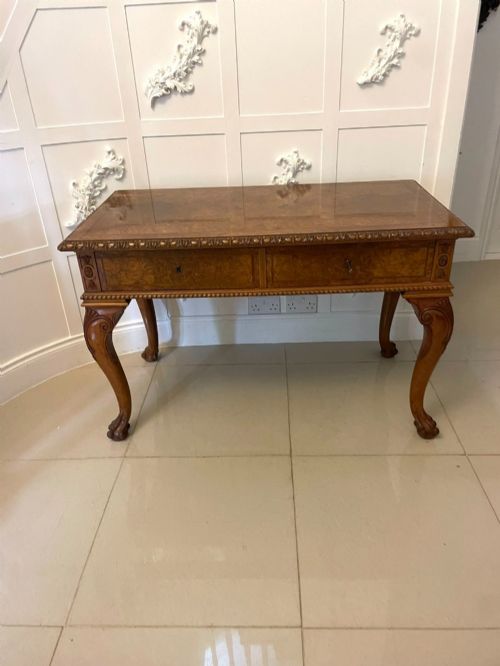
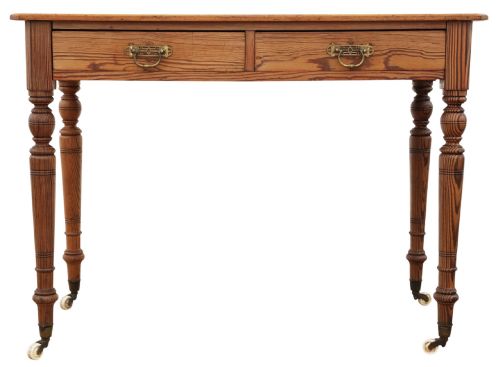
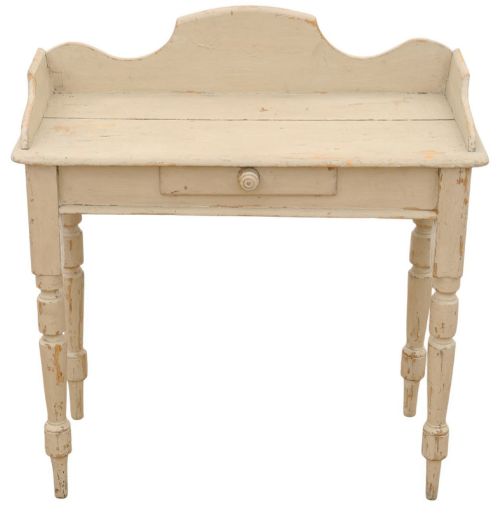
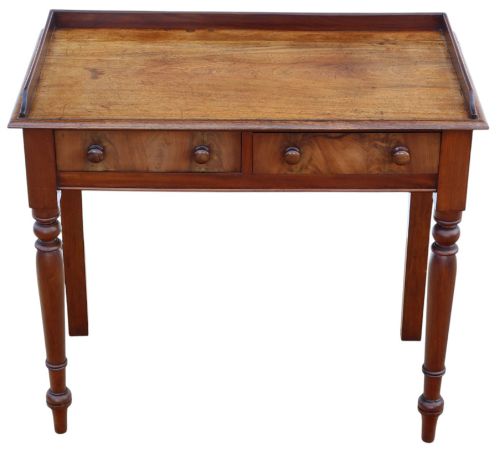
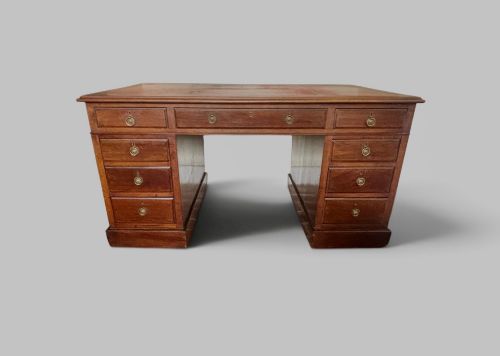


Antique Writing Table Drawers
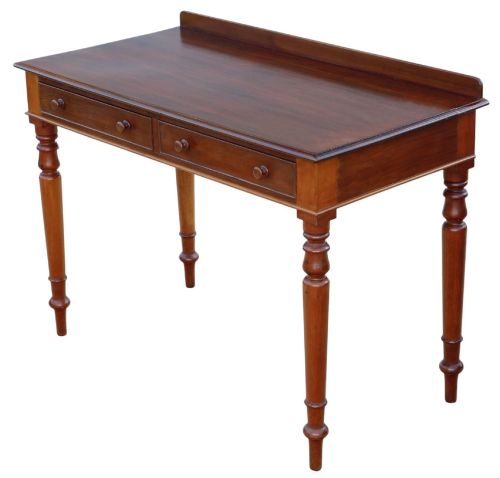
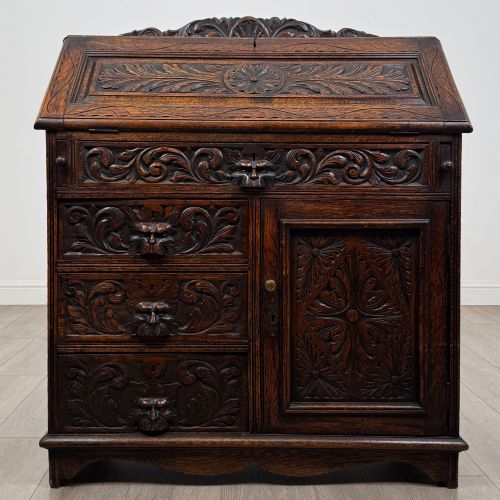
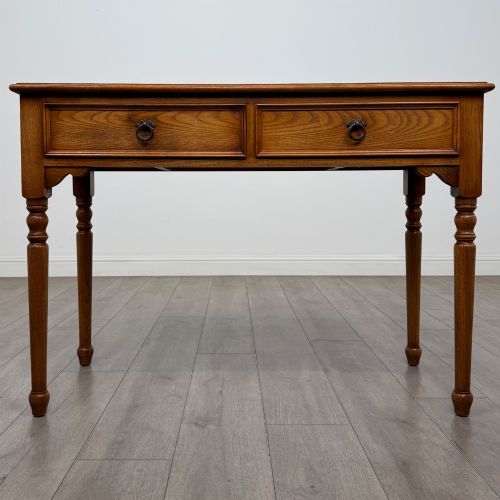
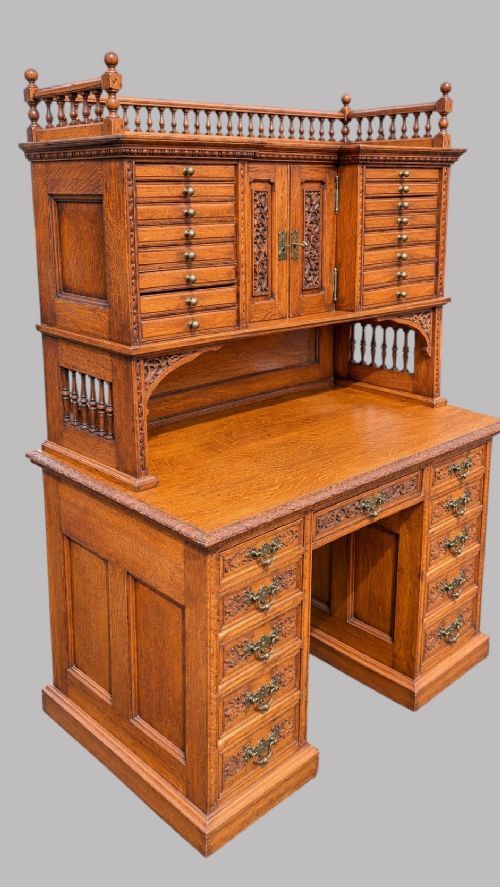
These antique writing table drawers bring period character and functional surface space to a room, offering classic craftsmanship across multiple historic styles.
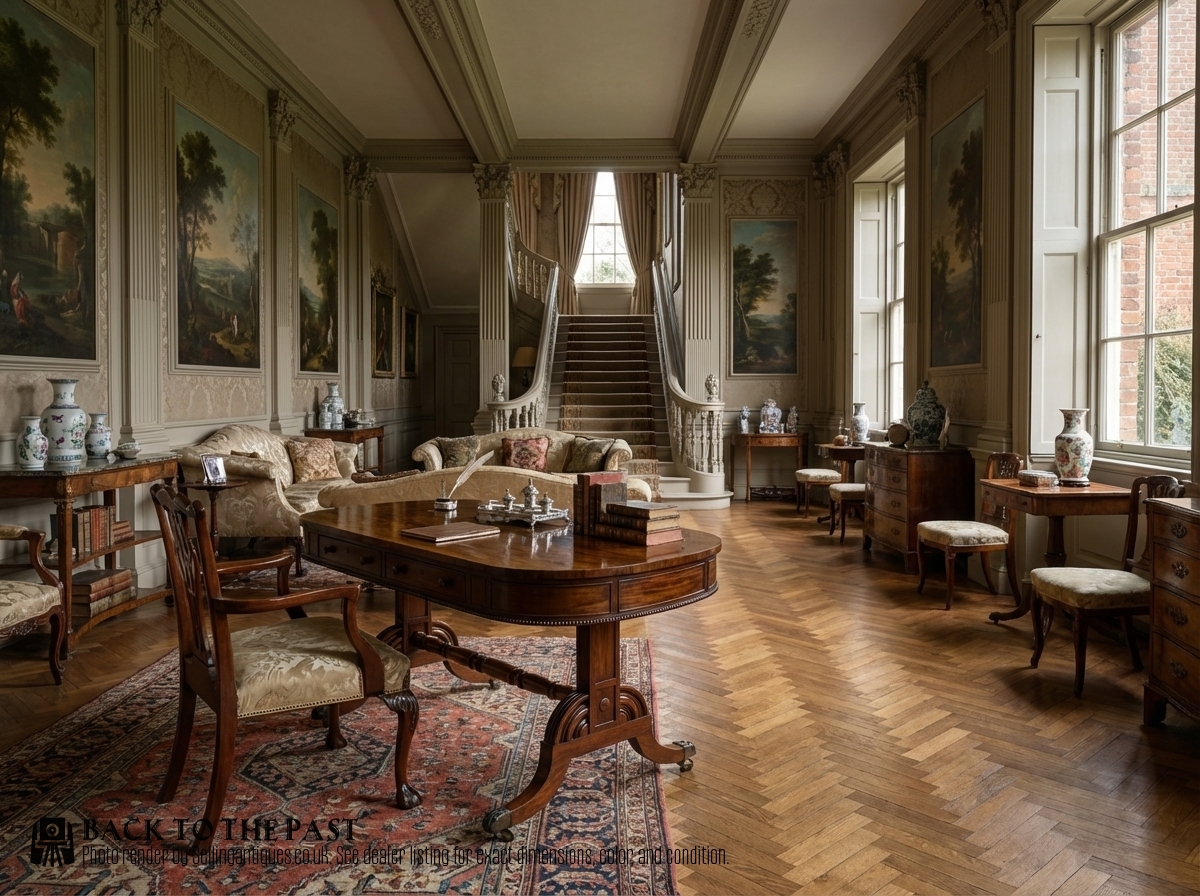
Forms and Origins
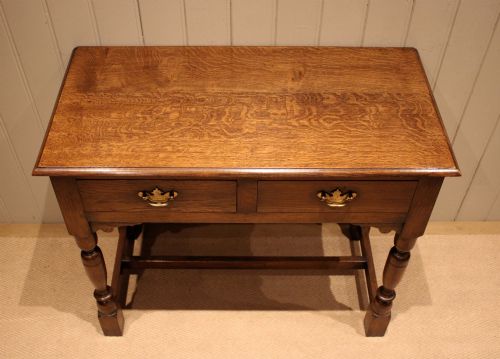
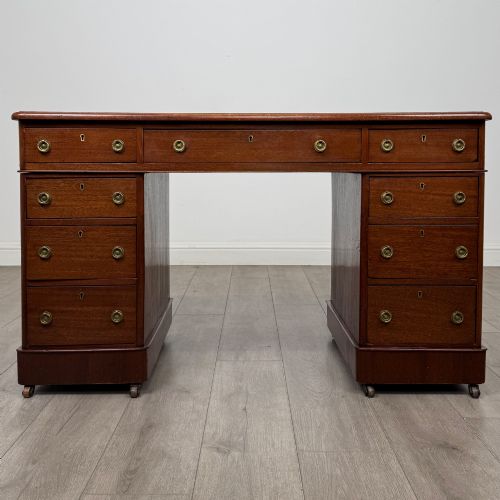
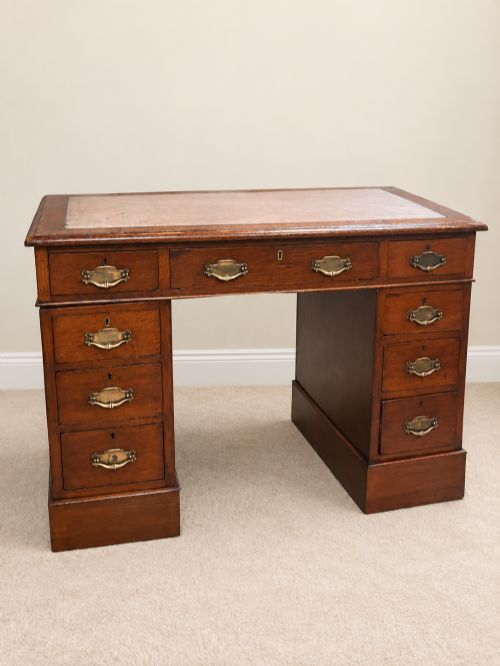
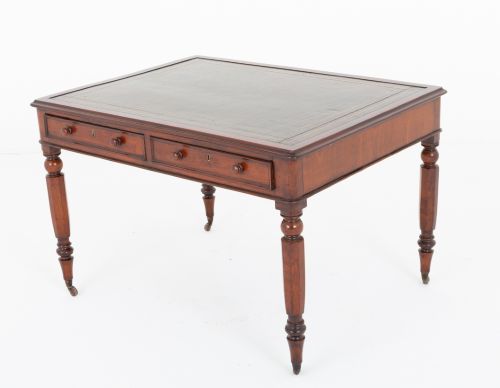
When you search for antique writing table drawers, you encounter a selection of heritage furniture pieces that span the Georgian, Regency, Victorian, and Edwardian eras. These forms range from traditional lowboys and library tables to compact desks, bureaus, and console tables equipped with storage.
The versions most commonly met on this page include mahogany and rosewood library tables, burr walnut writing desks, and oak lowboys. They originate primarily from British workshops, reflecting the shifting domestic requirements for study and correspondence through the eighteenth and nineteenth centuries.
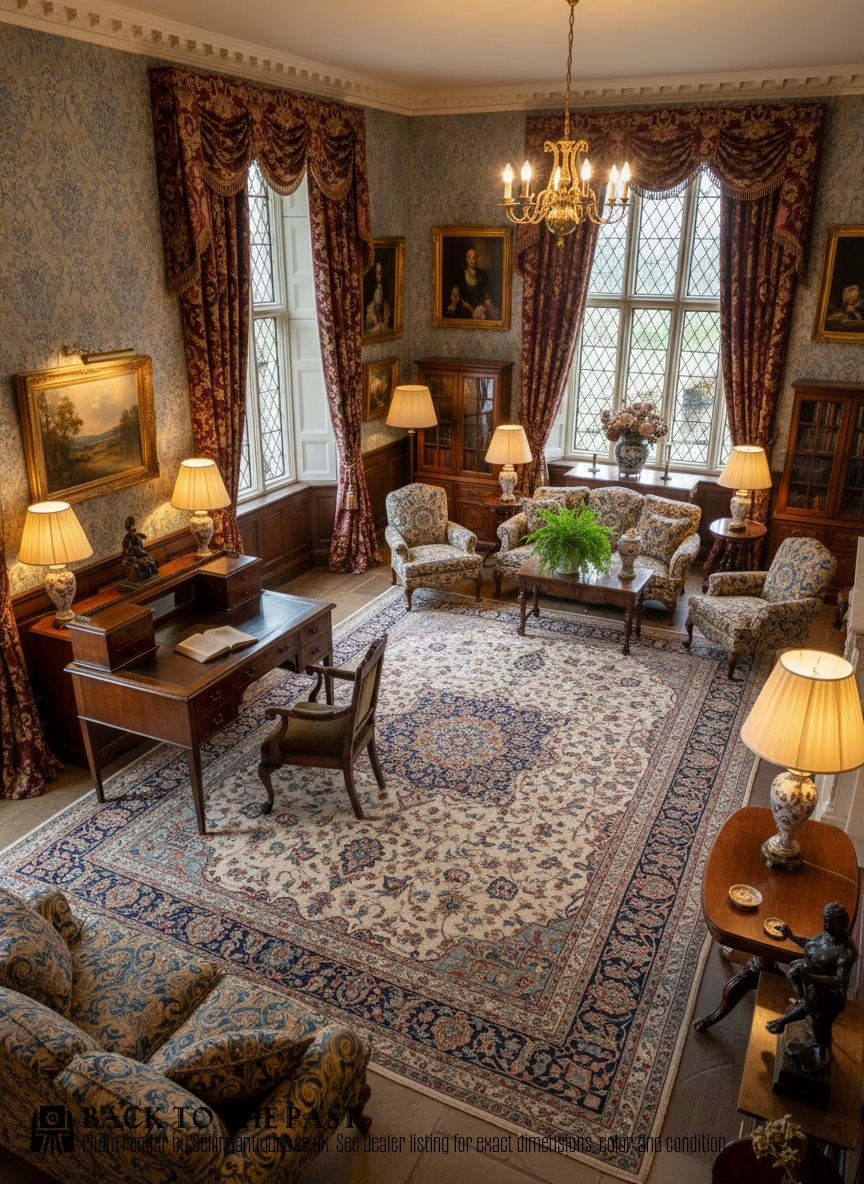
Materials and Techniques
Cabinet makers utilised dense hardwoods such as mahogany, rosewood, oak, and burr walnut, frequently pairing them with secondary timbers like pine for drawer linings and internal framing. Surfaces were accented with boxwood inlay, while fitted compartments sometimes incorporated leather writing inserts.
Joinery methods relied on traditional techniques, including hand-cut dovetails for drawer construction and stable framing to support drop leaves and pedestal bases. Brass hardware, from handles to castors, was integrated into the design to facilitate movement and daily use.
Retail Price Guide 2026
Typical UK retail prices for writing table drawers, calculated from the Sellingantiques database of over a million retail prices indexed since 2003. This retail price guide relies exclusively on Sellingantiques data; no external sources or auction records are used, so the figures do not describe the wider market.
Listings feature pieces from the 18th, 19th, and 20th centuries, utilising oak, mahogany, rosewood, and burr walnut.
Distinctions in Execution
Quality separates ordinary utility pieces from finer examples through the selection of timber veneers and the precision of the cabinet work. Finely figured burr walnut or rich rosewood grain denotes a more ambitious commission, whereas plainer oak or fruitwood often points to provincial workshop production.
The refinement of internal elements, such as secret drawers within a kidney desk or finely executed boxwood stringing on a mahogany top, demonstrates the maker's attention to detail. Structural integrity in the drawer action and the preservation of original brass fittings further distinguish the standard of manufacture.
Gillows of Lancaster
The Antique Writing Table Drawers Glossary
- Lowboy
- A small side table with one or more rows of drawers, commonly produced in oak or fruitwood during the eighteenth century.
- Library Table
- A large freestanding table designed for heavy books and papers, typically featuring multiple drawers and robust pedestal or pillar supports.
- Secretaire
- A piece of furniture containing a pull-out drawer or fitted drop-front that reveals a writing surface and small pigeonholes.
- Sofa Table
- A rectangular table with drop leaves on either side, originally designed to stand in front of a sofa and equipped with end drawers.
- Dovetail
- A traditional interlocking joint used in drawer construction to ensure durable corners without relying on metal fasteners.
Frequently Asked Questions
How do I identify a Georgian writing table?
Georgian examples are typically constructed from mahogany or oak, displaying clean architectural lines, brass drop handles, and hand-dovetailed drawer construction without elaborate veneers.
Later Victorian interpretations often feature darker finishes, heavier turnings, or burr walnut veneers, while Edwardian pieces introduce lighter inlay work and kidney-shaped writing surfaces.
Were these tables used in bedrooms?
Many smaller forms, such as lowboys and bachelors chests, served multifunctional purposes in both bedrooms and dressing rooms for personal correspondence and storage.
Larger library tables and pedestal desks remained in designated studies, parlours, or libraries where household accounts and letters were managed.
How should I care for antique leather inserts?
Leather writing surfaces benefit from gentle cleaning with a slightly damp cloth, avoiding harsh chemical cleaners or excess moisture that could warp the surrounding timber.
Applying a specialised leather preservative occasionally helps maintain suppleness and prevents the dry cracking common in older hide inserts.