
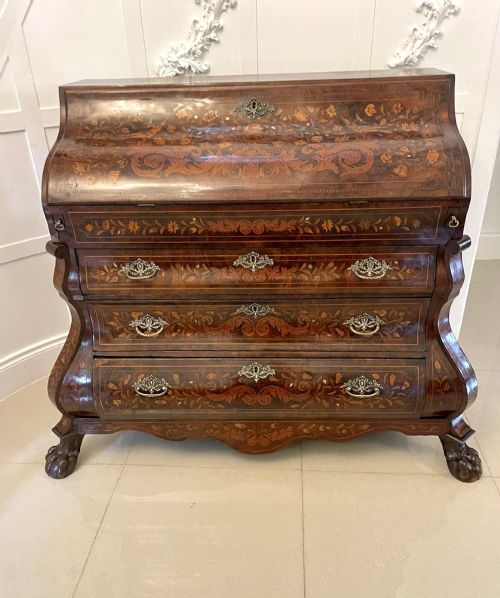

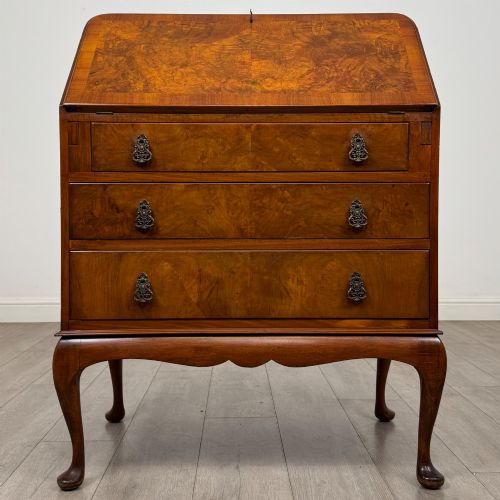
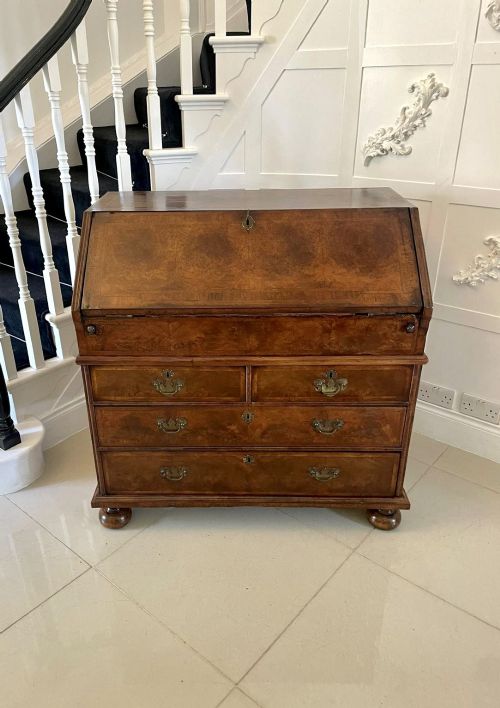
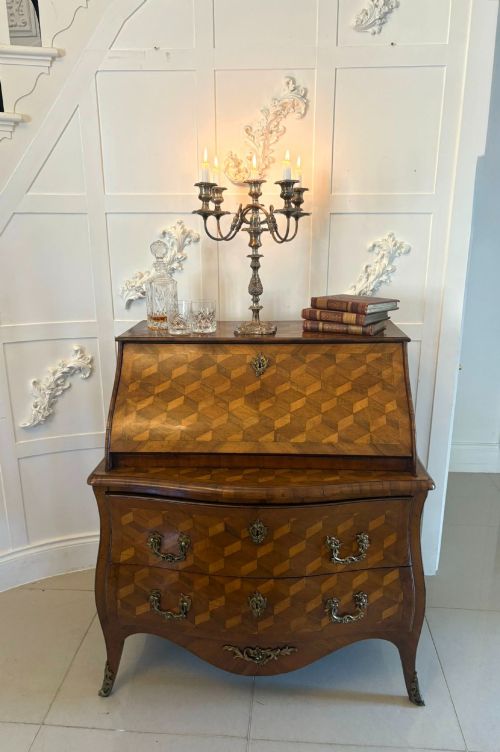
Antique Walnut Slant Desk
An antique walnut slant desk offers a fitted writing interior beneath a sloping lid, bringing warmth and 18th-century utility to any room.

Understanding the antique walnut slant desk
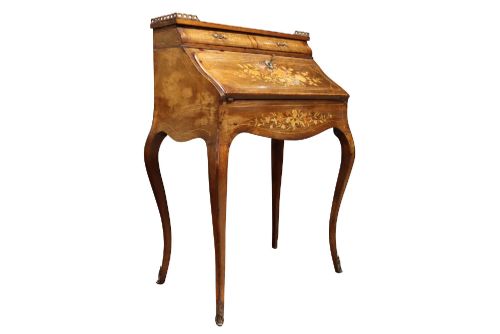
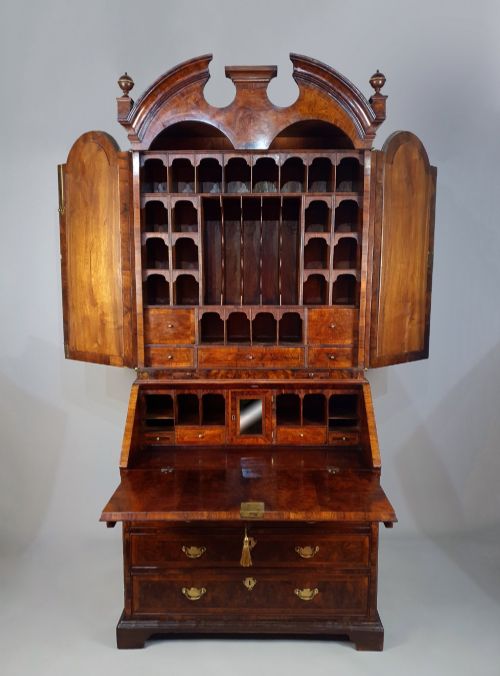
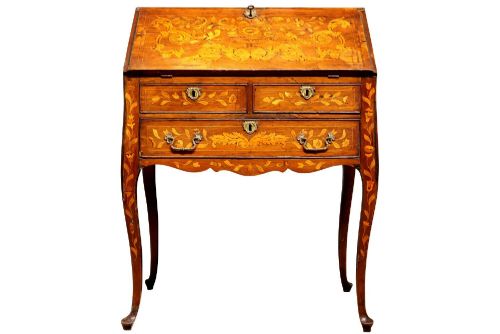
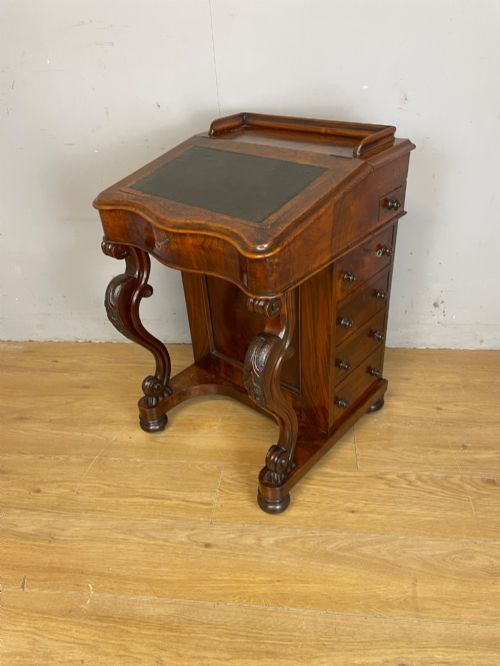
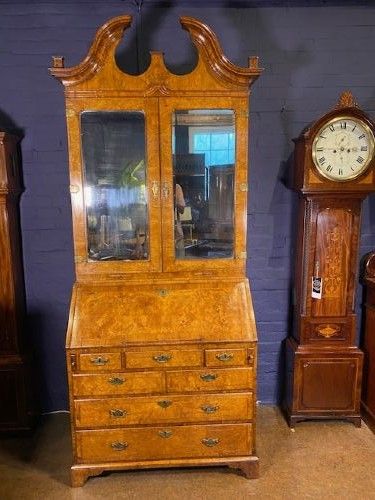
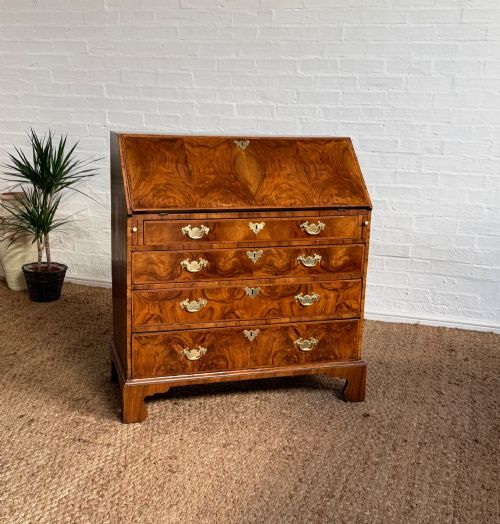
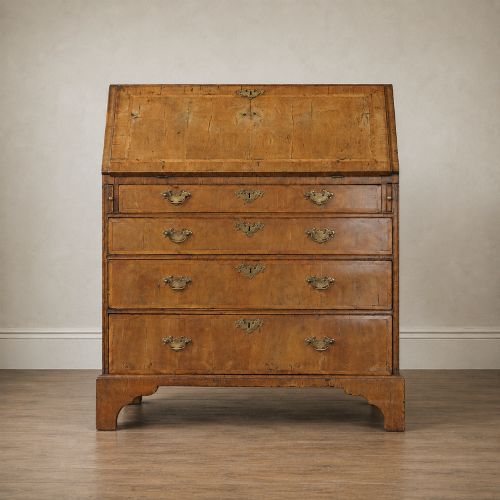
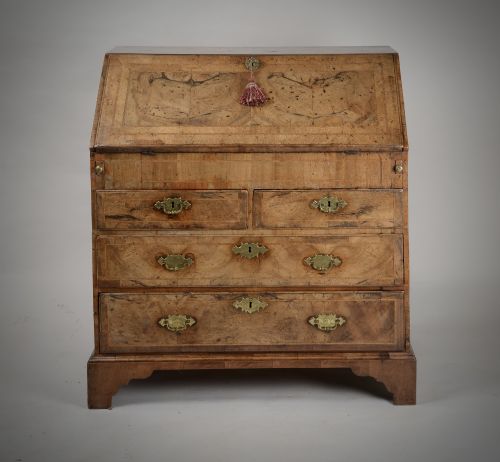
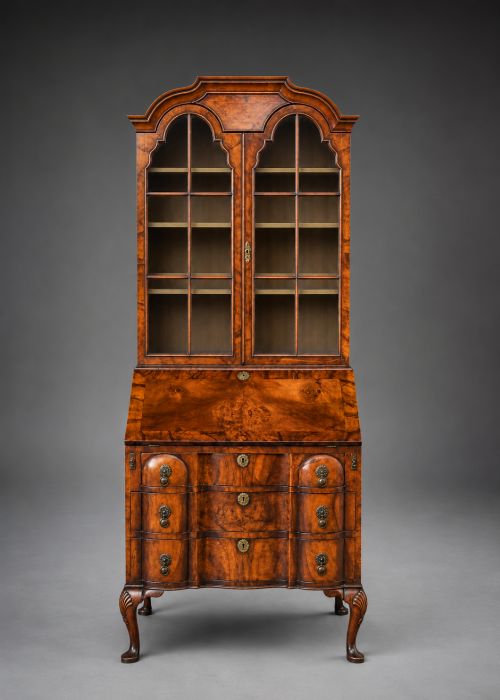
An antique walnut slant desk is primarily encountered as a bureau or bureau bookcase, with origins spanning the Queen Anne, George I, and George II periods alongside Victorian revivals. These pieces combine a sloping fall-front lid with internal pigeonholes and small drawers designed for correspondence and accounts. Most examples date from the 18th century, utilising rich timber figures to create a commanding presence in a study or drawing room.
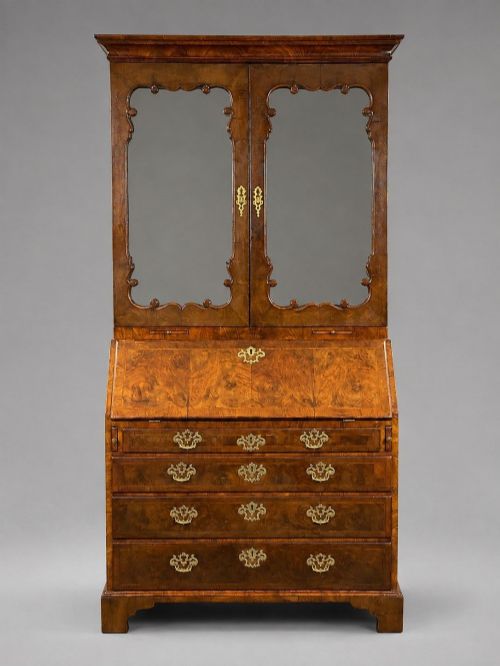
The larger forms in this category include bureau bookcases, which add an upper cabinet for books or display above the writing slope. Buyers frequently encounter standard bureaus that rest on bracket feet or bun feet, often concealing a well beneath the sliding lid. These desks represent a fundamental form of domestic furniture developed when private correspondence required secure and dedicated storage.
Materials and construction
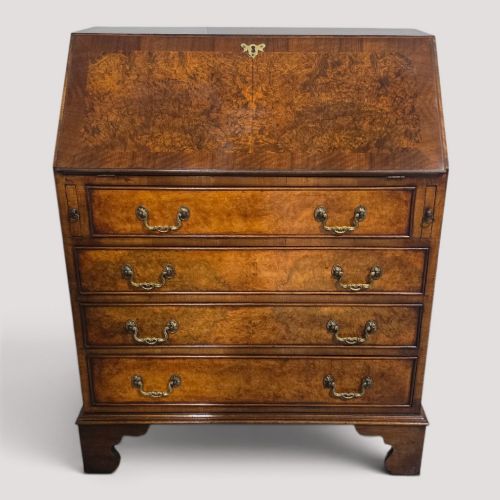
Cabinetmakers constructed these desks using solid walnut and burr walnut veneers applied over secondary timbers such as oak. The distinctive figured grain of burr walnut is selected for the primary exterior surfaces, particularly the fall-front flap and drawer fronts, creating rich patterns across the front of the desk.
Hardware consists of brass handles and escutcheons, typically cast and chased, alongside internal locking mechanisms operated by iron keys. Drawer linings and internal dividers are fashioned from lesser timbers like oak, joined with hand-cut dovetails that reflect the period of manufacture.
Retail Price Guide 2026
Typical UK retail prices for walnut slant desk, calculated from the Sellingantiques database of over a million retail prices indexed since 2003. This retail price guide relies exclusively on Sellingantiques data; no external sources or auction records are used, so the figures do not describe the wider market.
Many of these desks conceal secret miniature drawers behind sliding pigeonhole partitions, intended for hiding private letters and hidden treasures.
Distinctions in quality
Quality rests in the selection of the walnut veneer and the continuity of the grain across the fall-front lid and drawer fronts. Superior pieces display carefully matched burr patterns that flow naturally across the surfaces, whereas lesser examples show mismatched patches or extensive replacement veneer.
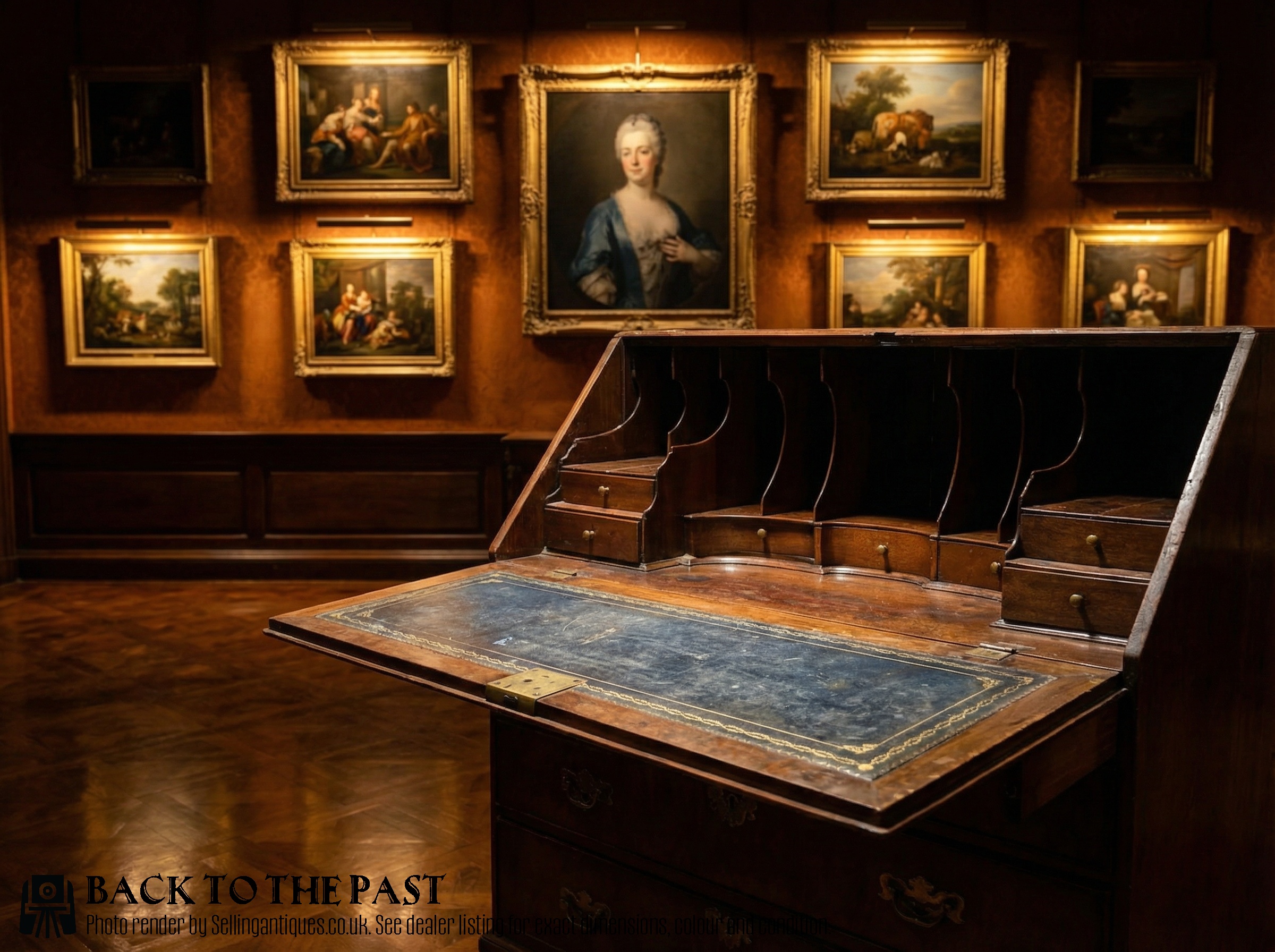
The sophistication of the internal fitments also separates standard desks from finer ones. Superior interiors feature shaped pigeonholes, secret drawers, and sliding wells that demonstrate advanced cabinetmaking, while simpler desks offer plain compartments with minimal detailing.
The Antique Walnut Slant Desk Glossary
- Burr walnut
- A prized veneer taken from the wart-like growths on walnut trees, yielding complex swirling grain patterns. Cabinetmakers used this timber on primary display surfaces like desk lids.
- Bureau
- A writing desk featuring a sloping hinged lid that opens to reveal a fitted interior of small drawers and pigeonholes. This term is often used interchangeably with slant desk.
- Bureau bookcase
- A tall two-part furniture form combining a slant desk base with an upper shelving or cabinet section enclosed by doors. It provides both writing space and enclosed display.
- Dovetail
- A traditional wood joint formed by interlocking wedge-shaped fingers, securing drawer corners without metal fasteners. Hand-cut dovetails indicate earlier periods of manufacture.
Frequently Asked Questions
What is inside the slant desk?
Lifting the sloping lid reveals an arrangement of small drawers, pigeonholes, and occasionally a central cupboard door. Many examples also incorporate a sliding board or secret compartments accessed by removing small internal drawers.
These fitted compartments were designed for storing letters, account books, and writing implements securely when the lid was closed and locked.
How do I date a walnut bureau?
Dating relies on examining construction methods, timber choice, and hardware styles. Pieces from the early 18th century, such as those from the Queen Anne and George I periods, often feature solid oak drawer linings and distinct bracket feet.
Later Victorian pieces display different interior layouts and machine-sawn elements that distinguish them from 18th-century originals.
Where should I place it?
These desks suit studies, living rooms, or hallways where the sloping lid and figured walnut grain can be appreciated as a focal point. Because the fall-front drops down for writing, adequate clearance in front of the desk is necessary.
Keeping the timber away from direct heat sources and strong sunlight preserves the walnut veneer and prevents warping.
How do I care for walnut veneer?
Walnut benefits from occasional application of quality wax polish to maintain the sheen and nourish the timber. Avoid using modern aerosol sprays containing silicone, which can damage the finish over time.
Maintaining stable room humidity prevents the burr walnut veneer from shrinking or lifting away from the secondary oak timbers.