
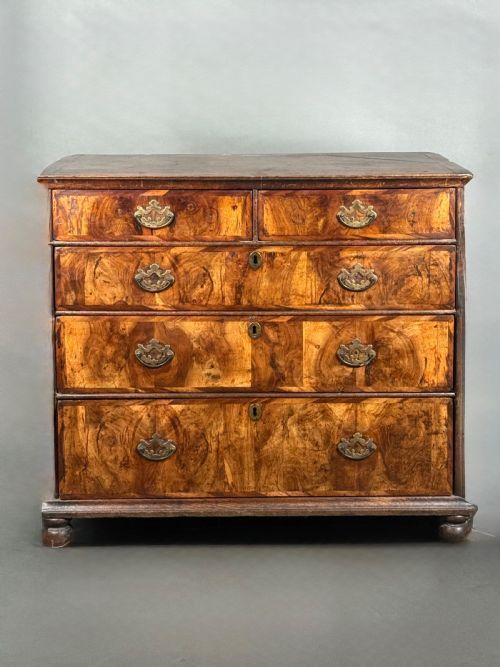
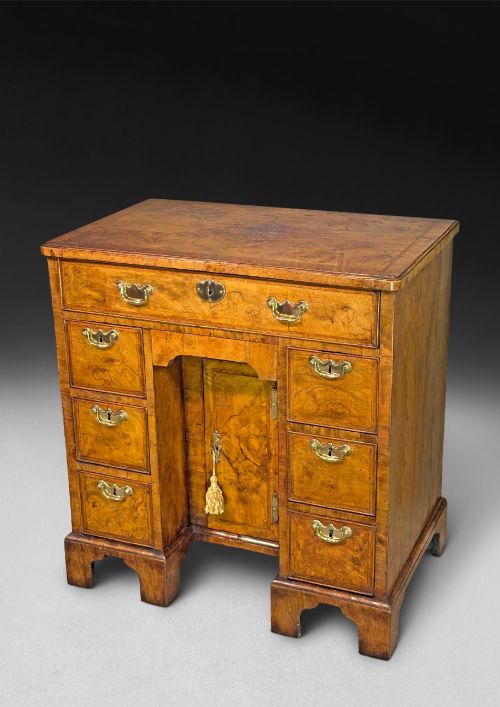
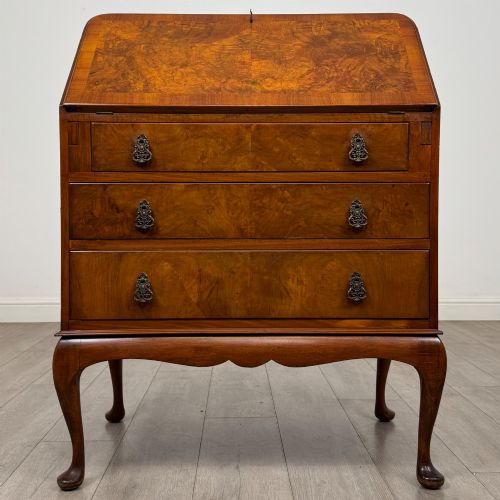
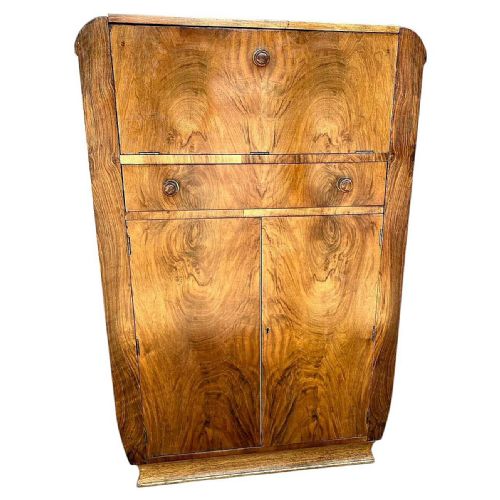
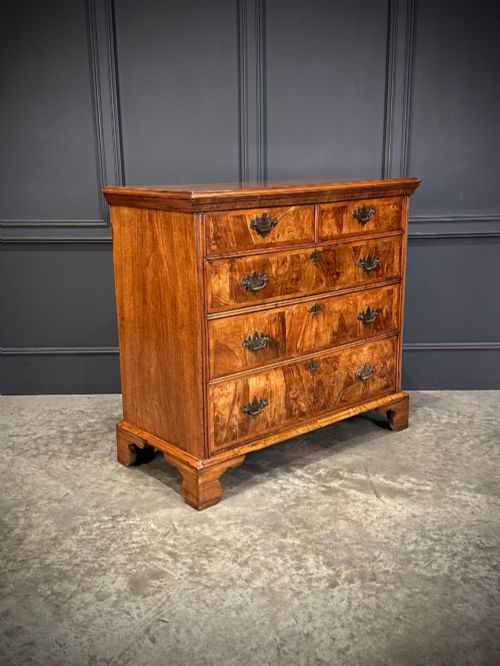
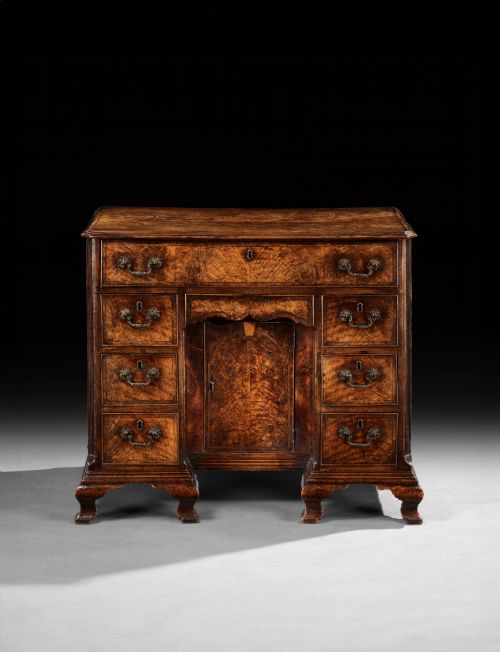


Figured Walnut Bureau
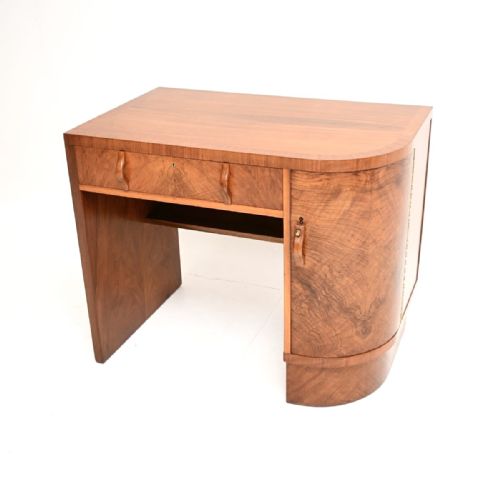
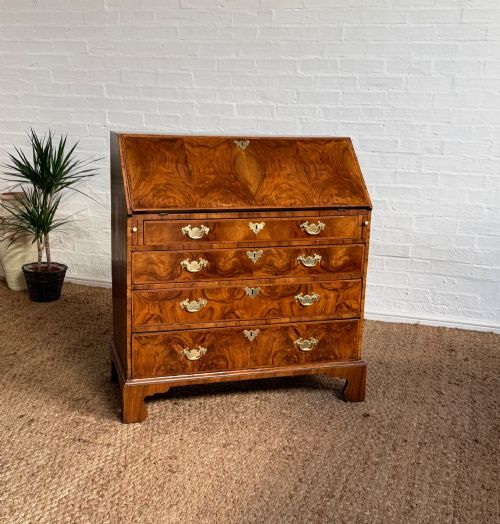
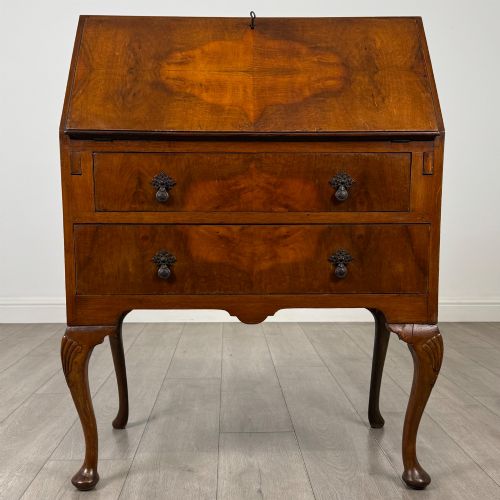
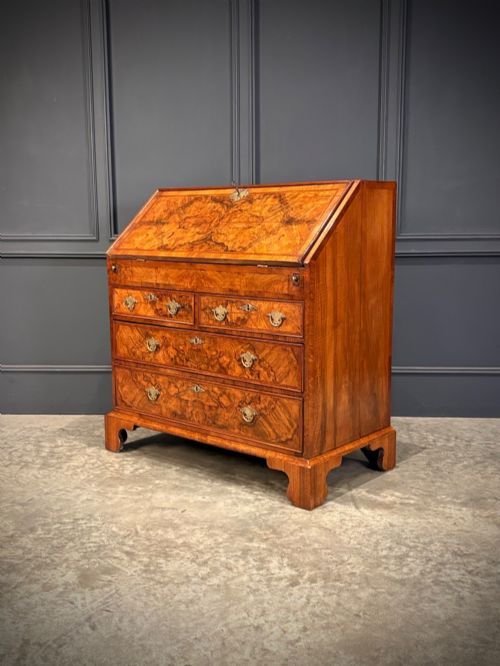
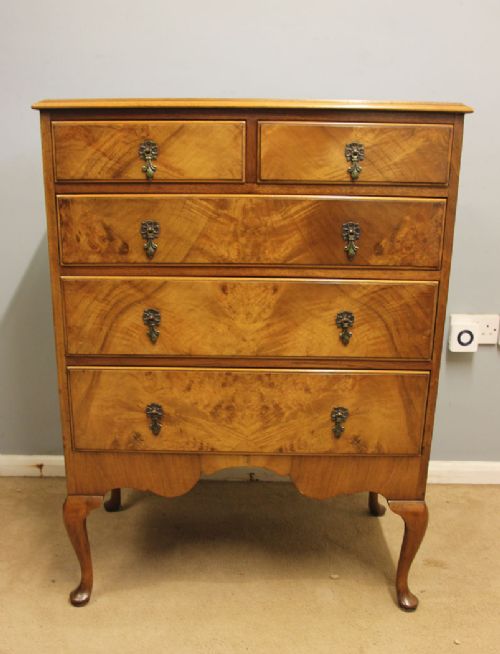
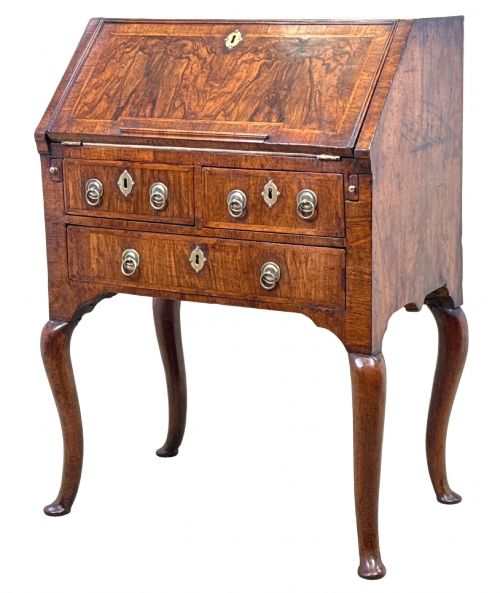
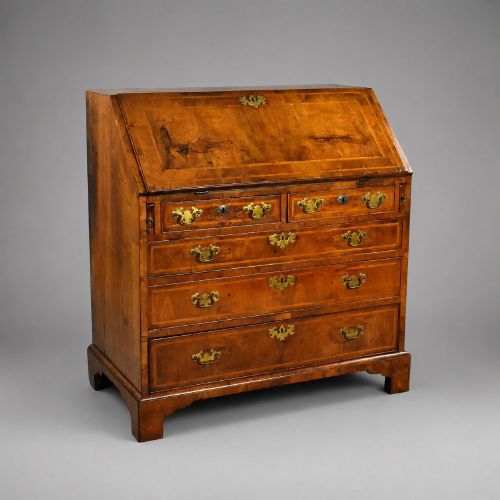
These figured walnut bureau pieces offer sophisticated slanted writing surfaces and rich timber grain, providing timeless character for domestic workspaces.

What a figured walnut bureau is
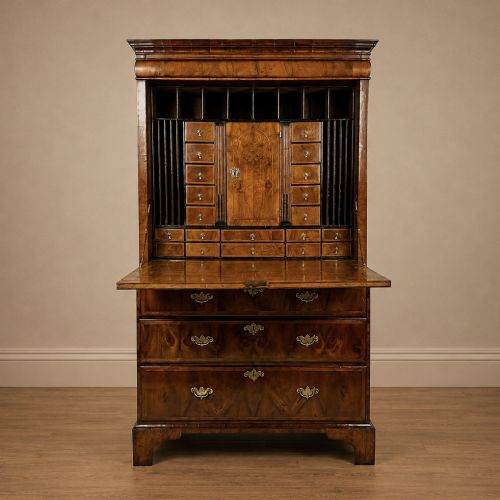
A figured walnut bureau combines a hinged writing flap that opens to reveal internal compartments with a chest of drawers beneath. These writing desks span several distinct periods including Queen Anne, George I, George II, and Edwardian revivals.
Most examples found here date from the eighteenth century or belong to later Edwardian revivals. The form functions as a practical writing desk while displaying dramatic decorative wood veneers on the primary exterior surfaces.
Materials and construction methods
Cabinet makers utilised walnut timber, burr walnut, and oak alongside brass for handles and escutcheons. Surfaces often feature decorative additions such as cross banding, feather banding, and herringbone inlay to frame the timber grain.
The primary carcase construction relies on solid oak for internal linings and drawer boxes while veneering techniques apply thin sheets of highly figured walnut to the visible exterior panels.
Retail Price Guide 2026
Typical UK retail prices for figured walnut bureau, calculated from the Sellingantiques database of over a million retail prices indexed since 2003. This retail price guide relies exclusively on Sellingantiques data; no external sources or auction records are used, so the figures do not describe the wider market.
The listings show items spanning the Georgian period, the year 1700, and Edwardian revivals, constructed in walnut, burr walnut, oak, and brass.
Distinctions in quality
The visual impact depends largely on the choice of timber veneer, where dense swirling grain patterns and symmetrical matching elevate an example significantly. Superior pieces maintain their original brass hardware and well-fitted internal stationery compartments without heavy restoration.
Proportion and scale also separate standard items from finer works, particularly where compact dimensions or intricate herringbone banding demonstrate higher levels of cabinet making skill.
The Figured Walnut Bureau Glossary
- Figured walnut
- Timber exhibiting highly decorative grain patterns caused by irregular growth in the tree. This material forms the primary visual appeal of these desks.
- Cross banding
- A decorative border technique where strips of veneer are laid perpendicular to the main grain direction. It creates a neat framing effect around drawer fronts and flaps.
- Feather banding
- Narrow strips of veneer arranged in a V-shape pattern resembling bird feathers. Craftsmen used this delicate inlay to edge panels on eighteenth century pieces.
- Escutcheon
- A protective plate surrounding a keyhole, usually cast in brass. These details help date a piece based on their period specific styling.
- Bureau bookcase
- A taller variant featuring glazed or panelled shelving doors mounted above the writing desk section. This combination provided storage for both books and writing materials.
Frequently Asked Questions
How do I date a walnut bureau?
Dating relies on examining construction methods, secondary timbers like oak, and decorative details such as cross banding or brass hardware styles. Earlier examples from the eighteenth century display hand cut dovetails and specific drawer configurations.
Later Edwardian and revival pieces utilise twentieth century machining methods and standard fixings while copying earlier George I or Queen Anne aesthetic conventions.
What is the slant front used for?
The hinged flap drops down to create a stable writing surface supported by internal runners or pull out wooden lopers. Behind this flap sits a cluster of small drawers and pigeon holes for stationery.
Closing the flap conceals the paperwork and writing materials, keeping the domestic room tidy when the desk is not in use.
Are these desks suitable for daily use?
These historical writing desks accommodate modern laptops and paperwork provided care is taken with antique polished timber surfaces. The interior compartments organise small items effectively.
Placing the desk away from direct sunlight and maintaining stable room humidity protects the fragile walnut veneers from splitting or warping over time.
What timber is beneath the veneer?
Cabinet makers traditionally used oak for the primary carcase structure, drawer linings, and internal dividers due to its strength and stability. Secondary woods like pine may appear on Edwardian revival pieces.
Walnut veneer was applied over these stable woods to provide a decorative exterior without risking the structural movement inherent in solid figured timber.