
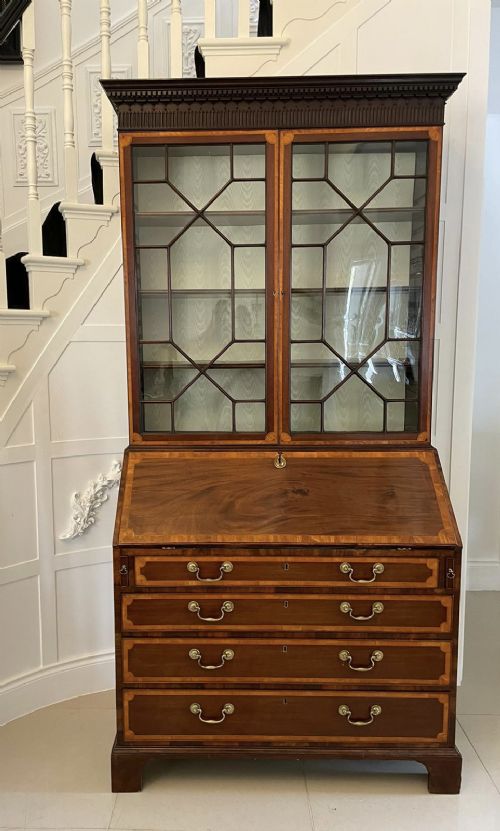
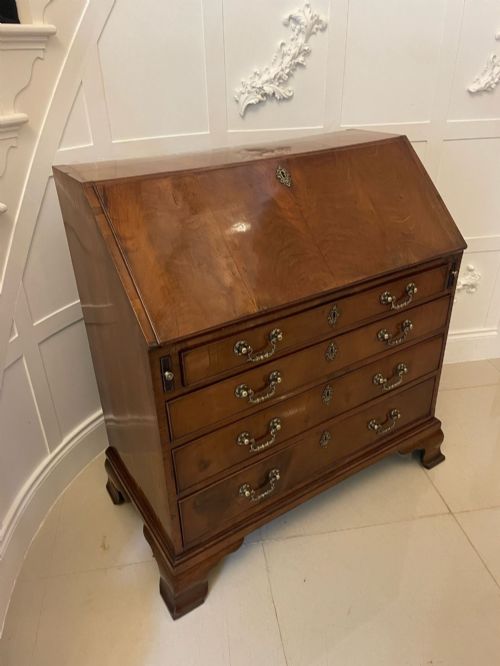
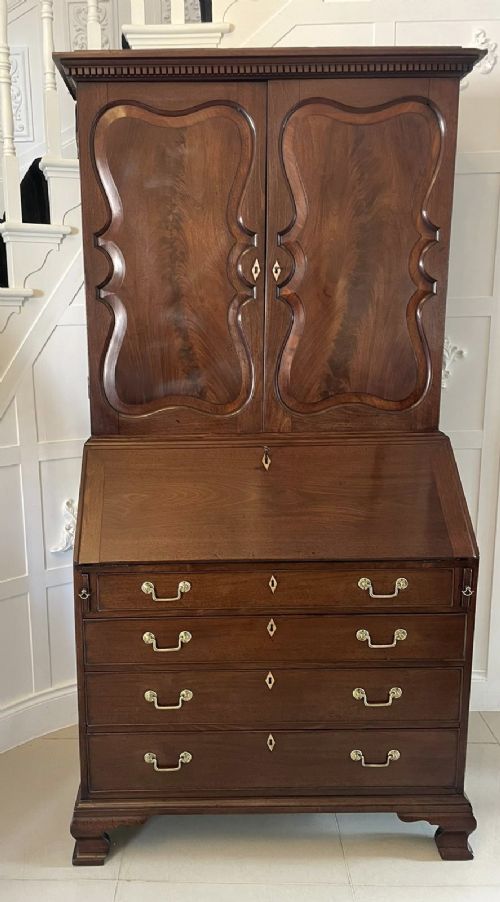
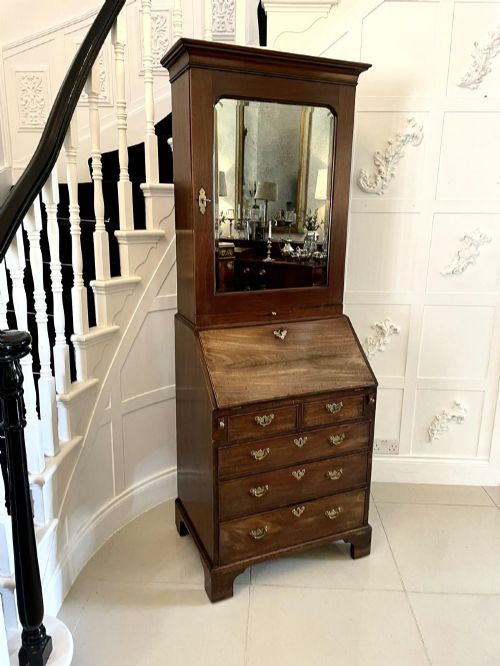

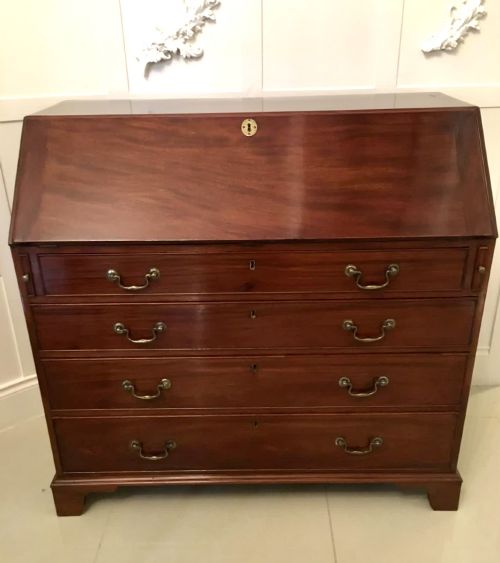
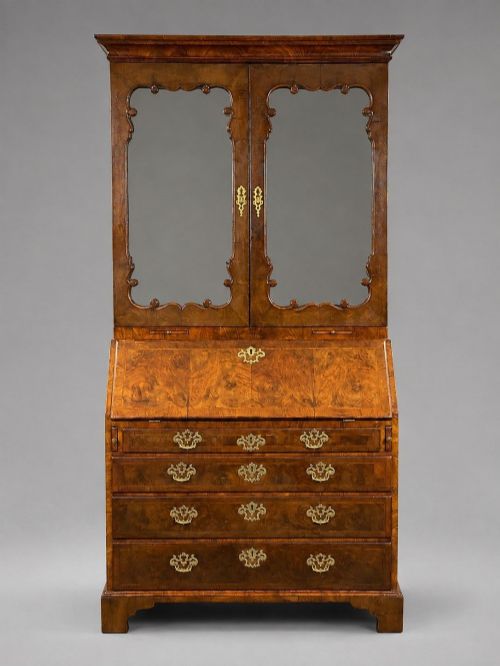
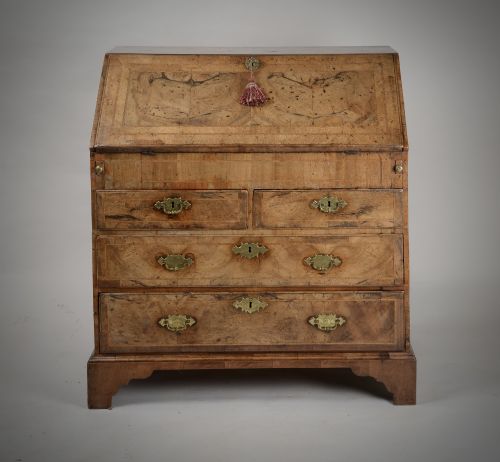
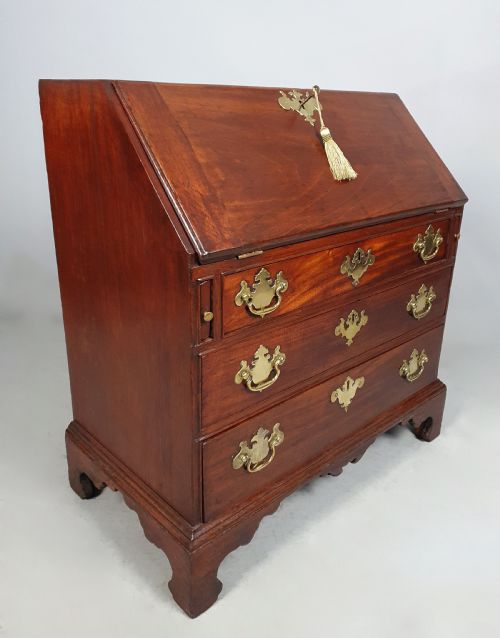
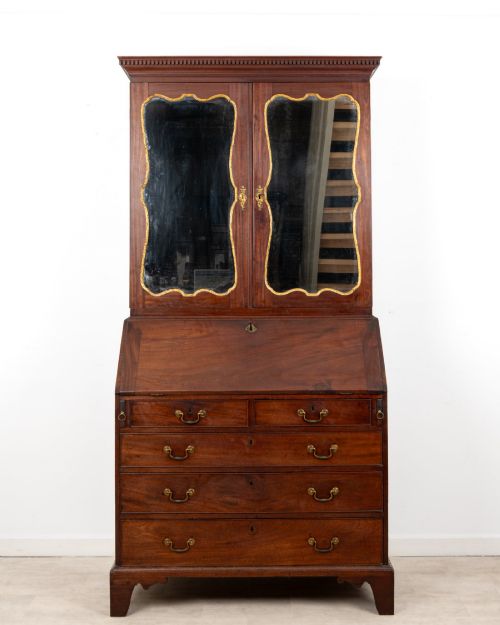
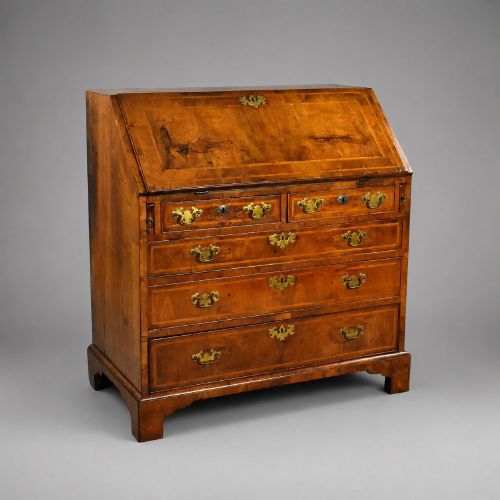
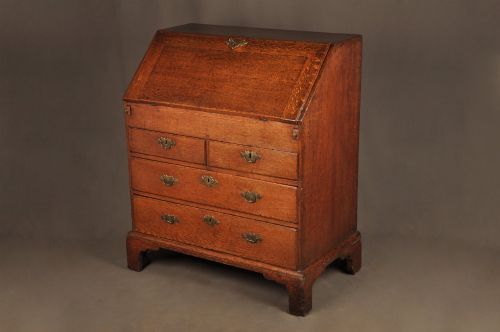
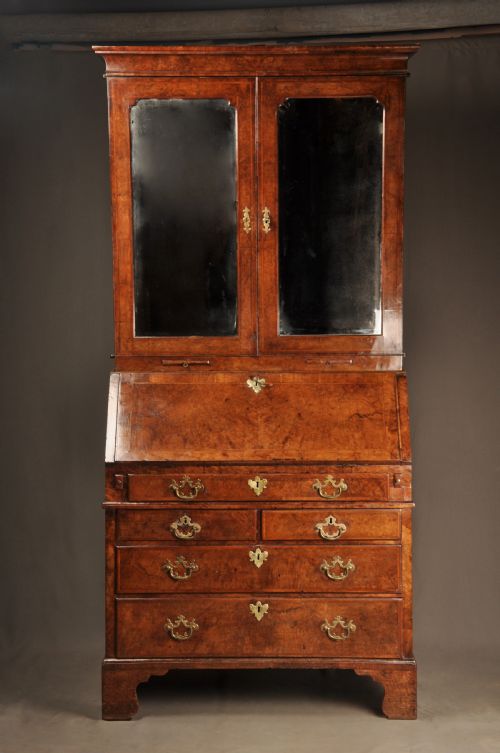
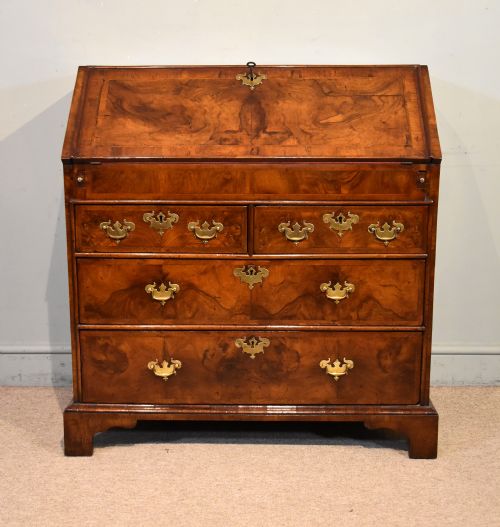


George I Slant Front Bureau
A george i slant front bureau provides a fitted writing surface above drawers, combining walnut or oak construction with period craftsmanship for domestic workspaces.
George I Slant Front Bureau
When you search for a george i slant front bureau, you encounter writing furniture designed for domestic use during the eighteenth century and subsequent revival periods. These pieces combine a hinged writing flap that opens to reveal internal compartments with a chest of drawers positioned below.
The versions most common on this page date from the eighteenth century, incorporating periods from George I through George III alongside later nineteenth-century interpretations. Materials range from walnut and burr walnut to mahogany, oak, and fruitwood.
Forms vary between simple slant-front desks and tall bureau bookcases featuring glazed upper sections and candle slides. Dimensions span from diminutive proportions to larger cabinet configurations.
Materials and construction techniques
Makers utilised native and imported timbers, applying figured walnut veneers, burr walnut, mahogany, oak, and cedarwood over solid frames. Brass hardware, including handles and escutcheons, secures the drawers and fall fronts.
Joinery methods involve fitted interiors with small drawers and pigeon holes behind the slanted fall front. Selected examples incorporate glazed top sections and candle slides for illumination during writing.
Some miniature bureaus were made small enough to sit on top of a table.
Distinctions in quality
Quality rests upon the selection of timber veneers, such as figured walnut or burr walnut, matched across the fall front and drawer facades. The intricacy of the internal fittings, including secret compartments and pigeon holes, marks superior examples.
Structural integrity depends on the preservation of original brass hardware, candle slides, and the smoothness of the drawer construction. Cabinet versions demonstrate refinement through proportion and the execution of glazed doors.
The George I Slant Front Bureau Glossary
- Slant front
- A hinged board that slopes at an angle when closed and folds down horizontally to serve as a writing surface. It conceals a fitted interior when opened.
- Bureau bookcase
- A piece combining a lower writing bureau with an upper cabinet enclosed by doors, frequently glazed. This form provides both workspace and display storage.
- Candle slide
- A pull-out shelf positioned beneath the upper section of a bureau bookcase to hold lighting. It retracts into the cabinet frame when not required.
- Fitted interior
- The arrangement of small drawers, pigeon holes, and central compartments revealed when the fall front opens. This area often includes secret compartments.
- Burr walnut
- Timber sliced from walnut tree growths, yielding a swirling grain pattern prized for decorative veneer work on drawer fronts and surfaces.
George I Slant Front Bureau: Frequently Asked Questions
How do I use a slant front desk?
You pull down the hinged wooden flap to create a slanted or horizontal writing surface. This reveals internal compartments designed for stationery and letters.
Closing the flap conceals the working papers and keeps the writing area tidy when not in use.
What woods were used for these desks?
Cabinetmakers employed walnut, burr walnut, mahogany, oak, fruitwood, and cedarwood. Veneers were frequently applied to structural carcases to create decorative grain patterns.
Brass fittings and mirror glass appear on specific taller formats and bookcase variations.
How are different periods identified?
Periods are distinguished through stylistic traits, construction methods, and timber choices associated with reigns such as George I, George II, and George III. Earlier examples favour walnut and oak, while later eighteenth-century pieces commonly utilise mahogany.
Revival pieces from the nineteenth century replicate these earlier styles using period techniques.