


Antique Walnut Bedstead
An antique walnut bedstead brings architectural warmth to a bedroom through rich timber grain and period carved detail.
Antique Walnut Bedstead
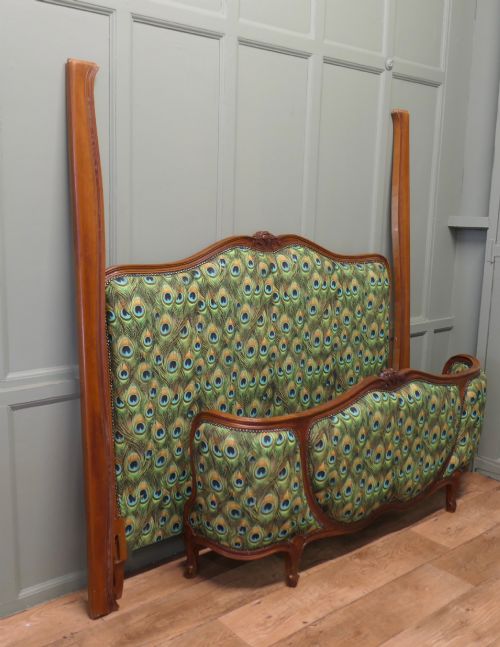
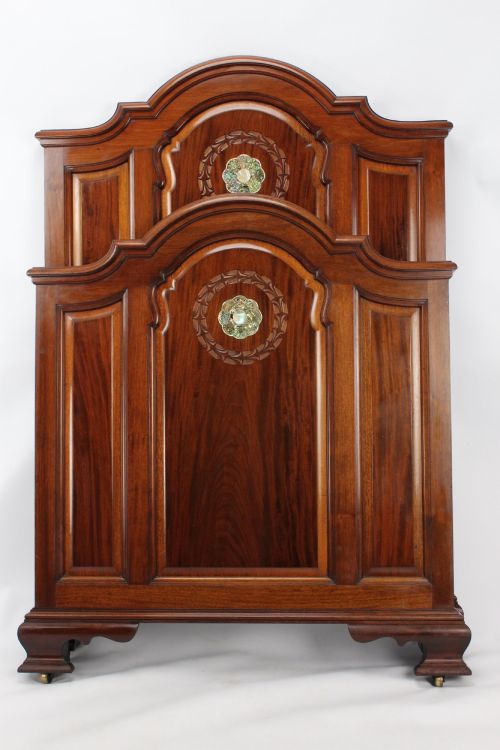
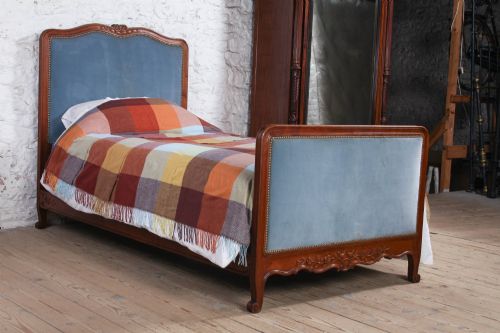
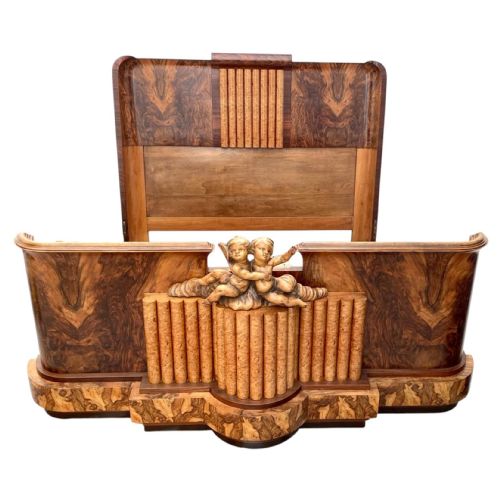
An antique walnut bedstead serves as a substantial focal point for the bedroom, combining structural timber framing with decorative period design. Buyers seeking this search phrase encounter pieces ranging from late Victorian and Edwardian examples to later Art Deco forms.
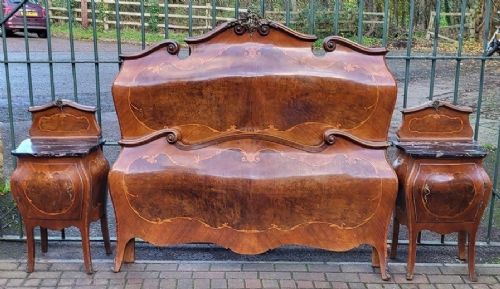
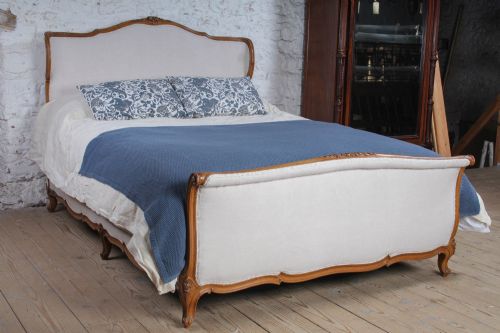
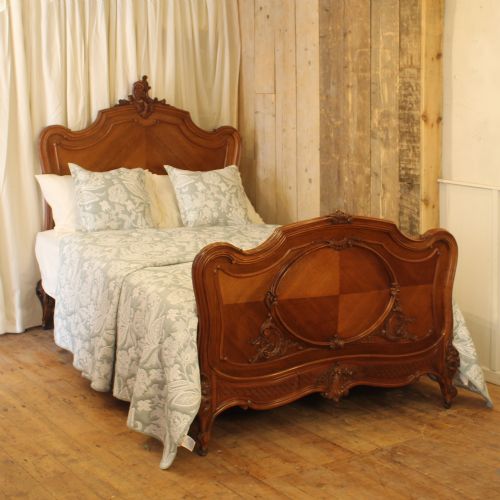
The selection includes double, king size, queen size, and emperor size formats, frequently reflecting continental European origins such as French and Italian workshops. Forms span French Renaissance Revival, Rococo, Henri II, and geometric Art Deco styling.
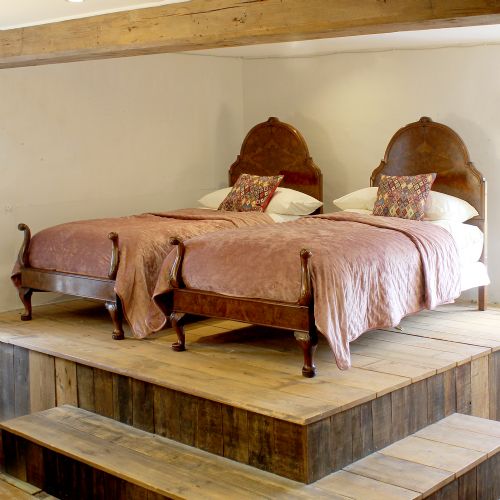
Most pieces date from the late nineteenth century through to the early decades of the twentieth century. Single beds also appear occasionally, sometimes forming matching pairs.
Materials and construction methods
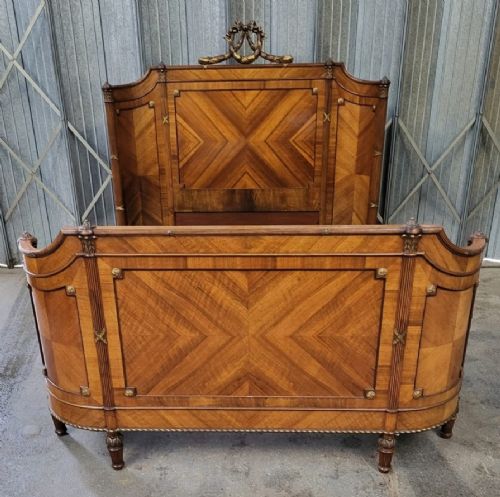
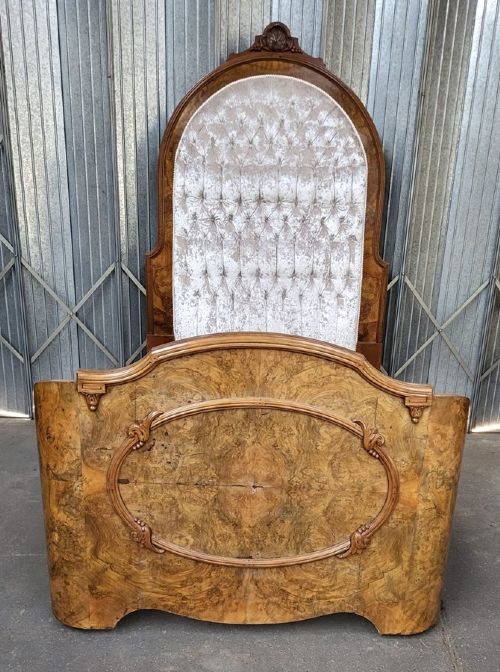
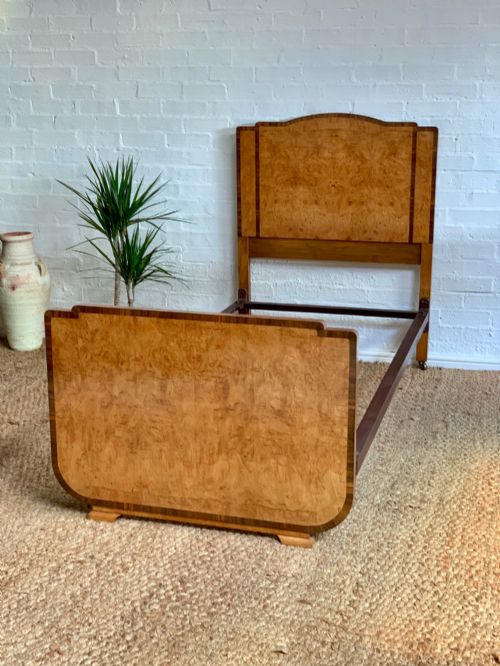
Construction relies heavily on solid walnut, figured walnut, burr walnut, and walnut veneer applied over a sturdy timber substrate. Cabinetmakers utilised the natural decorative patterns of the wood grain to create striking visual panels on headboards and footboards.
Carved ornament appears frequently, ranging from classical revival motifs to flowing Art Nouveau lines and symmetrical Rococo curves. Certain pieces incorporate contrasting elements like marble sections alongside the main wooden framework.
Antique Walnut Bedstead Retail Price Guide 2026
Typical asking prices for walnut bedstead among the pieces listed under this phrase on Sellingantiques today, from the lower quarter to the upper quarter. They describe what is for sale here now, not the wider market.
Early twentieth-century makers ensured that matching walnut bedside cabinets could accompany grand French king-size sleeping quarters.
Distinguishing quality in walnut frames
Quality rests primarily on the choice of timber and the complexity of the cabinetwork. Richly figured burr walnut and carefully matched veneer panels demonstrate superior material selection compared to plain timber surfaces.
The depth and execution of hand-carved details separate standard production from master craftsmanship. Artisans working in revival styles invested significant labour into moulding cornices, panel surrounds, and sculptural headboard crests.
The Antique Walnut Bedstead Glossary
- Walnut
- A dense, hard timber prized for its rich dark brown colour and decorative grain patterns. Cabinetmakers often selected it for high-end furniture throughout the nineteenth and twentieth centuries.
- Figured Walnut
- Timber exhibiting exceptional grain variation, such as ripples, swirls, or flecks. This visual complexity occurs naturally in certain sections of the tree and enhances decorative furniture panels.
- Burr Walnut
- Wood harvested from tree growths or burls, producing intricate, swirling patterns full of tiny eyes. It provides some of the most decorative veneer surfaces found on period beds.
- Walnut Veneer
- A thin slice of superior walnut timber applied over a secondary wood base. This technique allows makers to display striking grain patterns across large surfaces without using solid luxury timber throughout.
- Henri II Style
- A nineteenth-century French revival movement drawing inspiration from sixteenth-century Renaissance architecture. Pieces in this style typically feature bold mouldings, architectural panels, and robust proportions.
- French Rococo Revival
- A decorative style characterised by asymmetrical curves, C-scrolls, and naturalistic plant motifs. Furniture from this tradition emphasises fluid lines and elaborate carved ornamentation.
Antique Walnut Bedstead: Frequently Asked Questions
What sizes are available?
These beds appear in a range of historical dimensions, including standard double, queen, king, and emperor sizes.
Buyers should note that nineteenth- and early twentieth-century sizing standards differ from modern mattresses, so checking exact internal dimensions is essential.
How do I identify the period?
Period identification relies on decorative motifs, timber treatments, and structural styling. Late Victorian pieces often feature heavy Renaissance revival carving, while Edwardian examples lean towards cleaner Queen Anne influences.
Art Deco items introduce streamlined, curvaceous veneers from around nineteen-thirty.
Are these beds difficult to assemble?
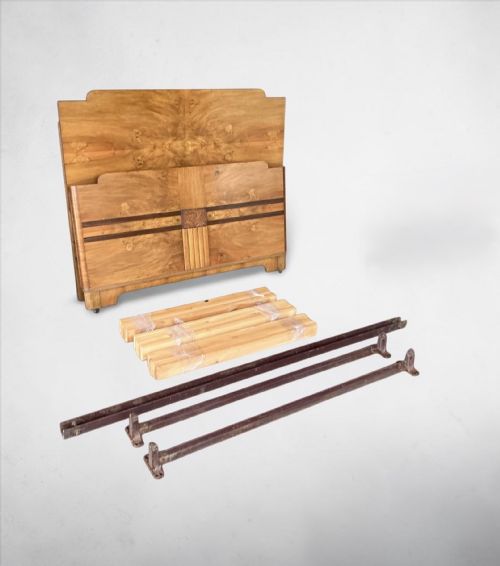
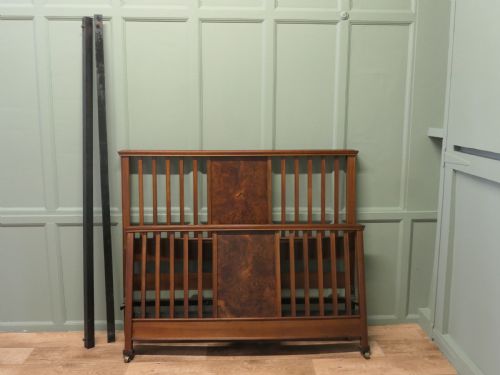
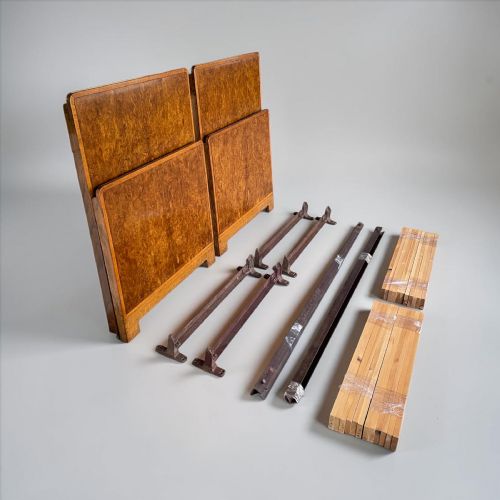
Most antique wooden bed frames utilise traditional bolt-together side rails and heavy tenon joints. This modular construction allows the headboard, footboard, and rails to separate for transport.
Careful reassembly with correct alignment ensures the structure remains stable and square.
How do I care for walnut furniture?
Maintaining walnut timber requires stable indoor humidity and protection from direct sunlight to prevent the wood from drying out or fading. Regular dusting with a soft, dry cloth preserves the polished surface.
Avoiding silicone-based polishes helps maintain the natural patina of the antique finish over time.