

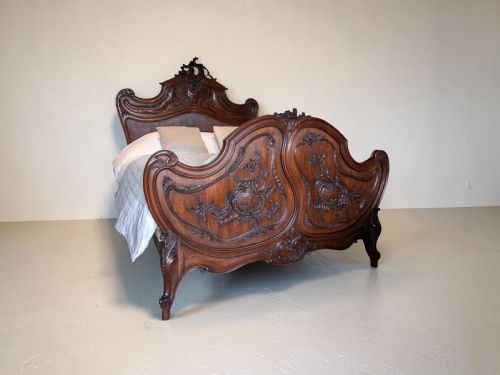


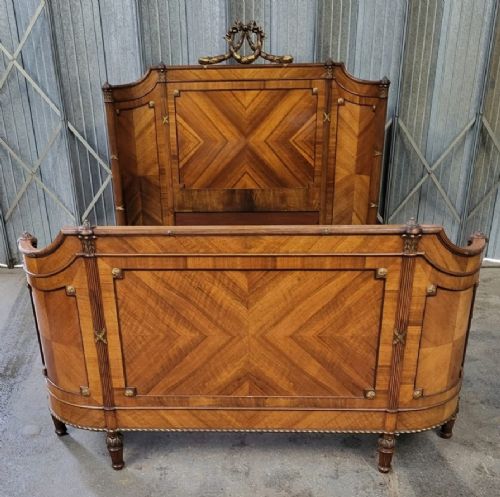
Carved Walnut Bed Frame
A carved walnut bed frame brings rich grain and deep relief carving into a bedroom, offering a sturdy centrepiece built to last generations.
What these pieces are
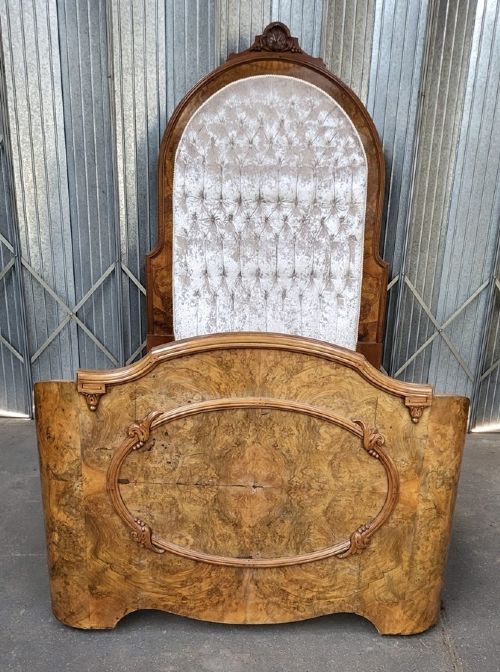
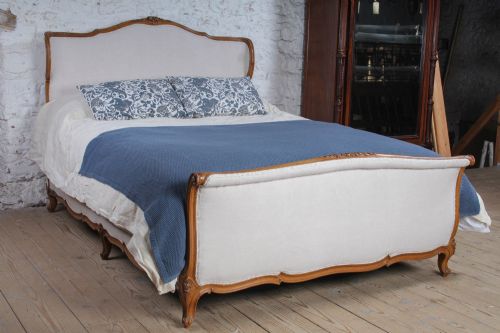
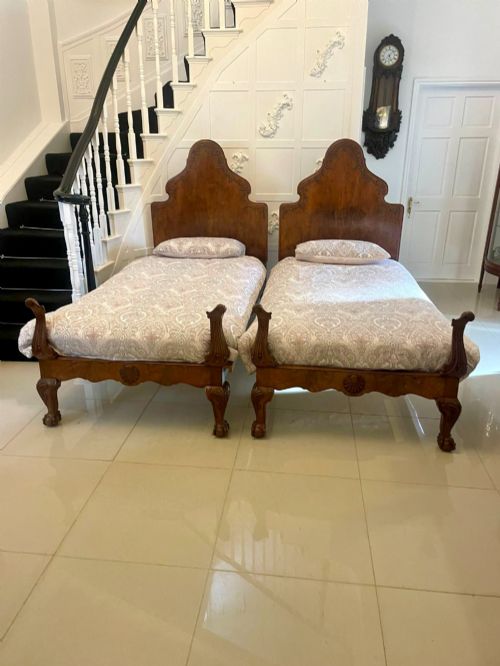
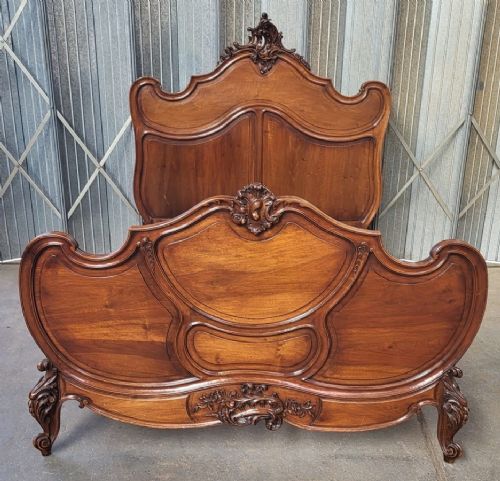
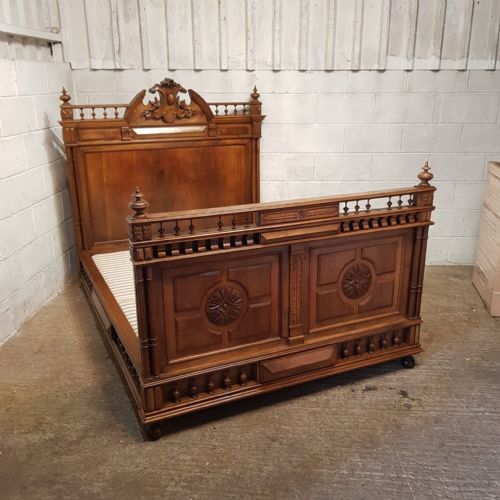
The pieces listed on this page originate from around eighteen-ninety, capturing the late nineteenth-century revival movements in French cabinet making. Buyers encounter robust wooden constructions that combine deep panel work with sculptural crests and footboards.
How they were made
These items utilise solid wood construction, relying heavily on dense walnut timber chosen for its rich brown tones and capacity to hold crisp detail. Craftsmen shaped the heavy sections by hand, joining major structural components with traditional mortise and tenon joinery.
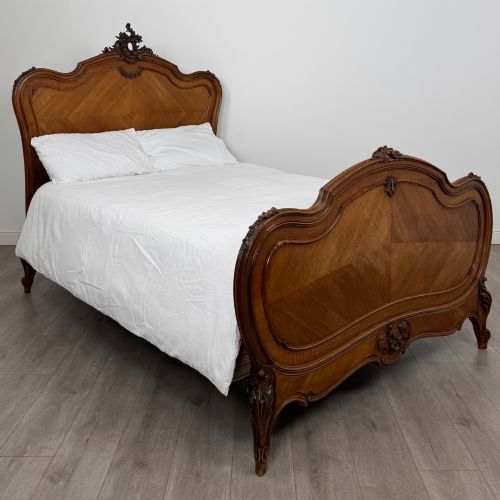
Carvers applied hand-chiselled relief work directly to the solid walnut boards, creating flowing floral motifs, scrolls, and asymmetrical panels characteristic of revival periods. The timber received hand-applied finishes that enhanced the natural grain patterns while protecting the dense wood.
The design styles recorded in these bed frame listings are exclusively French, spanning Louis XV, Renaissance Revival, and Art Nouveau periods.
What varies in quality
The distinction between standard production and superior craftsmanship lies in the depth and execution of the hand carving. Finer examples display undercut foliage and finely modelled scrollwork that show a sculptor's touch rather than repetitive machine routing.
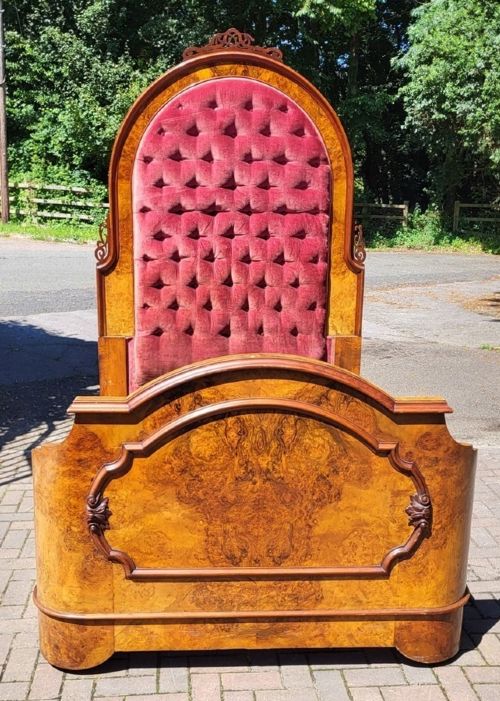
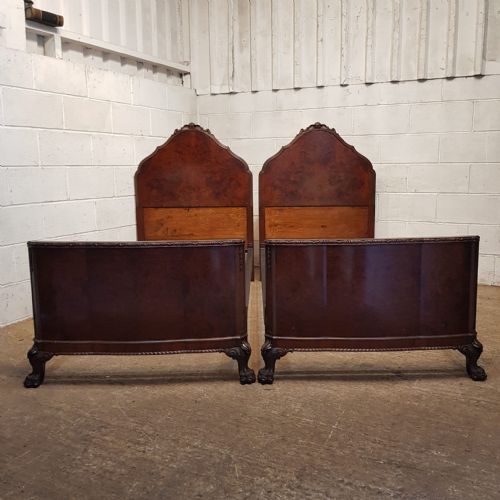
Quality also rests in the selection of the walnut timber itself, where boards with highly figured grain and uniform colour command greater visual presence. The weight and thickness of the structural side rails and headboard panels further determine the structural integrity and prestige of the bedstead.
The Carved Walnut Bed Frame Glossary
- Walnut
- A dense, heavy hardwood prized for its rich dark brown colour and ability to take sharp carved details. It serves as the primary material for these substantial nineteenth-century bedframes.
- Bedstead
- A framework of wood designed to support a mattress and box spring, often featuring both a headboard and a footboard. These nineteenth-century examples stand as complete architectural units rather than simple headboards.
- Renaissance Revival
- A nineteenth-century design movement that reinterprets sixteenth-century architectural motifs, classical symmetry, and heavy sculptural relief. This style appears on sturdy walnut bed frames of the era.
- Art Nouveau
- A turn-of-the-century artistic movement favouring organic, flowing lines, asymmetric plant forms, and natural curves. It influences the decorative carving found on selected walnut bed frames from this period.
Frequently Asked Questions
What mattress sizes fit these historic beds?
Nineteenth-century French bedsteads were built to historical continental dimensions rather than modern standard UK or international sizing. Buyers often need custom mattresses made to fit the exact interior length and width of the wooden rails.
Working with a specialist mattress maker ensures the support base sits correctly within the antique frame without damaging the original side rails or footboard.
How do I assemble a wooden bed frame?
These bed frames typically utilise traditional iron bed bolts or heavy interlocking metal brackets recessed into the wooden posts and side rails. Assembly requires two people to align the heavy solid wood headboard, footboard, and side rails securely.
Care must be taken not to over-tighten metal fittings into aged walnut timber, ensuring the original joints remain undamaged during the process.
How do I care for antique walnut wood?
Walnut timber benefits from consistent indoor humidity levels and protection from direct sunlight to prevent the wood from drying out or splitting. Dusting with a soft, dry cloth maintains the surface without the buildup of modern silicone polishes.
Occasional application of traditional beeswax feeds the timber and preserves the depth of the grain and the integrity of the hand-carved details.
How do I distinguish French revival styles?
Louis XV revival pieces display sweeping cabriole curves, asymmetrical floral cartouches, and delicate scrollwork reflecting eighteenth-century court taste. Renaissance revival versions feature much heavier architectural mouldings, fluted columns, and bold geometric panel relief.
Examining the specific motifs on the headboard and footboard reveals which historical period the nineteenth-century cabinet maker sought to emulate.