






Antique French King Bed
An antique french king bed brings generous proportions and sculptural woodwork into the bedroom, drawing on centuries of continental cabinet-making traditions.
What an antique french king bed is
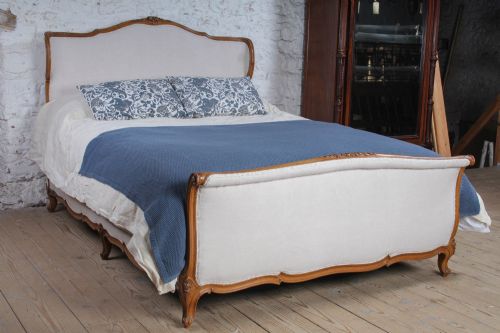
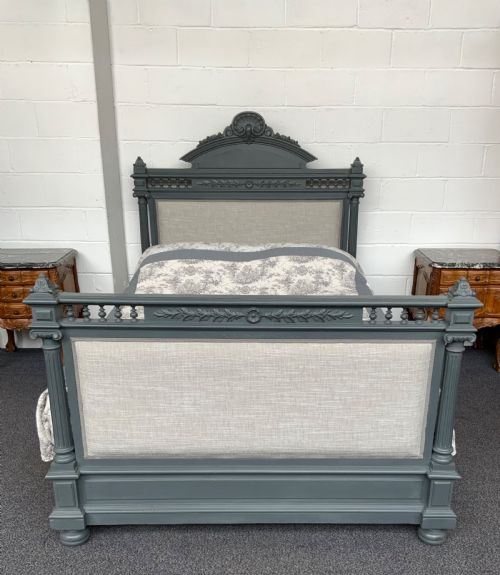
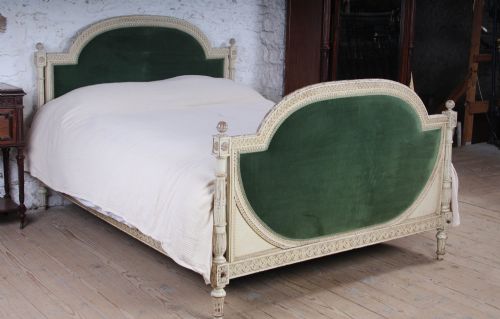
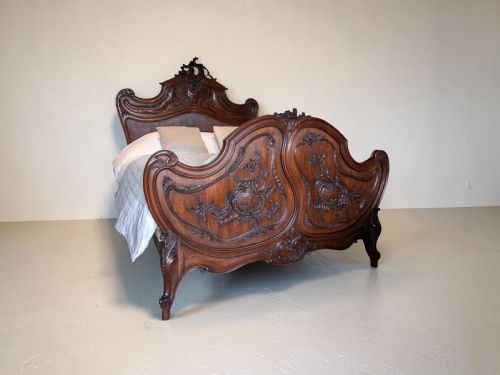
When you search for an antique french king bed, you are looking at substantial sleeping frames shaped by continental design from the nineteenth and early twentieth centuries. These pieces span classic stylistic revivals including Louis XV and Louis XVI, originating from workshops that favoured expansive dimensions.
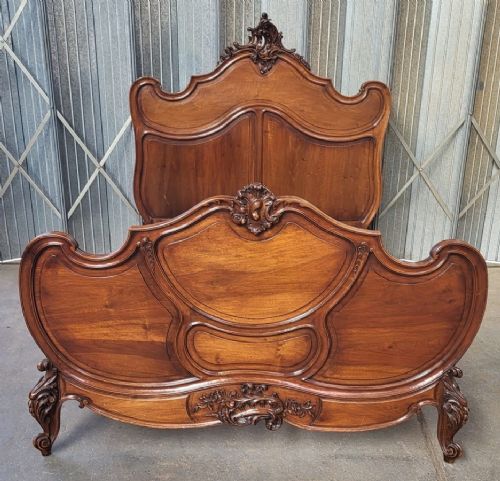
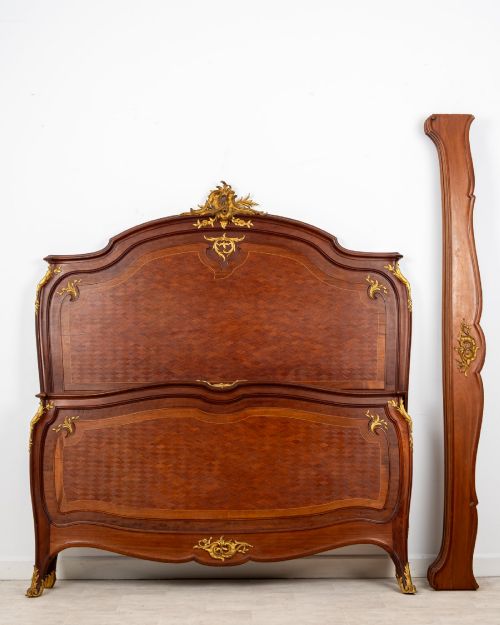
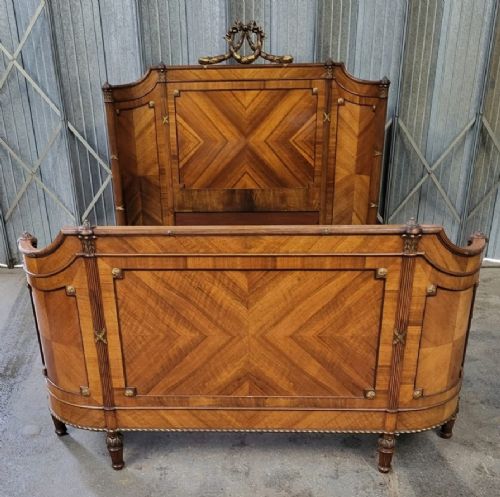
The versions most commonly met on this page include walnut and mahogany bedsteads alongside kingwood frames decorated with parquetry. You will also encounter carved wooden structures paired with woven cane panels or gilded accents.
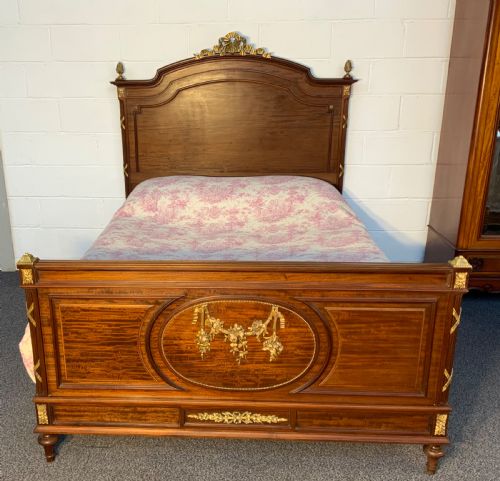
Forms range from straightforward panelled headboards and footboards to sculptural beds ornamented with brass mounts and ormolu. Each piece reflects the stylistic preferences of French periods stretching from the eighteen-eighties into the nineteen-twenties.
How they were made
Cabinet-makers constructed these bedsteads using solid timbers such as walnut, mahogany, and oak for structural integrity, often applying figured veneers and kingwood surfaces for visual depth. Parquetry and marquetry patterns were meticulously arranged by hand across visible panels.
Decorative elements relied on cast ormolu and brass mounts fixed to the wood, alongside intricate hand-carving directly into the solid frames. Caning was woven tightly into open wooden apertures to create light, breathable headboard and footboard panels.
Retail Price Guide 2026
Typical UK retail prices for french king bed, calculated from the Sellingantiques database of over a million retail prices indexed since 2003. This retail price guide relies exclusively on Sellingantiques data; no external sources or auction records are used, so the figures do not describe the wider market.
What varies in quality
The distinction between standard production and exceptional craftsmanship rests in the depth and precision of the wood carving. Superior examples display crisp, undercut foliage and scrollwork executed directly in the solid timber rather than relying on applied composition mouldings.
Material selection and mounting further define the scale. Finer frames incorporate dense kingwood veneers with complex geometric parquetry, heavier cast ormolu mounts, and meticulously hand-woven cane panels that maintain even tension throughout.
The Antique French King Bed Glossary
- Kingwood
- A dense, heavily figured exotic hardwood prized for its rich brown and golden tones, frequently utilised in fine French marquetry and parquetry.
- Ormolu
- Gilt bronze mounts cast and chased by hand, applied to furniture frames to accent corners and borders with metallic lustre.
- Parquetry
- Geometric wood inlay work arranged in repeating patterns such as herringbone or cubes across cabinet surfaces.
- Cane
- Plant material woven into open mesh panels to form light, decorative inserts within headboards and footboards.
- Louis XV Style
- A continental design movement characterised by asymmetrical curves, cabriole legs, and naturalistic floral carvings.
Frequently Asked Questions
How do I fit a modern mattress?
Many antique french king beds were built to historic continental dimensions rather than standard modern measurements. Adapting them often requires custom slats or a discreet internal support frame.
Consulting the exact internal length and width dimensions listed for each bedstead ensures proper alignment with contemporary bases and mattresses.
Are these beds dismantlable?
Most antique bedsteads utilise traditional bolt-in rails connecting the headboard and footboard. This dismantling mechanism allowed for easier transport between rooms.
Care should be taken when tightening historical metal threads to preserve the integrity of the original wood sockets.
How should I care for carved wood?
Maintaining the finish involves regular dusting with a soft, dry cloth to prevent particulate accumulation within deep carvings. Avoid silicone-based sprays that can degrade historic polishes over time.
Applying a traditional beeswax sparingly helps nourish dry timber and maintains the natural lustre of walnut and mahogany.
How do I distinguish Louis XV from Louis XVI?
Louis XV designs rely heavily on asymmetrical flowing curves, organic scrollwork, and cabriole forms. They present a softer, more undulating silhouette across the headboard and footboard.
Louis XVI pieces introduce neoclassical symmetry, straight fluted columns, and geometric proportions inspired by classical architecture.