

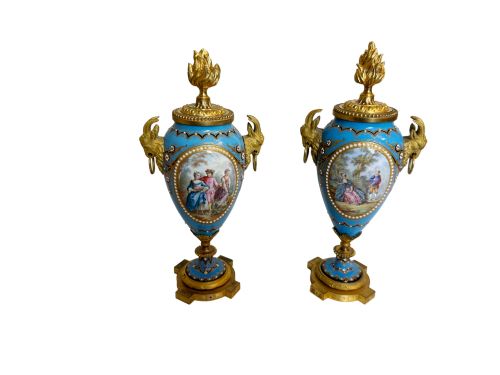
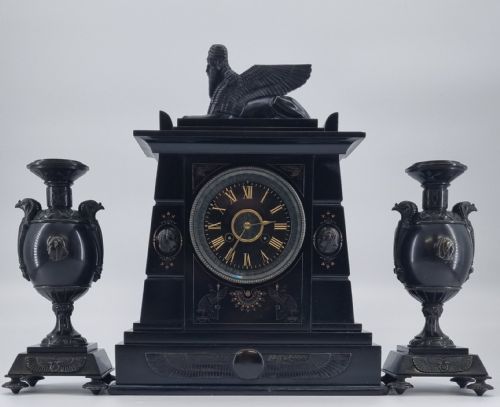
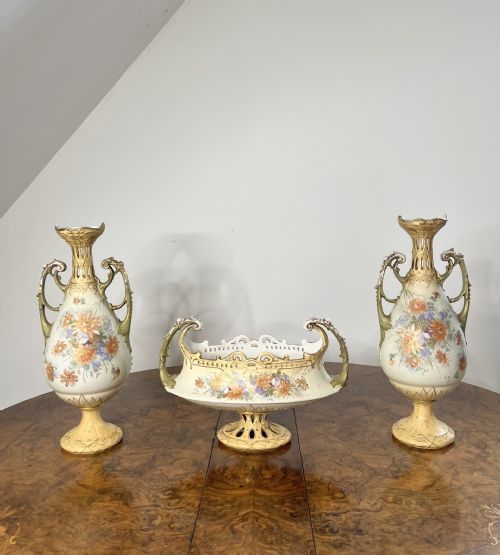
Antique Urn Garniture
An antique urn garniture brings symmetry and grandeur to a mantelpiece, pairing a central clock or centrepiece with matching side vases or candleholders.
Antique Urn Garniture
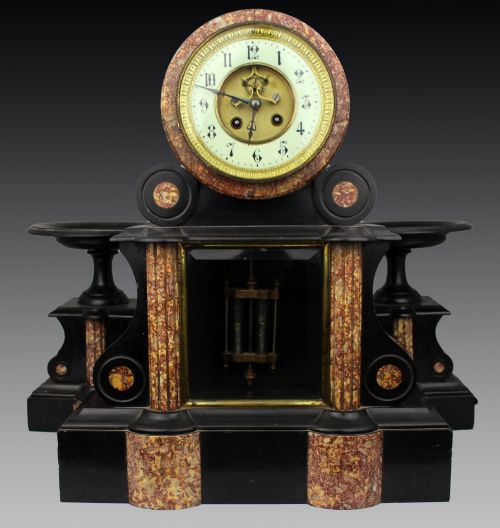
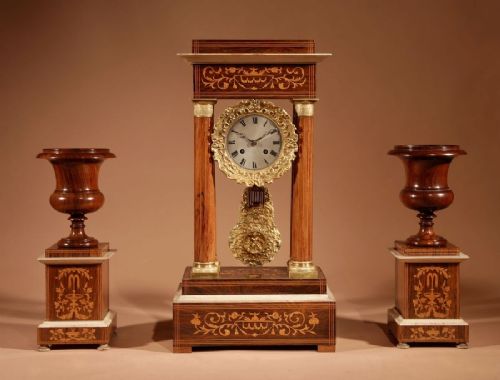
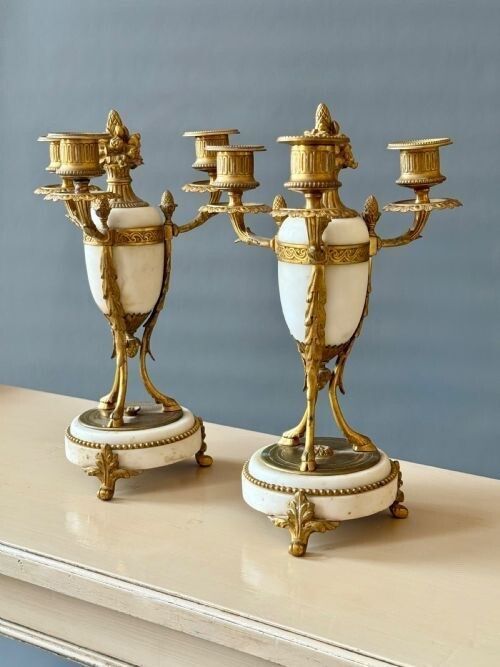
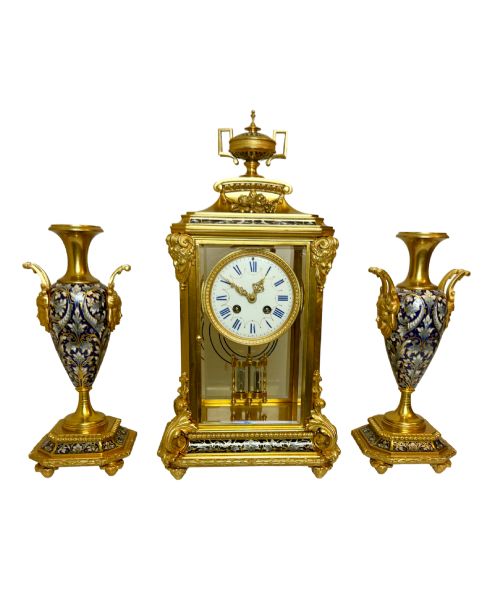
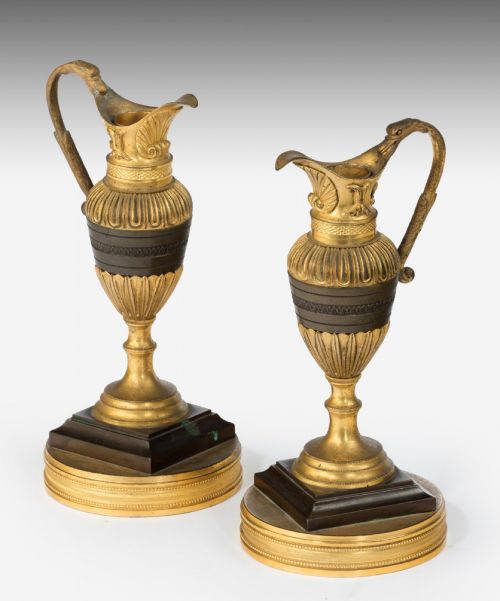
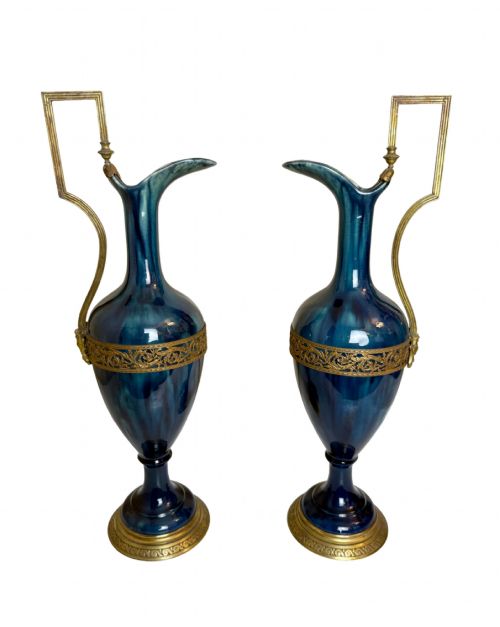
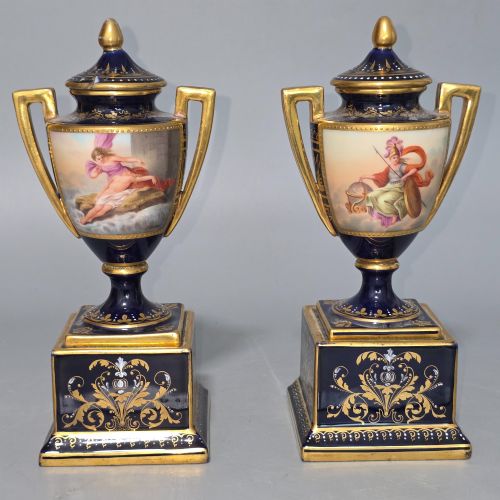
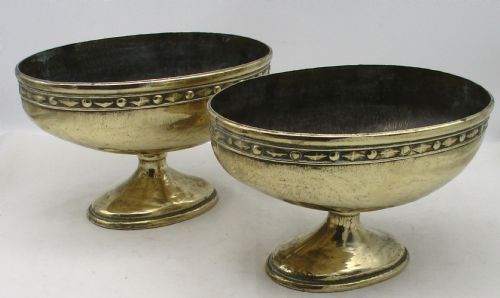
An antique urn garniture typically consists of three or more matching decorative pieces designed to sit together on a mantelpiece, sideboard or console. When searching for an antique urn garniture, buyers encounter matching sets of vases, urns, cassolettes and candleholders that often accompany a central mantel clock.
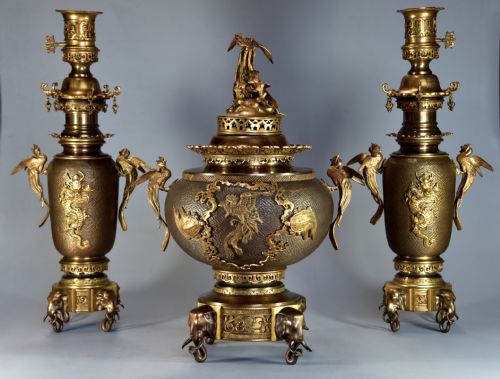
The selections available lean heavily towards nineteenth-century French and Japanese craftsmanship, spanning periods from the French Empire and Louis XVI styles to Victorian adaptations. These coordinated groupings function as a unified decorative scheme for formal rooms, linking different surfaces across a single interior.
How They Were Made
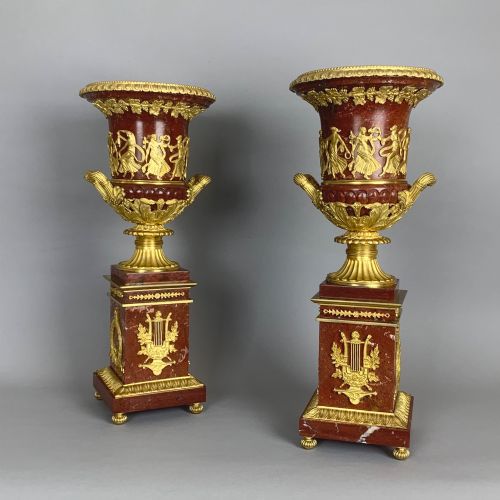
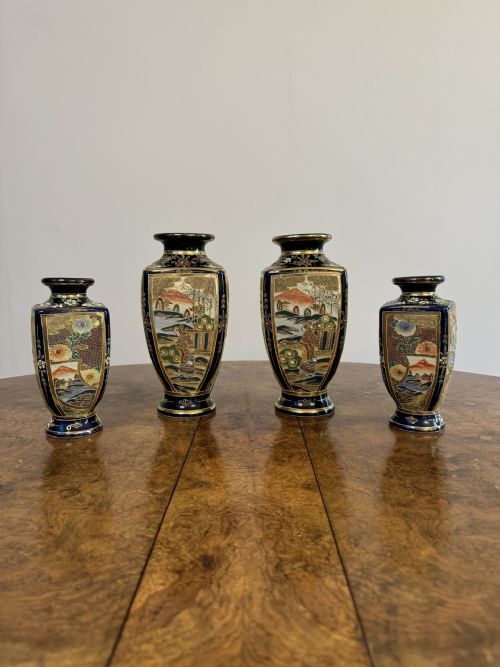
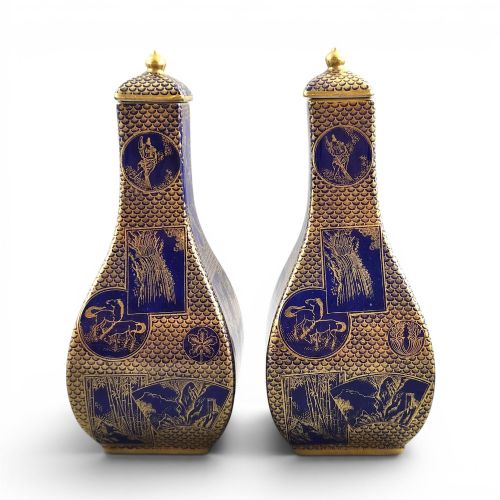
Maker workshops combined cast metals like gilt bronze, ormolu and brass with natural stones such as white marble, black marble, siena marble and onyx to build weight and structural contrast. Porcelain and glass bodies received hand-painted enamels, gilt highlights and intricate surface patterns before being mounted in metal trims.
Foundries and studios utilised specialised techniques for fire-gilding, champlevé enamel work and patination, pairing ceramic vessels with removable lids or reversible cassolette tops. Skilled artisans turned stone bases on lathes and assembled multi-part metal castings with precise mechanical joints.
Listings feature nineteenth-century French, Japanese and English works, spanning Neoclassical, Empire, Rococo Revival and Meiji period styles across porcelain, bronze, marble and glass.
What Varies in Quality
The refinement of the cast metal mountings separates standard production from exceptional pieces, visible in the depth of chasing and the crispness of leaf and scroll details. Heavier, more substantial bronze and ormolu mounts display sharper edges and deeper hand-finished chiselling than lighter, softer alloy casts.
The quality of the painted decoration and the selection of the stone body dictate the standing of a garniture set. Hand-painted porcelain scenes, finely layered champlevé enamel work and unblemished blocks of variegated marble indicate superior studio production and material cost.
Japy Frères·Mason's Patent Ironstone·Flight Barr and Barr·F. Koller
The Antique Urn Garniture Glossary
- Garniture
- A set of matching decorative objects designed to be displayed together on a mantelpiece or furniture top. The arrangement usually comprises a central clock or large urn flanked by two smaller matching vases, figures or candelabra.
- Cassolette
- A dual-purpose decorative vessel featuring a reversible lid that transforms from a closed urn into a candleholder or incense burner. They appear frequently in nineteenth-century French metal and stone sets.
- Ormolu
- Finely ground high-carat gold applied to a bronze base using a mercury amalgamation technique, or later through electroplating. This finish imparts a rich, warm golden lustre to metal mounts.
- Champlevé
- An enamelling technique where troughs or cells are hollowed out of a metal surface and filled with vitreous enamel paste before firing. The piece is then ground smooth and polished.
Antique Urn Garniture: Frequently Asked Questions
What is an antique urn garniture?
An antique urn garniture is a matching set of decorative vessels, usually numbering three pieces, designed to sit together on a mantelpiece or sideboard.
They coordinate in material, style and colour to provide visual balance and symmetry in a formal interior.
How were garniture sets used?
These sets were placed on mantelpieces beneath mirrors or upon console tables to anchor the decorative scheme of a room. They often framed a central clock, creating a balanced focal point for the interior.
Some pieces, such as cassolettes or candleholders, served a practical function for lighting or burning incense alongside their purely decorative role.
How do I live with a garniture?
Display the pieces together on a stable surface where their matched proportions can be appreciated from a distance. Keep them away from direct sunlight and excessive heat to protect delicate enamel, paint and gilt surfaces.
Dust them gently with a soft dry cloth without using liquid cleaners or harsh chemicals that could damage the antique patination.
How can I tell periods apart?
Earlier nineteenth-century pieces from the French Empire or Regency periods display strict classical proportions and restraint, utilising heavy bronze and precise Neoclassical motifs. Later Victorian and late-century examples often embrace eclectic revival styles, incorporating vibrant Japanese Imari palettes, Satsuma earthenware or elaborate champlevé enamel work.
Examining the materials, such as the transition from natural stones and fire-gilded bronze to later onyx and varied glass techniques, helps place a garniture within its decade of manufacture.