

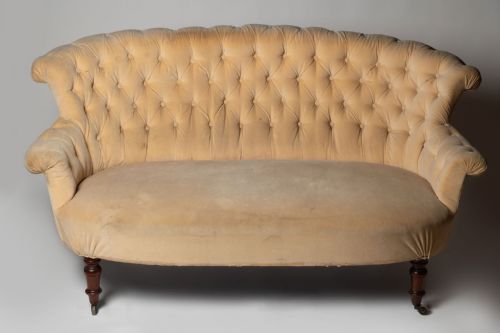


Antique Upholstered Canape
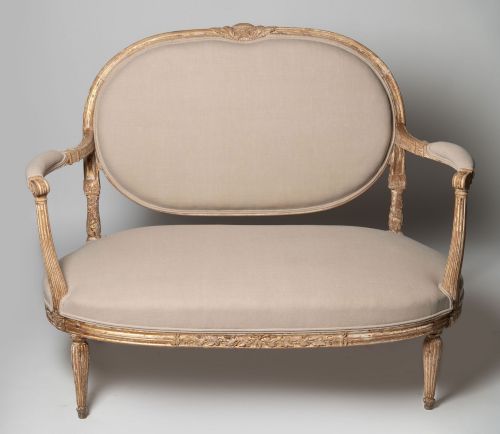
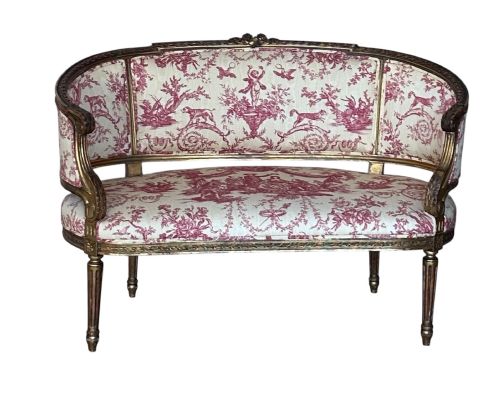
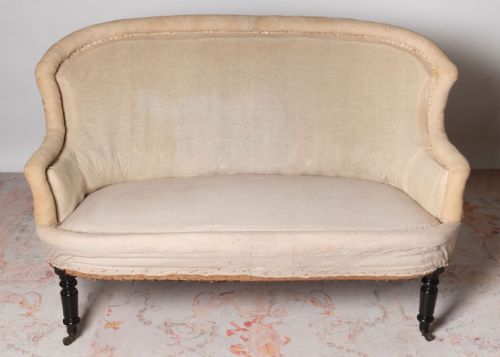
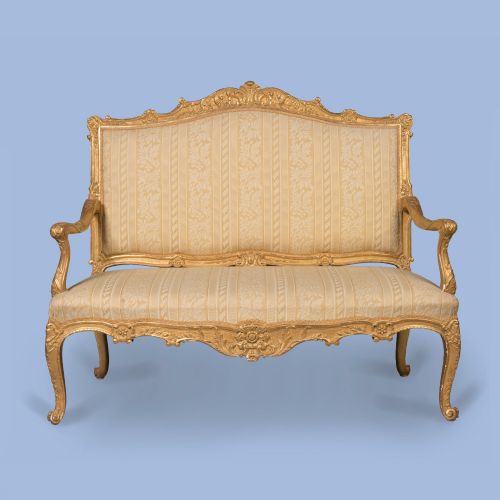
An antique upholstered canapé brings generous French elegance to a grand salon, offering wide seating and carved wooden frames.
Antique Upholstered Canape
When you search for an antique upholstered canapé, you encounter wide seats designed for multiple occupants that trace their lineage to French seating traditions. These pieces appear frequently in nineteenth-century interpretations, drawing heavily on Louis XV and Louis XVI styles with exposed wooden frames and generous upholstery.
Makers often fashioned these seating forms as part of larger salon suites that included matching armchairs. The proportions range from intimate two-seat boudoir forms to larger three-piece seating arrangements suited to expansive reception rooms.
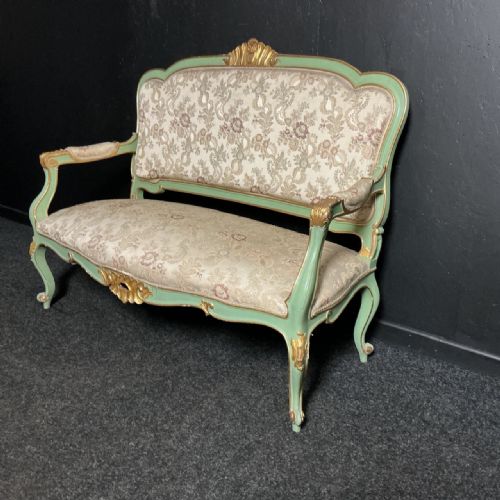
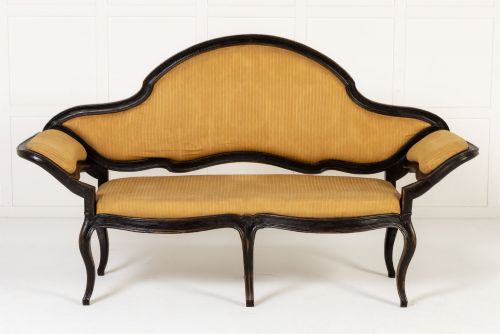
The aesthetic vocabulary encompasses French chateau designs alongside Italian Rococo and Regency influences. Walnut, mahogany, and giltwood provide the structural foundation for textiles ranging from plain linen to patterned silk.
Materials and Construction Methods
Craftsmen shaped the structural frames from solid hardwoods like walnut, mahogany, and beech, frequently applying giltwood or paint finishes. Hand-carving defines the woodwork, particularly along the crest rails, arm supports, and cabriole legs.
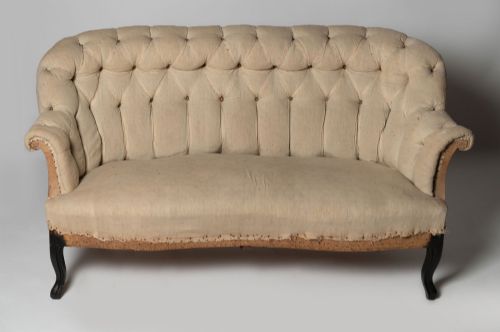
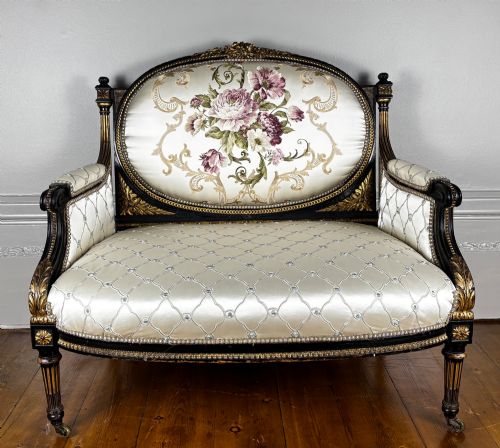
Upholstery techniques involved traditional stuffing secured over webbing and springs, finished with textile coverings such as velvet, damask, or needlepoint. Brass tacks or decorative gimp often secured the outer edges of the fabric to the wooden framework.
Listings feature numerous nineteenth-century examples alongside eighteenth-century origins, utilising walnut, mahogany, and giltwood frames.
Judging Quality and Execution
Quality rests heavily on the crispness and depth of the hand-carved woodwork along the frame. Pieces featuring deeply sculpted floral motifs or intricate parcel gilt display superior artisanal input compared to simpler moulded alternatives.
The integrity of the structural joinery and the selection of fine primary timbers dictate the overall durability. Finer examples retain harmonious proportions where the curved backrest and carved cabriole legs balance visually with the upholstered seat.
The Antique Upholstered Canape Glossary
- Canapé
- An upholstered sofa or settee, particularly one produced in a French decorative style with an exposed wooden frame. These seats typically feature padded backs and arms.
- Giltwood
- Timber that has been coated with a thin layer of gold leaf. This finish appears frequently on formal nineteenth-century salon furniture.
- Cabriole leg
- A furniture leg that curves outward and then tapers inward, ending in a pad or scroll foot. This shape is characteristic of Louis XV and Rococo revival designs.
- Salon suite
- A matched set of seating furniture comprising a sofa and corresponding armchairs. They were designed to furnish formal reception rooms.
- Bergère
- An enclosed armchair or settee featuring upholstered sides set into a wooden frame. The seat usually incorporates a loose down cushion over a sprung base.
Antique Upholstered Canape: Frequently Asked Questions
Where should I place a canapé?
These upholstered settees suit formal drawing rooms, large bedrooms, or expansive entry halls where they function as statement seating pieces. Their decorative carved backs look effective when floated away from walls.
Ensure adequate clearance around the piece so the carved wooden framework and curved legs remain fully visible from all angles in the room.
How do I identify a Louis XV style canapé?
Louis XV style pieces display asymmetrical floral carvings, flowing serpentine lines, and distinct cabriole legs without straight horizontal members. The framework is typically carved walnut or giltwood.
Look for a cartouche-shaped backrest and continuous curved lines flowing from the crest rail down to the front seat rail.
Can I reupholster an antique canapé?
Reupholstering is standard practice for antique seating when the existing fabric shows wear or fails to match your interior scheme. Traditional materials should be used to maintain the correct profile.
Consult a restorer who understands traditional webbing, stuffing, and tacking methods to preserve the integrity of the exposed wooden frame.
What is the difference between a settee and a canapé?
While both terms describe upholstered seating for multiple people, canapé specifically denotes a piece styled after French court furniture traditions. They often feature more elaborate carved woodwork and exposed frames.
Settee is a broader English term that covers everything from simple wooden benches to heavily padded Victorian parlor seating.