


Gilded Parlour Sofa
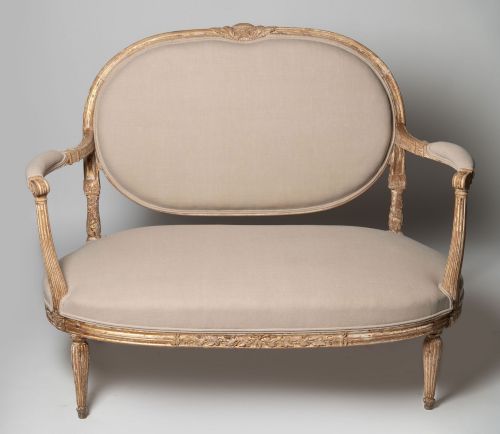
These gilded parlour sofa pieces bring French and Regency elegance to a room, offering ornate seating crafted from giltwood and beech.
Gilded Parlour Sofa
A gilded parlour sofa provides formal seating in nineteenth-century settings, taking forms such as two-seat settees, caned bergère sofas, and large giltwood couches. These pieces draw on French Neoclassical, Regency, and Rococo Revival styles, often reflecting Louis XVI influences.
Buyers on this page will most commonly encounter nineteenth-century examples, including pieces dated around 1880 and 1900. These items range from French gold-painted canapés to English early nineteenth-century giltwood settees.
The category extends beyond standard sofas to encompass related items such as salon suites and centre tables designed in matching Louis XVI styles. Such pieces share the decorative giltwood or painted finishes characteristic of formal nineteenth-century reception rooms.
Materials and construction
Carved wood forms the structural base of these seats, with beech and general wood frequently utilised alongside giltwood. Artisans shaped these timbers into intricate frames reflecting French Rococo and Empire tastes.
Surfaces receive decorative treatments including gold painting, cream paint, and complete giltwood finishes. Upholstery materials recorded in the listings include traditional textile, linen, and damask upholstery.
Some nineteenth-century makers could not decide between a sofa, a settee, or a couch, so they labelled the piece with all three terms at once.
Distinctions in quality
The refinement of the carving distinguishes finer examples from simpler alternatives, particularly in the execution of Louis XVI style details and Rococo curves. Hand-carved giltwood elements display greater depth and precision than painted wooden frames.
Upholstery choices also separate pieces, with heavy damask and linen fabrics indicating different periods of finish compared to original caning. The integration of matching salon elements elevates the standing of a suite.
The Gilded Parlour Sofa Glossary
- Giltwood
- Wood that has been coated with gold leaf or a gold-coloured finish. This material defines the opulent appearance of formal nineteenth-century seating.
- Bergère
- An enclosed upholstered armchair or sofa style with wooden frames. These pieces often feature cane panels alongside cushioned seating.
- Damask
- A reversible figured fabric traditionally used for heavy upholstery. It appears on formal settees from the nineteenth century.
- Cane
- Woven rattan material utilised for seat backs and panels. It provides a lighter texture contrasted against heavy giltwood frames.
- Rococo Revival
- A nineteenth-century design movement emulating the ornate curves of the eighteenth-century Rococo period. This style is prominent in the carved details of these sofas.
Gilded Parlour Sofa: Frequently Asked Questions
What periods do these sofas come from?
The listings span the nineteenth century, with specific examples dated around eighteen-eighty, nineteen hundred, and eighteen-twenty.
Most pieces belong to the broader nineteenth century, reflecting Regency and late Victorian revivals of French styles.
How were these settees used originally?
These settees served as formal seating in nineteenth-century parlours and reception rooms, designed to receive guests.
They functioned both as functional couches and as decorative statements matching other salon suite furniture.
What wood and upholstery materials appear?
Frames are constructed from beech and wood, frequently finished with giltwood, gold paint, or cream paint.
Upholstery includes textile, linen, and damask, while some bergère sofas incorporate cane panels.
How do Louis XVI and Rococo styles differ?
Louis XVI style pieces emphasise straight lines, classical symmetry, and restrained ornamentation.
Rococo Revival designs feature asymmetrical C-scrolls, naturalistic motifs, and flowing, curved wooden frames.