



Giltwood Sofa
When you set out to acquire a giltwood sofa, you are looking at gilded seating designed for formal reception rooms.
Giltwood Sofa
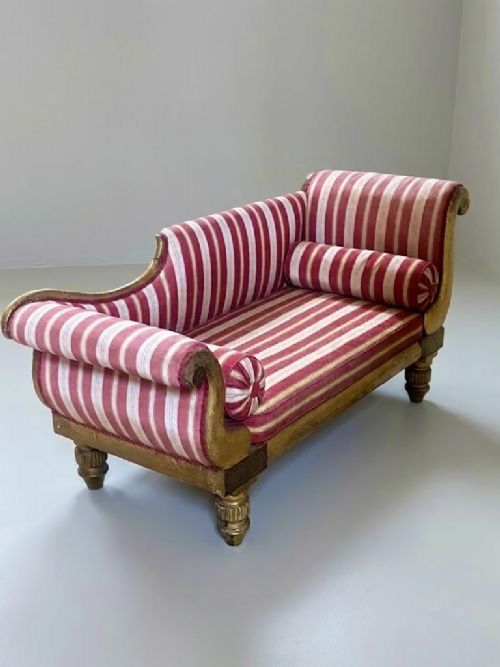
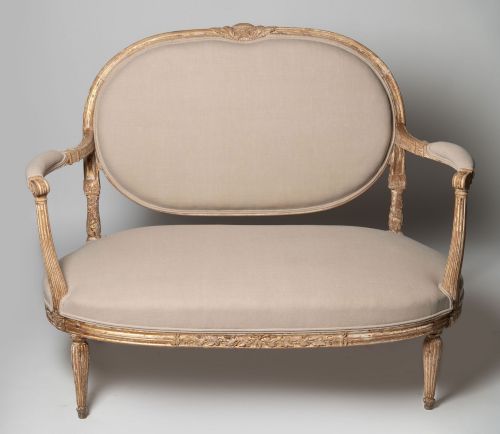
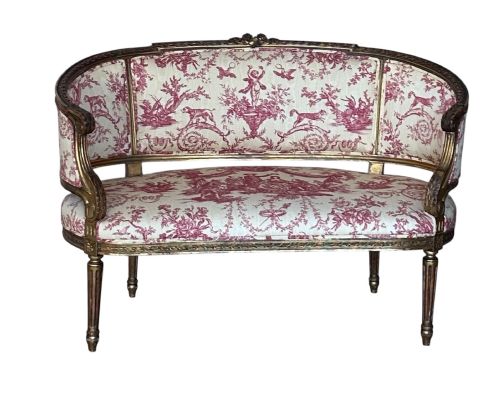
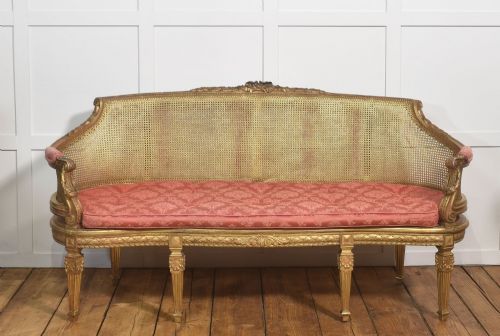
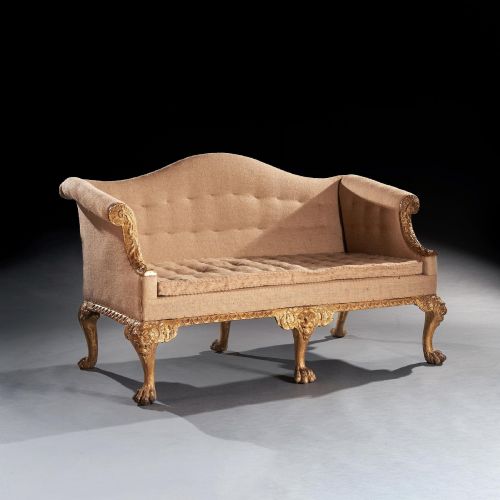
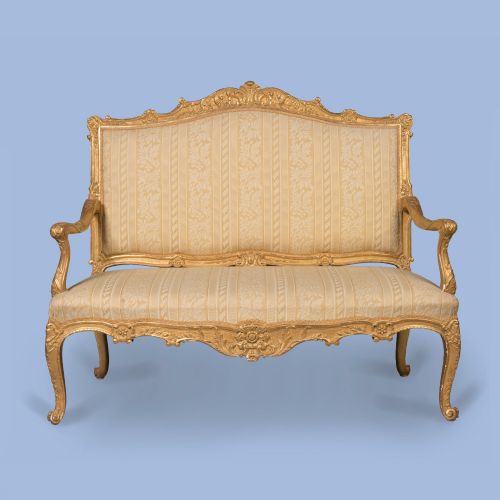
A giltwood sofa encompasses formal French and English seating made to command attention in a principal drawing room or salon. You will frequently encounter nineteenth-century pieces modelled on Louis XV and Louis XVI styles, alongside Regency examples.
The form ranges from compact two-seat canapés and boudoir loveseats to large country house settees and window sofas. Many pieces retain traditional upholstery in silk, linen, or floral textiles, while others utilise cane panels.
Materials and construction
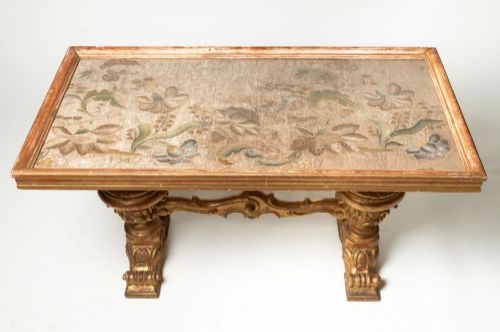
Carved wooden frames, commonly fashioned from beech or other supportive hardwoods, provide the structural foundation for these giltwood sofa pieces. Artisans applied thin sheets of gold leaf or specialist gilding over a prepared ground to achieve the bright metallic finish.
Upholstery methods varied from traditional horsehair stuffing beneath striped silk to buttoned curved backs and loose cushions. Frames often incorporate intricate hand-carved details, floral motifs, and fluted legs depending on the prevailing decorative style.
The listings demonstrate a strong presence of nineteenth-century French pieces, alongside English Regency and earlier eighteenth-century examples.
Assessing the craftsmanship
Quality rests upon the crispness of the wood carving and the depth of the gilding applied to the frame. Superior examples display sharp, hand-carved ornamentation where floral swags and scrollwork retain clean edges beneath the gold leaf.
Proportion and structural integrity define the best pieces, ensuring the carved frame supports the upholstered body harmoniously. The harmony between the gilt surface and the choice of textile, whether silk or antique linen, determines the overall presence of the settee.
Giles Grendey·Holland and Son·Gillows
The Giltwood Sofa Glossary
- Giltwood
- Wood that has been coated with gold leaf or powder. This finish gives formal furniture its bright metallic appearance.
- Canapé
- A traditional French term for a settee or sofa. These pieces typically feature an exposed carved wooden frame and upholstered seat.
- Louis XVI Style
- A neoclassical design period characterised by straight lines, symmetry, and classical motifs. Furniture from this group often includes fluted legs and rectangular proportions.
- Louis XV Style
- A decorative phase defined by asymmetry, curves, and naturalistic scrollwork. Pieces in this manner display flowing lines and floral carvings.
- Regency
- An English design period spanning the early nineteenth century. It draws heavily on classical Greek and Roman influences.
Giltwood Sofa: Frequently Asked Questions
Where should I place a giltwood sofa?
These pieces suit formal reception rooms, drawing rooms, or spacious bedrooms where their decorative frames can be appreciated. They function well as statement seating away from direct sunlight to protect delicate silk or linen textiles.
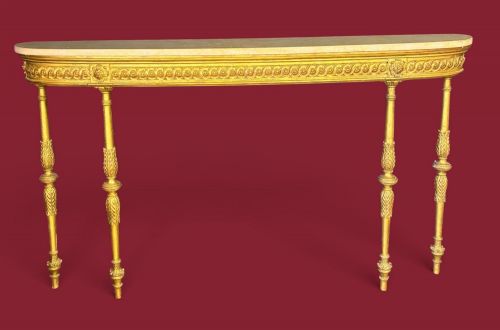
Ensure the scale matches the room, as larger settees require open space to balance their visual weight. Pair them with complementary console tables or salon chairs from similar decorative periods.
How do I care for the gilded finish?
Dust the carved wooden frame gently with a soft, dry cloth to prevent dirt accumulation. Avoid liquid cleaners or polishes that can lift or damage the delicate gold leaf.
Keep the seating away from sources of heat and moisture which cause the wood beneath the gilding to expand and contract. Professional conservation is recommended if the surface begins to flake.
How do I distinguish Louis XV from Louis XVI styles?
Louis XV pieces embrace curves, asymmetry, and elaborate floral carvings. The cabriole leg is a common feature on these frames.
Louis XVI furniture shifts towards straight lines, symmetry, and neoclassical restraint. You will observe fluted column legs and geometric shapes rather than sweeping organic scrolls.
Can I reupholster an antique settee?
Reupholstery is acceptable provided traditional methods and period-appropriate materials are respected. Preserving the integrity of the original frame is paramount during any conservation work.
Choose textiles such as antique silk, damask, or neutral linen that align with the historical context of the piece. Consult a specialist restorer to ensure the webbing and internal stuffing are handled correctly.