



Antique Twin Beds
Antique twin beds offer matched sleeping quarters for guest rooms, combining period timbers and metals with domestic scale.
What antique twin beds are
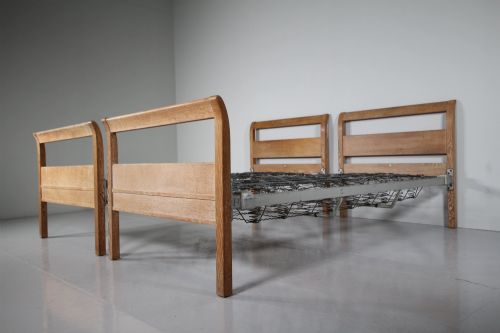
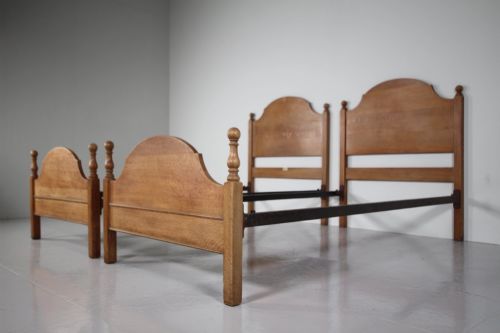
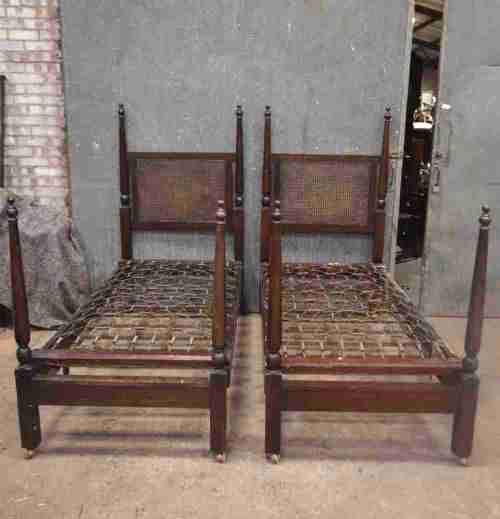
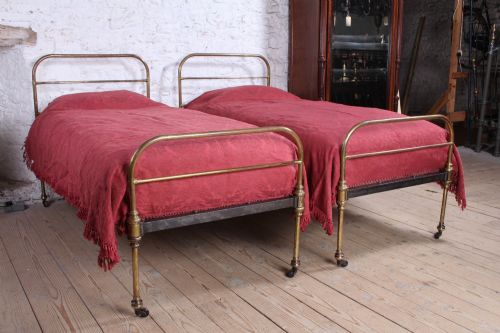
When you search for antique twin beds, you are looking at matched pairs of single sleeping frames produced across several decades from the Victorian era into the 1920s. These pieces include single beds, four poster single beds, and panelled bedsteads designed to match one another for use in the same room. The listings you encounter most often span the Edwardian period alongside pieces from around 1900, 1910, and 1920.
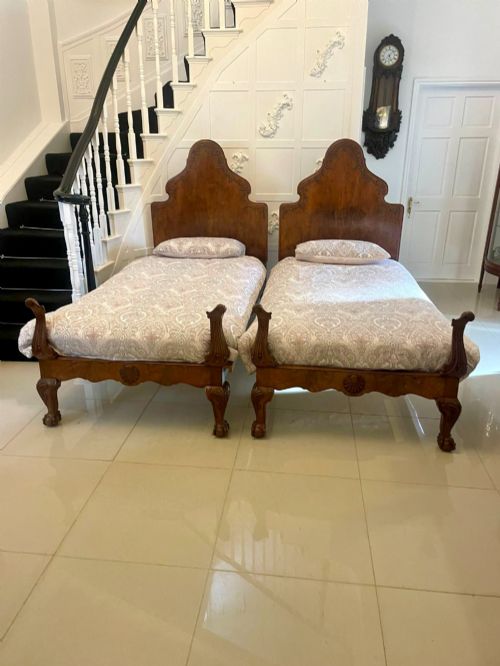
The styles represented across these matched pairs draw upon diverse design traditions, ranging from Colonial Revival and Queen Anne Style to Arts and Crafts and Victorian forms. Many examples function as independent single beds, while others feature cane work, inlaid mahogany, or carved burr walnut details that reflect the domestic tastes of their respective periods.
How they were made
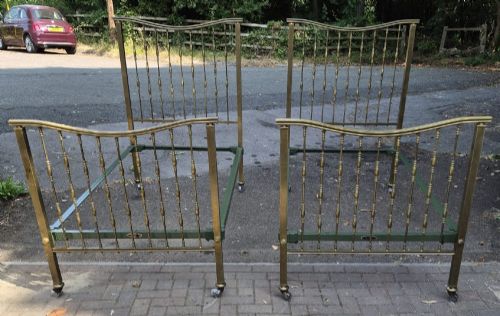
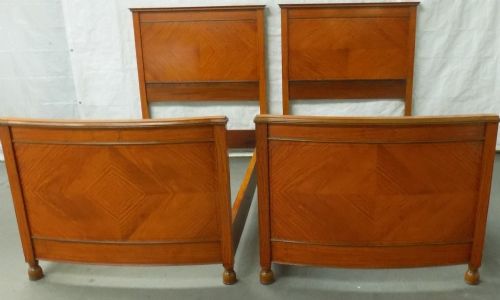
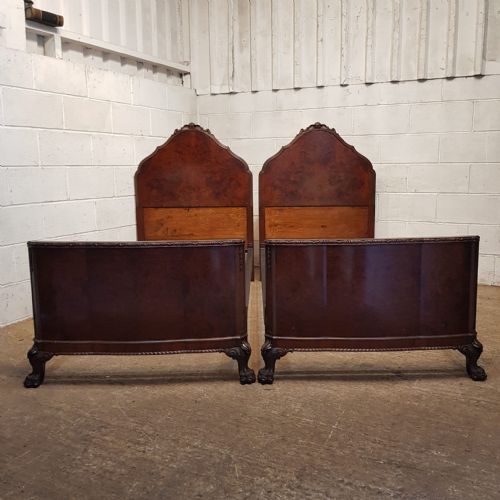
The construction of these beds utilises a range of traditional materials recorded in the listings, including iron, brass, oak, walnut, satinwood, cane, burr walnut, and general timber. Cabinetmakers shaped these woods using period joinery techniques, incorporating carved ornaments, burr veneers, and inlaid marquetry into the headboards and footboards.
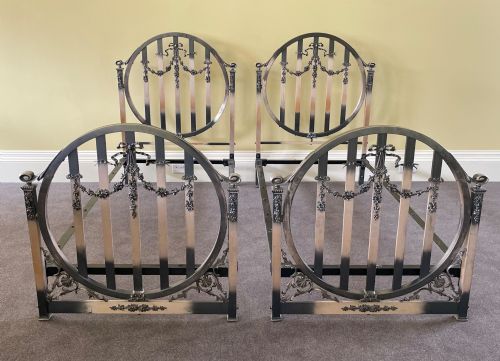
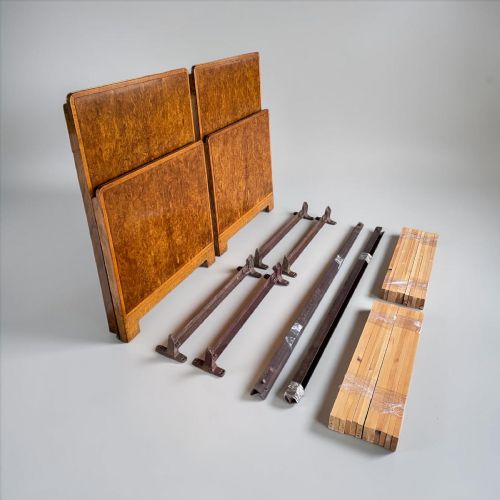
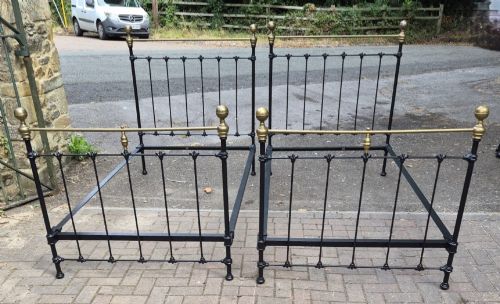
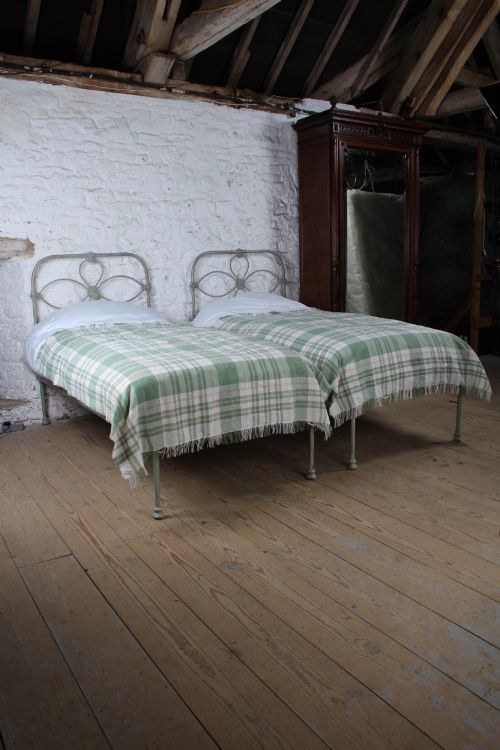
Metal frames combine structural iron components with brass fittings, while wooden variants employ sturdy timber frameworks designed to support bedding securely. Makers such as Heal's and Shapland and Petter applied their respective workshop standards to produce rigid, matched bedstead pairs that could withstand daily domestic use.
Retail Price Guide 2026
Typical UK retail prices for twin beds, calculated from the Sellingantiques database of over a million retail prices indexed since 2003. This retail price guide relies exclusively on Sellingantiques data; no external sources or auction records are used, so the figures do not describe the wider market.
Some Victorian white single beds arrive with the friendly capability of being joined together whenever a wider arrangement is preferred.
What varies in quality
The distinction between standard examples and the top of the range rests upon the choice of timber and the sophistication of the cabinetwork. Pieces utilising burr walnut, satinwood, or labelled Heal's provenance demonstrate superior material selection and documented workshop execution compared to plain timber frames.
Quality also shows in the depth and crispness of carved details, the precision of inlaid mahogany, and the integration of cane panels such as bergere work. Matched pairs that retain their original labelled maker identities or exhibit specialised stylistic motifs command greater interest from collectors of period bedroom furniture.
Heals·Shapland and Petter
The Antique Twin Beds Glossary
- Bergere
- A type of rattan or wicker cane work used for chair backs and bed panels. It provides a lightweight, textured decorative surface in wooden frames.
- Burr walnut
- Timber taken from the warted excrescences of walnut trees, displaying intricate swirling grain patterns. Cabinetmakers prize it for high-status veneering.
- Inlay
- A technique where contrasting woods or materials are inserted into recessed cavities of a timber base to form decorative patterns. Mahogany frames frequently feature this ornamentation.
- Edwardian
- The architectural and decorative style spanning the reign of King Edward VII up to the First World War. Pieces from this era often display lighter proportions than their Victorian predecessors.
- Four poster
- A bed with four vertical columns supporting a tester canopy framework. Single variants appear in period oak constructions.
Frequently Asked Questions
Can antique twin beds take modern mattresses?
Many antique twin beds feature non-standard interior dimensions compared to contemporary mattress sizes. Buyers often utilise custom-made mattresses to ensure a proper fit within the historic side rails.
Adjustment of the internal support slats may also be necessary to accommodate modern box springs or supportive bases safely.
How do I identify an Edwardian twin bed?
Edwardian twin beds typically display lighter forms and brighter timber tones than heavy Victorian equivalents. They often incorporate inlaid mahogany, satinwood, or understated Edwardian styling cues.
Maker labels or stamps from firms active during the early twentieth century help confirm the period of manufacture.
Are these beds sold as matched pairs?
The listings consist entirely of paired single beds designed to sit together in a shared bedroom or guest room. Each pair shares matching materials, periods, and decorative styles.
Some variants even allow separate single beds to be joined together physically when required.
What maintenance do wood and metal beds need?
Wooden twin beds benefit from occasional application of appropriate furniture wax to nourish dry timber and veneers. Metal iron and brass frames require gentle cleaning with a dry cloth to preserve their original finishes.
Checking and tightening structural bolts periodically ensures the bed frames remain stable and secure.