




Arts and Crafts Bed
An arts and crafts bed brings solid oak and honest construction into the bedroom, offering traditional joinery and straightforward charm for everyday use.
What these beds are
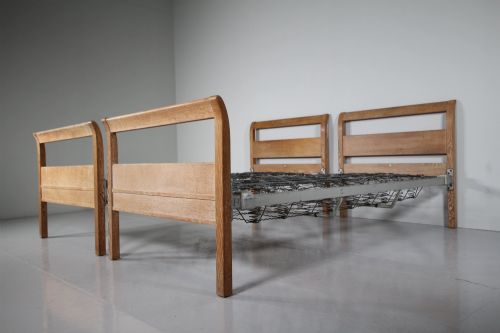
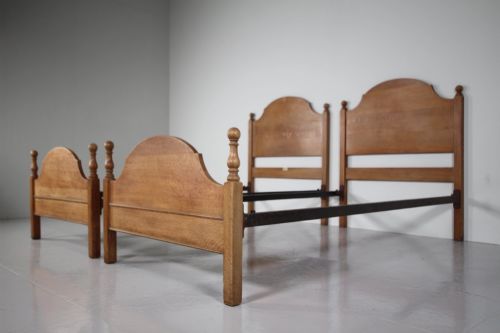
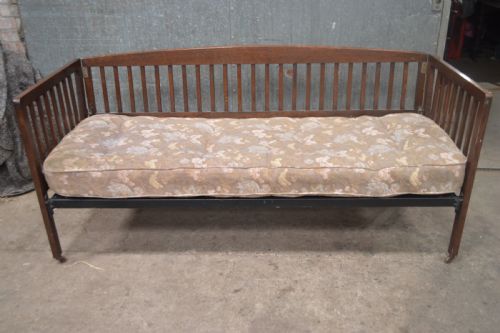
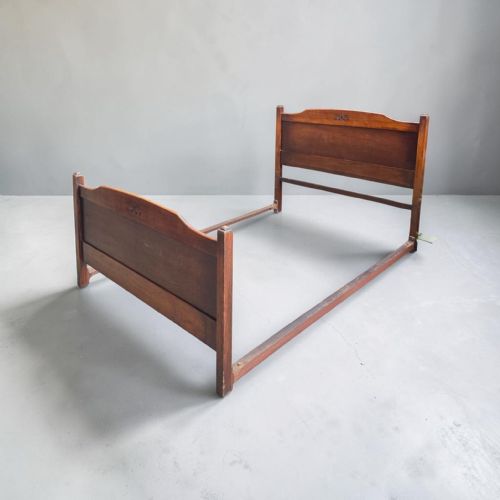
When searching for an arts and crafts bed, you are looking at sleeping furniture produced from the late nineteenth century through to the interwar period. These pieces encompass single beds, double frames, four posters, and twin configurations designed with utility and simple forms in mind.
The versions most commonly met on this page are constructed from oak, often reflecting Edwardian workshops or Cotswold traditions. They range from panelled bedsteads to labelled examples by known makers.
Beyond the standard frames, related items appear in the wider record, including bedside cabinets, wardrobes, and bedroom suites in matching timbers. The focus remains steadfastly on honest construction and visible grain.
Materials and construction
Makers utilised solid timbers predominantly, with oak forming the foundation alongside sweet chestnut, ash, fruitwood, pitch pine, maple, walnut, and mahogany. Metal elements such as brass and cast iron appear frequently in framing and decorative mounts.
Construction relied on traditional joinery methods, featuring panelled headboards and footboards, carved details, and occasional fruitwood inlay. Labels and stamps occasionally mark the origin of specific workshops.
Retail Price Guide 2026
Typical UK retail prices for arts and crafts bed, calculated from the Sellingantiques database of over a million retail prices indexed since 2003. This retail price guide relies exclusively on Sellingantiques data; no external sources or auction records are used, so the figures do not describe the wider market.
The archive records bedroom suites, bedside cupboards, and single or double bed frames utilising ash, maple, and mahogany.
Assessing quality
Quality rests upon the selection of timber and the integrity of the joinery rather than applied surface ornament. Solid oak frames with well-executed panel work and thoughtful proportions represent the upper tier of production.
Provenance and maker attribution elevate certain pieces significantly, particularly when accompanied by original labels or documented workshop origins. Simple utilitarian frames provide a sturdy alternative without the workshop signature.
Heals·Stanley Webb Davies·Shapland and Petter·Maple and Co·Gordon Russell
The Arts and Crafts Bed Glossary
- Bedstead
- A framework of a bed supporting the mattress and springs. It usually incorporates a headboard and footboard joined by side rails.
- Panelled
- Construction method where flat sections of wood are fitted within a surrounding frame. This technique accommodates natural wood movement over time.
- Sweet Chestnut
- A durable hardwood noted for its strength and attractive grain pattern. It was utilised in notable twentieth-century furniture pieces.
- Edwardian
- Pertaining to the reign of King Edward VII, spanning the early twentieth century. Furniture from this period often continued late Victorian vernacular styles with lighter proportions.
Frequently Asked Questions
How do I date an arts and crafts bed?
Dating relies on timber choice, construction methods, and stylistic cues such as panel proportions. Edwardian pieces often show lighter framing, while nineteenth-century examples lean towards heavier Gothic or vernacular forms.
Makers' labels, stamps, and documented workshop designs provide more precise dates when present on the timber frame.
Will these beds take modern mattresses?
Many antique frames accommodate standard mattress sizes, though internal dimensions can vary compared to modern manufacturing standards. Checking the exact width and length between the side rails is essential before purchasing.
Slats or modern support bases can often be adjusted or added to suit contemporary mattresses without altering the historic frame.
Are these beds made of solid oak?
Solid oak is the predominant material seen across these listings, though other timbers like sweet chestnut, ash, and mahogany also appear. Construction prioritises natural wood grains and honest structural joinery.
Secondary woods may be used for internal rails or slats, but the visible surfaces typically showcase the primary hardwood.
How do I care for a wooden bed frame?
Routine care involves dusting with a soft cloth and avoiding excessive moisture or direct sunlight. Preserving the finish requires occasional treatment with suitable natural waxes.
Checking and gently tightening bolts or joints periodically ensures the frame remains stable during everyday use.