

Antique Oak Bed
An antique oak bed brings centuries of sturdy domestic craft and rich timber grain straight into the bedroom.
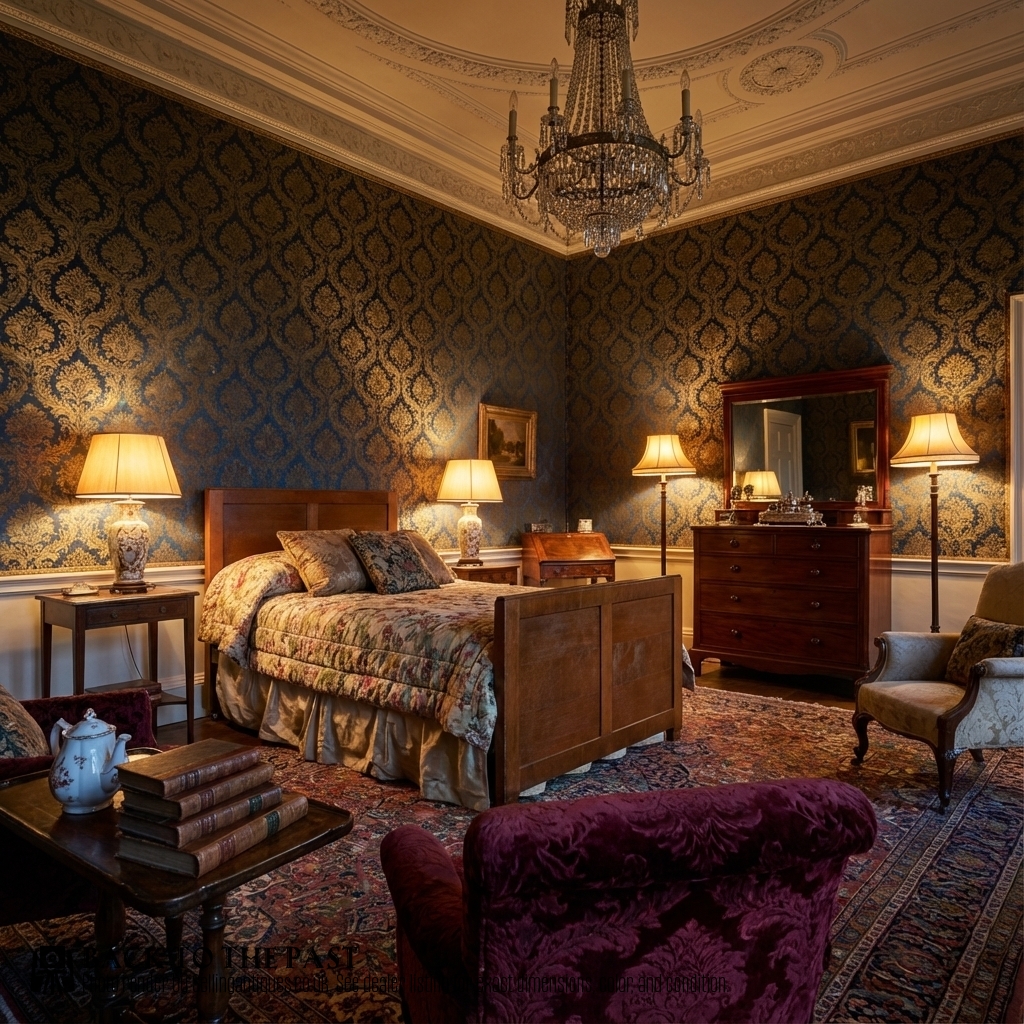
Antique Oak Bed
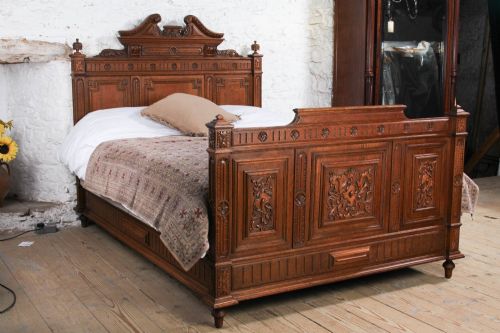
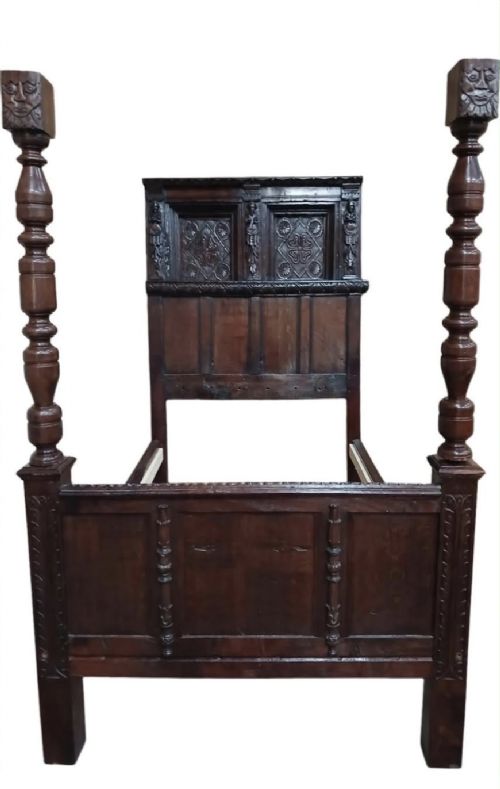
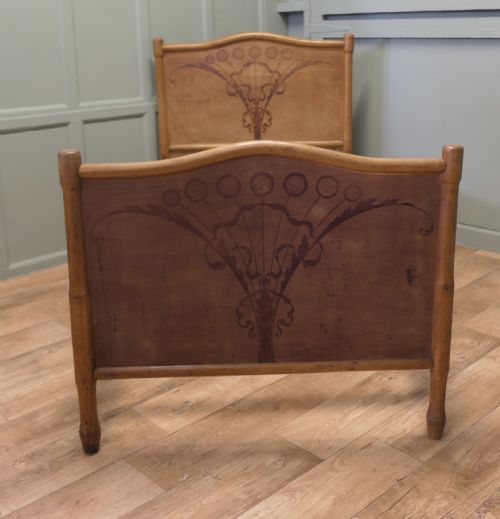
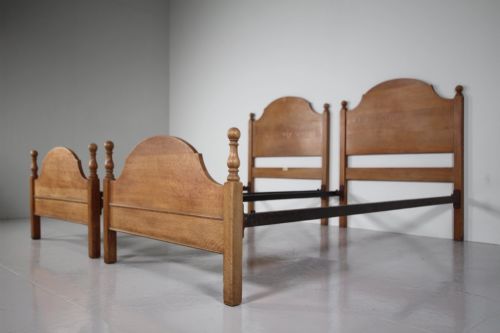
When searching for an antique oak bed, buyers encounter a range of forms spanning from seventeenth-century tester beds to twentieth-century panelled bedframes. Many examples from the Edwardian period and the 1920s reflect simpler domestic requirements, often found as single beds or sturdy daybeds.
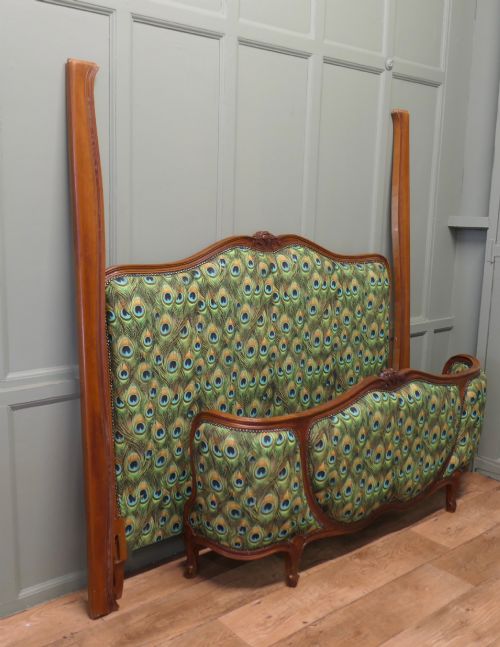
Heavier framework emerges in pieces carrying seventeenth-century style characteristics, alongside French and Victorian interpretations incorporating carved headboards and footboards. Alongside complete bedsteads, the category frequently embraces related sleeping furniture including four-poster designs and low-end frames.
The material's natural resilience ensured that many large frameworks survived intact, allowing modern interiors to incorporate robust double and king-sized furniture originally built centuries ago.
Factors influencing quality
The distinction between ordinary and superior pieces rests on the depth and crispness of the hand-carved enrichment, the selection of evenly figured timber, and the integrity of the original construction. Pieces produced by documented makers or specific retail houses typically display a higher standard of joinery and considered proportion.
Survival of original components - such as posts, testers, and panelled headboards without later alterations - determines the integrity of an antique bedframe. Lesser examples may exhibit mismatched timber replacement parts or heavily reworked headboards that obscure the original period character.
Antique Oak Bed Retail Price Guide 2026
Typical asking prices for oak bed among the pieces listed under this phrase on Sellingantiques today, from the lower quarter to the upper quarter. They describe what is for sale here now, not the wider market.
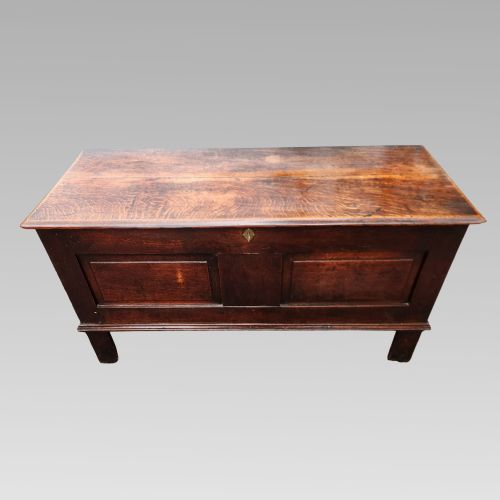
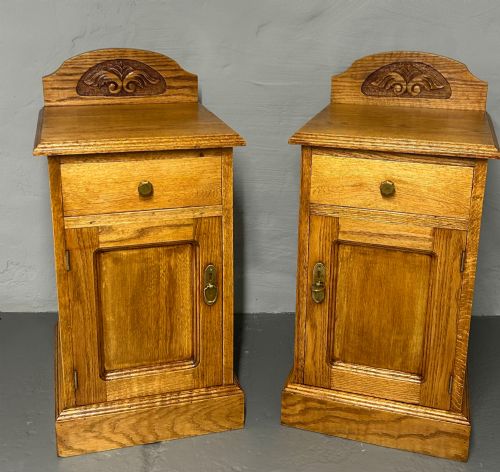
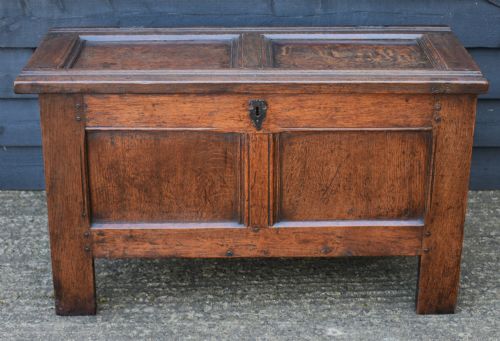
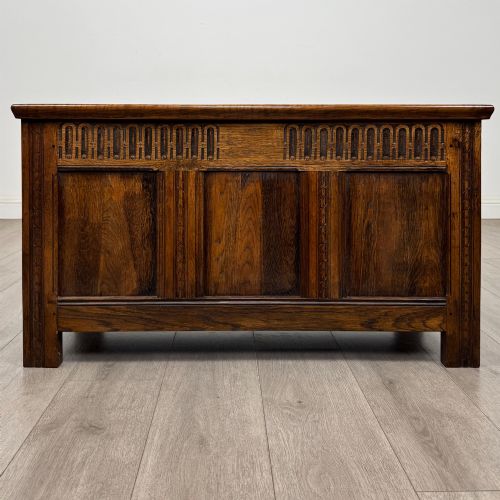
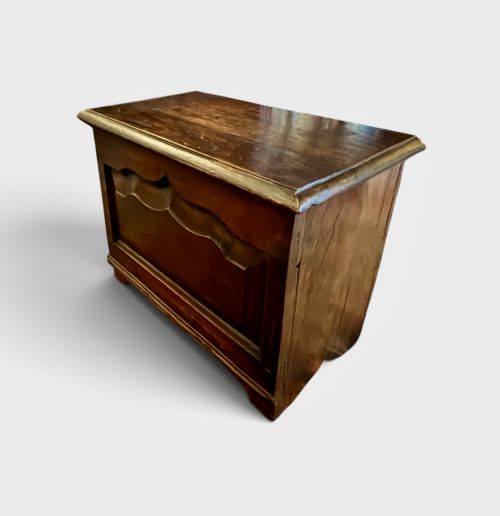
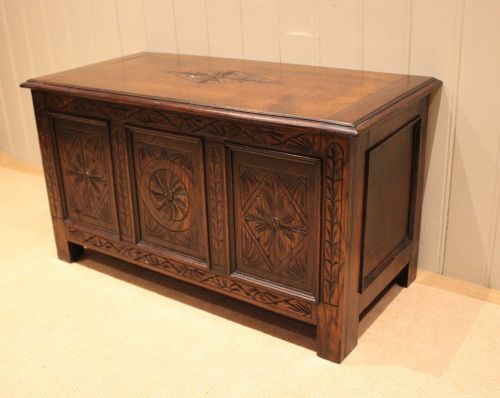
Listings feature oak bedframes, chests, and bedside cabinets spanning from the seventeenth century through the Edwardian era and the 1930s.
Heals·Gordon Russell·Liberty London·Maple and Co
The Antique Oak Bed Glossary
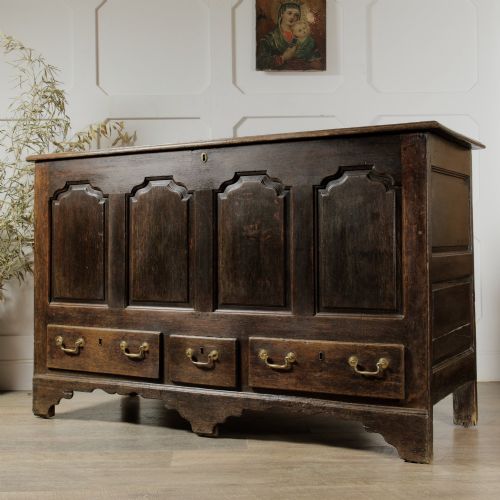
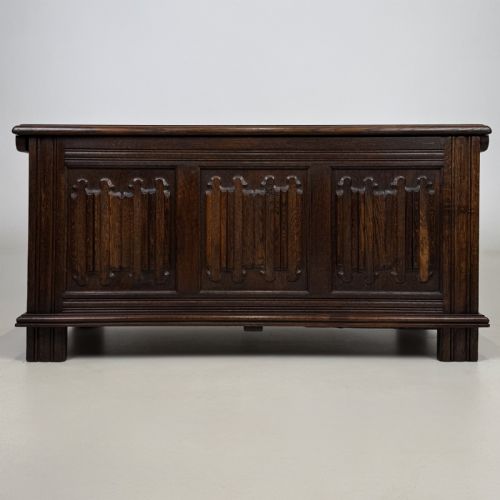
- Coffer
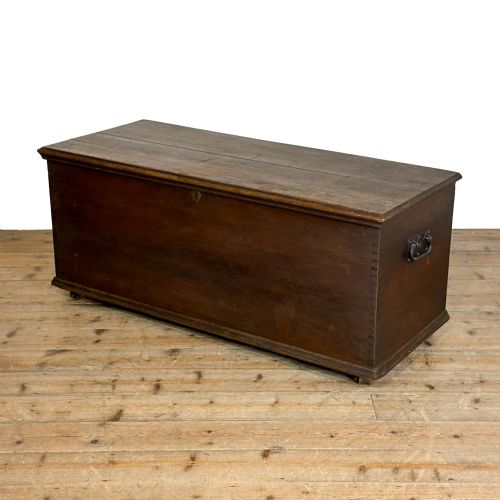
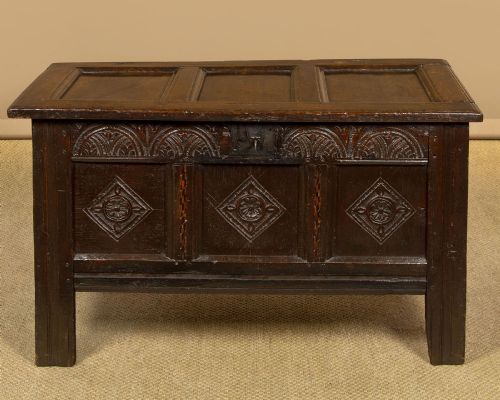
- A large wooden storage chest featuring a hinged lid, frequently associated with early domestic interiors and bedroom storage. These boxes often display detailed front panels carved with strapwork or arches.
- Bergere
- A type of chair or bed component featuring woven cane panels set within a wooden frame. This technique lightens the visual weight of heavy oak headboards.
- Mule chest
- A traditional storage chest fitted with one or more drawers beneath the main lift-top compartment. This form bridges the utility of a coffer and a chest of drawers.
- Joint stool
- A sturdy low wooden stool constructed with pegged mortise and tenon joints, occasionally utilised as a bedside surface in period settings. These pieces showcase the fundamental joinery techniques found in larger oak furniture.
Antique Oak Bed: Frequently Asked Questions
Will an antique oak bed fit modern mattresses?
Many older bedframes were constructed to historical dimensions that differ slightly from modern standard mattress sizes. Buyers often need to verify internal rail measurements to ensure a standard contemporary mattress fits securely within the antique frame.
Custom mattress options can resolve discrepancies in width or length, particularly with seventeenth-century or Victorian frames that predate modern standard sizing conventions.
How do I care for antique oak furniture?
Maintaining solid oak requires keeping timber away from direct heat sources and sudden humidity shifts that can cause splitting. Regular dusting with a dry cloth preserves the natural surface sheen without requiring heavy polishes.
Applying occasional appropriate wax feeds the dry hardwood, protecting the grain and maintaining the depth of colour developed over centuries of handling.
How can I tell a seventeenth-century bed from a revival piece?
Authentic period construction displays tool marks, hand-cut peg holes, and timber shrinkage consistent with centuries of age. Revival pieces produced during the nineteenth or twentieth centuries often reveal mechanical saw marks and uniform uniformity in the wood grain.
Examining the underside and hidden structural joints usually clarifies whether the framework dates to the original period or represents a later stylistic recreation.
Can I dismantle an antique wooden bed for transport?
Most antique wooden bedframes utilise interlocking side rails and pegged joints designed to be taken apart for moving. Careful documentation of the original peg placement ensures the structure reassembles correctly without straining the joints.
Enlisting professional handlers experienced in historic furniture prevents accidental damage to fragile carved headboards and aged wooden tenons during transit.