




Solid Oak Bedstead
A solid oak bedstead offers enduring architectural weight and honest joinery, grounding any bedroom with centuries of material history.
Solid Oak Bedstead
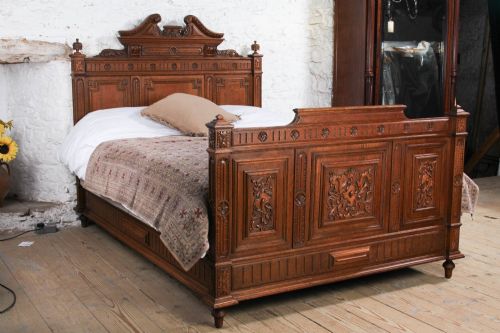
When you search for a solid oak bedstead, you encounter heavy timber frameworks built to last generations, spanning robust single frames to grand four-poster constructions. The examples available through this marketplace encompass various eras, from early seventeenth-century joinery to twentieth-century workshop designs.
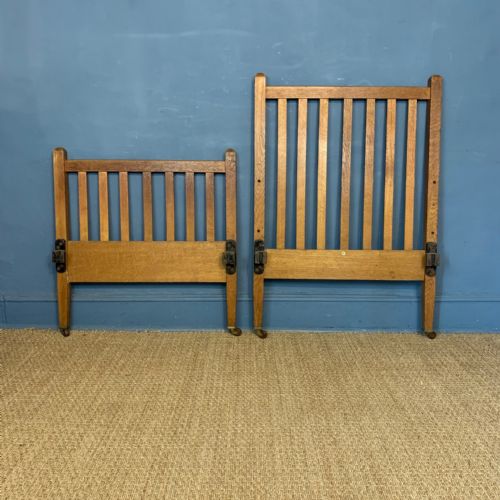
You are most likely to meet twentieth-century single and double frames, particularly those reflecting the pared-down aesthetic of the Arts and Crafts movement or specific makers like Heals. Alongside these sit earlier panelled headboards and occasional four-poster variations employing sturdy timber.
The forms range from simple panelled headstones on single proportions to carved details on kingsize and double formats. Iron, steel, and brass fittings frequently appear alongside the timber, securing the structural integrity of these large pieces.
How they were made
The primary material across these pieces is solid oak, complemented by occasional metal components such as iron, steel, and brass for bolts, brackets, and fixtures. Cabinetmakers relied on dense native hardwoods to construct weight-bearing posts and substantial headboards.
Construction techniques involve traditional jointing methods, visible in peg-fastened mortise and tenon joints on seventeenth-century and Arts and Crafts examples. Carving is executed directly into the solid timber panels rather than applied as separate ornamentation.
Solid Oak Bedstead Retail Price Guide 2026
Typical asking prices for solid oak bedstead among the pieces listed under this phrase on Sellingantiques today, from the lower quarter to the upper quarter. They describe what is for sale here now, not the wider market.
Some early single beds were built specifically for nurseries, bearing the small proportions and child-safe heights of a bygone domestic life.
What varies in quality
Quality rests upon the depth of timber selection and the integrity of the original joinery, where hand-cut joints outperform mass-produced assembly. The presence of maker labels or distinct workshop attribution elevates certain pieces above standard domestic furniture.
Proportion and the restraint of carved detail distinguish superior examples from heavier, less balanced interpretations. The preservation of original surface finishes and unmodified structural timber remains central to a piece's integrity.
Heals
The Solid Oak Bedstead Glossary
- Bedstead
- A framework of a bed supporting the mattress and springs, distinct from the bedding itself. These structures rely on headboards, footboards, and side rails.
- Four poster
- A bed with four vertical columns supporting a canopy framework above. This form appears in both seventeenth-century and later nineteenth-century interpretations.
- Arts and Crafts
- A design movement prioritising traditional craftsmanship, honest construction, and plain materials. Pieces from this tradition often feature exposed joinery and minimal carved ornamentation.
- Mortise and tenon
- A woodworking joint where a projecting tongue fits snugly into a corresponding cavity. This method provides the primary structural strength for heavy timber frames.
Solid Oak Bedstead: Frequently Asked Questions
How do I assemble a solid oak bedstead?
Most antique wooden beds utilise iron bed bolts or metal brackets to lock the side rails securely into the headboard and footboard posts. You will need a suitable spanner to tighten these connections evenly.
Because solid oak components are exceptionally heavy, assembly usually requires two people to support the frame while the fixings are secured.
Will an antique bedstead fit modern mattresses?
Many older bed frames predate modern standard mattress dimensions, particularly single and small double proportions from the Edwardian and Arts and Crafts periods. You may need to verify the internal length and width before purchasing.
Contemporary custom mattress makers can supply bespoke sizes to fit awkward historical frames without altering the original woodwork.
How do I care for solid oak furniture?
Maintain the timber by dusting regularly with a dry cloth and avoiding silicone-based polishes that build up on the grain over time. Natural beeswax applied sparingly helps nourish antique oak.
Keep wooden beds away from direct heat sources and drastic humidity changes to prevent the solid timber from splitting or warping.
How can I tell the period of an oak bed?
Examine the tool marks, joinery style, and hardware used to fasten the rails together, as these indicate the manufacturing era. Seventeenth-century examples display hand-split panels and pegged joints, whilst Edwardian and later pieces often incorporate modern screw threads.
Maker labels or stamps, particularly on twentieth-century workshop pieces, offer the most direct confirmation of date and origin.