






Arts and Crafts Bed Frame
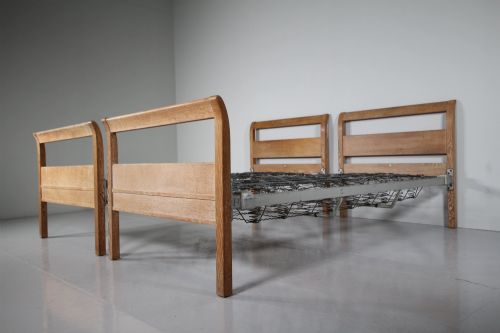
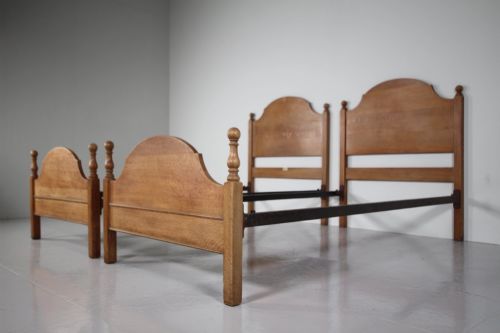
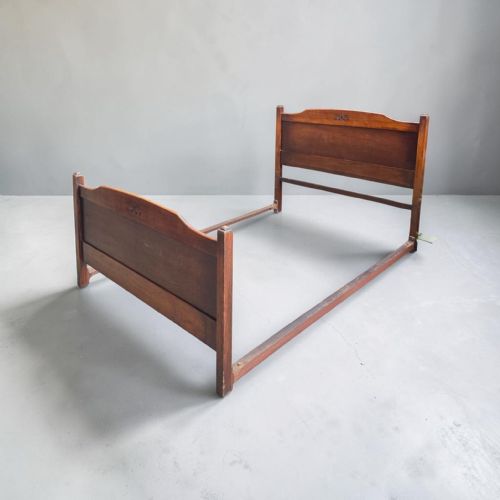
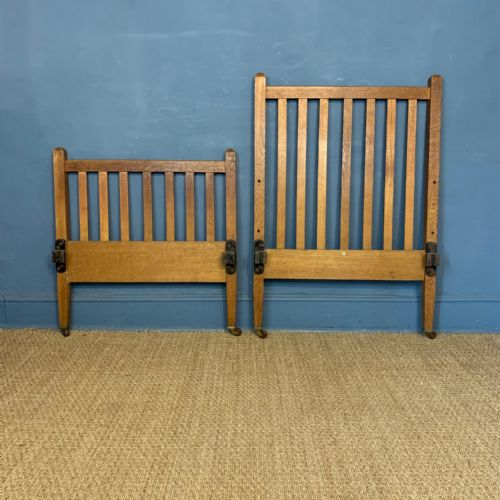
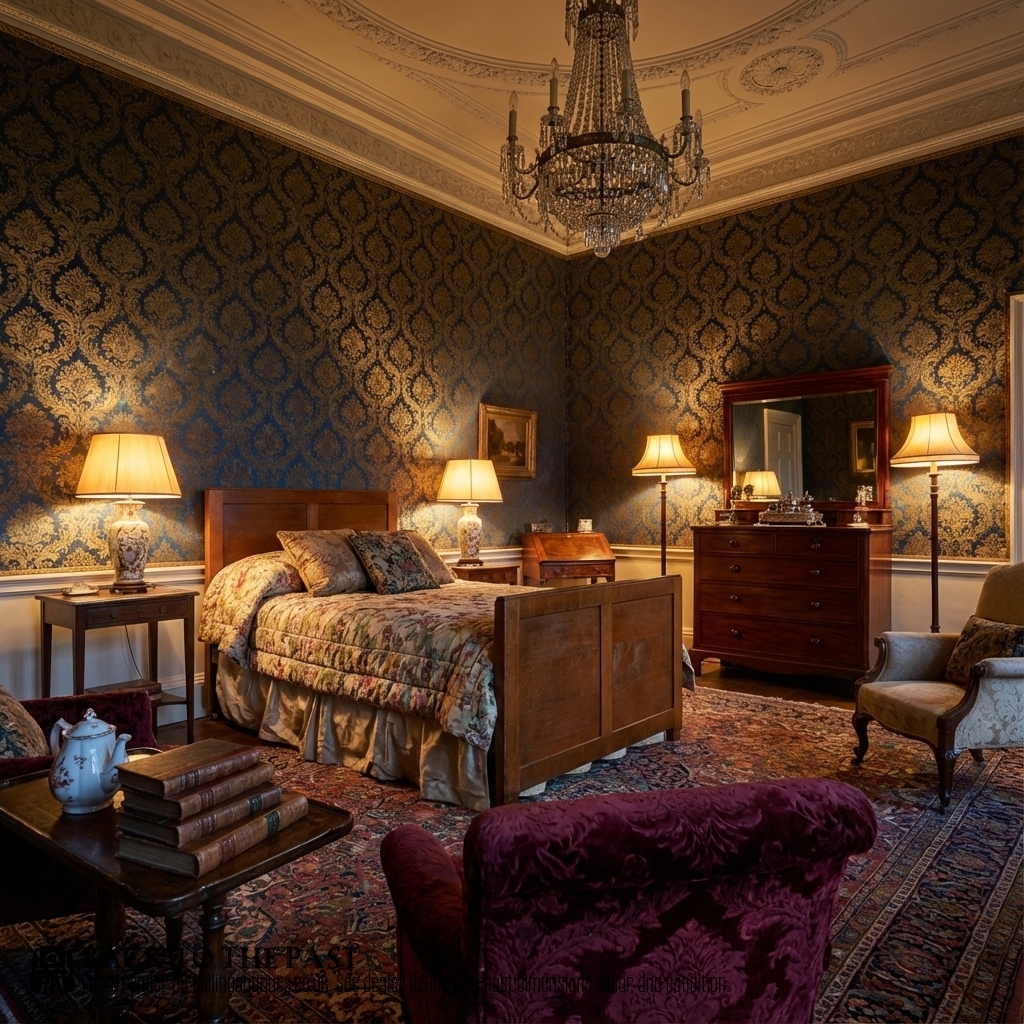
An arts and crafts bed frame brings honest timber construction and simple joinery straight into the bedroom.
Arts and Crafts Bed Frame
The aesthetic prioritises visible construction and natural grain over surface veneer. Many examples follow regional workshop traditions or bear labels from prominent London retailers and makers.
Materials and construction methods
Makers rely primarily on solid oak, supplemented by regional timbers such as sweet chestnut and fruitwood, alongside metal components in iron, brass, cast iron, and steel. Timber selection focuses on strong grain patterns and natural warmth rather than applied decoration.
Joinery methods emphasise structural integrity through exposed tenons and pegged joints. Metal elements appear in structural brackets and decorative brass bedstead fittings that contrast against the dark or polished wood.
Listings feature solid oak, sweet chestnut, and fruitwood spanning the Victorian era through the nineteen forties.
Judging the standard of execution
Maker attribution elevates certain examples, particularly where original labels or well-documented workshop designs survive. The depth of hand-carved panelling and the integration of brass or iron hardware further distinguish standard production from exceptional pieces.
Heals·Heal and Son·Stanley Webb Davies·Oliver Morel·James Shoolbread and Co·Shapland and Petter
The Arts and Crafts Bed Frame Glossary
- Bedstead
- A framework of wood or metal supporting a bed, distinct from the mattress and bedding. This term frequently appears in period descriptions for substantial wooden and brass frames.
- Panelled
- Woodwork constructed with flat panels fitted into stiles and rails. This technique provides structural stability and forms the decorative surface of headboards and footboards.
- Sweet Chestnut
- A durable hardwood native to temperate regions, prized for its pronounced grain and rich colour. It appears in bespoke furniture from the nineteen thirties.
- Letchworth
- A specific model style associated with workshop production in Hertfordshire during the early twentieth century. These designs reflect regional Arts and Crafts ideals.
Arts and Crafts Bed Frame: Frequently Asked Questions
How do I assemble an antique bed frame?
Most antique wooden bed frames utilise traditional side rail bolts or drop-in iron brackets to connect the headboard and footboard. Assembly typically requires two people to align the joints securely without forcing the seasoned timber.
Ensure the frame rests on a level floor so the side rails maintain correct square alignment. Modern slatted bases often drop inside the antique wooden rails to support contemporary mattresses safely.
Are these beds standard modern sizes?
Antique single and double beds often vary slightly from contemporary standard mattress dimensions. Single frames frequently measure narrower or shorter than today's standard single beds.
Checking exact internal dimensions between the side rails prevents sizing issues with modern mattresses. Custom or slightly smaller mattresses may be necessary for specific nineteenth-century or early twentieth-century bed frames.
How should I care for oak and fruitwood timber?
Maintenance involves applying natural beeswax periodically to nourish the dry wood grain and maintain a soft lustre. Avoid placing wooden bed frames near direct heat sources or damp areas that cause timber movement.
Dusting with a dry or slightly damp lint-free cloth preserves the surface finish without stripping the historic patina. Prevent moisture rings by using protective pads beneath any decorative objects placed on surrounding furniture.
Can I dismantle these beds for moving?
Period bed frames are engineered to dismantle into major components including the headboard, footboard, and two side rails. This modular construction aids transport and installation within residential spaces.
Keep all original iron bolts and fixings together during disassembly to protect the threaded joints in the antique wood. Professional furniture movers experienced in handling antique timber help prevent stress on historic tenon joints.