
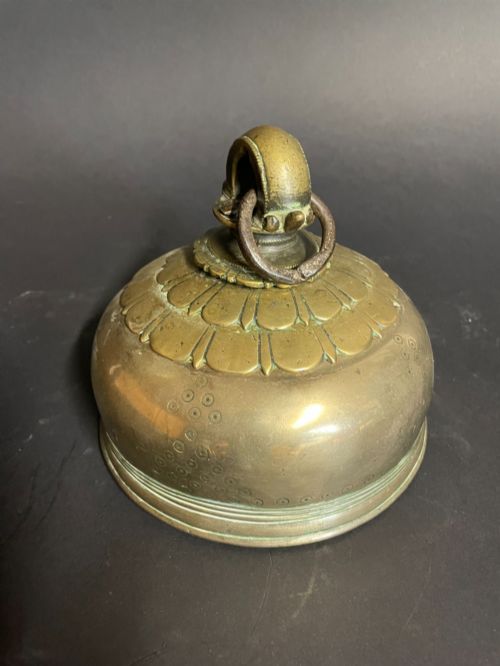


Antique Tibetan Bronze
These antique tibetan bronze pieces are ritual figures, temple lions, and ceremonial vessels shaped by centuries of Buddhist devotion and metalcraft.
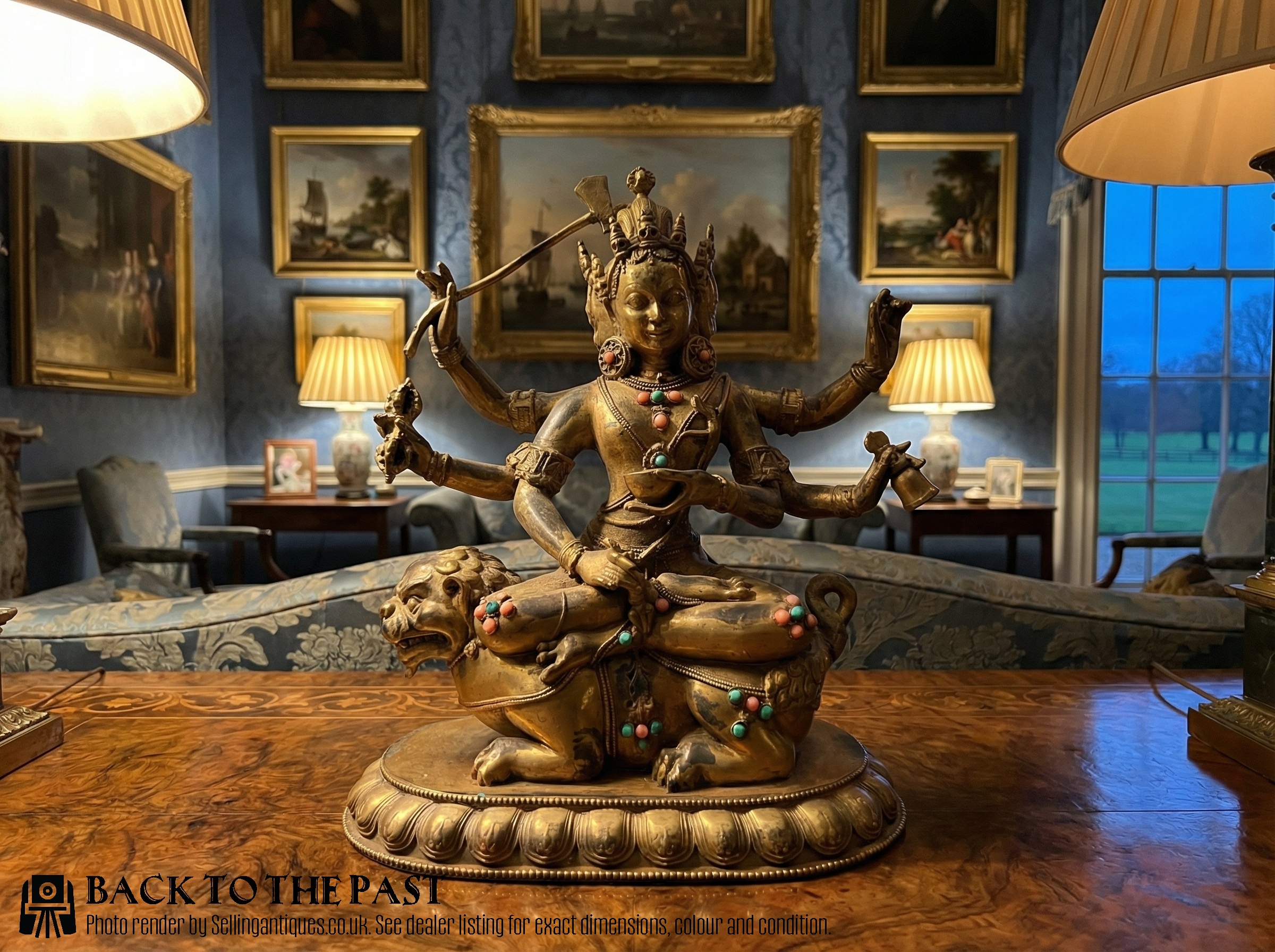
Antique Tibetan Bronze
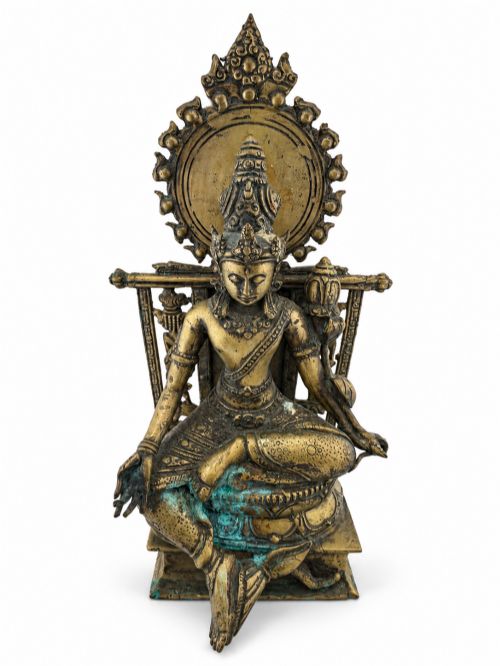
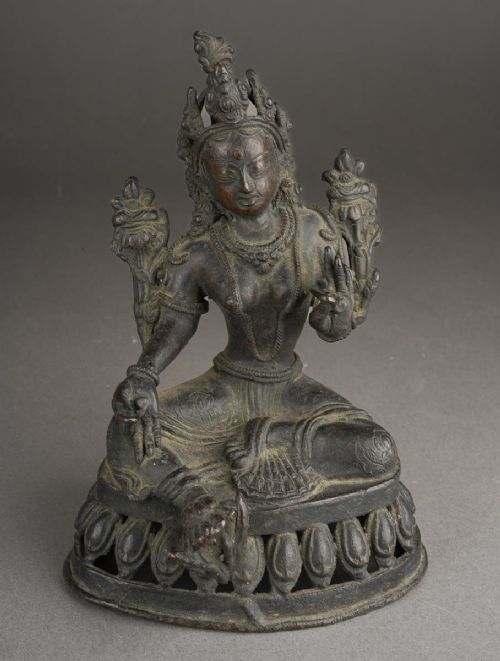
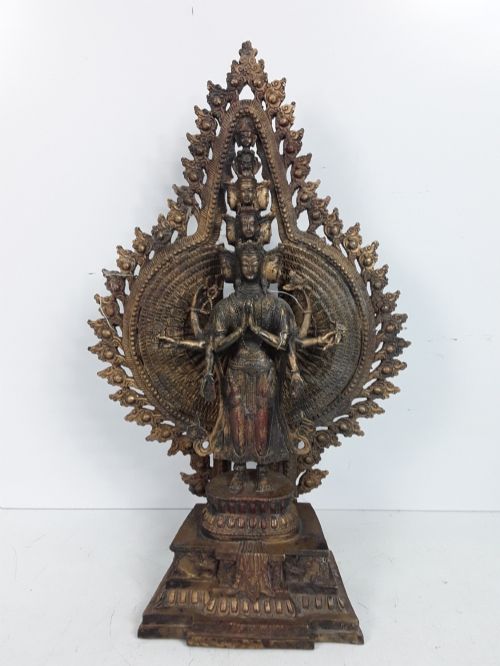
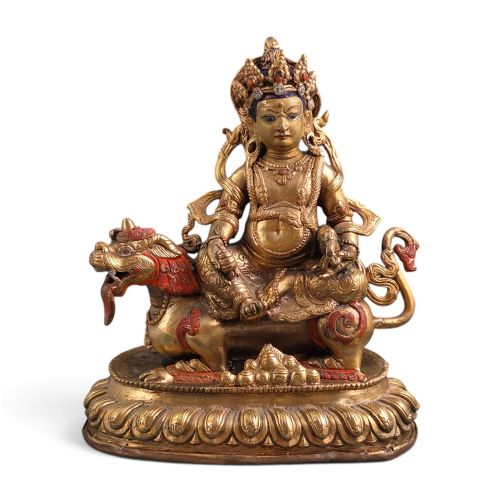
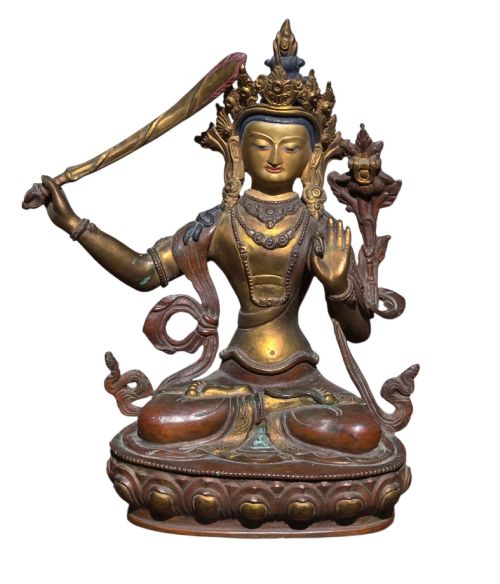
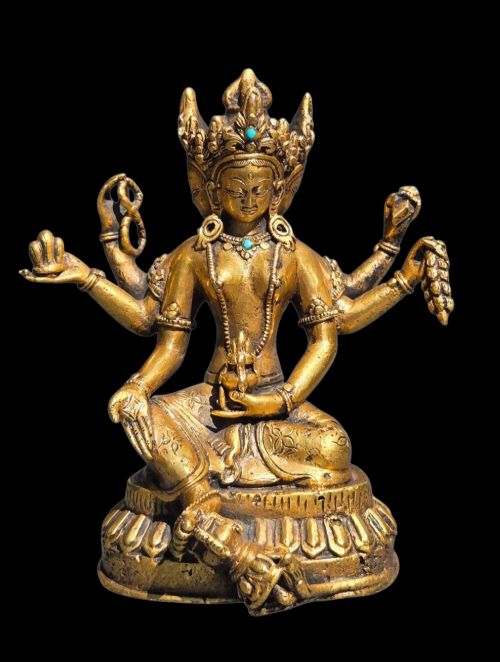
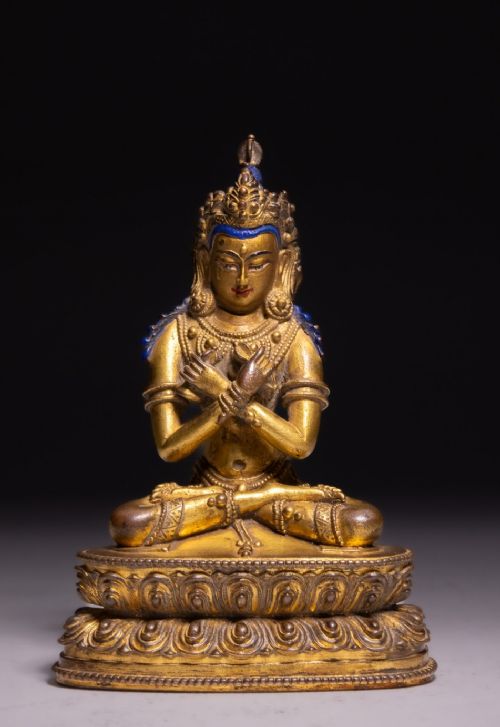
When you search for antique tibetan bronze, you encounter cast metal figures of Buddhist deities, temple guardians, and ritual implements spanning from the seventeenth century into the early twentieth century. These objects include multi-armed deities such as Avalokiteshvara and Tara, seated Buddhas, fierce temple lions, bells, and ritual daggers.
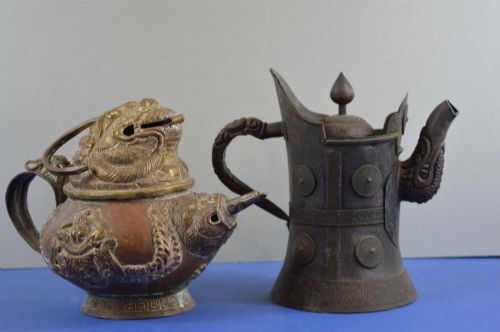
The pieces appearing on this page range from small shrine statues measuring fourteen centimetres to substantial temple sculptures weighing many kilograms. Alongside figures of deities, you find functional items like incense burners, ewers, tea pots, caskets, and vases created for monastic and domestic shrines.
Materials and casting methods
Artisans fashioned these works primarily from bronze, copper alloy, brass, and copper, frequently applying fire gilding to create a bright golden surface. Surviving pieces often retain traces of pigment and copper patina from their ritual use in shrines and monasteries.
Many sculptures incorporate mineral inlays such as turquoise and coral to accent jewellery, crowns, and borders on the garments of deities. Craftsmen also employed lost-wax casting methods to achieve intricate details on multi-armed figures and fearsome protective deities like Mahakala and Vajrakilaya.
Listings feature items dated across the seventeenth, eighteenth, and nineteenth centuries, alongside early twentieth-century pieces.
Factors that distinguish quality
The distinction between standard domestic items and high-status ritual objects lies in the weight of the metal, the complexity of iconography, and whether the base remains sealed with a copper plate engraved with a double vajra. Pieces produced under Sino-Tibetan court influence often exhibit particularly refined surface finishing and elaborate costume details.
The Antique Tibetan Bronze Glossary
- Gilt Bronze
- Bronze metal coated with a thin layer of gold, often applied using a mercury amalgam technique known as fire gilding. This finish provides a lasting golden sheen that resists tarnishing.
- Phurba
- A three-sided ritual dagger used in Tibetan Buddhist ceremonies to subdue spiritual obstacles and negative forces. These implements typically feature a pommel with three wrathful deity heads and a blade issuing from the mouth of a sea creature.
- Avalokiteshvara
- The bodhisattva of compassion, frequently represented in sculpture with multiple arms and heads to survey the suffering of the world. This deity is central to Tibetan Buddhist practice and appears in numerous forms.
- Mahakala
- A fierce protective deity depicted with wrathful attributes, flames, and a crown of skulls. Incense burners and sculptures dedicated to this figure are designed to guard monastic spaces.
- Casket
- A small enclosed box or chest utilised for storing jewellery or sacred texts. These metal containers often feature chased ornamentation and regional decorative motifs.
Antique Tibetan Bronze: Frequently Asked Questions
How do I date an antique tibetan bronze?
Dating relies on stylistic conventions, casting techniques, and the wear patterns on the metal surface. Eighteenth-century and seventeenth-century pieces often show distinct modelling styles and deeper patination compared to early twentieth-century works.
Examination of the baseplate, where present, and the remnants of gilding or pigment can also offer clues regarding the period of manufacture and ritual use.
What is the difference between Tibetan and Sino-Tibetan bronzes?
Sino-Tibetan bronzes reflect stylistic influences from Chinese imperial workshops, particularly during the Qing dynasty. These pieces often feature specific facial types, ornate lotus thrones, and refined gilding.
Purely Tibetan or Nepalese pieces tend to follow indigenous monastic iconography, utilising local casting alloys and distinctive copper patinas.
Were these bronzes made for home or temple use?
The objects served both private domestic shrines and large monastic institutions. Smaller statues and caskets were suited for personal devotion, while massive temple lions, large ewers, and heavy deities belonged in communal halls.
Ritual implements like phurbas and bells were utilised by monks during ceremonies and esoteric practices.
Why do some bronzes have turquoise and coral inlays?
Stones such as turquoise and coral were set into the metal to adorn crowns, jewellery, and the borders of garments on divine figures. These materials held spiritual significance in Himalayan culture and added visual brilliance to sacred art.
Inlays also highlighted the status of the sculpture and the skill of the metalsmith who created it.