
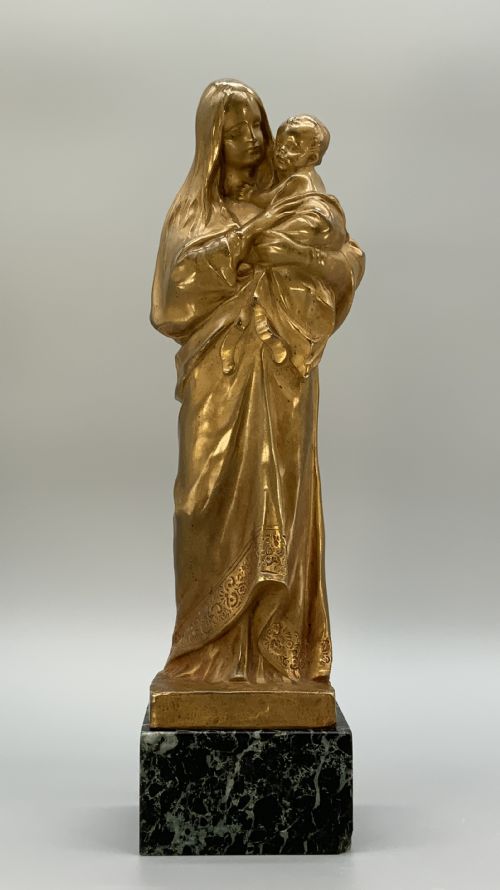
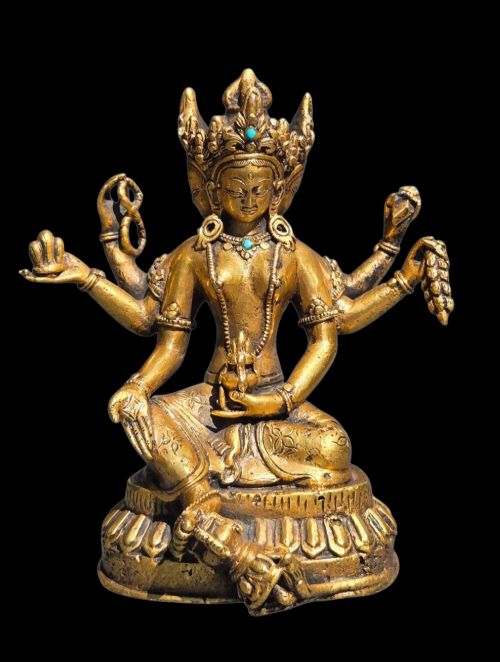
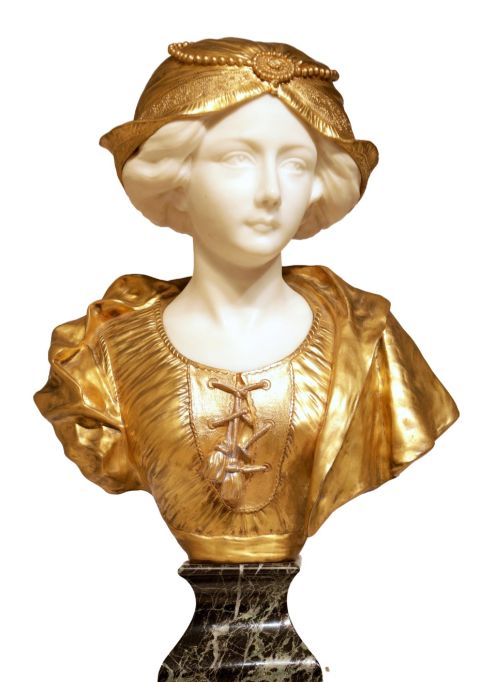
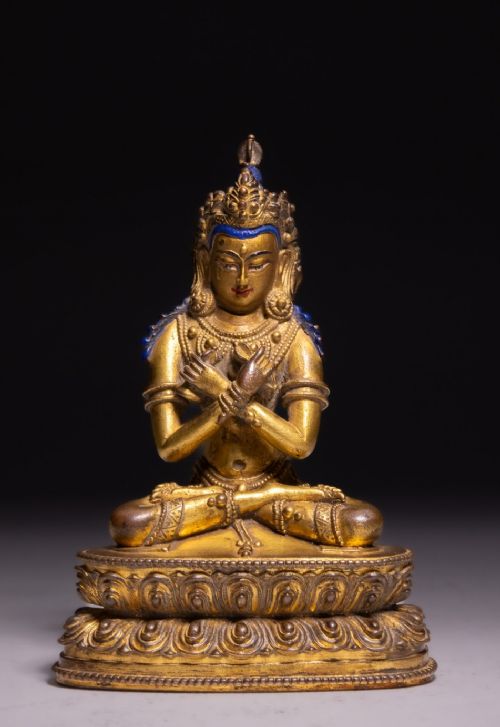
Gilt Bronze Statue
A gilt bronze statue carries the weight of ritual and the gleam of fire gilding across centuries.
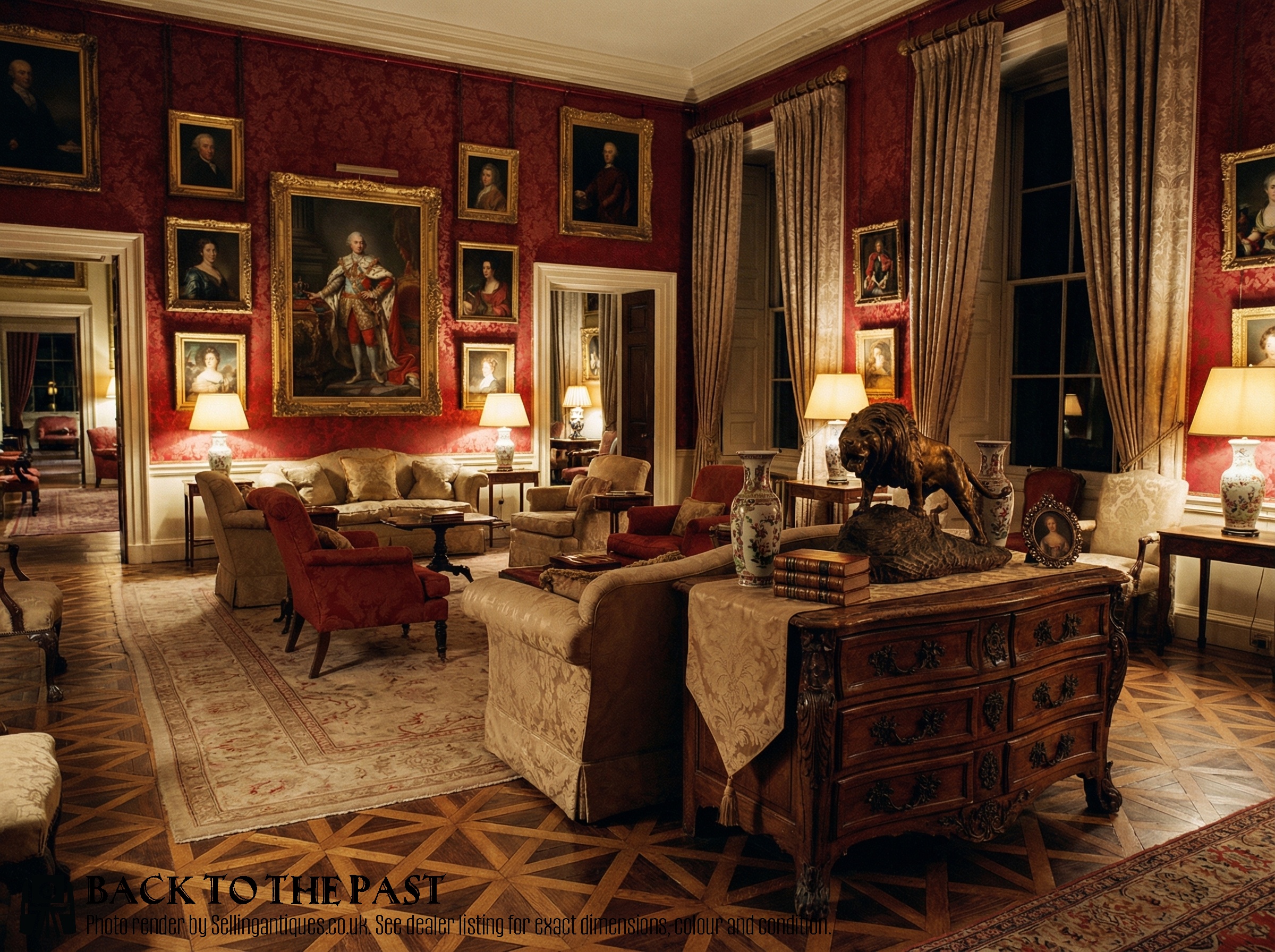
Understanding gilt bronze statue
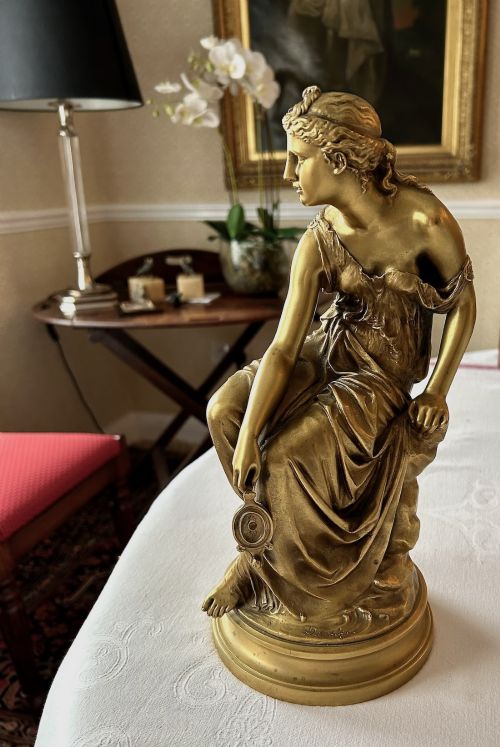
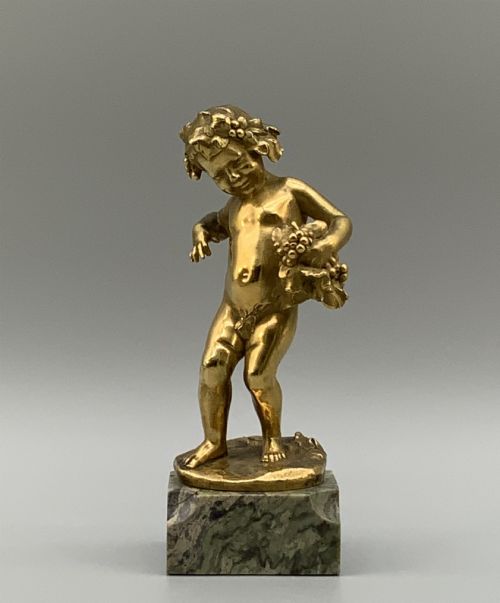
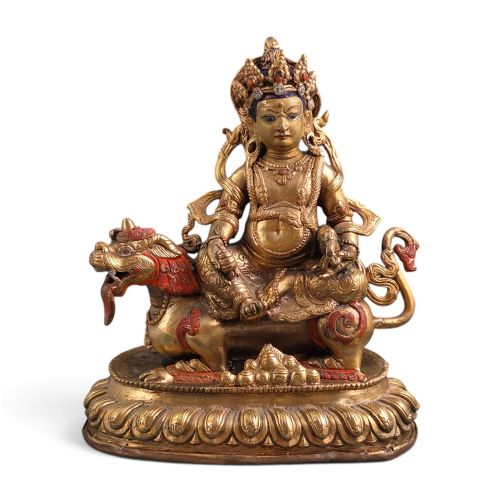
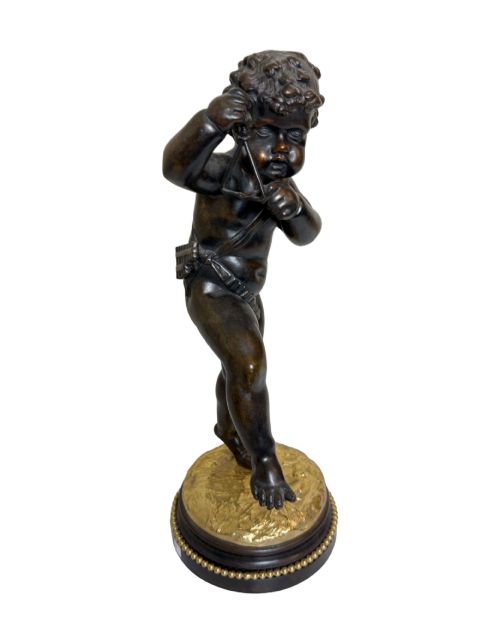
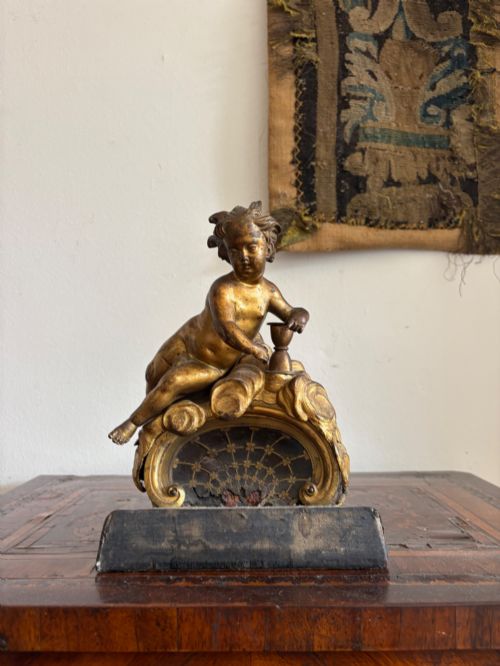
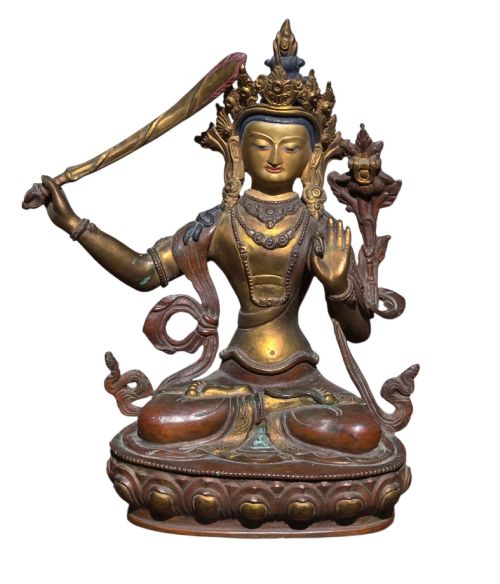
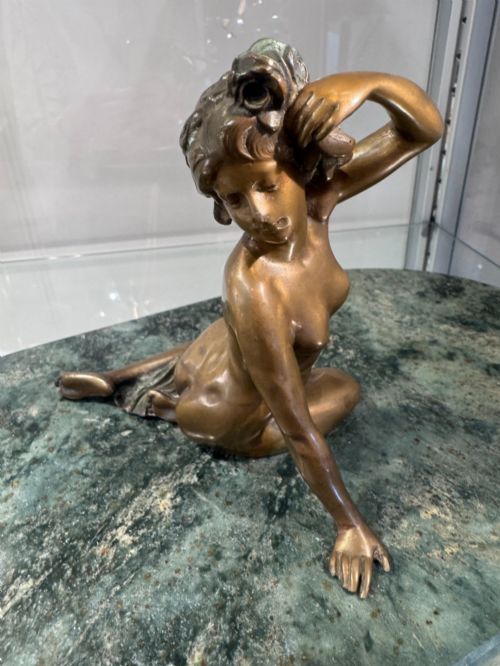
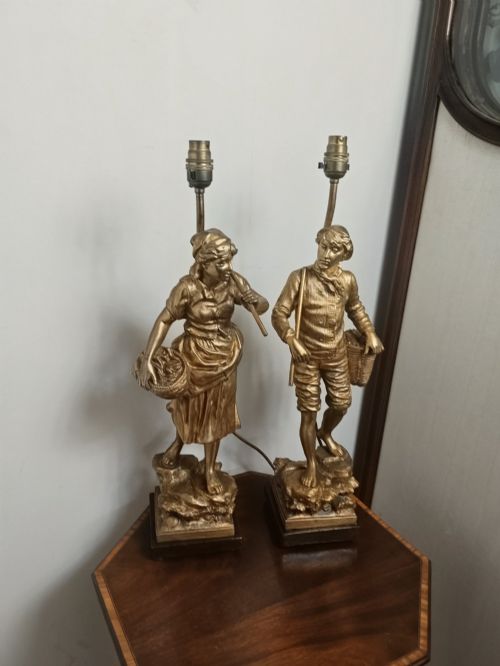
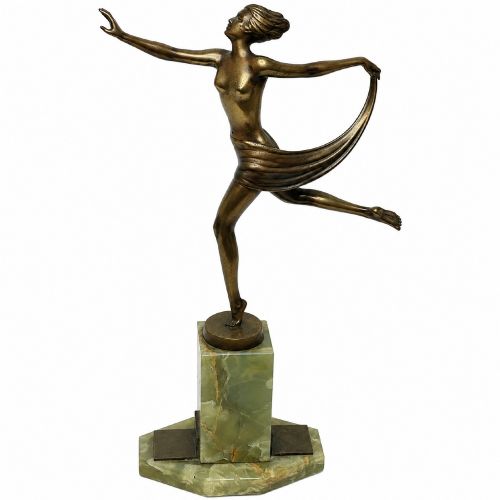
A gilt bronze statue brings together cast metalwork and devotional or decorative figures spanning the seventeenth through to the early twentieth century. When searching for a gilt bronze statue, collectors encounter deities, classical maidens, animals, and car mascots.
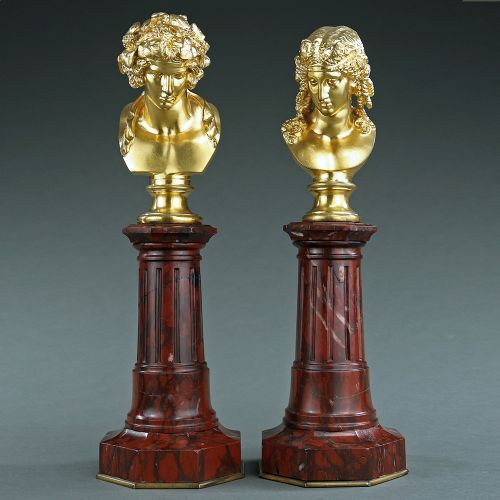
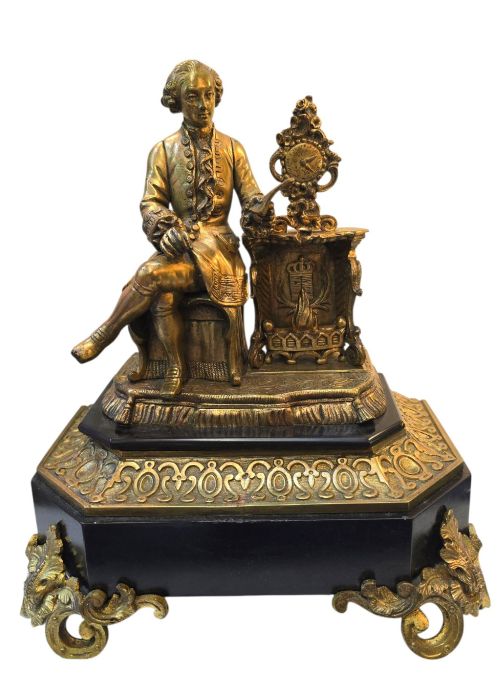
The material traditions here stretch from Sino-Tibetan and Japanese Meiji workshops to French ateliers and Neoclassical studios. Figures frequently appear mounted on marble bases or paired with contrasting materials.
Religious subjects from Tibetan and Chinese traditions sit alongside French animalier bronzes and Victorian character studies. Each piece reflects the specific aesthetic of its origin, whether the solemnity of a temple deity or the dynamic energy of a roaring lion.
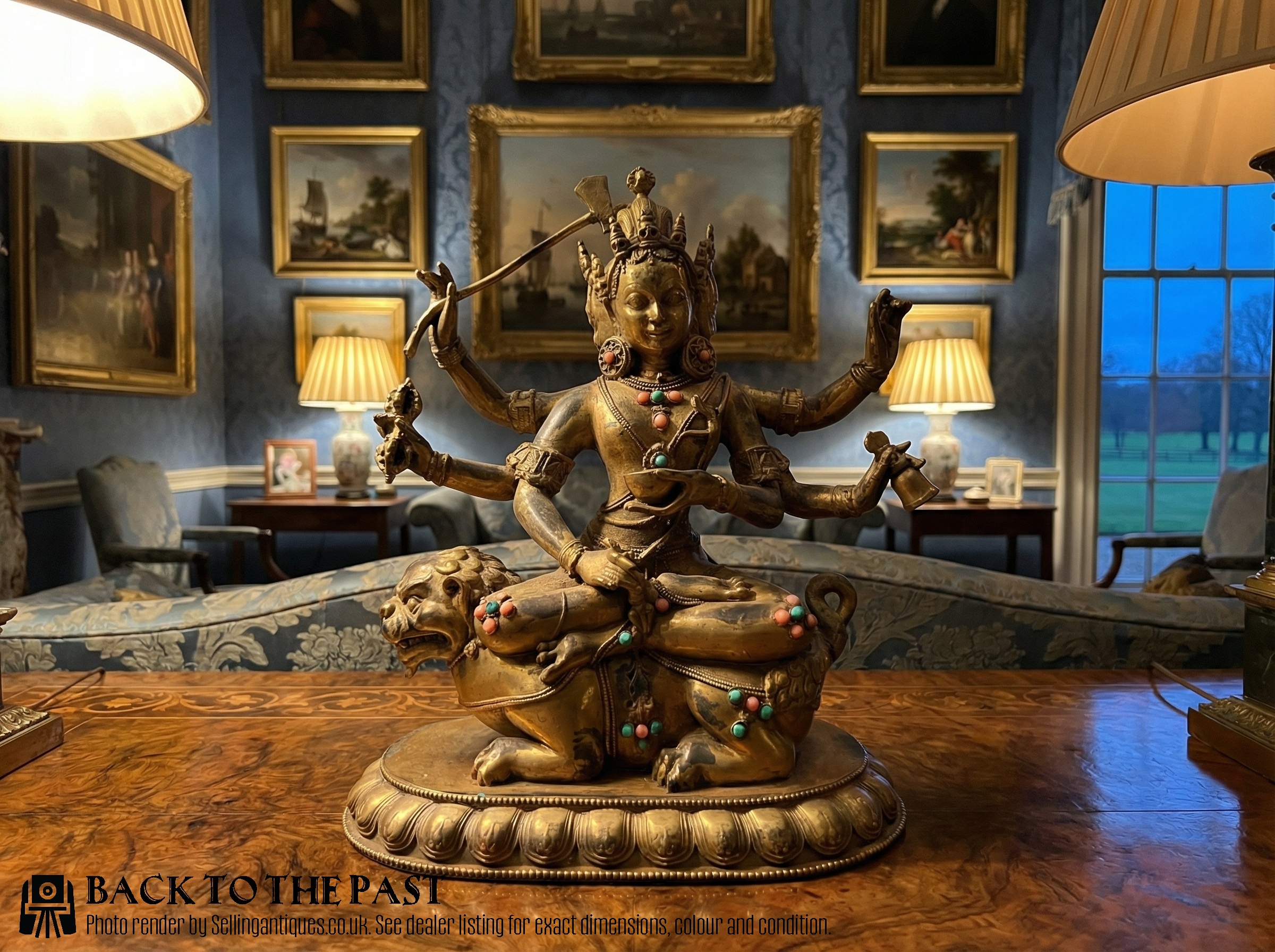
Materials and construction
The underlying body is typically formed from bronze, copper alloy, or occasionally spelter and brass, shaped through traditional casting methods. Molten metal takes the impression of a detailed mould before undergoing surface refinement.
Gilding is applied to the metal surface, creating a lustrous golden finish often referred to as ormolu on European works. Artisans frequently incorporate inlays of turquoise, coral, pigment, or ivory to enhance specific details of clothing, jewellery, or attributes.
Retail Price Guide 2026
Typical UK retail prices for gilt bronze statue, calculated from the Sellingantiques database of over a million retail prices indexed since 2003. This retail price guide relies exclusively on Sellingantiques data; no external sources or auction records are used, so the figures do not describe the wider market.
A lady golfer takes her swing frozen in time as a gleaming bronze car mascot.
Assessing quality and execution
The integration of secondary materials such as marble bases, hardstone inlays, or pigments alters the character and balance of the sculpture. Signed works or those bearing specific foundry marks carry distinct documentation of their origin.
Etienne-Henri Dumaige·Miyao·Le Courtier·Jose Dunach·Gori
The Gilt Bronze Statue Glossary
- Gilt bronze
- Metal alloy coated with a layer of gold, combining the strength of cast bronze with a golden surface. This technique preserves fine detail while providing a rich, reflective finish.
- Ormolu
- Finely ground high-carat gold mercury-gilded onto a bronze object, common in French decorative arts. The process produces a warm, durable lustre that differs from modern electroplating.
- Sino-Tibetan
- Art produced within the sphere of Chinese and Tibetan cultural exchange, often featuring Buddhist deities. These pieces typically display intricate iconography and traditional ritual attributes.
- Animalier
- A nineteenth-century artistic style focusing on the realistic depiction of animals, particularly in motion. Sculptors in this tradition captured wild beasts and domestic subjects with anatomical precision.
- Car mascot
- A sculptural ornament mounted on the radiator cap of an automobile during the early twentieth century. These figures combined aerodynamic designs with artistic miniature casting.
Frequently Asked Questions
How do I clean a gilt bronze statue?
Dust the surface gently with a soft, dry brush to remove settled particles without disturbing the metal or any applied pigment.
Avoid using water, chemical solvents, or abrasive polishes, as these can strip the delicate gold layer or damage stone bases.
What is the difference between bronze and spelter?
Bronze is a durable alloy of copper and tin or other metals that accepts fire gilding and fine chasing exceptionally well. Spelter is a softer, zinc-based metal used as a more economical alternative in later decorative pieces.
Weight, surface resonance, and the crispness of fine details generally help distinguish between the two materials.
Are these statues usually marked?
Some European animalier sculptures and decorative figures carry artist signatures or foundry stamps cast directly into the metal base. Asian religious statues more frequently rely on style, material wear, and occasionally reign marks rather than individual signatures.
Why do some statues have inlaid stones?
Inlays of turquoise, coral, and other minerals are traditional in Tibetan and Himalayan Buddhist metalwork to represent sacred ornaments and focal points. These additions enhance the spiritual significance and visual vibrancy of the deity.