
Antique Standing Vitrine
An antique standing vitrine displays porcelain, silver and curiosities behind glazed doors.
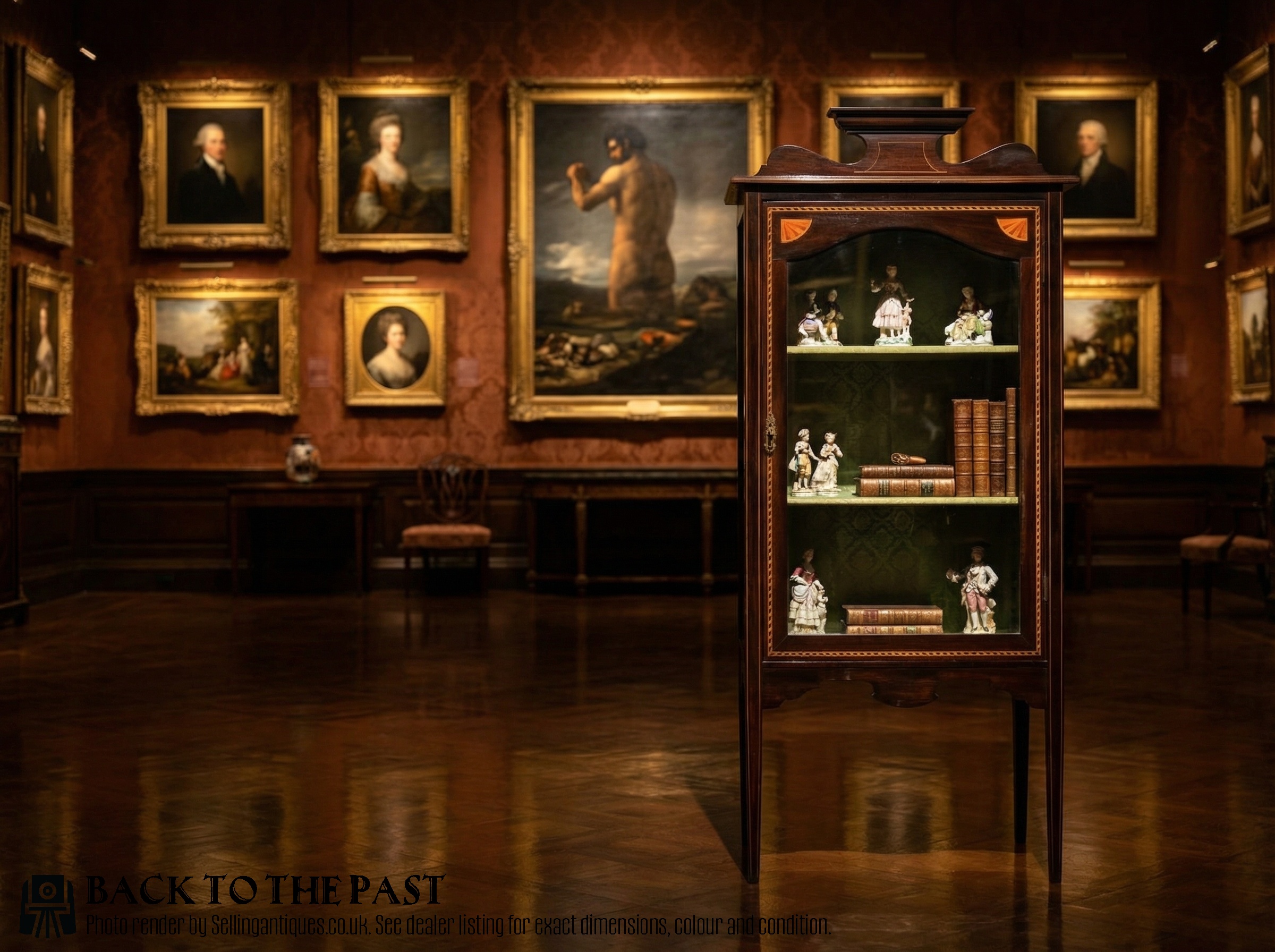
Antique Standing Vitrine
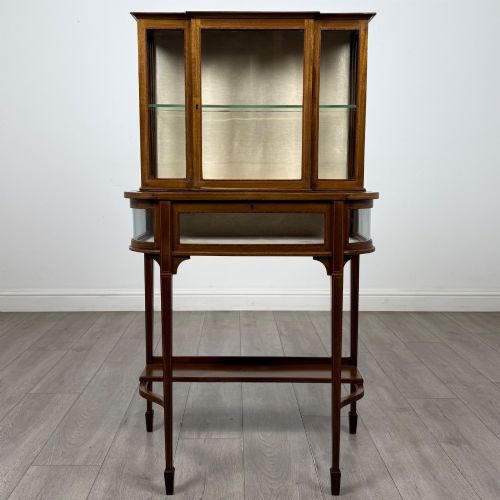
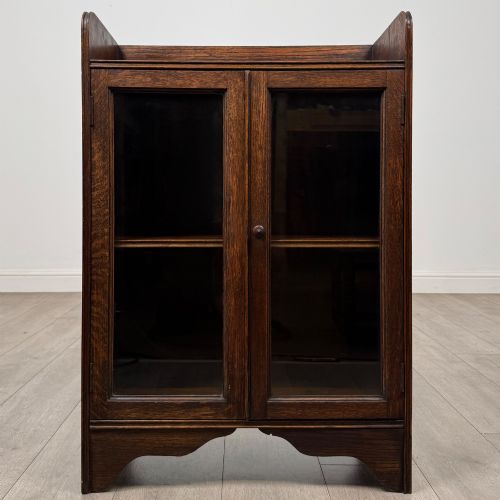
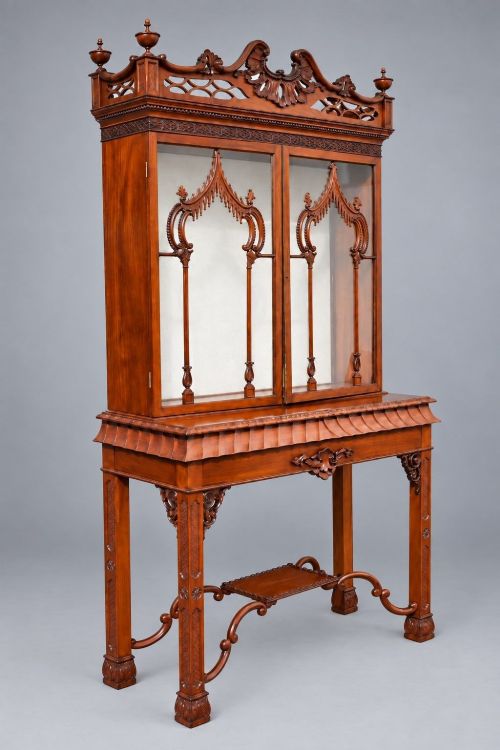
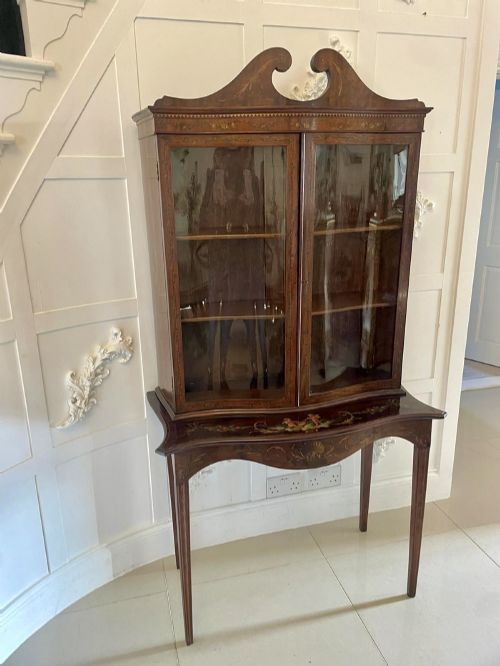
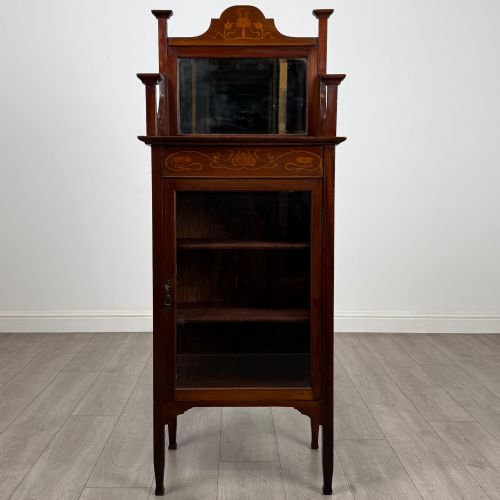
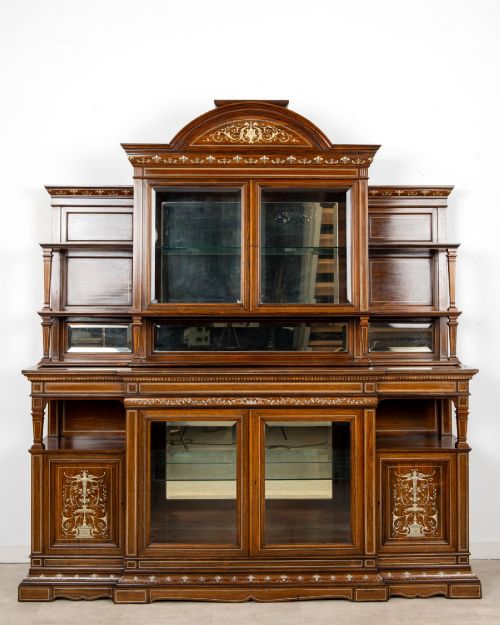
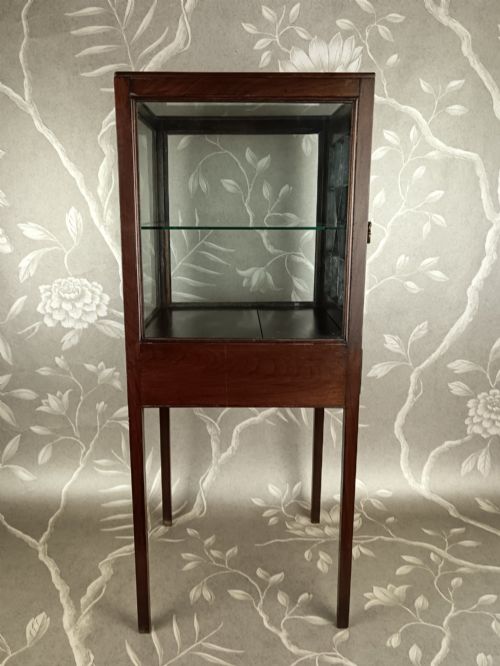
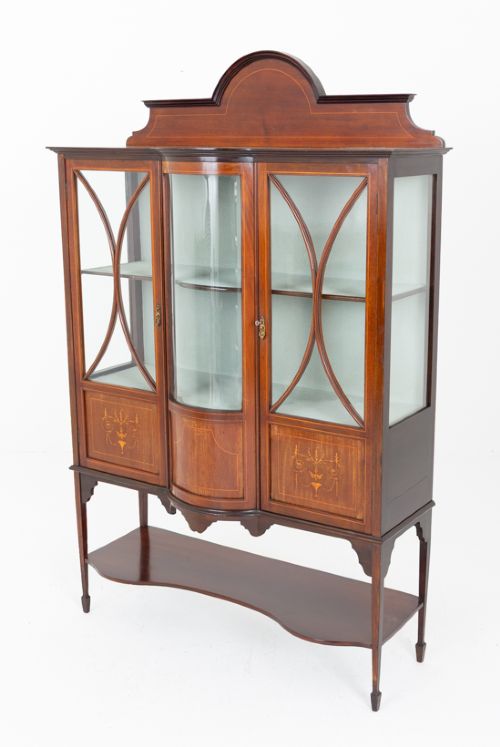
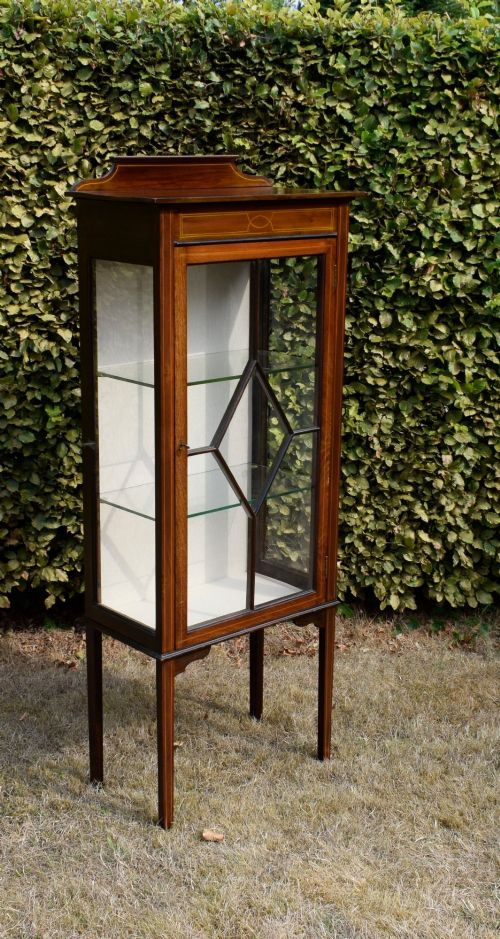
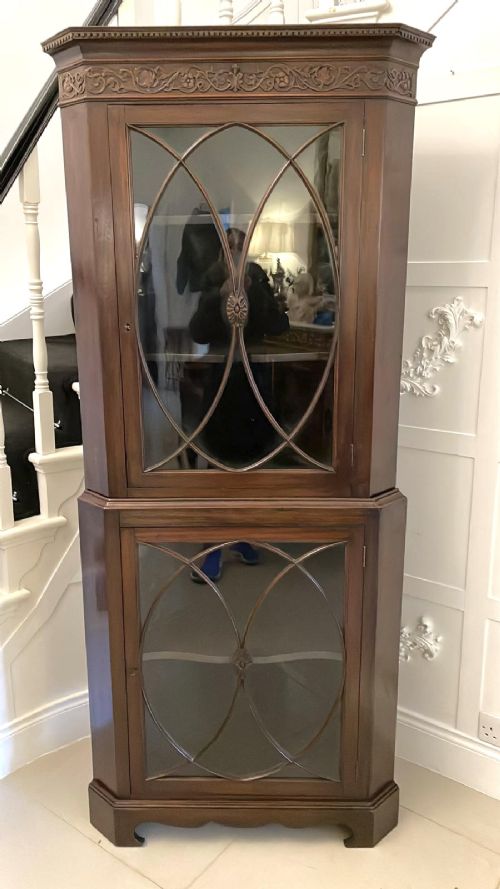
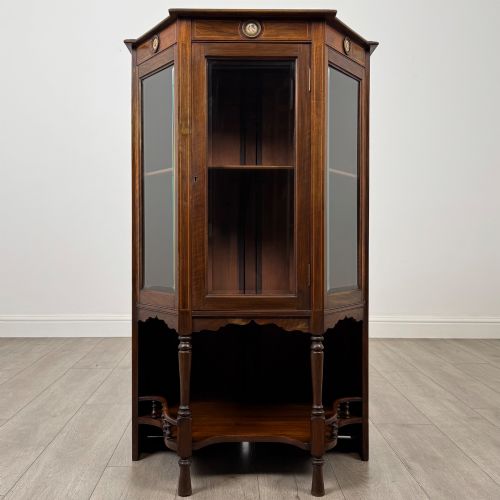
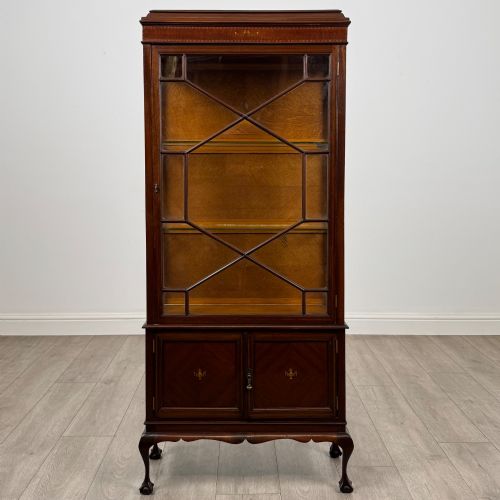
An antique standing vitrine is primarily a tall display cabinet designed to showcase precious objects and collections in a drawing room or parlour. The pieces seen on this page span from the Georgian and Victorian eras through to the Edwardian period and the early twentieth century.
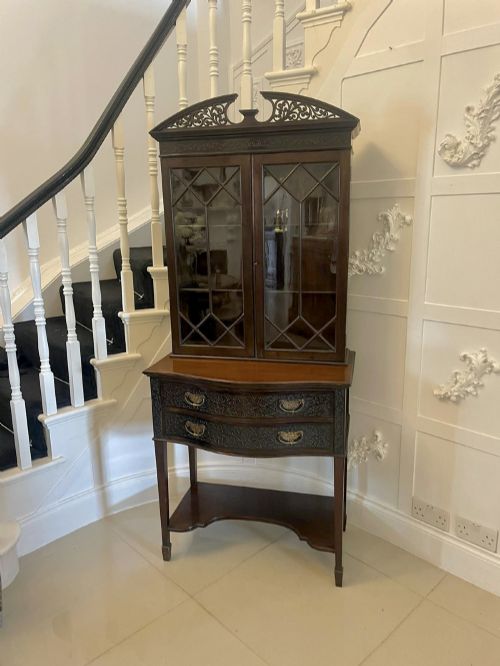
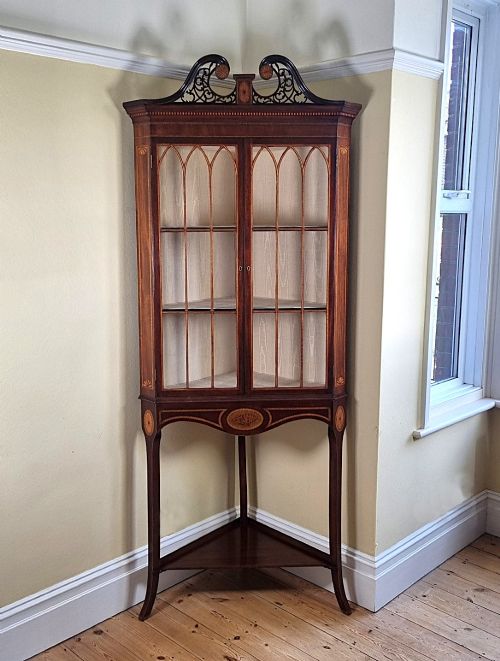
Most examples take the form of freestanding floor cabinets or corner cabinets with glass panes held by timber frames. Makers of these pieces drew upon styles ranging from Sheraton Revival and Chinese Chippendale to Art Deco and Gothic influences.
Buyers will encounter various configurations including flat front cabinets, breakfront designs and pedestals. The internal shelves often feature fabric linings to contrast with the displayed items.
Materials and Construction
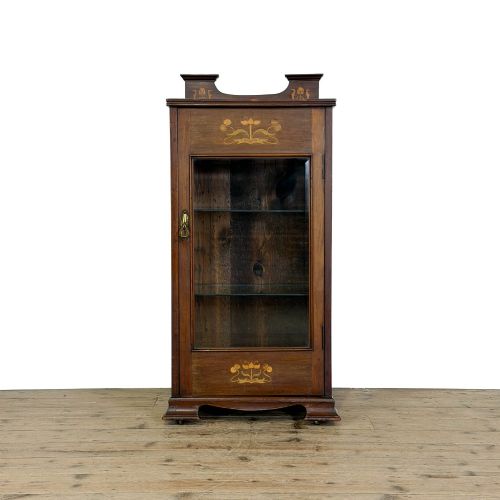
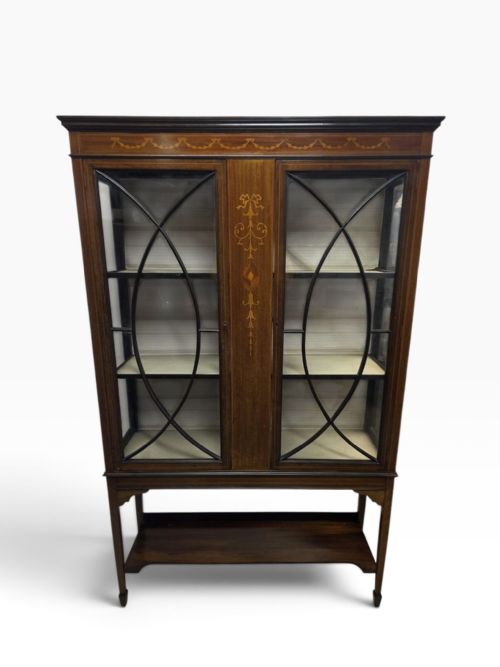
Cabinets are constructed predominantly in mahogany, oak, walnut and satinwood, frequently enhanced with contrasting satinwood inlay or painted decoration. Glazing is a primary structural element, utilising leaded or wooden astragal bars to hold the glass panes securely.
Brass fittings appear on hinges, locks and handles, while internal mirrors reflect light through the display space. Pine and secondary timbers are utilised for carcass backs and interior framing.
Antique Standing Vitrine Retail Price Guide 2026
Typical asking prices for standing vitrine among the pieces listed under this phrase on Sellingantiques today, from the lower quarter to the upper quarter. They describe what is for sale here now, not the wider market.
Distinctions in Quality
The standard of timber selection and joinery marks the primary difference between everyday items and superior examples. Finer cabinets employ carefully figured veneers and intricate inlay work rather than plain surfaces.
Original glass panes, intact painted decoration and retaining original hardware elevate a piece significantly. The precision of the astragal glazing bars and the weight of the timber carcass demonstrate the maker's skill.
Collinson and Lock·Maple and Co
The Antique Standing Vitrine Glossary
- Vitrine
- A glass-fronted cabinet designed specifically for displaying fine objects or curiosities. The term derives from the French word for glass.
- Astragal
- A moulding profile used to hold glass panes within a door or window frame. In these cabinets, wooden astragal bars create delicate geometric patterns across the glazing.
- Satinwood
- A durable hardwood with a lustrous golden yellow sheen used extensively for cabinet veneers and decorative inlays. It was favoured during the Sheraton Revival and Edwardian periods.
- Breakfront
- A cabinet design where the central section projects forward from the flanking wings. This architectural arrangement adds depth and visual interest to larger display furniture.
- Corner Cabinet
- A specialised storage piece built with an angled back to fit neatly into the corner of a room. These come in single units or two-part forms on stands.
Antique Standing Vitrine: Frequently Asked Questions
What is an antique standing vitrine?
An antique standing vitrine is a glazed floor cabinet designed to exhibit porcelain, glassware and small collections. These pieces elevate display items above eye level while protecting them from dust.
Most versions rest directly on the floor or upon a dedicated stand, incorporating glass panels on the sides and doors to maximise light penetration.
How do I date an antique vitrine?
Dating relies upon observing the timber species, decorative motifs and construction techniques. Edwardian and Victorian pieces frequently feature mahogany with satinwood inlay, while earlier Georgian models display heavier proportions and simpler glazing bars.
Stylistic revivals during the nineteenth century often reinterpreted eighteenth-century aesthetics, making timber ageing and hardware inspection essential for accurate attribution.
Where should I place a vitrine?
These cabinets suit drawing rooms, dining spaces and hallways where natural light can pass through the glass doors. Placing them away from direct sunlight protects both the timber finish and any fabric linings inside.
Corner cabinets fit neatly into unused angles of a room, whereas flat front or breakfront models function well as focal points against a principal wall.
How do I care for wooden display cabinets?
Maintain timber surfaces by dusting gently with a dry, soft cloth and applying appropriate wax polish sparingly. Avoid placing cabinets near heat sources or damp environments to prevent wood movement and veneer lifting.
Glass panels require standard cleaning solutions applied to a cloth rather than sprayed directly onto the wood or fabric.