
Antique Staffordshire Earthenware
Antique staffordshire earthenware brings British domestic history to the shelf through figures, jugs and creamware vessels shaped by hands from the eighteenth and nineteenth centuries.
Antique Staffordshire Earthenware
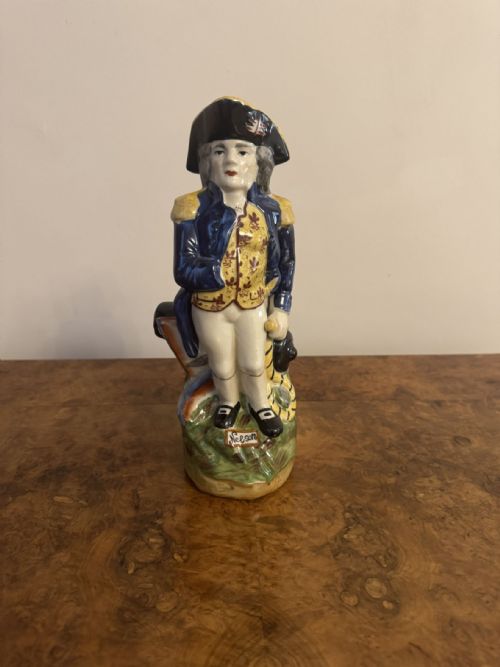
When searching for antique staffordshire earthenware, you encounter objects spanning the Georgian, Regency and Victorian periods, including commemorative jugs, flatback figures, dogs, poodles, lions and tableware. These pieces reflect both utilitarian kitchen use and parlour display, originating from the kilns of English country potteries.
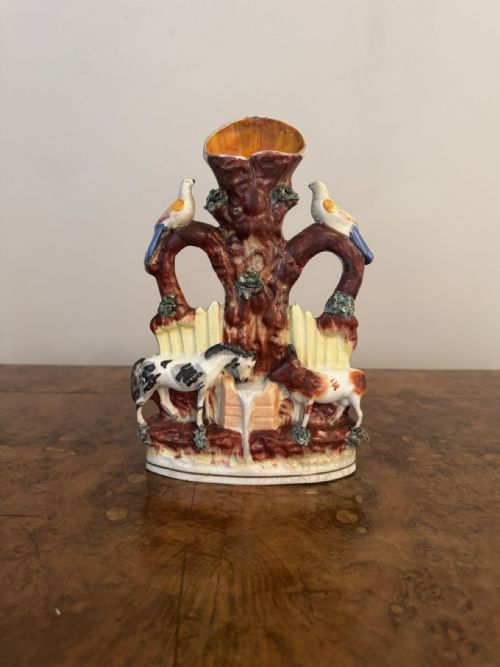
The version you meet most frequently on this page is the nineteenth-century figure or animal pair, alongside creamware jugs bearing transfer prints or polychrome enamel. Such objects served as mantelpiece ornaments in homes across Britain, capturing popular figures, literary themes and everyday fauna of the era.
Materials and methods of production
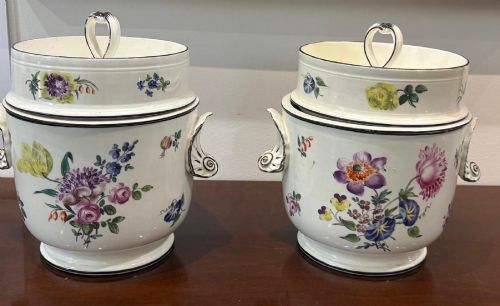
Potters shaped these objects using local clays finished with lead glaze, creamware, pearlware or slip, building bodies through moulding and throwing. Kiln workers then applied enamel colours, transfer printing in blue or black, and occasional gilt highlights before firing.
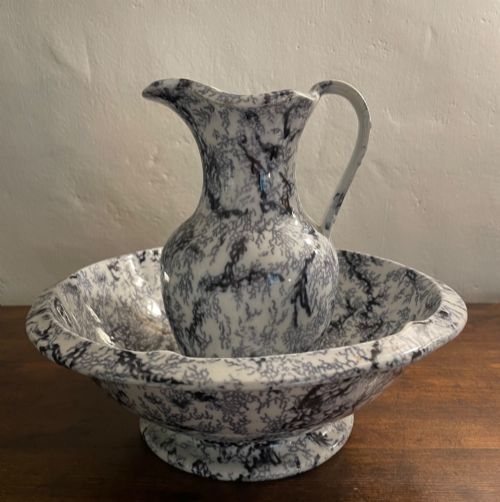
Specialised techniques distinguished specific wares, such as the distinct blue and white transfer prints on chargers and tureen covers, or the sponge-decorated surfaces seen on early Prattware pieces.
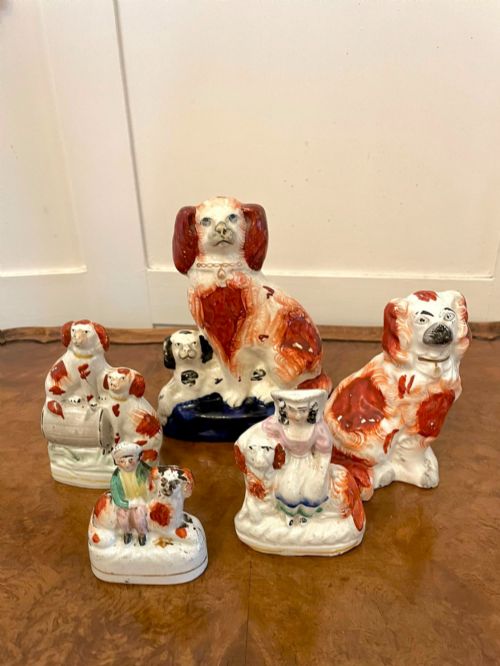
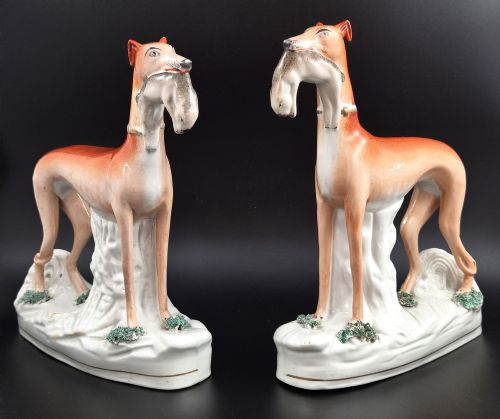
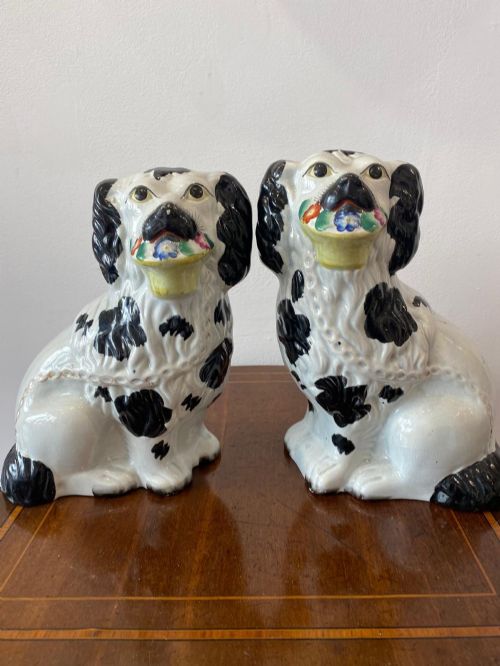
Nineteenth-century potters ensured loyal hounds stood sentinel on parlour mantelpieces by pairing greyhounds with hares and spaniels with attentive expressions.
Assessing quality in earthenware and figures
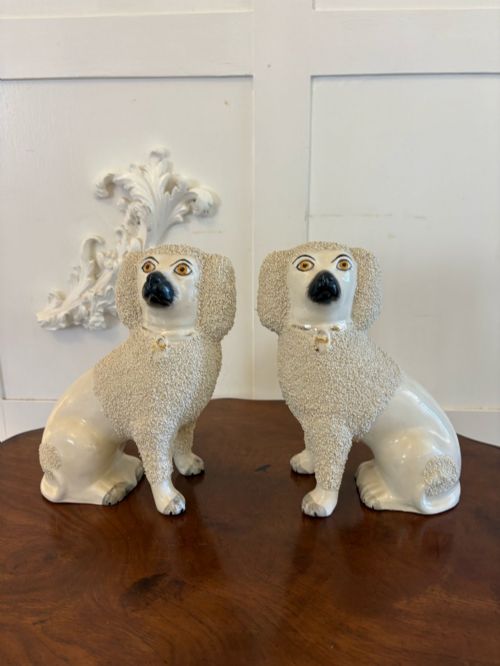
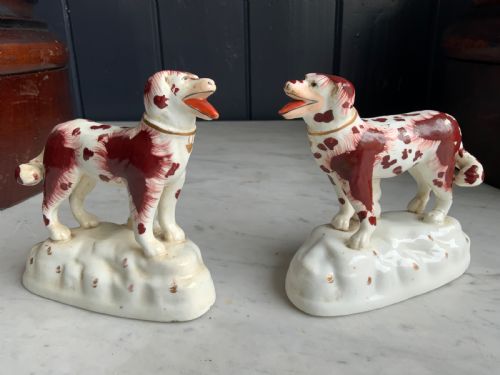
The retention of original colour without excessive restoration dictates desirability, particularly in pairs of dogs or spill vases where matching patination and uniform firing marks indicate a genuine original pairing.
Robert Hamilton·John Rogers and Son
The Antique Staffordshire Earthenware Glossary
- Creamware
- A refined earthenware with a pale yellowish-buff lead glaze developed in the eighteenth century. It became the dominant tableware material before the widespread adoption of white ironstone.
- Flatback
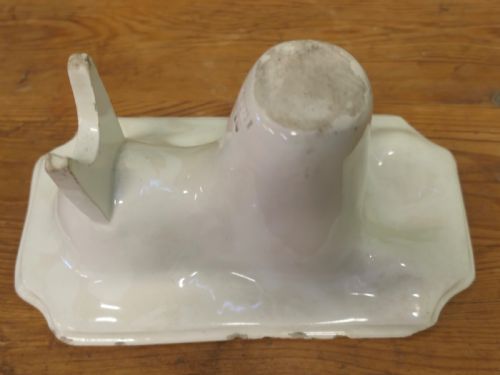
- A Staffordshire pottery figure modelled with a finished front and a flat, unglazed or minimally decorated rear designed to stand against a wall. These figures dominated Victorian mantelpiece displays.
- Pearlware
- An improved earthenware body perfected in the late eighteenth century featuring a bluish-tinted glaze that pooled in recesses to mimic Chinese export porcelain. It served as the canvas for many transfer-printed domestic vessels.
- Spill vase
- A hollow pottery figure incorporating an attached cylinder designed to hold wooden spills for lighting pipes or candles. They frequently depict sheep, dogs and pastoral scenes.
- Transfer print
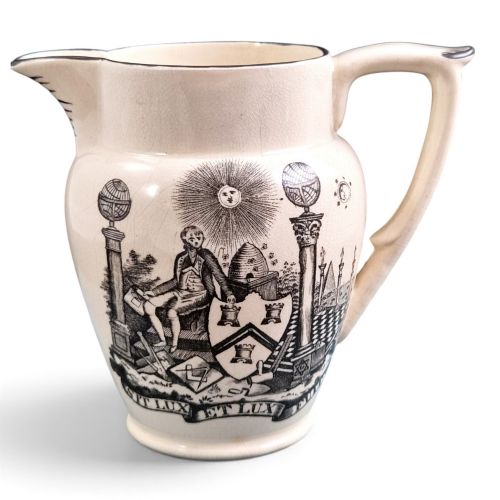
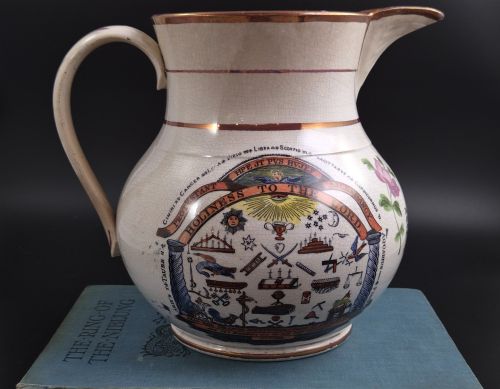
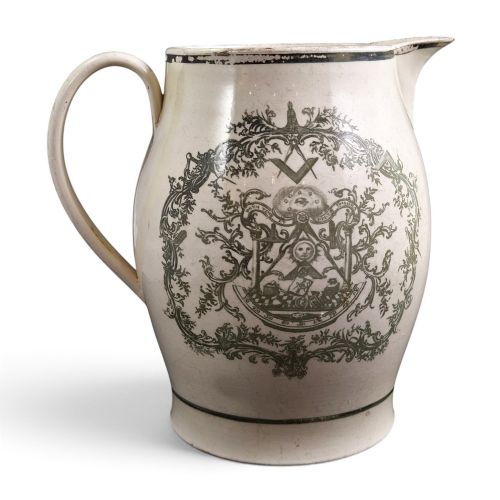
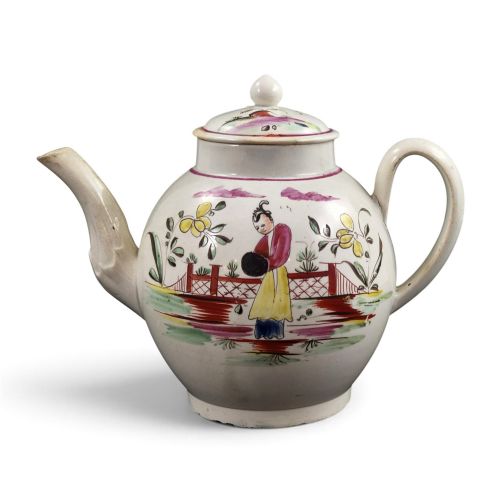
- A decoration applied to pottery by transferring a design from an engraved copper plate onto tissue paper and then onto the ceramic body. This technique allowed intricate patterns like Canton River Scene and Masonic emblems to be reproduced rapidly.
Antique Staffordshire Earthenware: Frequently Asked Questions
What are Staffordshire flatback figures?
Staffordshire flatback figures are ceramic mantelpiece ornaments produced during the nineteenth century, shaped with detailed fronts and flat backs meant to sit flush against cottage and parlour walls.
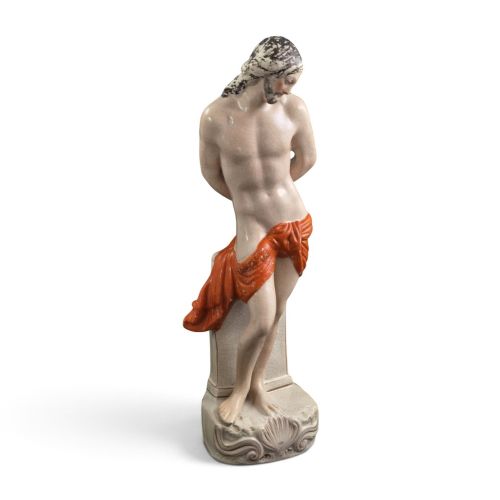
Potters moulded these pieces to depict royalty, military heroes, literary characters and animals, finishing them with hand-painted enamel colours and gilt accents.
How do I tell creamware from pearlware?
Creamware exhibits a warm, pale yellow or ivory tint in its lead glaze, characteristic of eighteenth-century tableware and jugs.
Pearlware possesses a faint blue pooled tint beneath a clearer glaze, developed around the turn of the nineteenth century to achieve a whiter appearance resembling porcelain.
Were Staffordshire dogs made as pairs?
Staffordshire dog figures, including spaniels, poodles, greyhounds and whippets, were typically modelled as left-and-right facing pairs for symmetrical display on either side of a fireplace.
Finding an original matched pair with consistent glaze and wear remains a key indicator of authenticity for collectors.
What was a Toby jug used for?
Toby jugs served as drinking vessels shaped like stout, cheerful figures holding a mug and a pipe, often depicting historical personalities or caricatures.
Beyond domestic use for ale and cider, these earthenware jugs doubled as decorative items on tavern and home shelves.