





Military Ceramic Ornament
These military ceramic ornament pieces capture 19th-century history through Staffordshire figures and European porcelain.
Military Ceramic Ornament
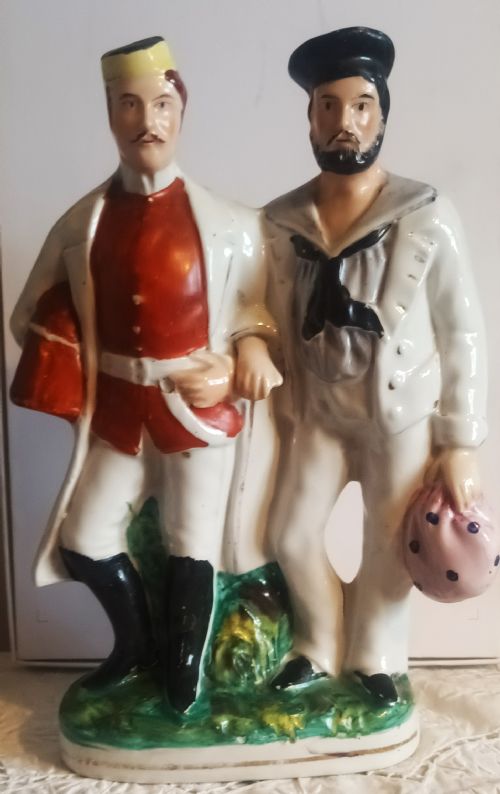
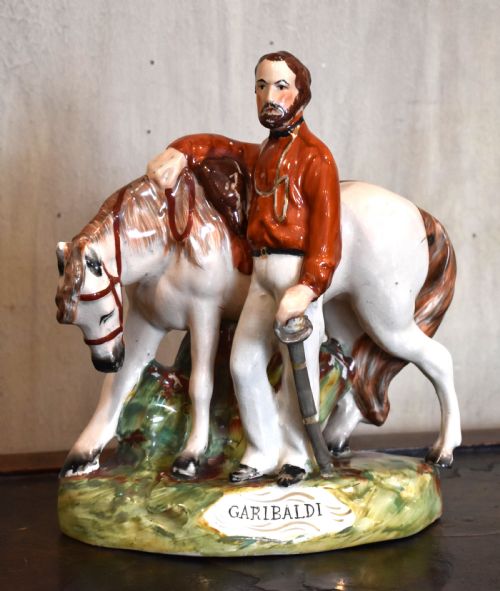
A military ceramic ornament takes the form of a portrait figure or commemorative group, depicting notable historical commanders, royalty and alliances from the Victorian era. When searching for a military ceramic ornament, buyers most frequently encounter Staffordshire earthenware figures representing figures such as Admiral Sir Charles Napier, General Charles George Gordon and Garibaldi. These pieces serve as tangible records of 19th-century patriotism, military campaigns and European political alliances.
The selection ranges from large Staffordshire portrayals of leaders like Napoleon III and Louis Napoleon to pairs such as the Companions in Arms. Makers also produced elaborate continental porcelain groups, including Meissen elephants depicting Alexander the Great. Each military ceramic ornament reflects the public fascination with contemporary military heroes and royalty during the Victorian period.
How They Were Made
Gilt highlights were frequently added to enhance regimental insignia, uniform buttons and decorative bases. The combination of moulded clay, fired glaze and enamel decoration defined the standard production methods for Victorian pottery figures.
Military Ceramic Ornament Retail Price Guide 2026
Typical asking prices for military ceramic ornament among the pieces listed under this phrase on Sellingantiques today, from the lower quarter to the upper quarter. They describe what is for sale here now, not the wider market.
Elephants bearing commanders into battle share cabinet space with Victorian generals.
What Varies in Quality
Scale and ambition also divide the standard pottery output from more elaborate works, such as large portrait figures or multi-figure Meissen porcelain groups. The depth of the colour palette and the preservation of the original gilt and lead glaze determine the visual impact of the piece.
Meissen
The Military Ceramic Ornament Glossary
- Earthenware
- A porous ceramic body fired at lower temperatures, requiring a glaze to achieve impermeability. This material forms the primary substrate for standard Victorian Staffordshire figures.
- Hard-paste porcelain
- A dense, vitrified ceramic composed of kaolin and petuntse, fired at high temperatures to create a durable, white body. It provides the refined medium for continental sculptural groups.
- Lead glaze
- A glossy vitreous coating containing lead oxide, used extensively on earthenware to seal the porous clay body and enhance surface reflection. It gives Victorian figures their characteristic shiny finish.
- Gilt
- A thin layer of gold applied to ceramic surfaces to highlight decorative elements such as uniform buttons, lettering and bases. This metallic embellishment signifies higher-status portrait figures.
Military Ceramic Ornament: Frequently Asked Questions
What subjects do these figures depict?
These ceramic ornaments primarily depict 19th-century military commanders, admirals, royalty and political leaders of the Victorian era. Examples include British figures like Admiral Sir Charles Napier and General Charles George Gordon, as well as continental rulers such as Napoleon III and Garibaldi.
Subjects also extend to classical military history through continental porcelain groups depicting leaders like Alexander the Great. Each piece serves as a historical record of contemporary heroes and international alliances.
How were Staffordshire figures displayed?
Victorians typically displayed these pottery portrait figures on mantelpieces, chiffoniers and parlor tables as expressions of patriotism and historical interest. They functioned as conversation pieces in domestic interiors during the nineteenth century.
Their substantial scale allowed them to stand as prominent decorative ornaments within middle-class and upper-class homes alike.
Are these pieces made of porcelain or pottery?
The selection encompasses both earthenware and hard-paste porcelain depending on the origin of the piece. Staffordshire makers utilised earthenware bodies finished with lead glaze and enamel paint for their portrait figures.
In contrast, continental works such as the Meissen elephant groups utilised hard-paste porcelain for finer sculptural detail and a denser ceramic structure.
How do you identify a portrait figure?
Portrait figures often feature inscribed names or titles on the base to identify the specific historical personage, such as military commanders or reigning monarchs. Contemporary costume, regimental uniforms and specific attributes also signal the identity of the subject.
Moulding styles and glazed earthenware characteristics further assist in attributing the pieces to the Victorian period.