







Victorian Military Pottery
Victorian military pottery brings home the regiments, generals and monarchs of nineteenth-century campaigns through earthenware figures and commemorative plates.
Victorian Military Pottery
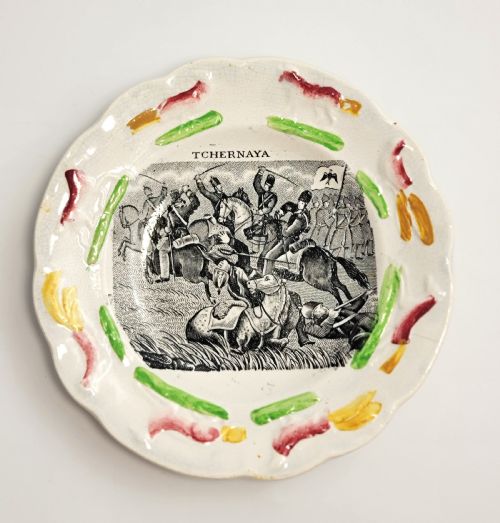
Victorian military pottery comprises earthenware figures, jugs and decorative plates celebrating British volunteers, naval commanders, Crimean War scenes and European leaders. These pieces served as mantelpiece ornaments that recorded the military and political events of the nineteenth century for the domestic household.
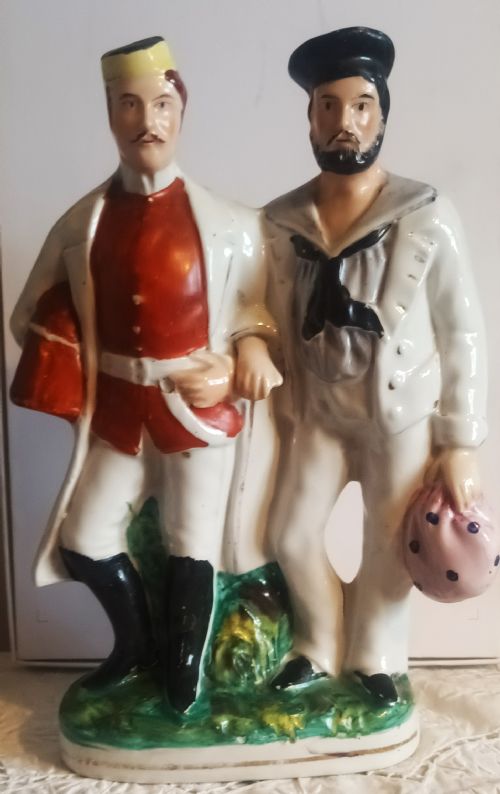
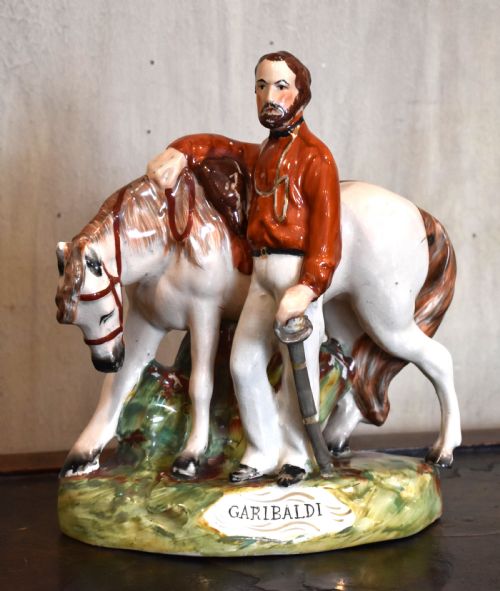
Collectors on this page will most frequently encounter Staffordshire pottery figures and portrait pieces dating from the Victorian era. These objects portray notable figures such as Admiral Sir Charles Napier, Napoleon III, Garibaldi and Prince Albert, alongside named subjects like Companions in Arms and The British Volunteers.
How they were made
Potters shaped these figures and plates from earthenware, finishing the ceramic bodies with lead glaze and glaze to create a smooth surface. This combination provided a receptive base for subsequent surface decoration.
Victorian Military Pottery Retail Price Guide 2026
Typical asking prices for victorian military pottery among the pieces listed under this phrase on Sellingantiques today, from the lower quarter to the upper quarter. They describe what is for sale here now, not the wider market.
Nineteenth-century mantelpieces regularly hosted French emperors alongside British admirals, turning Victorian parlours into miniature geopolitical summits.
What varies in quality
The application of enamel paint and gilding marks the distinction between workshop outputs. Finer specimens display precise brushwork on the military attire and carefully placed gilt accents, whereas inferior items rely on crude, heavy-handed colour application.
The Victorian Military Pottery Glossary
- Earthenware
- Porous pottery fired at a relatively low temperature. This material formed the standard body for nineteenth-century Staffordshire figures.
- Lead glaze
- A glossy coating containing lead oxide applied to pottery before firing. It waterproofed the earthenware and gave the surface a bright sheen.
- Enamel paint
- Opaque glass-based pigment fused to the pottery surface during a secondary low-temperature firing. Potters utilised this for the bright colours on military uniforms.
- Gilt
- A thin layer of gold applied to the ceramic surface for ornamentation. Makers used it sparingly to highlight lettering and uniform details.
- Staffordshire pottery
- Earthenware produced by various factories in the Staffordshire Potteries region. This area dominated the manufacture of Victorian portrait and military figures.
Victorian Military Pottery: Frequently Asked Questions
What subjects do these pieces show?
Victorian military pottery depicts British volunteers, naval admirals, foreign leaders and key figures from conflicts such as the Crimean War.
Common subjects include portrait figures of generals, monarchs and allied commanders alongside commemorative jugs and plates.
How do I identify the figures?
Most portrait pieces feature impressed or painted titles on the base or front identifying the sitter, such as Garibaldi or Admiral Sir Charles Napier.
Uniform details, regimental titles and campaign names provide further clues to the specific historical event commemorated.
Where were these pieces made?
These items originated in the pottery kilns of Staffordshire during the nineteenth century. Staffordshire workshops produced the bulk of Victorian commemorative figures for the domestic market.
Local artisans shaped the earthenware bodies and decorated them by hand with enamels and glazes.
How should I display them?
Place pottery figures on stable mantelpieces or shelves away from direct sunlight to protect the enamel colours and gilt highlights. Keep them in rooms with stable humidity levels to preserve the earthenware body and glaze.
Dust the glazed surfaces gently with a soft, dry cloth rather than using liquid cleaners.