

Antique Silver Forks
These antique silver forks span Georgian, Victorian, and later dining traditions, offering functional silverware shaped by centuries of metalwork.
Identifying Antique Silver Forks
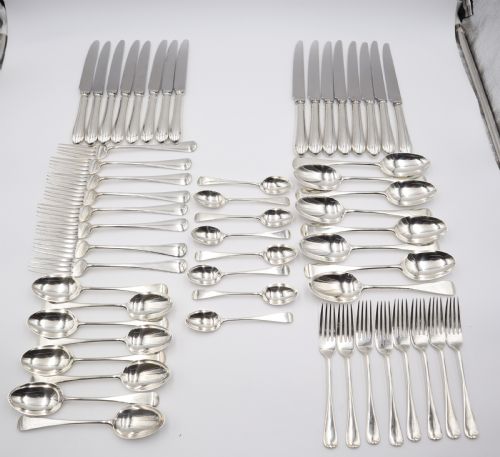
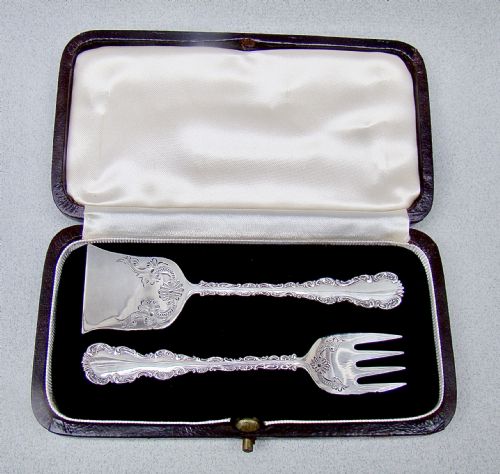
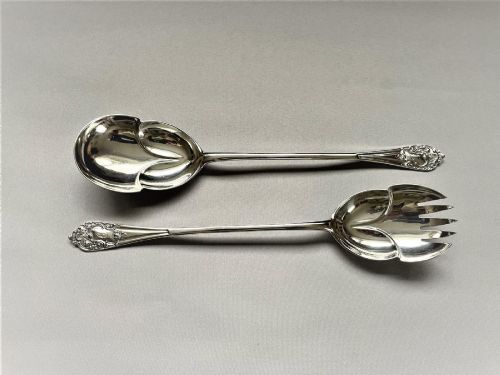
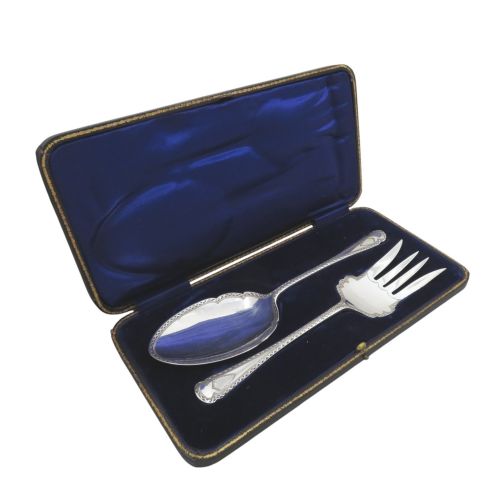
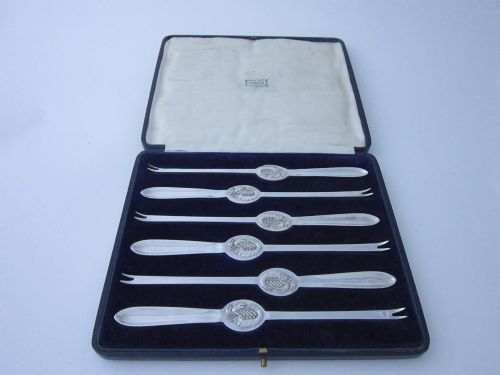
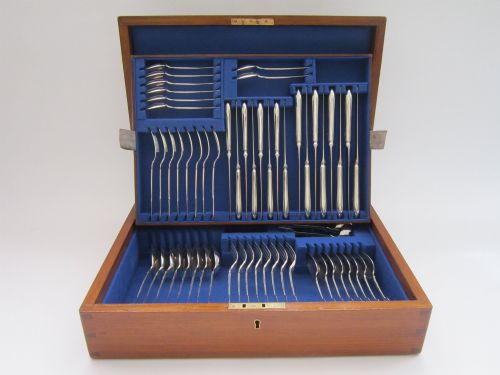
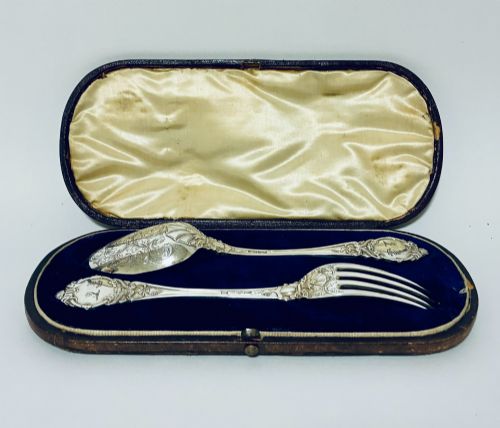
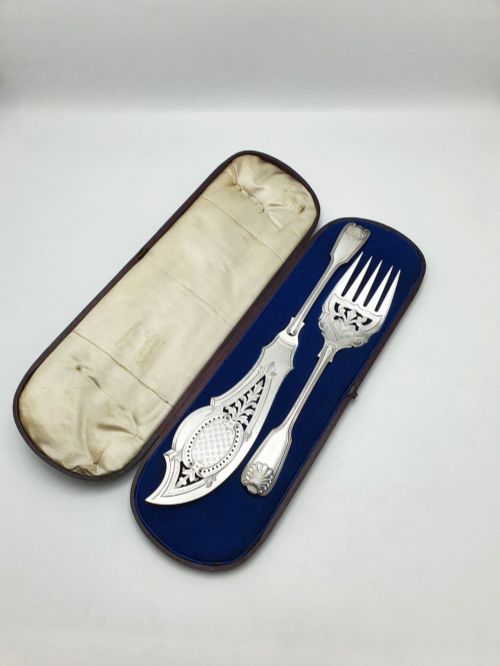
When searching for antique silver forks, buyers encounter various forms ranging from large table and dinner pieces to smaller dessert, pastry, cake, and fish variants. The records show items spanning the eighteenth century through the Victorian era and into the mid twentieth century, including cased sets and individual cutlery items.
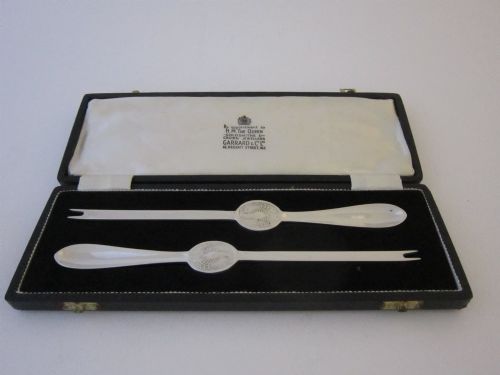
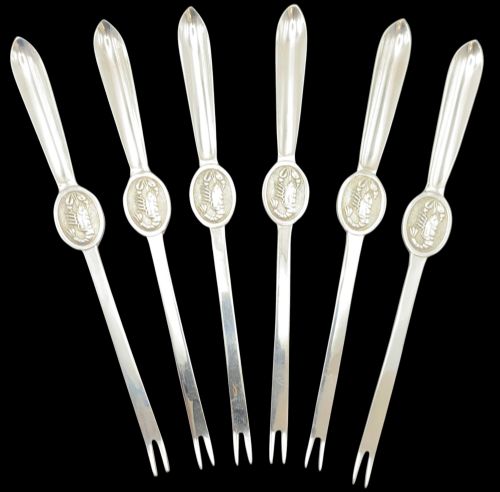
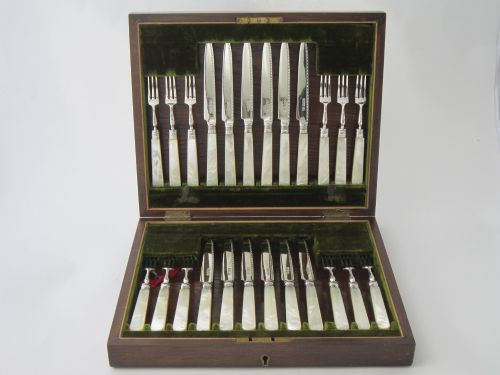
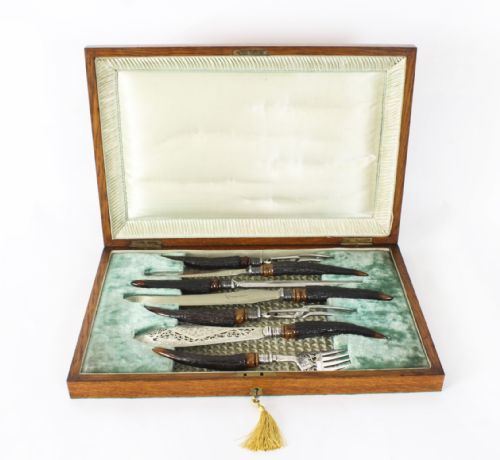
Table forks and cutlery sets form the backbone of the available selection, often found alongside specialised serving pieces like pickle forks, oyster forks, and afternoon tea utensils. Many of these pieces appear paired with handles made of organic materials or accompanied by fitted presentation boxes.
Materials and Construction
The primary material across the listings is sterling silver, occasionally supplemented by silver gilt or silver plating. Workshops also utilised natural materials such as mother of pearl for handles, alongside wooden elements like mahogany and interior felt linings within presentation cases.
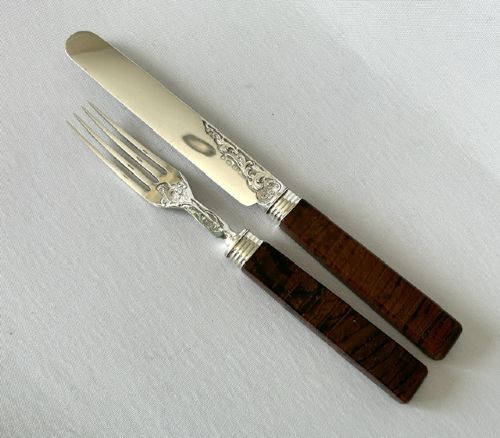
Silversmiths employed traditional forging and shaping techniques to create patterned items, including Fiddle pattern, Queens pattern, and Dognose styles. Structural elements range from solid silver construction to mixed media pieces featuring metal tines fitted to organic handles.
Listings feature items spanning the eighteenth, nineteenth, and twentieth centuries, utilising sterling silver, silver plate, mahogany, and mother of pearl.
Factors of Quality
Quality in these items relates to the weight of the silver, the crispness of engraved crests or armorial details, and the integrity of patterned handles. Maker marks and clear hallmarks provide definitive evidence of origin and standard.
The condition of fitted cases, the secure seating of mother of pearl handles, and the uniformity across matched sets influence the overall character and preservation of the cutlery.
Whiting·Liberty and Co·Henri Soufflot·Aaron Hadfield·Wang Hing·Bateman·Storr
The Antique Silver Forks Glossary
- Sterling silver
- A standard alloy consisting of ninety-two point five percent silver and seven point five percent other metals, typically copper. This composition ensures durability while maintaining a bright metallic appearance.
- Dognose
- An early style of fork and spoon handle characterised by a rounded notch at the top, popular around the turn of the eighteenth century. It represents an evolution from earlier flat-stemmed cutlery designs.
- Fiddle pattern
- A nineteenth-century cutlery handle design featuring a slender stem that expands towards the terminal in a shape resembling a violin. This style appeared frequently in Victorian dining services.
- Silver gilt
- Sterling silver that has been coated with a thin layer of gold through a chemical or electrochemical process. This treatment adds a warm golden tone to the surface of the metal.
- Mother of pearl
- The iridescent internal layer of mollusc shells, utilised by makers for decorative knife and fork handles. Its natural grain gives each handle a unique appearance.
Frequently Asked Questions
Are cased fork sets original?
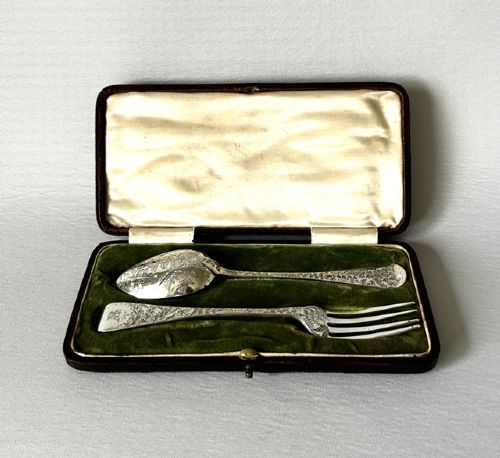
Many Victorian and Edwardian forks survive in their original fitted presentation boxes, often lined with felt and featuring compartments designed specifically for each piece. These boxes frequently match the era of the cutlery inside.
However, buyers should examine the interior fit and hinges to confirm whether the case is contemporary to the forks or a later pairing.
How were different fork types used?
Dining traditions required specific forks for each course, ranging from heavy dinner and table forks for main meals to delicate pastry, cake, and oyster forks for specialised dishes. Smaller afternoon tea or fruit forks were designed for lighter foods.
Table settings in the eighteenth and nineteenth centuries often utilised these specialised pieces to maintain etiquette during multi-course meals.
How do I clean antique silver forks?
Maintenance requires gentle cleaning with a specialised silver cloth or mild polish to remove tarnish without wearing away engraved details or hallmarks. Harsh abrasive cleaners should be avoided to protect the metal surface.
For pieces with mother of pearl handles, care must be taken to keep organic materials dry and away from harsh chemical dips.