



Solid Silver Forks
Solid silver forks bring centuries of dining tradition to the table, ranging from plain Georgian dinner services to boxed Edwardian cake sets.
Solid Silver Forks
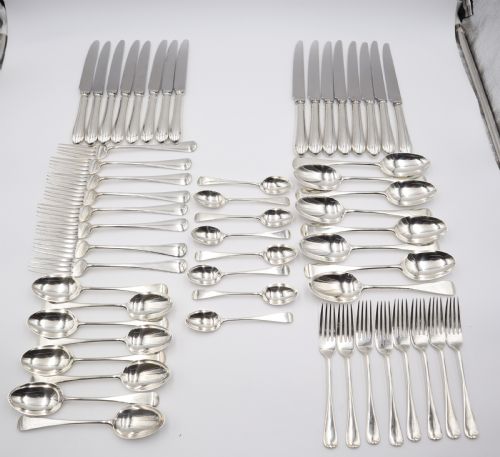
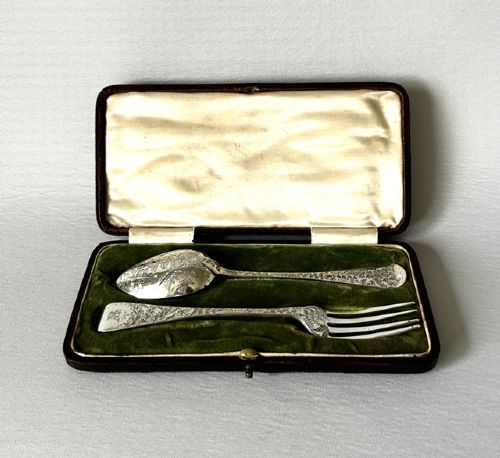
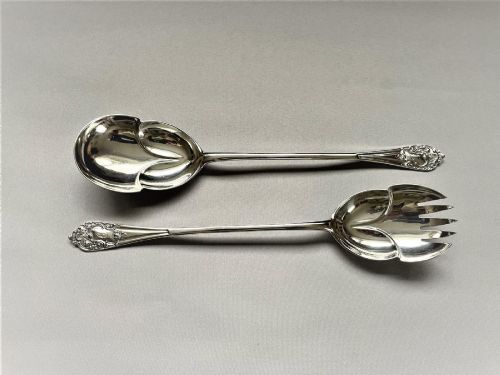
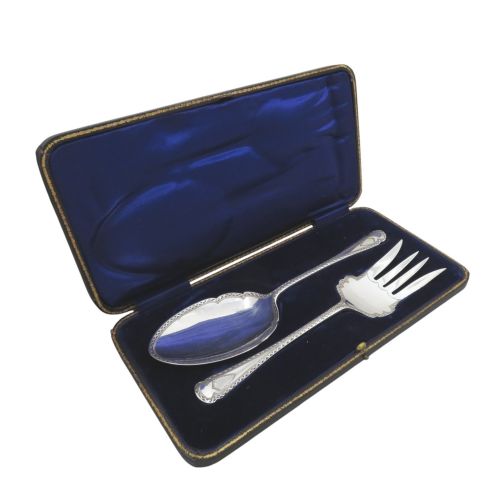
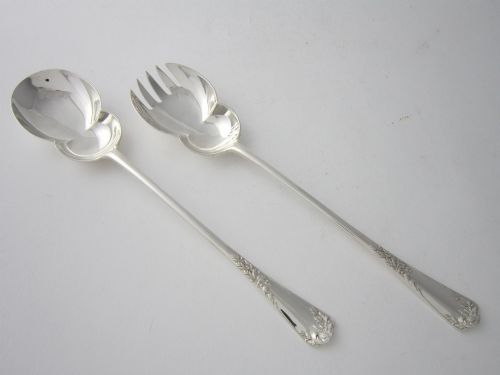
Solid silver forks encompass everything from single table utensils to large canteens, salad servers, Christening sets and specialised pastry forks. These items span the Georgian, Victorian and Edwardian eras, alongside Art Deco designs from the early twentieth century.
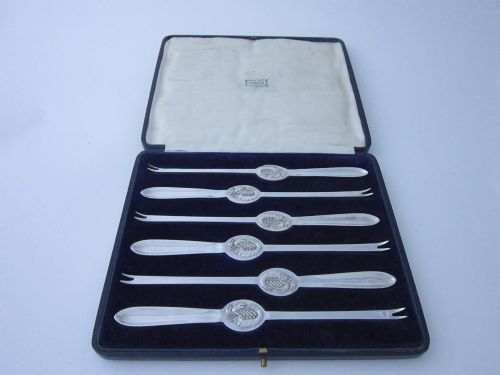
Buyers will most frequently encounter sets of six cake or pastry forks housed in fitted boxes, alongside nineteenth-century table and dessert forks executed in traditional patterns. Individual serving pieces and lobster picks also appear regularly across different periods.
How they were made
Makers shaped sterling silver and lower-grade Continental silver through casting and hammering, frequently forming specific prong counts and decorative patterns by hand. Handles incorporate materials such as mother of pearl, steel and ceramic, while fitted presentation cases utilise wood, leatherette, velvet, silk and mahogany.
Techniques evolved from the engraved crests and three-pronged formats of the eighteenth century to the mechanised stamping and patterned handles of the Victorian and Art Deco periods. Many individual pieces and canteens carry clear hallmarks indicating their assay office and year of manufacture.
Some Edwardian sets sport tiny carved swan finials peering down from the ends of the handles.
What varies in quality
The weight and gauge of the silver distinguish heavier dining forks from lighter pastry utensils, with substantial metal thickness ensuring longevity under daily use. Maker attribution also plays a role, as pieces bearing the marks of established silversmiths command greater attention.
Condition and completeness matter significantly, particularly for canteens and boxed sets retaining their original silk-lined cases. Retained armorial crests, crisp hallmarks and matching patterns across a matched set elevate the standard of the work.
E Coker·Walter & John Barnard·John Round·Liberty and Co.·Hans Hansen·Henri Soufflot·Aaron Hadfield·Wang Hing·E.W. Haywood·Paul Storr·Bateman
The Solid Silver Forks Glossary
- Hallmark
- Official stamps struck into precious metals to indicate the assay office, purity standard and year of manufacture. These marks allow collectors to date pieces accurately.
- Fiddle pattern
- A nineteenth-century cutlery handle design featuring a distinctive violin-shaped swell near the terminal. It remained extremely popular throughout the Victorian era.
- Kings pattern
- An elaborate nineteenth-century cutlery style decorated with shell and scroll motifs along the borders. It represents a heavier and more ornate aesthetic.
- Hanoverian pattern
- An eighteenth-century spoon and fork style characterised by a central ridge running down the front of the handle. The terminal curves upward in a subtle sweep.
- Silver gilt
- Silver objects that have been coated with a thin layer of gold on the surface, sometimes referred to as vermeil. This technique was frequently applied to dessert and fruit forks.
Solid Silver Forks: Frequently Asked Questions
How do I clean solid silver forks?
Wash silver forks in warm soapy water using a soft cloth, avoiding harsh abrasives that scratch the metal surface. Dry them thoroughly immediately afterward to prevent water spotting.
For tarnished pieces, use a dedicated silver polish applied gently along the grain of the metal. Rinse and dry again before returning them to storage or display.
Can I use antique forks every day?
Many solid silver forks remain entirely robust for regular dining, provided they are washed by hand rather than placed in an automated dishwasher. Older silver is softer than modern stainless steel and benefits from gentle handling.
Thin pastry forks and delicate gilt fruit sets require more care than heavy dinner table forks. Storing them in lined boxes prevents unnecessary scratching between uses.
How do I read silver hallmarks?
British hallmarks typically consist of a maker's mark, a standard mark indicating sterling quality, an assay office symbol and a date letter. Together these stamps reveal where and when an item was made.
Foreign pieces often feature alternative purity numerals, such as 800, alongside different national maker marks. Reference books and online assay guides help decode unfamiliar punch marks.
What is the difference between table and dessert forks?
Table forks are the largest utility forks in a traditional cutlery service, designed for the main course of a formal meal. They measure longer and heavier than other dining forks.
Dessert forks are scaled down for smaller courses or sweets, often accompanied by matching dessert knives. They frequently appear in sets of six or twelve within fitted canteens.