

Engraved Silver Flatware
Engraved silver flatware brings historical depth to the dining table, offering everything from heavy basting spoons to delicate caddy spoons shaped by centuries of silversmithing.
Engraved Silver Flatware
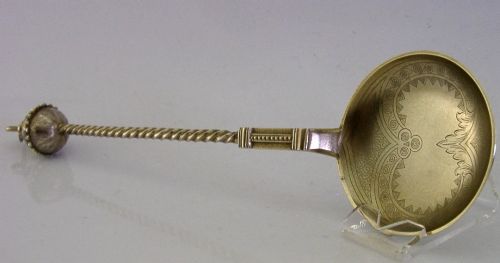
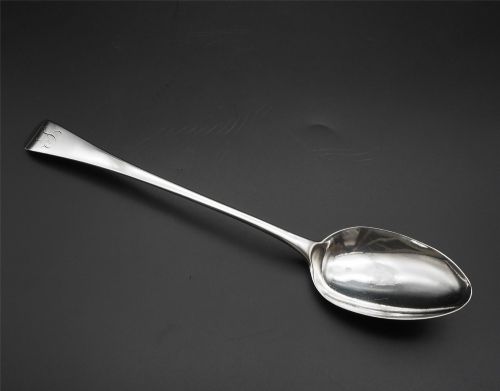
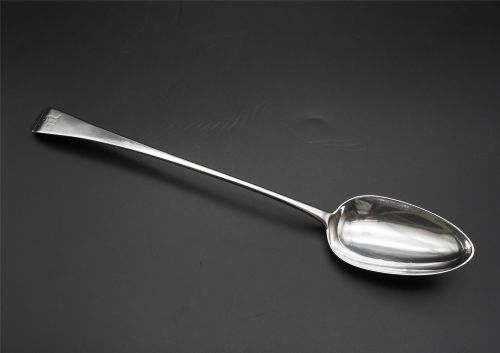
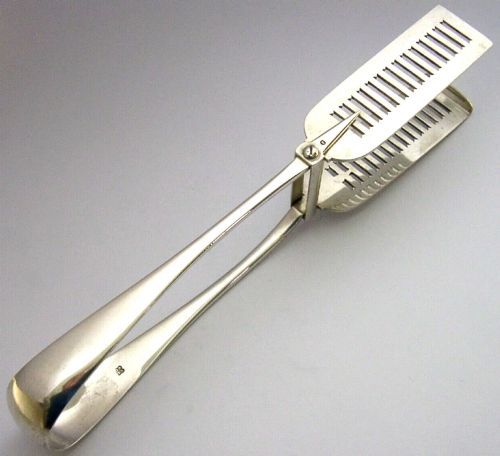
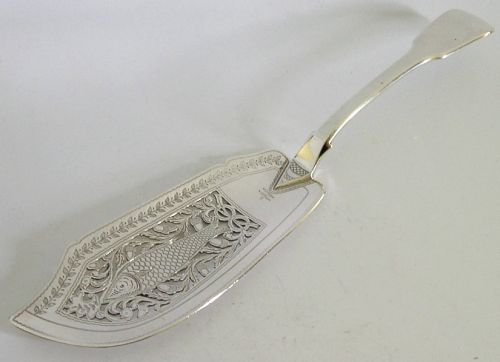
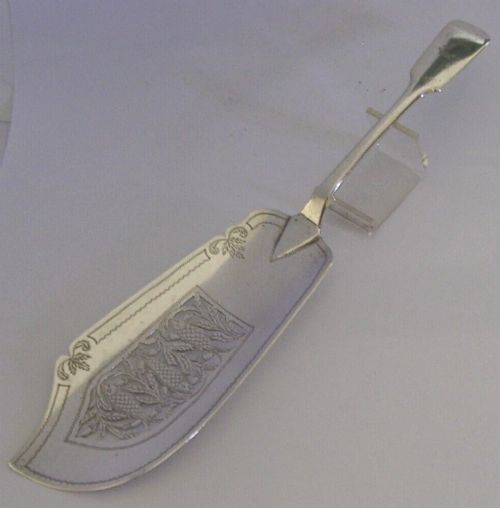
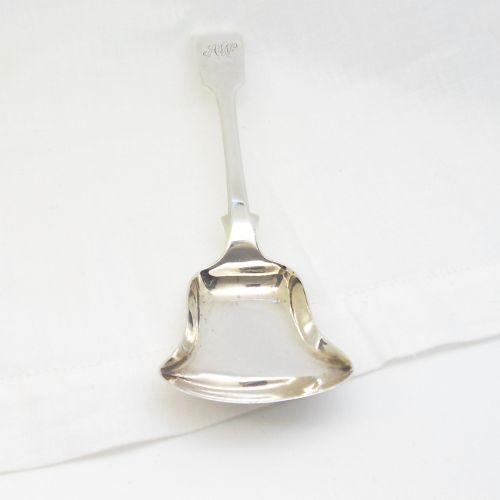
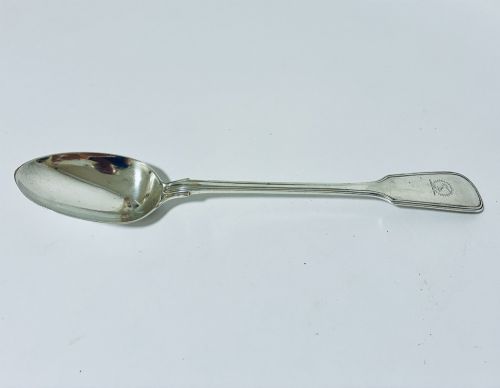
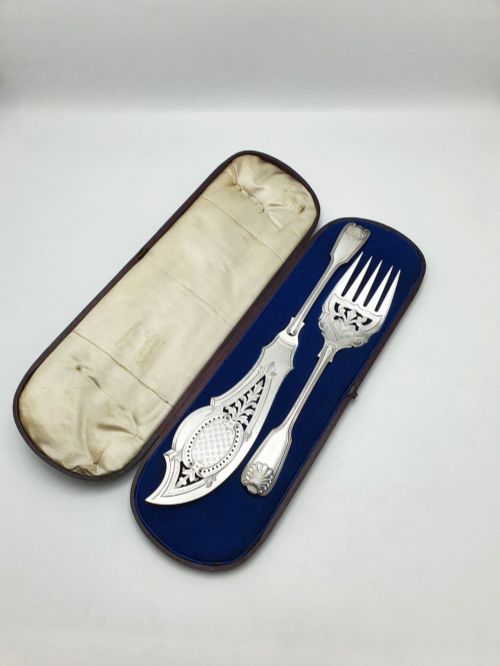
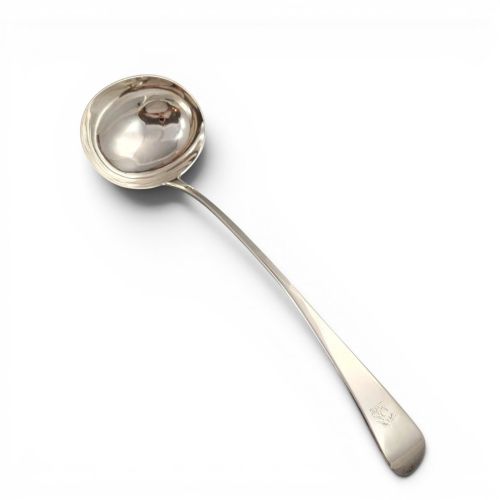
When you search for engraved silver flatware, you encounter pieces spanning from the seventeenth century through to the Edwardian era, encompassing both British and continental origins. The selection on this page centres heavily on Georgian and Victorian pieces, featuring functional items like basting spoons, soup ladles, fish servers, and sugar shovels.
Materials and construction methods
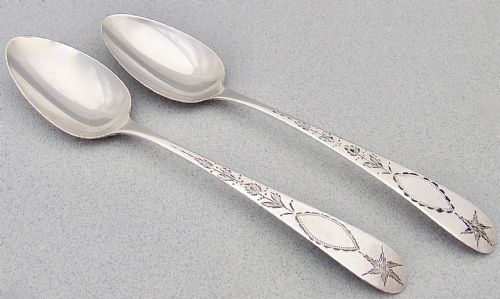
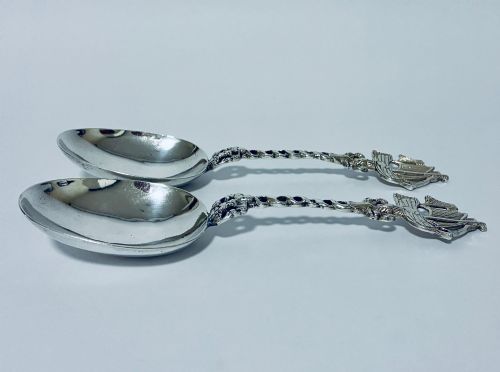
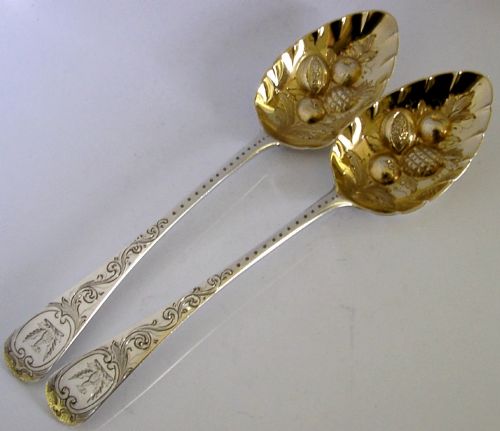
The objects are predominantly fashioned from sterling silver or solid silver, occasionally enhanced with silver gilt or paired with organic elements such as mother of pearl handles. Makers employed techniques like casting for blades and handles, followed by hand-engraving and chasing to apply crests, foliage, and textured borders.
Constructed across periods ranging from William III to the late Victorian era, these items reflect the standards of diverse assay offices in London, Dublin, Edinburgh, Glasgow, and Newcastle. Surviving examples often retain crisp hallmarks stamped directly into the metal, documenting the year of creation and the master silversmith responsible.
Several Victorian spoons bear family crests belonging to families who likely used them to dish out very posh peas.
Factors that distinguish the range
Quality in engraved silver flatware rests upon the crispness of the hand-engraving and the preservation of original crests or decorative motifs against wear from use and polishing. Pieces that retain high relief in chased fruit or deep clarity in armorial engraving demonstrate superior craftsmanship.
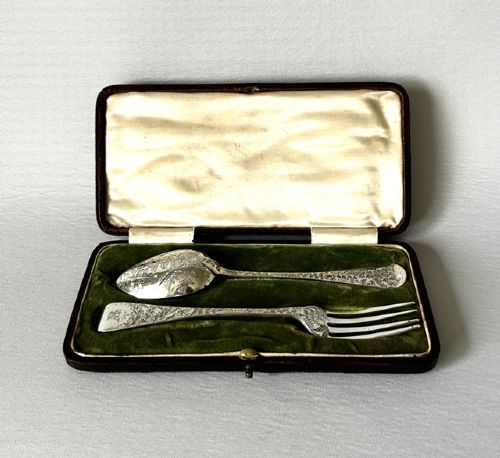
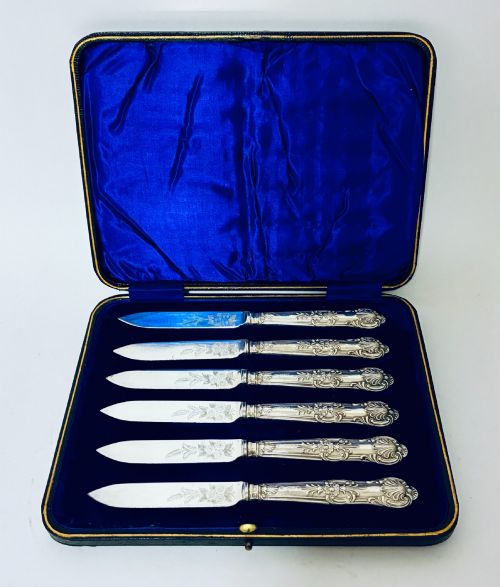
The weight of the silver, the balance of the utensil, and the legibility of the maker marks and town hallmarks further elevate a piece. Additionally, surviving together in original fitted velvet or silk-lined boxes adds a layer of integrity that separates standard utensils from exceptional collector examples.
John Pittar·John Walton·William Chawner II·James Tookey·William Penstone·Isaac Davenport·John Smith·Michael Smith·R Grey
The Engraved Silver Flatware Glossary
- Hallmark
- Official marks stamped into precious metals to indicate the standard of purity, the assay office, and the date letter. These stamps serve as the primary tool for dating British silver.
- Basting spoon
- A large, long-handled spoon utilised in the kitchen or at the table for serving liquids or moving meat juices. They frequently feature detailed crests and substantial silver weight.
- Caddy spoon
- A short spoon designed specifically for measuring tea leaves from a storage caddy into a teapot. Georgian examples often display shell-shaped bowls and intricate handle engraving.
- Trefid
- An early form of spoon popular in the late seventeenth century, featuring a flat, three-lobed terminal end. Surviving examples represent some of the oldest items in this category.
- Silver gilt
- Silver objects coated with a thin layer of gold applied through chemical or electrochemical processes. This technique provides a rich, two-tone appearance particularly common on large ceremonial or serving spoons.
Engraved Silver Flatware: Frequently Asked Questions
How do I clean antique silver flatware?
Clean silver gently using a specialist microfibre cloth and a mild silver dip formulated for antiques, avoiding abrasive pastes that wear down fine engraving.
Store pieces in dry environments away from direct sunlight, and refrain from putting antique silver into modern dishwashers.
Can I use these spoons for daily dining?
Many solid silver spoons remain entirely robust enough for regular use at the dining table, provided they are washed by hand immediately after meals.
Fragile pieces with hollow handles or delicate niello work are better suited for display or occasional ceremonial use.
What does a family crest signify on flatware?
Crests and armorial bearings were engraved by noble or prosperous families to mark ownership and personalise their household silver.
These additions often allow researchers to trace the lineage of a piece back to its original Victorian or Georgian patrons.
How do I identify the date of a piece?
Examine the reverse of the handle or bowl for the series of stamped punch marks, which typically include a maker's mark, a purity standard mark, and a date letter.
Reference tables for specific assay offices like London or Dublin will translate that date letter into the exact year of manufacture.